



A Conversation with Beth de Araújo (JOSEPHINE)
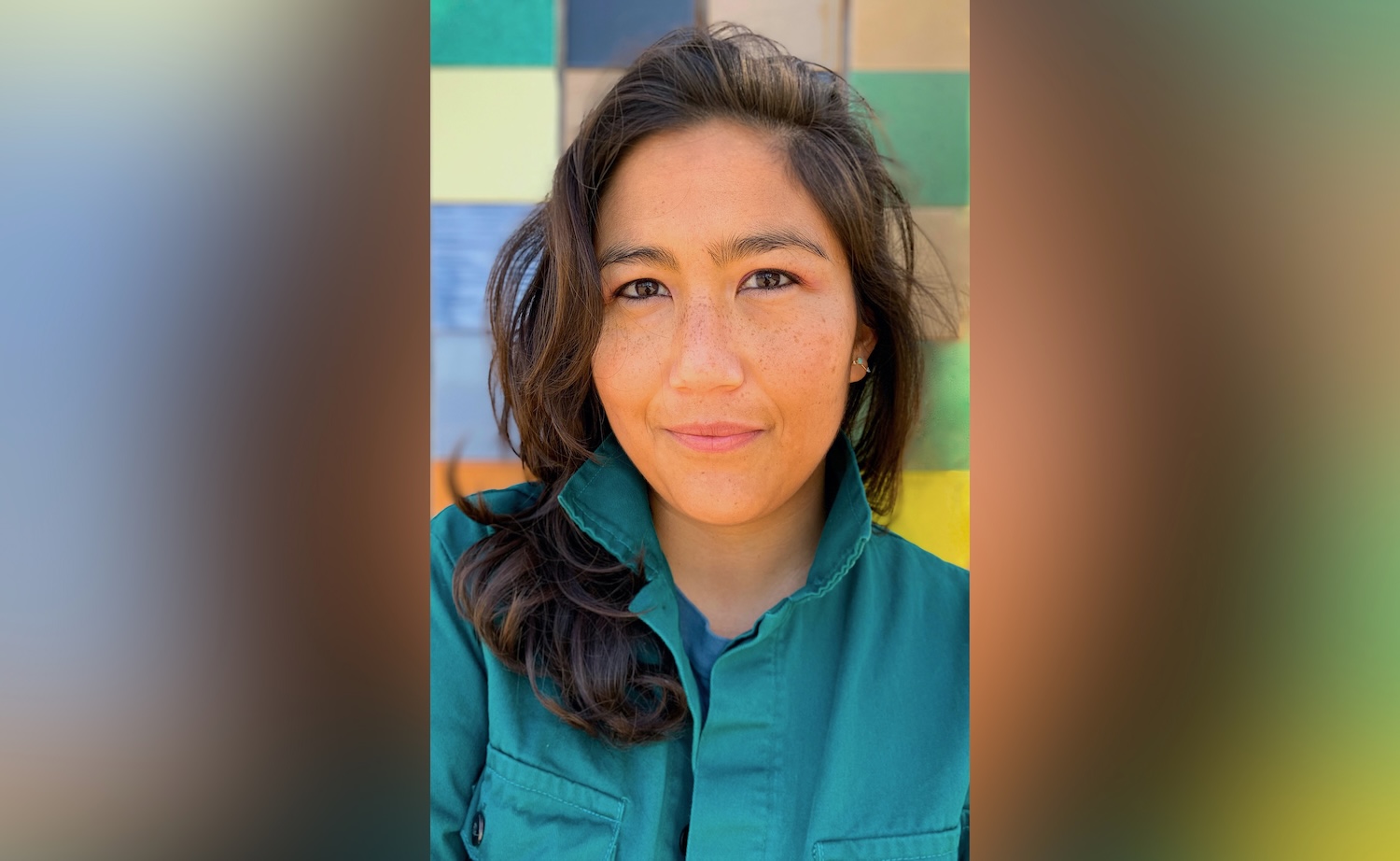
Director Beth de Araújo’s Josephine, which premiered at the 2026 Sundance Film Festival, tells the disturbing tale of the aftermath of a rape. The titular girl—just 8 years old—is the sole witness to the crime and struggles to process what she has seen while the adults around her, most notably her parents, do their best to heal her. Eventually, she will have to present her point of view in court, with a hostile defense attorney asking questions that would be difficult for anyone, much less a child. A remarkable young actress, Mason Reeves, plays Josephine, supported by established stars Gemma Chan (Don’t Worry Darling) and Channing Tatum (The Lost City) as mom and dad.
I saw and reviewed the film out of this year’s Toronto International Film Festival, where I wrote that Josephine is “tough going, but well worth the experience.” The story is rooted in the director’s own similar experience from childhood. I spoke with De Araújo (Soft & Quiet) recently by Zoom, and we discussed the roots of the narrative and her experience making the movie. Here is that conversation, edited for length and clarity.
Hammer to Nail: I saw this film at Toronto. It premiered at Sundance, and so you’ve had this 11-month period of the journey of the film in front of audiences. You explained in other interviews, and also in the press notes, how you began writing this film as a way to process the lingering after effects of your childhood experience witnessing a rape in San Francisco’s Golden Gate Park. Leaving aside the many well-deserved professional kudos you’ve received, how has this journey been for you on a personal level? Has it done what you hoped it might do?
Beth de Araújo: I didn’t really have expectations when I started writing it about what it would do for me personally, how it would or would not help me process it. I think it was literally kind of needing to purge out of me. When I say that I wrote a first vomit draft, I think we often talk about those drafts as being very stream-of-consciousness, unfiltered, very fast. And it certainly was that, but it was also a regurgitation of this poison I had ingested and that was taking over my body. And I do feel like I have expelled it from myself in some ways, and I don’t think anyone ever really gets over or heals in the traditional sense from something like sexual assault and interrupting one. But I do certainly think that I have reclaimed the narrative with my perspective on what had happened. And there is actually quite a bit of power, I think, in that. And I will say that this year I have started occasionally sleeping through the night, which is more than I can say for what it was before.
HtN: Thank you for sharing that personal perspective. So, since the story hit so close to home, what was it like casting the lead role? What were you looking for in a child actor who could inhabit this traumatic space?
BdA: I wasn’t ever looking for Mason to really inhabit this traumatic space; I was looking for a kid who felt very deeply in their own experiences. That was pretty key for me because I knew I was going to talk to them about their own life and try to use that as a form of directing. And I knew I needed a sporty kind of tomboy girl. I knew I wouldn’t have enough time to work with them to transform them physically. And I didn’t want them to have to think about that. I think you can really only take on so much as a child actor.
So, physically, she was already the way I saw Josephine. She was sprinting the first time she caught my eye at the farmer’s market. And then her first audition tape came in and it blew me away how much she felt truthfully and honestly, and then she just continued to blow me away. I mean, Mason is a deeply perceptive child. She soaks up everything. She is so in tune with everyone’s emotions in a room, which is what an actor does. She’s a really special person, and I think we all felt a deep responsibility in making sure she felt very protected and really had a good experience with this being her first time acting.
HtN: The rest of the cast beyond Mason Reeves, including Gemma Chan and Channing Tatum, but also Syra McCarthy and Philip Ettinger, are all very strong. What were you looking for in the parents and the other roles? Syra, of course, plays the woman who’s assaulted and Philip Ettinger is the assaulter.
BdA: Thank you for bringing them up. I mean, I’m so proud of them and this movie, it doesn’t work without them. So I’ll go in chronological order of how they got attached. The first was Gemma Chan in 2019. Her agent had sent her the script and Gemma and I just really got on. I mean, I think she has been the collaborator on this the longest and also a producer and really protective of my vision and making sure that the movie was how I saw it. And in the way that she talked about Claire and the way that she and Josephine relate to one another throughout the course of the film, I just found so insightful. Gemma’s very graceful, she’s very elegant, and Claire is a ballerina, so that really fit already.
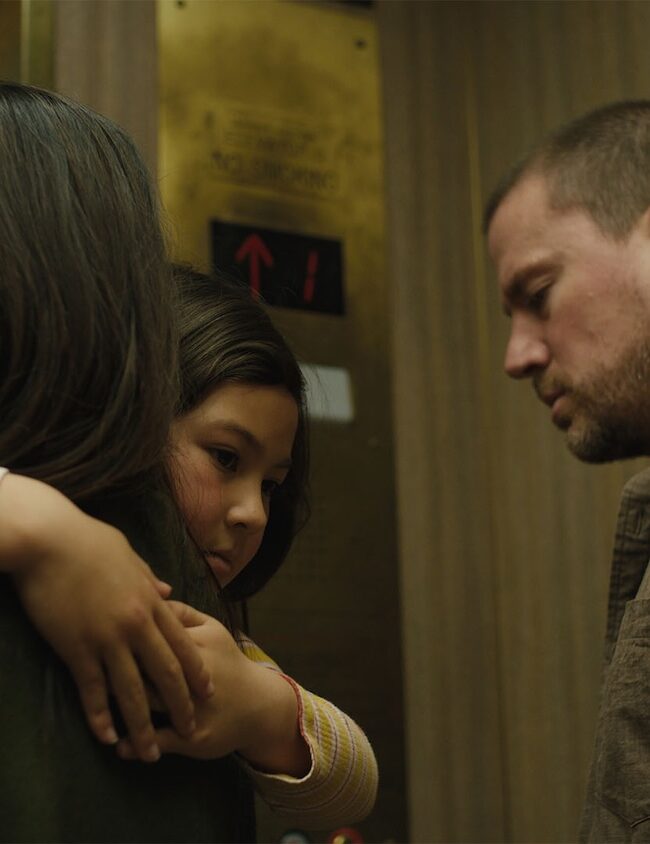
And then Channing…originally, Damien was written as foreign-born, and I had that as a part of his character because I felt that he was an underdog and that he saw himself as kind of like a fish out of water. And I met with Channing and he described what it felt like being from the South and living in a coastal city. And he had a similar, I think, perspective as feeling like he didn’t really belong. And that really worked for me. And so I rewrote Damien for him very specifically. And I also felt like, first of all, he needed to have the physicality—pretty broad shoulders—so someone would know that they wouldn’t win a fight with him and would run away, and also just someone who could carry the weight of understanding what it meant to be a father to a young girl and just have the talent that Channing does. I was very lucky that he agreed that he would gain 30 pounds and try to de-shine himself from the Magic Mike of it all.
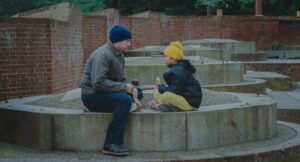
Channing Tatum in JOSEPHINE
And then came Philip. Philip was an offer. I was a huge fan of his work before he stepped on to do Josephine. I mean, he is an exceptional actor, and I saw him in First Reformed and in the series This Much I Know Is True. With someone like that, you jump at the opportunity to work with them. And it is not an easy thing to say yes to. That is not a role that most people would even entertain the idea of, but he approached it with such purpose and such truth, and I’m really proud of him. I’m really grateful for him.
And then came Syra, and it was a week out from shooting and we were getting down to the wire and I was very nervous about finding her. We had done many auditions and I wasn’t finding the interpretation of the experience of Sandra. And then we opened it up to people of Asian descent, and the next day, Syra’s tape came in. And I had been hesitant because Josephine is of East Asian descent, and so is Claire, and I didn’t want this to be a commentary on just specifically that kind of violence against women, but it is a very Bay Area story, and honestly, that was the truth of the story. And so I think maybe the universe was telling me it’s okay to lean into that. And Syra’s tape came in—it was the scene in the police car—and it made me fully weep, and I knew it was her, and we just met for tea, and then we were off to the races. Sorry, I could talk about these wonderful humans forever.
HtN: I really appreciate learning all of that. I also really liked the scene—which was so heart-rending—in the courtroom when Sandra thanks Josephine for what she’s been doing. I found that really, really quite profound. I thought her performance was very strong.
BdA: Thanks, Christopher. Yeah, for me, that’s the verdict. That’s why you don’t actually hear it—one of the reasons why you don’t hear it—because that’s not the point for Josephine. And really, she notices in that moment that that was why she did it.
HtN: So, your cinematographer, Greta Zazula, also shot your first movie, Soft & Quiet, which I’ve also seen and also reviewed for Hammer to Nail. In that earlier film, you made it look like one continuous take. That’s not what you do here, but you do play around with shifting objective and subjective perspectives. What did you and Greta discuss ahead of the shoot in terms of what you were looking for?
BdA: Greta and I, we have such rapport; we don’t have to talk about it. She knows exactly what I want to do. If it’s a one-take scene, there’s just no discussion. She’s like, “Let’s just get on set, let’s just start.” She knows exactly how we do it. We parse it out, we take what feels like a kind of natural break in the moments and the flow, and so we block it with the actors, and then we coordinate with the camera movements exactly where we want to be and exactly where we want the camera to be looking in each moment. We do about two to three pages. We get it in sync, everyone gets it down, we move on, we continue. We add two or three more pages. We do the blocking, we get the camera blocking down, we put them in sync, and then we put it all together, and then we do another three pages, so on and so forth. And so it’s quite methodical. And for Greta, she talks so much about how it’s just muscle memory for her.
Instinctually, as a director, you’d want to give the DP and camera operator a break between takes to catch their breath because it’s quite a physical feat carrying a camera for that long. But for Greta, she’ll say right away, “I want to go right away again,” because it’s part of how she gets the pattern into her body of the movements and scene. And you cannot do a film like this without a Greta Zazula because she is so ingrained in understanding the narrative and in understanding how the characters are feeling in every single moment and wanting to make sure that the camera embodies that.
HtN: You also worked with the same composer, Miles Ross, as you did on Soft & Quiet. I understand that he’s your romantic partner in real life.
A still from JOSEPHINE
BdA: (laughs) Yes, he is my fiancé.
HtN: So, what were you looking for in the score for Josephine? I found it really quite effective without being too obtrusive and without interfering too much in my own process as a viewer. What did you tell him to write?
BdA: I’m happy that that’s how you see it. First and foremost, I think the way Miles thinks about score is that he doesn’t want to impose any emotion onto the audience. I think because every audience member has their own very specific experience of the world of sexual assault, he wants to allow the score to just give you the space to breathe and the space to conjure whatever it is that you have inside of you. It’s very important to him that he is never trying to make you feel happy, trying to make you feel sad. And we had very early discussions about how we wanted this music to lay in. We wanted to play with the discord of having both very classical music and house music, electronic music, and see how they mixed with each other. I think it creates this really interesting dissonance, and it’s also two of my favorite genres of music.
And he came onto set every day; he would walk the spaces, he would listen for the different elements that were at play, naturally, in the scene. He adds so much of the foghorn into the sound of the score. And then one day—obviously I have the benefit of living with him—he was like, “Come into my studio; I want to play you something.” And he played this voice. He had kind of gone in there and tried some things on the microphone, and then he asked me to try some things on the microphone, and he created this very androgynous sounding voice that I loved because it was kind of confusing whose voice it was. And so much of this film is about being able to communicate your truth, and it just fell so beautifully into the film and we then really leaned into that. Also, with the classical element, my cousin is a cellist, actually. She plays cello for the Seattle Symphony, and we had her play the cello that we laid into the score, as well.
HtN: Beth, thank you so much for chatting with me, and thank you for making the film. It was really quite powerful. I’m glad I got to see it and I’m glad I got to talk to you.
BdA: Oh, the pleasure is mine. Thank you, Christopher.
– Christopher Llewellyn Reed (@ChrisReedFilm)