



A Conversation with Mark Jenkin (ROSE OF NEVADA)
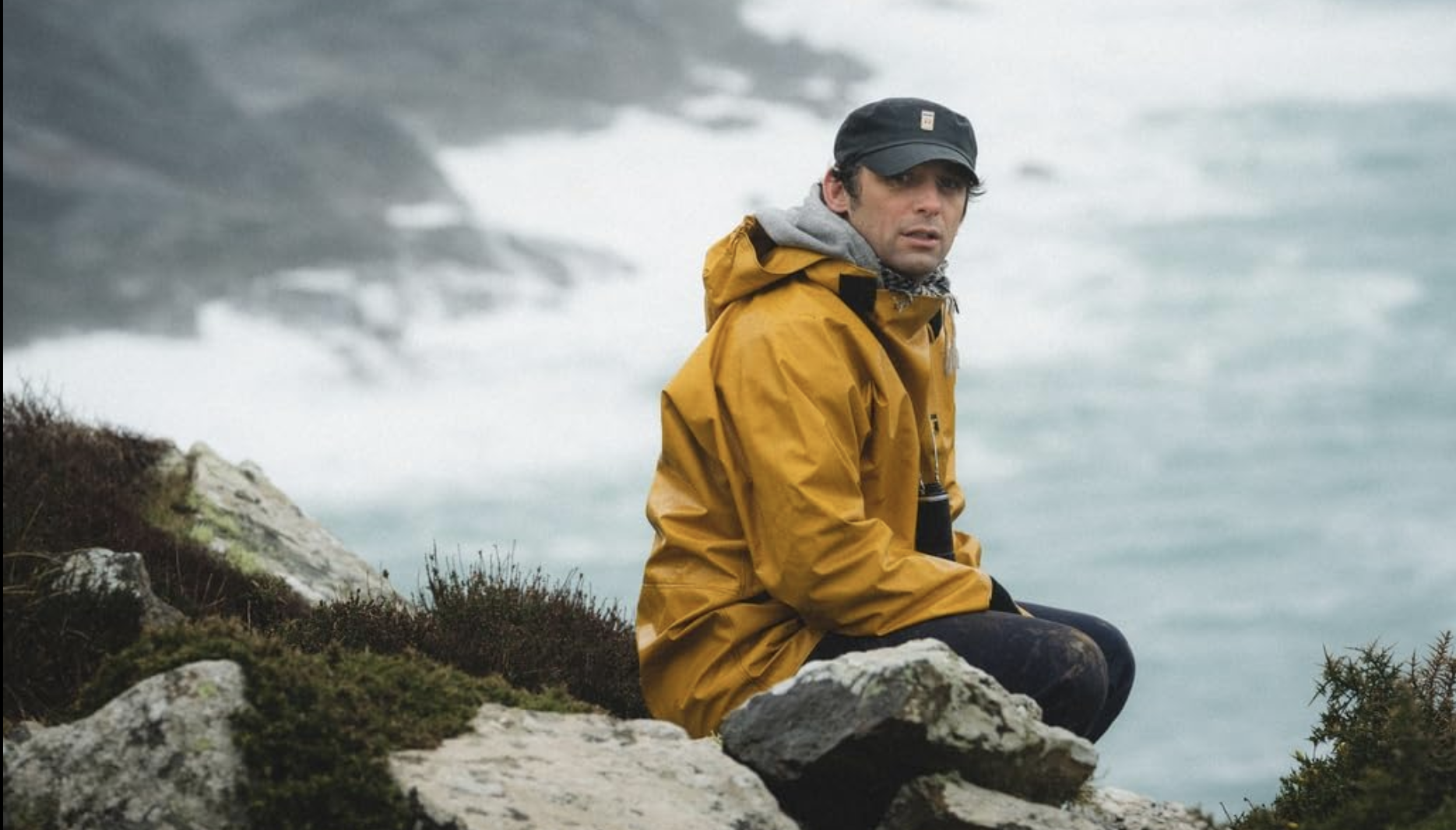
There is no working filmmaker whose process is more inseparable from his images than Mark Jenkin’s. All three of his features have been shot in Cornwall on 16mm using a clockwork Bolex, a camera that runs roughly twenty-seven seconds before it has to be rewound, which means everything is captured fast and lean. No sound is recorded on set. The actors re-voice every line of dialogue in post, and every footstep, gust, and dropped fish is built afterward by hand. With Bait in 2019 and Enys Men in 2022, that method announced a sensibility so specific it cannot be confused for anyone else’s. Rose of Nevada, his third feature, is the largest thing he has attempted, with a bigger crew, real movie stars, practical effects, a storm, a car chase, and yet not one of those additions waters it down. This is still unmistakably a Mark Jenkin film.
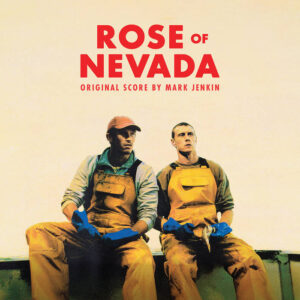
The premise reads like a Twilight Zone episode. Thirty years ago the trawler Rose of Nevada was lost at sea with all hands, taking a coastal village’s economy down with it. Now the boat has reappeared in the old harbor, and a new crew is sent out to coax the village’s luck back. Nick Dyer, played by George MacKay, takes the job to provide for his young family. Liam, played by Callum Turner, signs on to outrun a past he never names. They have a good trip, return to shore, and find they have slipped three decades into the past, greeted by everyone as the men who vanished. Jenkin uses that scaffold to think about labor, sacrifice, and the way a hollowed-out place keeps its people permanently at work, while staging a quiet collision between his century-old technique and a world of iPhones, jukeboxes, and contemporary pop. Francis Magee, Edward Rowe, Rosalind Eleazar, and Mary Woodvine round out a cast that holds the uncanny and the ordinary in the same frame. The film premiered at Venice and Toronto last fall. The following conversation was edited for length and clarity.
Hammer to Nail: I’d like to dive in first about the goodbye between George MacKay, his wife, and his daughter. In retrospect the scene takes on a newfound importance, once you know he’ll never see them again. It’s a simple moment, but the hope in Nick and his wife’s faces contrasts with the music and how sad the daughter looks. What was important to you in helming that moment?
Mark Jenkin: It’s funny talking about it now as a finished scene, then thinking back to how we shot it. The exterior of those two houses was a location we’d been looking for a long time and couldn’t find, so with about two weeks left on the shoot we built that little street out the back of the studio. The paint was still drying on the walls when we filmed it, and we shot everything on that bit of street on the last day. It was stressful, which isn’t necessarily a bad thing.
There are two moments in the film that really cement the relationship between the two of them, or the three of them. The goodbye was the key one in the script, because at the time you just think he’s saying goodbye and he’ll see her in a few days, when actually he’s never going to see her again. Later that becomes incredibly significant, so the scene has to be memorable enough that you can flip back to it in your mind. It had to be really warm.
Early on I had notes saying people felt Nick should be a bit more useless, a bit more hapless, so that she’s almost happy to get him out of the house. I pushed back hard. No, they’re really in love, probably childhood sweethearts. Their life is perfect. They’ve got each other and they’ve got a daughter. The only thing they haven’t got is enough money, which they can just about manage until the roof caves in, and then they definitely need it.
The flip side of that scene is when Nick walks out of the kitchen, having done the washing up, and stands in the doorway watching his wife and daughter drawing on the front room floor. It cuts to his point of view, a close up of her neck and her shoulder. I got notes on that one too, asking whether we needed it, what it was adding. I said it’s not adding anything to the story, it’s about them. This is a true relationship between two people. Having a daughter doesn’t stop them being a couple. He’s lusting at her. He’s looking at her, thinking she’s beautiful. They are not just the parents of this girl. They are this partnership.
You’re the first person to ask me about that scene, and I’m glad, because that relationship is so important. The tragedy doesn’t work unless there’s true love there. If he’s useless and she’s glad to see him go, then the end of the film is about her regret at not being nicer to him, and that’s not the film.
When working with child actors, you get what they give you. She was not massively enjoying shooting that scene. That was the last thing we shot. She’d done a couple of scenes and was a bit over it by then, a bit like, I’m done with this now. I’m glad we got what she gave us, because there’s a version where she’s really sweet and adorable and it becomes a saccharine goodbye. The fact that she’s a bit indifferent works, because at that point she doesn’t know it’s a big moment either. He always goes out, so what’s the difference? George has two young daughters himself, so the way he leans down and touches her just before they leave is beautiful, and it’s mirrored when he touches her cheek at the end, in the alternative version of them saying goodbye.
HTN: I also love the moment toward the end of their first voyage, where the skipper says, “the only thing worse than being at sea is not being at sea.” This is after a long stretch of fishing and gutting. Nick looks a little burnt out, while Liam seems to have found life on the boat. He gives Nick a noogie and is excited to get back to the boozer. What was important to you in those moments, just before the twist that they’ve gone back in time?
MJ: Exactly that. You’re very insightful, that was the key. There’s nothing like the euphoria of completing hard work. When I’ve had manual jobs, that feeling of going home on a Friday afternoon when you feel like you’ve earned the trip to the pub. I don’t drink anymore, but when I did, a pint after a week of physical work tasted completely different to a pint when you’d been sitting at a desk all week. I wanted to capture that. They both put everything into the trip, and the success of it breeds enthusiasm. Then you get the moment you always get on a fishing trip, where the skipper says, that’s it, we’re going home, and there’s that euphoria.
Liam is thinking he’ll go back to the pub and see that girl he met, which turns out to be a complicated relationship if you look at it a few times.Nick is going home to his family, to a loving relationship, so you understand it. If he’d been booted out because he was useless, told to go and earn some money, that would be different. Instead he gets to smile, he’s elated, and it’s a beautiful moment because he doesn’t really get another one like it. You see him happy.
There are two different things going on. Nick is going home having provided for his family, so it’s a sense of achievement, we’ll earn enough to mend the roof, maybe go out for a meal, I can buy my daughter something. Liam has two things going on. He’s found a purpose on the boat, and that increases through the film. Whatever he was running from, he’s a runner. When it gets tricky, he runs. He never really fits in anywhere, and then he’s on this boat and he’s made a difference. They couldn’t have done that trip without him. Plus he’s going back to the pub, and last time the pub was great. So you get the euphoric moment, which then gets undercut in two different ways when they get back.
HTN: After Liam willingly accepts his fate and joins the family outside the pub, Nick rushes home to find his wife and child gone. The house is no longer his own. It’s now 1993. The fear in his eyes as Francis Magee, Edward Rowe, and Mary Woodvine try to calm him down is palpable. It’s a pivotal moment. Again, what was important to you?
George MacKay in ROSE OF NEVADA
MJ: That was the hardest thing to write. How does somebody react in that situation? In reality you’d probably just stand in the street screaming until they took you away in an ambulance, but that doesn’t work, that’s a different film.
At the local university where I’m a professor of film, I used to go in and do visiting lectures, and there was a stairwell I’d walk down. Two floors down was the office for the course, a glass door, and you’d look in and see all my colleagues at their desks working. The floor above was exactly the same door, but it was a storeroom with nothing in it. One day I thought I’d gone down two flights, and I opened the door and looked in and thought, where’s everybody gone? Same room, but empty except for boxes. For a split second it was the most scared I’ve ever been in my life. It wasn’t horror, nothing jumped out at me, it was, Jesus, I’ve slipped through time, I’ve slipped forward a year to when the course has shut down and everyone’s moved out. I wanted to capture that panic of nothing making sense. The greatest horror we can experience is when time stops making sense. How can they not be there?
There are two different locations in it. The shot of George looking through the window, with the panic in his eyes, was one of the last things we shot on the fake street we built. His point of view through the window was shot in the interior of the house about a month earlier. It’s one of the only consciously handheld shots, looking into the kitchen you’ve already seen. I loved it when I put it together. It’s hard to write, and if it’s hard to write, it’s hard to perform. But because he has so few words, the fewer we gave him, the more it came out of his eyes. It’s just blind panic, and you can relate to that, because what do you say in that situation? You just panic.
Right up until we put it in front of an audience I was worried. Are they going to go with this? Are they going to believe this is how someone would react, that Liam would just walk home? That’s why Rosalind playing Tina had to be so forceful. There’s no choice. He either does what she says or he gets a smack in the mouth, so he takes the easy option. I’m glad it works.
HTN: At about the hour and twelve minute mark, we get this wild montage. It starts with a red lens flare subsuming the water, shown upside down. We cut to Nick outside the boat, taking in the villagers, while Mike speaks to him through what sounds like a phone, even though he’s right there. Nick sees his wife and child in a vision, walks slowly to a car, starts it, and drives away fast. As he drives, it freeze frames, and we hear someone say, you never forgave yourself. We cut to the old woman waking, then to Nick about to crash into her, while in a vision she holds a flare and spins rapidly. Then we’re back on the boat. It’s a wild moment. How did it come to life, from the page to the set to the edit?
MJ: It’s one of those scenes I write on the page in a much more straightforward way. Then we shoot it, and I get in the edit and realize I haven’t got enough footage to make a scene out of it linearly. So I get creative, jumping around in time and space, using freeze frames.
The key bit was Ed playing Mike, his dialogue. He’d come back and recorded it three months later, and I took that dialogue and played it into a tape loop. I had two tape machines running a quarter-inch tape loop, ran the dialogue into it, then grabbed the tape, stopped it, played it again, feathered it so it warbles, so a bit of it plays backwards. Then I laid that audio in and edited the visuals to what the audio was doing, which made it go crazy. Suddenly the scene isn’t dictated by the visuals, it’s dictated by something I did blind on the tape loop.
Then I had that shot of the water with the red light leak. Something weird happens when you invert a shot of water. It still looks like water, but it looks really odd, and you can’t quite work out what’s going on, because it’s so oppressive. It could just be still water, but it feels like a heavy sky bearing down on you. In a very literal sense it’s the moment everything goes crazy, so you go upside down. It’s the other world. Is he asleep? Is he awake? I tried to make it even more ambiguous, because he wakes up in his bed but he’s injured. Is his back hurting because he slept on the bunk, or has he hurt his ribs? Was there a car crash? Did he steal the truck? Did they rescue him and put him back on the boat? Did he dream the whole thing?
A lot of it is that I lay traps for myself in the shoot. I shoot what I see and what I like, imagining how it might cut together, thinking, that would make a great sequence. But when I get in the edit, I haven’t imagined all the shots I’d need to do it linearly. So it’s, I need to jump back here, I need to go somewhere else, where can I go? I’ve got this shot of George looking, but I’ve already shown him looking over at the truck, so what else could he be looking at? I’ve got a bit of a shot of his wife where she turns around and appears to look straight down the lens, so I drop that in and watch it go weird. It’s like she can see him through time. I’m not good enough to write those things, but I’m alive enough to the possibility of writing in the edit to recognize them, and not to worry about linearity or continuity.
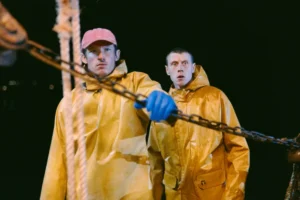
Callum Turner & George MacKay in ROSE OF NEVADA
The irony is it goes from that into the first car chase I’ve ever made, which was great fun, bringing in a stunt driver and ragging a truck through the middle of a little village, skidding out onto the road. So you’ve got this very capital-E experimental sequence that wouldn’t be out of place in an art gallery, cutting into a car chase. I love it. It never worked until right at the very end. We were still tweaking a frame here, a frame there, a bit of sound, taking some sound out, almost to the end of the process, until we went, right, that’s working now.
HTN: I’d love to ask about the storm, where the skipper goes into the water and has to be fetched out by the men. It’s insane, and honestly I have no idea how you pulled it off. Can you illuminate, technically, how it was achieved? It’s such a remarkable, white knuckle moment.
MJ: We knew we were going to use a practical effect. We worked with guys who had a three or four ton dump tank, and it dropped three tons of water onto the deck of the boat. We had rain makers above the boat for the pouring rain, handheld leaf blowers as wind machines, water whooshes, massive hoses spraying the windows, and a little wave machine, which was an oil drum with a handle that you drop up and down in the water to make waves.
The boat was tied against the harbor wall the whole time. We built a little pontoon around it to create a pool, so we could affect the salinity of the water, the range of the water. We had jet skis just out of shot churning it up, which is what we used for all the fishing sequences, because we never once went to sea. It was all done with the boat tied up in the harbor. For the storm we built a metal bar off the top of the wheelhouse, attached to a rope, and people on the quayside pulled the boat backwards and forwards while we dumped the water over it.
I only ever shoot one camera, but we shot three. I shot the A camera out of the wheelhouse. We had a camera wrapped in a plastic bag on top of the wheelhouse looking down, and a vintage Bolex in a diving bell housing with no viewfinder, which my friend James Holcombe operated in the water. He couldn’t see what he was filming, he was just pointing it. The key was no wide shots, everything in close up, because one wide shot of a wave hitting the boat could have blown the whole budget for the movie. Keep it tight, keep it claustrophobic.
Francis Magee, who plays Murgey, did all of that scene except going over the side. That was Jamie Edgell, our stunt coordinator. He’s retired, and there was going to be a stuntman to do it, so he came down to check it out when we got the first dump tank installed. They dropped a ton of water on the boat and it knocked him about a bit. Then two tons, and it knocked him over a little. Then three tons, and it knocked him over the side. He was expecting to go, but it really took him, and it looked great. He said, I’m coming out of retirement, I want to do this stunt myself. So he did. We did two takes, and I think we used the second, on the B camera. Some of it was him in the water with a fake beard, but Francis actually went into the sea too. He was a trawlerman, a fisherman for eight years before he was an actor, when he was younger. Not that he was used to being in the water, a fisherman is used to never being in the water, but he wasn’t afraid to get in and do it. That’s why we can show close ups of his face going in and out of the water.
If we’d done a wide shot, I’d have called action, six cameras rolling, and you’d have seen the boat in a tank, waves left and right, rain and wind, and at the end everyone would high five and think, we’ve got an amazing shot, we can go home. After two night shoots on the storm, everyone went home thinking we had nothing, because it was just a load of close ups. As the director, I have to say, no, we’ve got everything, while in my own mind I’m thinking, I don’t think we’ve got anything. It’s not until you put it together in the edit that it becomes greater than the sum of its parts.
The last thing that went in was the sound, and the storm still wasn’t working for me. Then one day I was in my studio with Deadliest Catch on the TV in the background, a storm sequence, and I suddenly thought, that’s it. It’s the boom, the sub boom of the wave hitting the hull of the boat before the white water. We hadn’t put that in. We created a real subby boom and dropped it in about a second and a half before any shot of white water, and the scene just lifted off. That’s when we knew we had it. It’s a big scene made of tiny pieces, tiny bits of footage and sound, to create something spectacular, which is what I love. If a layman had walked onto the set, they’d have said there’s no way this is going to look like a storm. It looks like we’re just chucking a bit of water around. It did not look like we were making a film.
– Jack Schenker (@YUNGOCUPOTIS)