



A Conversation with Josh Fox (THE WELCOME TABLE)
Impressively ambitious in scope, Josh Fox’s humbly titled The Welcome Table finds the environmental activist-filmmaker-writer-
Soon after The Welcome Table’s US debut on HBO, Hammer to Nail reached out to Fox, who is also the producing artistic director of the socially conscious International WOW Company, which he founded back in 1996, to learn all about the counterintuitively uplifting project and its existential message: that mankind has already migrated to a new dangerously heated planet. Indeed, we’re all climate refugees now.
Hammer to Nail: Can you talk a bit about the origin of the project? Were you always sure it would be a film?
Josh Fox: While I’ve been obsessed for awhile now with the fact that climate change will cause the largest mass migration in human history, I saw Trump’s 2019 policy of kidnapping children at the border as such an extreme injustice that I had to start there. I wanted to ask, “Was there anything stronger than this tide of xenophobia, hate and racism?”
Initially, the film was called The Border Table. My first thought was to put a very long table on the border and have people come from both sides for a conversation. However, I soon realized I wanted a broader concept than just the US-Mexico border.
Back in 2019 when I was doing a campaign event in South Carolina with Bernie Sanders, I found myself in the backseat of a rental car in a McDonald’s parking lot at midnight with Cornel West and Heather Gautney. (Since we’d flown in late there was nowhere else to eat.) After Dr. West asked me what I was working on he goes, “Oh, oh, interesting. You know, James Baldwin’s last work was called The Welcome Table.” Then later on I was down in New Orleans seeing John Boutté perform. As soon as he gave me his record after the show and I saw that one of the songs was called “The Welcome Table,” I thought, this is fate. I just immediately had a vision of John singing that song on the levee that broke after Katrina.
All of a sudden the idea started to take off. I realized I should travel the world and document stories of climate displacement, and then bring all those people to meet at the same table in New Orleans. Because the wall and the fascist policies of Donald Trump are not what this country is about and it’s not what we need to be. And what’s the opposite of a wall? A table. It’s a symbol of solidarity, unity, collaboration, dialogue, of a place to be.
Most climate films are tragedies, but I really thought of this as a sort of Shakespearean comedy, where everybody gets married at the end, you know, everybody comes together in a celebration of this moment. We don’t have to see this time of crisis as a Mad Max future. It’s an opportunity for us to be the most generous, the most caring, the most sharing. It’s a moment of true intercultural collaboration, which is what I think we need.
HtN: Shooting across six continents seems a daunting logistical as well as financial challenge. How did you decide where to film? Were there other places you were hoping to visit but weren’t as accessible (or as welcoming as, say, the Peruvian Amazon where the Achuar tribe have their own media coordinator)?
JF: The film has to be global to truly represent the problem of climate refugees. It is also fundamentally a movie about how the Global North owes a debt to the Global South. The root cause of climate change is, in fact, colonialism. Big oil and gas is a symptom of that horrifically abusive system that gripped the world for hundreds of years, and that is still very much in place in many ways.
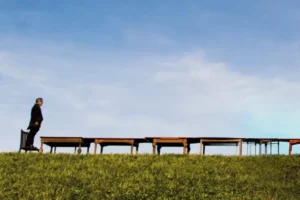
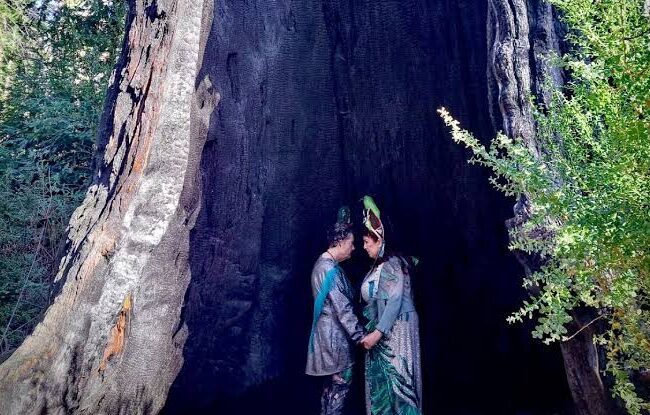
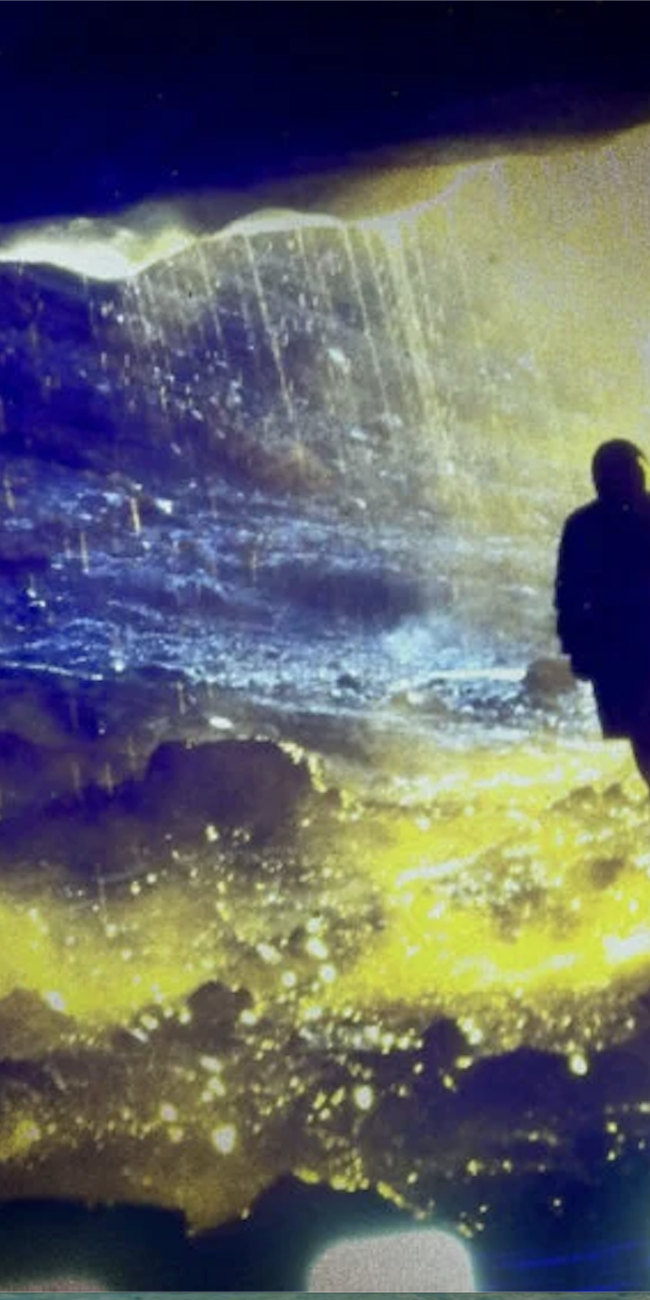
A still from THE WELCOME TABLE
The film is a progression from the economies of the Global North to the colonized, that is to say the Indigenous people, in the Global South. It advocates for a loss and damage fund, for reparations, and against the growing climate apartheid that is forming. To that end, we really wanted to go to Bangladesh, but the political unrest didn’t allow us to travel there. Instead I ended up staying in Australia, where I filmed an incredible segment that was completely unplanned.
This movie could’ve been 10 hours long, weeks long. Having a cross-section of people from the Global North and the Global South, and across race, class, sexual orientation and ethnicity was crucial. And we also wanted to redefine the idea of a climate refugee within the United States. There are people all over the US who, while not necessarily being forced across borders to other countries, are pushed across state lines and into different towns because their own communities have been destroyed.
HtN: Besides the serendipity of meeting one of the trans participants while filming at a favela, how did you find and choose your climate refugee cast? How did you select musicians for the song interludes? Was it a matter of mostly pulling on one thread and that character led to another?
JF: The New Orleans musicians are all friends of mine, and our brilliant producer and researcher Molly Gandour identified key people to talk to: Leo Farah, the great first responder in Brazil, Mimmo Lucano, the renegade mayor in Italy.
But to me a film is primarily an investigation, a question. The moment you answer the question, the movie is over. As soon as the investigation ends the audience immediately loses interest, and usually so do I. That means that if you accidentally answer the question in the middle, then you and the film have to find a more profound question to ask. So you have to have confidence in the depth of your question. Which is a weird trick, because you have to have confidence in your own uncertainty. That’s a strange kind of faith.
But there is a mysterious thread that connects us all. In times of disaster you can see the frayed ends of it, and you can pull at that thread and see where it weaves us all together. It laces through our lives in ways that don’t seem to connect, but if you can follow it you find that it loops through your instincts. Logic gives way and you tug at the mystery.
The Welcome Table is ultimately a film about that thread, that deeper level of intuition. In a disaster it compels us toward the instinctual communal generosity that can, for a moment, rise above the everyday world to create a better one. The fabric of the best of all possible worlds is woven out of that care, that moment of contact, and that will to give.
HtN: As a Westerner from the part of the world responsible for resource exploitation and our current climate catastrophe, how did you ensure against extractive filmmaking and the romanticizing of Indigenous cultures?
JF: This movie is really the fourth or fifth installment of the documentary series that began with Gasland, a film about how the oil industry was invading the United States. I entered the conversation as a person from a frontline community deeply affected, and I’m still a member of that community and still a part of the opposition. I’m someone who was pulled into this trajectory not by choice but by crisis and necessity. I truly believe the fight against fossil fuels binds people together from across the world, and I think it’s important for us to recognize that we have to fight together. We have to create solidarity right now, globally, in that battle.
Having said that, I think it’s very important that the film specifically supports the organizations and tribes that are featured. To that end, I have a contract with the Achuar that explicitly states a kind of profit-sharing agreement. When I wrote an article about them for Rolling Stone, I sent them a significant portion of the payment. Unfortunately, though, The Welcome Table will not generate a profit. The film cost about twice what HBO offered, and I had to raise the rest through my nonprofit, so we’re not going to benefit financially. However, I do feel strongly about showing the film in the Amazon at the next Achuar Federation meeting, which we are planning to do.
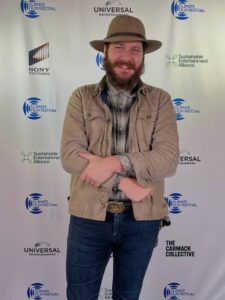
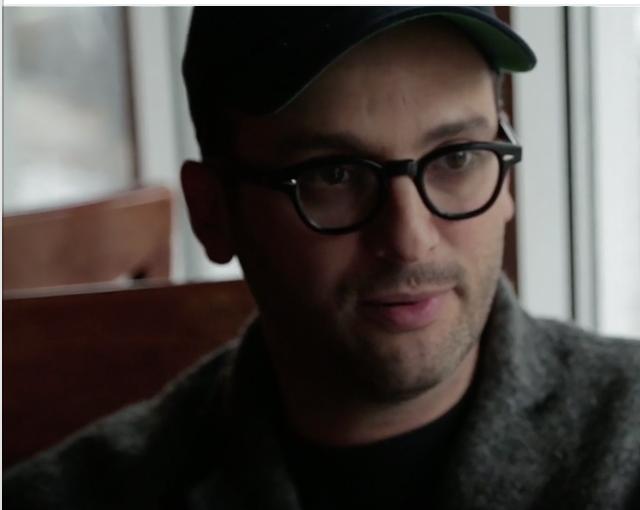
Filmmaker Josh Fox
And we are optimistic that when we do screenings of the film in Turkana, Kenya and Australia it will serve as a fundraising opportunity for the tribes that participated in its making. The Welcome Table also presents an opportunity for the tribes to raise money and awareness, to gain steam, as well as for all the organizations, our co-producers, in the film to show off their amazing work. The entities that brought me to these places are all listed on our website, so you can connect with Amazon Watch, IMPACT Kenya, SOS Méditerranée, or any of the organizations that we feature. We hope that people will donate directly to them.
We likewise remained in consultation with all the participants throughout production to ensure that we didn’t get anything wrong. Ultimately, we tell this story as a team, which is reflected in the choice to have the whole ensemble narrate the film with me. Bottom line is that we are battling extractivism together, the main extractor being the oil industry. I think all involved understand that the film can be a tool in that fight for everyone.
HtN: Can you discuss the impact campaign? Where does the film go from here now that it’s debuted on HBO?
JF: Just like with all my other films, Gasland and Awake: A Dream From Standing Rock, we are looking for as robust an engagement campaign as we can muster. The first part of our strategy is to create house parties and watch parties across the nation so that people who have HBO can bring people to their homes to watch together. There is also a screening guide with questions, conversation topics and other information available at our website.
After this we plan to have our thousand-foot-long table brought to at least 10 cities in the United States and everywhere the movie was filmed. (One of the table events is already slated to take place in New Orleans this fall.) We are actually looking for organizational partnerships right now. Hopefully, out of the house party campaign will grow an organic consensus around where we want to bring the table. The idea would be to do a big outdoor screening with the table serving as a symbol of solidarity, and would possibly include musical performances as well, like a mini festival. We’d want the table to be populated by mutual aid organizations, entities working on climate change and fighting against ICE, so that together we can break out of our silos and develop some kind of solidarity.
Looking to host a screening in your community? Click here for more info…
– Lauren Wissot