




(The Toronto International Film Festival (or TIFF) ran September 10-20 and HtN had boots on the ground covering all the best indie films they have to offer. Check out Chris Reeds’s Elsinore movie review from the fest! Seen it? Join the conversation with HtN on our Letterboxd Page.)
In 1989, actor Daniel Day-Lewis walked off the stage of London’s National Theatre in the middle of performing Hamlet. As one can imagine, this plunged the production into some turmoil. Looking for a new star to take on the role, artistic director Richard Eyre eventually landed on Ian Charleson, a friend of his who was most famous for playing Scottish runner Eric Liddell in the 1981 historical epic (and smash hit and Oscar-winner) Chariots of Fire.
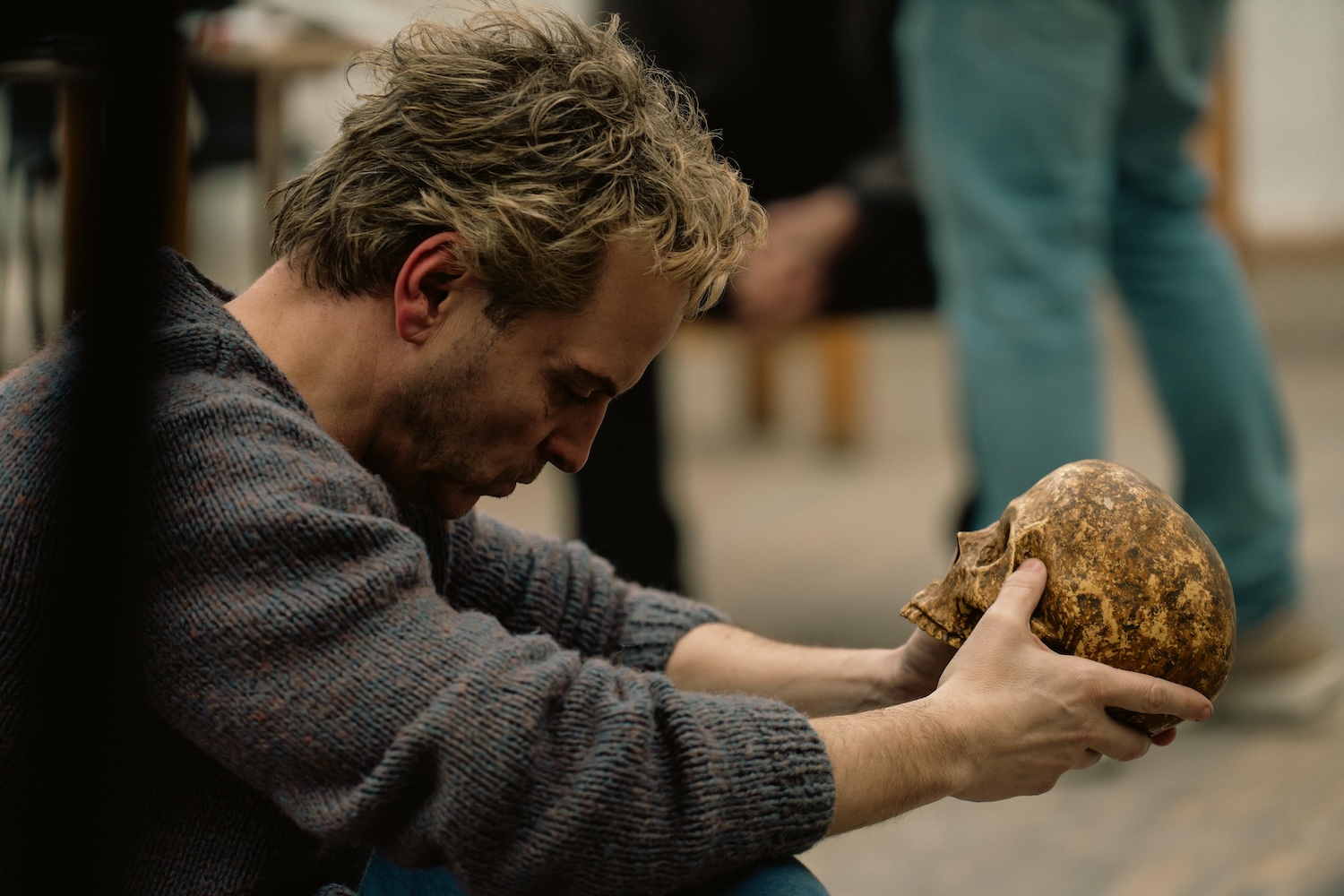
Now, in Elsinore, director Simon Stone (The Dig) revisits that moment through the lens of Charleson’s experience, though the movie is about significantly more than Hamlet. Still, the play holds a central place in the narrative, the vehicle through which we grow to understand Charleson the actor and man. He died in 1990, of complications from AIDS just two months after his National Theatre run. This film is a tribute to his life and work and to the suffering and resilience within the gay community at that time.
Andrew Scott (All of Us Strangers) plays Charleson, who when we meet him is only out to his friends; his parents and the public are unaware of either his sexual orientation or his HIV diagnosis. While others around him begin to have the dreaded Kaposi sarcomas break out in visible ulcers on their skin, he remains at first free of them, continuing in his routine of auditions for films of questionable quality. Recognizable to many because of Chariots of Fire, he longs to do something that will transcend the prison of limited fame (and what to him is that dreaded Vangelis theme music).
So when Eyre (Johnny Flynn, The Score) comes calling, Charleson is more than up for the challenge. Unfortunately, just prior to receiving the offer the sarcomas show up. His time is therefore limited, though Eyre is more than willing to support him.
Sadly, the disease has other ideas. No matter Charleson’s grit and resolve, there’s only so much one can do in the face of a deadly virus for which there is still very limited treatment. Thanks to the suggestion of a colleague, Charleson finds his way to the clinic of Dr. Margaret Johnson (Olivia Colman, The Lost Daughter), where at least they make an effort to try something new. And then, despite Johnson’s disapproval (she thinks he should rest), Charleson throws himself into Hamlet rehearsals.
Elsinore is a simultaneously heart-rending and inspiring affair. Scott is his usual brilliant self, showing Charleson’s talent and wry wit, both of which keep him going. Given how serious Colman remains throughout, I’d like to imagine her, in between takes, bursting out laughing from Scott’s often-hilarious joking. AIDS was, and is, a terrible illness, but the joy of life demands that we be able to enjoy humor in even the worst situations. Otherwise, what’s the point of it all?
Perhaps the most moving scene is Charleson’s parents’ visit to the ward while their son is incapacitated from pneumonia (he later improves enough to continue with the show). Played by Georgie Glen (Jackie) and Peter Mullan (Pearl), Mom and Dad are devastated by the diagnosis, the latter appearing to be quite upset—possibly also because he just learned that his son is gay—though when he breaks down shortly thereafter, it is clear how much he loves Ian. It’s only a brief cameo, but a powerful performance.
The rest of the ensemble is similarly strong, though this is very much Scott’s movie, just as the 1989 Hamlet was Charleson’s vehicle. Elsinore pulls off the trick of handling its emotional content without maudlin sensibility, and the result is all the more poignant because of it. Good night, sweet prince, we now know you well.
– Christopher Llewellyn Reed (@ChrisReedFilm)