

A Conversation with Gar O’Rourke (THE SIEGE OF PARADISE)
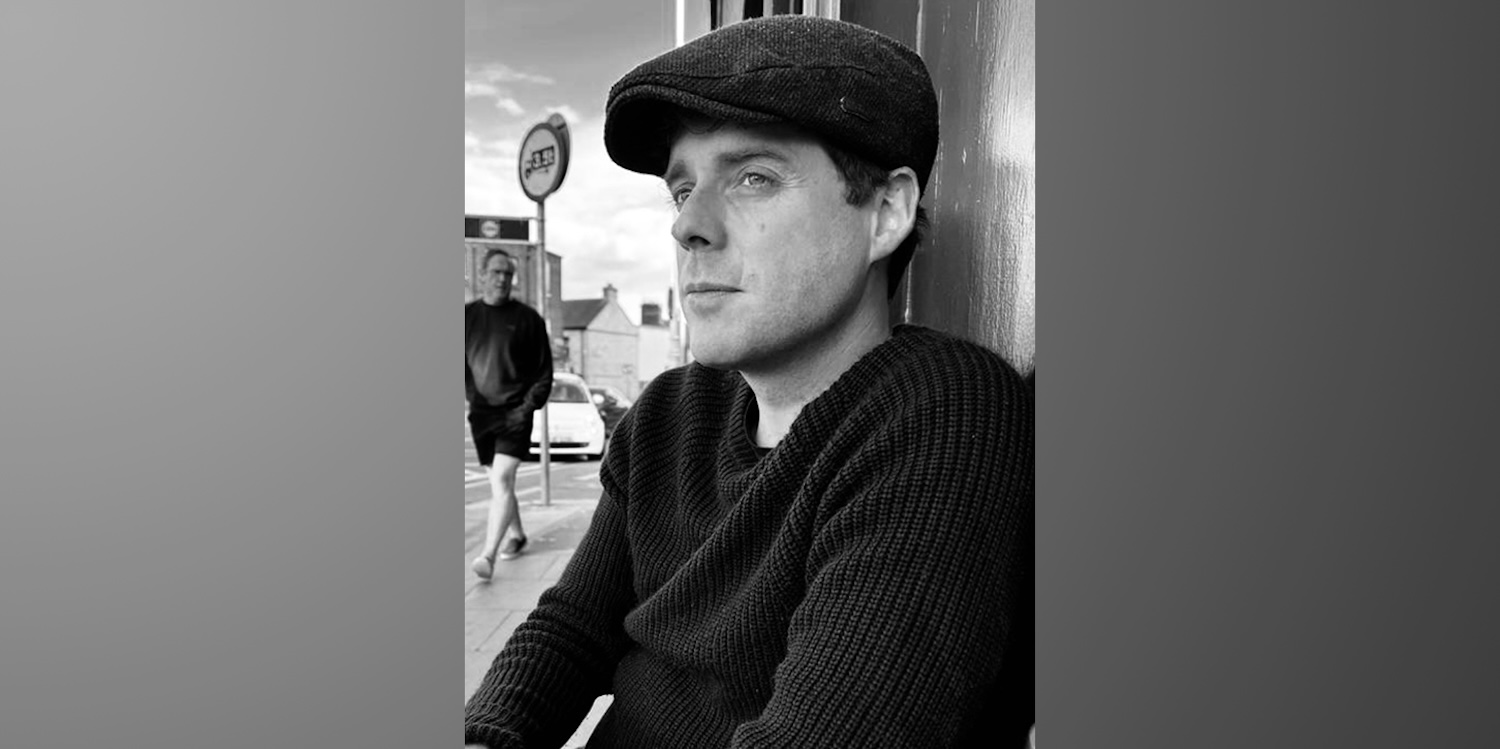
In the documentary The Siege of Paradise, Irish director Gar O’Rourke examines the toll that rapidly rising rates of tourism take on Italy’s beautiful Cinque Terre region. Comprised of five separate villages—Corniglia, Manarola, Monterosso, Riomaggiore, and Vernazza—along the northern Mediterranean coast, south of Genoa, the area is famed as much for its culture as its landscapes. Both are, as the title suggests, under siege from the large number of summer visitors who severely strain the communities’ infrastructure.
O’Rourke follows various locals, as well as an American influencer, in order to paint as complete a picture of the situation as possible. The result is a sharp exploration of what it means to travel in the age of social media and the challenges we face to keep unique sites as unspoiled as possible. I reviewed the film out of the 2026 Tribeca Festival and then had a chance to speak with O’Rourke at the very next festival I attended, DC/DOX. Here is that conversation, edited for length and clarity.
Hammer to Nail: What is your personal connection to Cinque Terre?
Gar O’Rourke: Yeah. How did an Irishman find his way onto the Northern Italian Riviera? Well, my closest connection to Cinque Terre was that I used to date a girl who was from that area a few years ago and she was my entry into Cinque Terre. And so that’s how I learned about the situation there. I didn’t really have any prior knowledge of Cinque Terre other than the iconic coastal images of the houses that we all know very well.
HtN: Which of the five villages was she from?
GO: So, from none of the five villages, actually. There’s a town right beside called La Spezia. And this is actually where most of the tourists enter into Cinque Terre because they either come off by cruise ship or they get in there by train. Very few people stay in Cinque Terre, actually. So yeah, she was from right beside, but she remembers growing up and visiting the little villages quite often as a kid and just seeing the exponential increase in tourism over the last few decades.
HtN: Why do you think there’s been such an exponential rise in tourism? Does it track, globally, or is it specific to this area?
GO: I mean, let’s be honest, tourism is at a higher point right now than it’s ever been, globally. But with regards to Cinque Terre, think about all the different shifts in media that we’ve had over the years, right? I mean, one of the first big points that got everything moving was an article in the New York Times by Rick Steves where he had “discovered” Cinque Terre and that really kind of brought Cinque Terre into the consciousness in North America for sure, but also in Europe, as well. And that’s when the first wave of tourism came. But then once that happened, they started to really try and market Cinque Terre to the outside world. They knew they had a good thing going. They were like, “Right, we need to start paying for advertising.” So they really marketed their region a lot.
But probably the real peak of tourism did not happen until really within the last 15/20 years. And it’s the advent of social media; it’s the advent of smartphones. We went from seeing the image in travel agents’ offices in the early ’90s, where you’d see the shot of Cinque Terre and be like, “God, I’d love to get a ticket there,” to seeing it all the time: on your phone, your cousin went, they’d share a photo, and with social media now, everyone is just exposed to all of these beautiful places in the world all the time. So I think social media has probably been the biggest factor in tourism in Cinque Terre and the rest of the world.
HtN: And you certainly talk about that in your film, but let’s go back and talk about how you recruited the subjects of the story. How did you pick these people?
GO: The way that I go about that is quite organic. So with all the local characters, when I first started thinking about this as maybe being a great film to make, you have to go there, you have to spend time there, you have to meet people there. So I would go and I’d have a glass of wine with the local old boys sitting on the steps or I’d see the ladies out there, and being Irish, we talked to everybody, and Italians like to talk, as well. So I’d always have a translator. My Italian’s still pretty rough right now, but I made an effort of trying to talk to as many people as I possibly could over a year and a half/two years of the research that I did. And you look at your characters in the film kind of as a football team and everybody needs to offer something slightly different or a different perspective or speak truth to something that’s a little bit different than somebody else’s.
There’s a lot of brilliant and lovely people in Cinque Terre. It was difficult to actually decide on the final number of people that you film. And with our tourists, we were looking for people who were there already, but also we found that the influencers—like Grace and Isabel, who are two of the main people in our story, actually—that was a long process to try and find them. It was quite difficult, actually, because it’s pretty hard to intercept influencers. It turns out they’re not as easy to catch as you think. And we had a team of multiple people doing research trying to reach out to influencer agents and travel agencies and all this kind of stuff. So it was a long, long process and I think my producer Ken talked to about 70 people and I remember talking to Grace for the first time over a Zoom call.
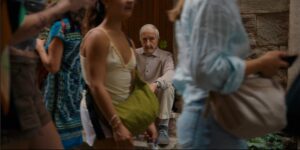
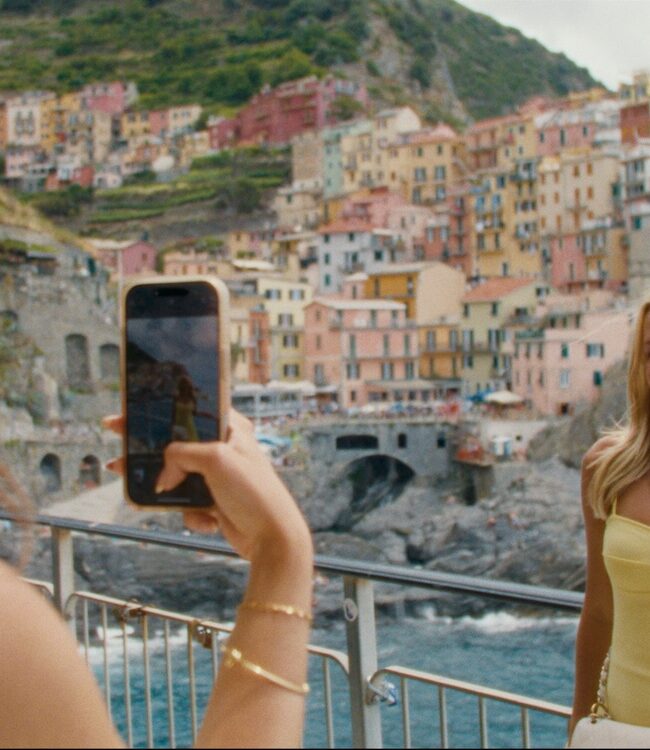
A still from THE SIEGE OF PARADISE
Grace is a person who’s completely absorbed in influencing. Every moment is an opportunity for content and she’s always on. This is her job, so she’s always working. We all have different jobs. Her job is to get content all the time. That’s what she does. But I was really impressed by her openness in those early Zoom calls. She was very, very open to talking about her experiences being an influencer and she knew from the very beginning that she was not going to have control over her image, which, if you’re an influencer, you need to have control over your brand and how people perceive you. And I told her very clearly, “Look, you’re not going to have control over your image here,” but I hope I made sure that she understood what the vision of the film was going to be and what we were going to explore.
So it’s very nice to see her really love this film, actually. And she was at the premiere in Tribeca a few days ago with her family, and Isabel was there, her friend in the film, with her family. It’s very nice for them to see and understand the bigger picture of what the film was trying to say.
HtN: So your movie is, as you mentioned, in part about how social media affects how we view the world. Have you found that in making this film and in analyzing that within your movie, that that has made you think more about how you personally travel? It certainly made me think about being the umpteenth person to go to that famous view and hold your phone up for a selfie, which is what people are doing in Cinque Terre. And, obviously, what’s more important is to just be present and to enjoy it, which is what your vintner in the film, Bartalo, is all about. Has this made you think more deeply about your own travel?
GO: Yeah, a little bit. I mean, I’m kind of the same person I was a little bit before making the film and it’s probably why I made the film because I was a bit frustrated at … I’m not a perfect tourist, you know what I mean? I’m probably as annoying as every other person, from a local’s point of view, but most people like having tourists. Most local economies like seeing tourists come. I grew up in the west of Ireland in a very nice place called Clifton, which is in Connemara. And we always had tourists there in the summertime, a lot of American tourists, and we used to love seeing the tourists come because we’d meet someone from a different place and we’d have a chat and everything.
But at that time it was all about the conversation. It was all about just having a chat with someone, connecting with someone, asking them: “Do you need directions? Do you know where you are? Can I tell you a little bit about the place?” It isn’t rocket science to know what a good version of travel looks like, which is to just be engaged and curious about the place that you’re in, be respectful towards people and look for the cultural experiences. It doesn’t mean you have to go to a vineyard and harvest wine, but it’s just like … I love that scene in our film where Grace meets Bartalo and they just have a lovely conversation. Bartalo’s talking about when he was one-day-old and he drank wine for the first time and that’s what it’s all about. It’s just about having nice conversations with people and connecting with people and I just think that’s the main reason why I made the film.
I think phones have made the world so accessible, so known: you feel like you know everything about where you are already. You’re on Google Maps, you don’t need to ask for directions, you know where everything is, you’re in your own little lane the whole time. If you want, you don’t need to have any engagement with a local person. And I hope, in some small way, this film just reminds you that travel should be about those little conversations that you have with people, putting the phone down just for a minute, maybe, being in a place, being present. Don’t get me wrong, when the sun sets there, I’m the first guy taking the photo and trying to make it look amazing, but at the same time, just remember to try and be a little bit present. And I’m not here to lecture people, by the way. I’m not a perfect tourist, but I just think that with social media, people care a lot about the presentation of the holiday, right? More sometimes than the experience of the holiday.
HtN: They care about documenting the fact that they’ve been someplace, and I’ve been guilty of this, rather than actually being in that place. I actually was really worried for Bartalo when I saw that Grace was meeting with him because he’s such a gentle soul and I was like, “Please, Grace, stop filming, just be there.” But it ended up working out okay. So I was happy for that.
GO: Yeah. Not to give anything away, but when you see this moment where there’s two absolute opposite worlds … you’ve got Bartalo, old school, classic Italian man, like zero tech in his life. Then you’ve got Grace, who represents, I guess, social media and hyper-connectivity and very different perspectives and points of view. But of course, everybody falls victim to Bartalo’s charm and I think he’s just a very inspiring person to meet and be around and he represents the best of Cinque Terre, like the people who really have this strong identity with their home, and people who are of the land and work the land and I think someone with a lot of integrity, and I think it was really important to show an example or two of people who embody a place, you know what I mean? And kind of represent it in a way that that’s what you look for when you go to a place. The reason why we travel anywhere, Spain or anywhere, is you want to meet someone who’s from that place, specific to that place, who can also inspire you a little bit, or you come away feeling like maybe you think differently about something after meeting them.
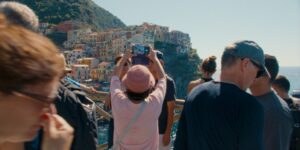
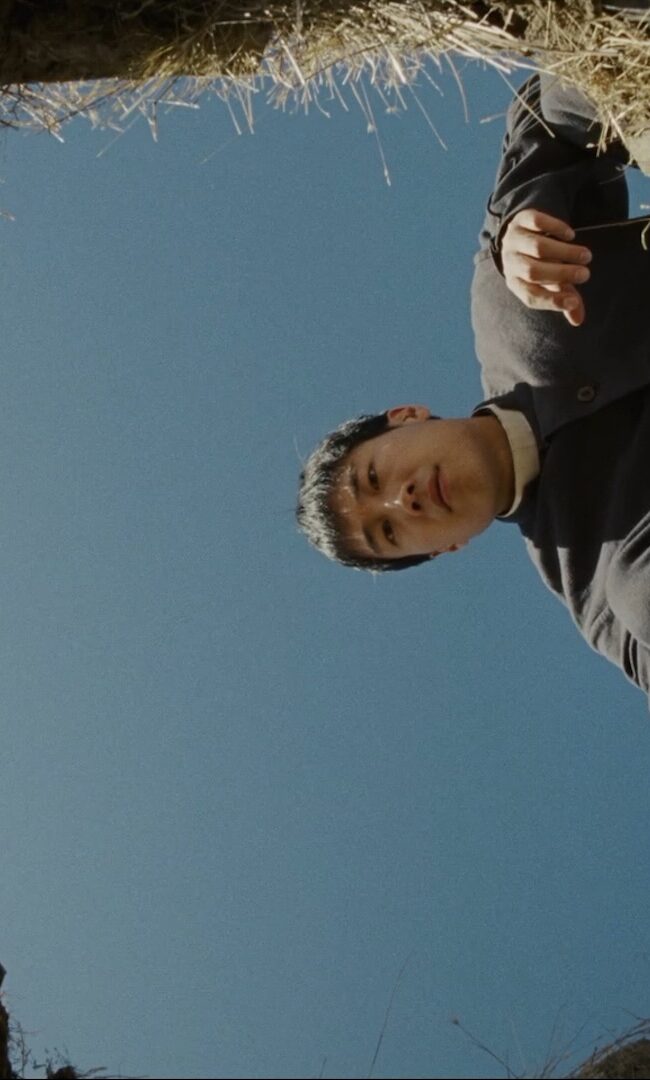
A still from THE SIEGE OF PARADISE
HtN: That’s a lot of what the mayor, Fabrizia, is talking about, too, that loss of cultural identity if there’s a sameness everywhere. But I want to ask you some specifics about filming. First, I noticed looking at the press notes that you shot in an aspect ratio of 2:1.
GO: Really?
HtN: That’s what the press notes say.
GO: It’s interesting you asked this question because originally I thought I was going to shoot in 4:3 and the way we shot throughout the whole summer was we had a monitor where we had the grid of 4:3, but we had the widescreen, as well. We knew that we had to provide a widescreen version of this film because the funders asked for widescreen and then we wanted to do our own 4:3 version. But when it got into the edit, I realized that the wider aspect worked better for this story and this place because while the 4:3 would give a sense of claustrophobia, which was what we were trying to communicate with that narrow frame—this feeling of being boxed in—it felt more expansive as a location once you embraced the widescreen a bit more.
I’d love to say I was the tyrant director who only went by his vision from the very beginning to the very end, but in the editing process, you have to be open to surprises and I was very open to that surprise because we were always going to shoot this 4:3. So yeah, these things are like a process. You look at it, you think, “Is this giving the right feeling of what you’re trying to communicate?” And then if you’re able to remain open to it, maybe another approach can work better.
HtN: Your cinematographer is a man by the name of Lukas Gut. And I think his work is really amazing. What kind of instructions or guides did you give him for shooting this? And if I may ask, also, what did you shoot on? What was your camera of choice?
GO: We shot on a Canon C400. That was our main camera and then we had a smaller B-camera for days where we had to move around a lot, and that was a C70, also a Canon. We shot on some Cine Zooms; I think they’re called Laowa Rangefinders, and then a bunch of other smaller lenses and stuff. But Lukas is a great DP [Director of Photographer]. I mean, Cinque Terre’s a very physical place to work and there’s a lot of climbing and Lukas actually made this customized backpack. He’s Swiss, as well, so climbing with heavy gear on your back kind of comes second nature to this ox of a man. (laughs)
But it was a very demanding place to film. It looks so idyllic when you look at the movie, but it’s a very demanding place to film because cars can’t get anywhere near where you need to shoot. So you’re always on foot, you’re always carrying everything. You’re going up to these vineyards, you’re going up hills and steps all day long and it can get up to like 35, 36, 37 degrees [Celsius] there. There were a few days that were like 38º, so it’s pretty brutal and then you put a load of crowds in on top of that.
But when it comes to the cinematography, I was really clear from the beginning on the style and visual grammar of this film and Lukas and I worked together a lot on that and creating a kind of rule book, like, “This is when we shoot things, this is how we shoot things, when the camera moves, how the camera moves” and kind of defining the language, the cinematography before you film anything. It was a pleasure working with Lukas and I love great visuals and think visually all the time. So it was a very good collaboration to have Lukas there on the project.
HtN: So, going back to when you were saying that Grace was there for the premiere at Tribeca, have you screened this to everyone who is in the film and, if so, what were their reactions to it?
GO: Yeah, we’ve screened it to everyone and their reaction’s been really positive, actually. It’s been very nice. Maybe the most beautiful reaction was from Bartalo.
HtN: I love that man.
GO: Yeah, he’s a really great human being and he sent a really beautiful email. I won’t tell you everything he said in the email, but it was just very emotional and very touching. I think it meant a lot to him so that was very, very nice to see that. And Grace and Isabel loved the film. I think it’s probably a bit worrying for them. Someone else has control over your message, your brand and your image and stuff, but I’m really glad that they enjoyed the film from the very beginning, like Grace has actually been posting it on her Instagram, promoting it. It’s great to have an influencer promoting your film! (laughs) And then, yes, the other locals who’ve seen it, they really love it, so it’s great. I’m really looking forward now to the people who are from Cinque Terre being able to see it on a big screen because that’s what it’s all about.
HtN: Well, I think you definitely showcase how beautiful the place is, so hopefully they’ll like it, and you present a range of views about the tourism industry, so that’s great. I want to thank you so much for talking to me.
GO: Thank you very much!
– Christopher Llewellyn Reed (@ChrisReedFilm)