




A Conversation with Harry Dodge & Silas Howard (BY HOOK OR BY CROOK)
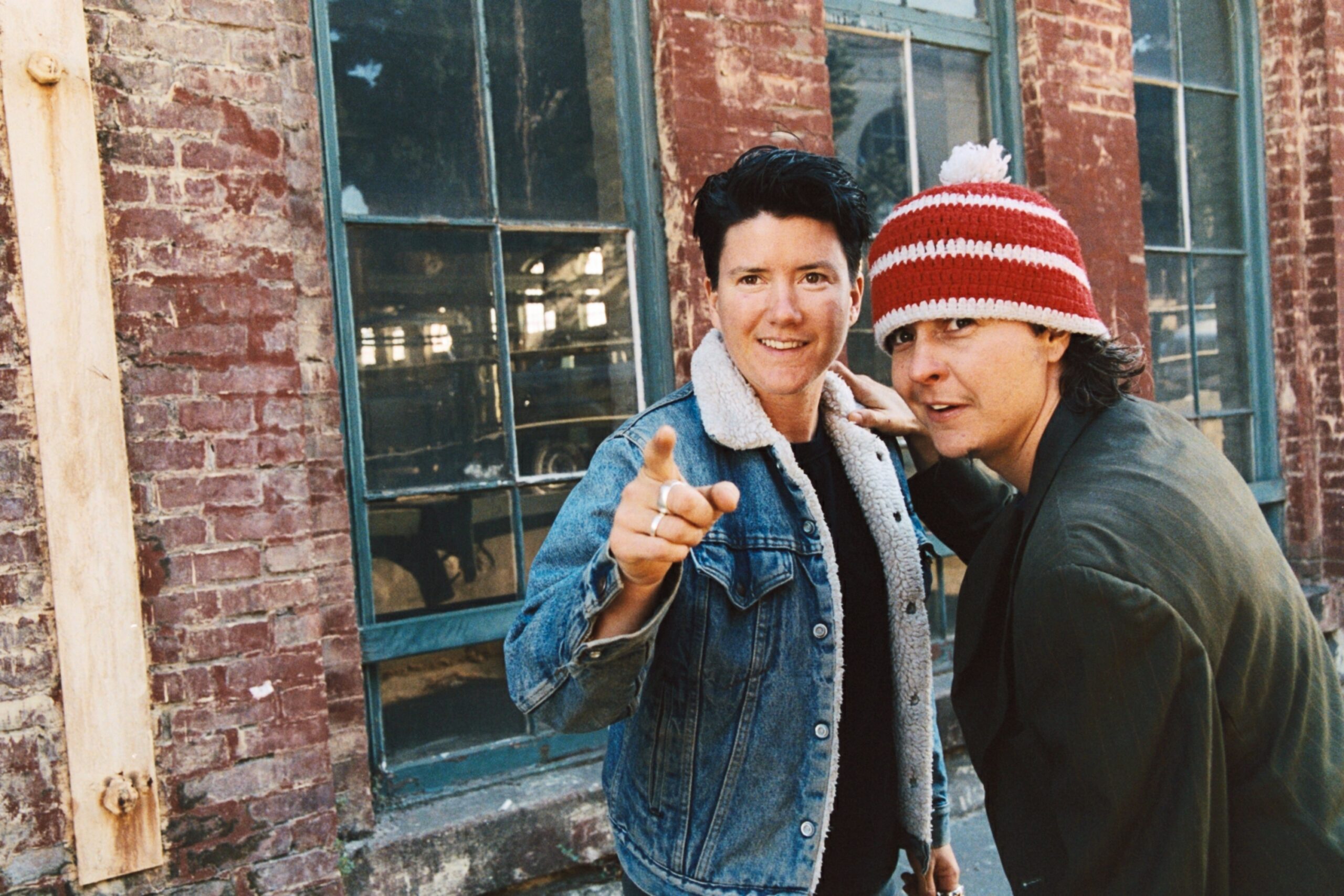
By Hook or by Crook arrived in 2001 as the kind of film queer and trans cinema needed before the culture knew how to ask for it. Written, directed by, and starring Silas Howard and Harry Dodge, the film emerged from a DIY queer art scene in San Francisco rather than from an industry in LA newly eager to ‘represent’ the queer life that they had newly discovered in the Arthouse movement. That difference matters. By Hook or by Crook offered something rare: a scrappy, tender, funny, unruly portrait of gender-expansive life that did not pause to explain itself to a straight audience. It trusted its world, its language, its bodies, and its friendships. In doing so, it became a landmark of queer and trans independent cinema, premiering at Frameline in 2001, screening at Sundance in 2002, and later becoming a cult touchstone for audiences who recognized in it a form of trans and butch self-representation made from the inside out.
This is one of those rare films that does not simply represent queer and trans life; it moves with it, hustles alongside it, and refuses to translate it into respectable terms. It understands cinema not as a request for inclusion, but as a tool for making other lives visible, livable, and imaginable. Its importance in queer and trans film history lies partly in its timing — arriving long before “trans visibility” became an institutional buzzword — but even more in its attitude. By Hook or by Crook does not ask permission. It does not stage gender variance as a problem to be solved, explained, or redeemed. Instead, it offers a gloriously anti-authoritarian vision of queer life as fragmentation, fugitivity, friendship, and refusal.
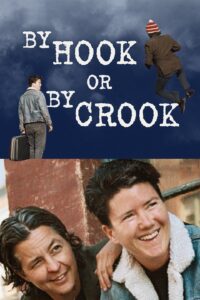
The film follows Shy (Howard), who bails on small town life after his father’s death and heads to San Francisco with a loose plan to remake himself through a life of petty crime. There he meets Valentine (Dodge), an unpredictable, magnetic adoptee searching for the mother never known. Their bond quickly becomes the film’s emotional and political center: part buddy comedy, part road movie, part chosen-family manifesto. Together, Shy and Valentine drift through scams, grief, fantasy, and tenderness, building a world out of whatever scraps dominant culture has left behind.
What makes By Hook or by Crook still feel so electric is that its rebellion is not merely stylistic. Its anti-authoritarianism is ethical. The film rejects the institutions that claim the right to name, discipline, classify, and contain queer and trans bodies — family, law, medicine, gender, narrative itself — and replaces them with something messier and more sustaining: relation, disassociation, and survival. It is funny, wounded, stubborn, romantic, and beautifully ungovernable.
Thanks to acclaimed boutique distributor Altered Innocence, the 25th Anniversary Theatrical 4K Restoration Release of By Hook Or By Crook will play theatrically June 12th-18th in NYC at Anthology Film Archives and June 16th in Los Angeles at Vidiots, and then expand to additional cities throughout the US. Digital and physical releases (DVD & Blu-Ray) will follow later this summer. More info here.
I had a chance to chat with Harry Dodge and Silas Howard shortly after the premiere of the restoration at the Academy of Motion Picture Arts and Sciences.
Hammer to Nail: So, I hope you are looking forward to some hardcore media studies, because I’ve run off to Canada to get a second graduate degree.
Harry Dodge: Bring it on.
HtN: Congratulations on getting the movie back out there. It looks gorgeous.
HD: Doesn’t it look nice?
HtN: One of the things I love about the film is like it starts, and then it starts again, and then it starts again. Shy keeps saying ‘this is about when it started.’ ‘Oh, this is when it started.’
Silas Howard: We were having trouble starting it, could you tell?
HtN: But it’s sort of like the way you start telling a story, and you realize that, you know, you left something out or you realize that actually this is the important part. When you are in the middle of something, you kind of understand it a little bit better. It makes me think a lot about queer temporality, you know, that time works differently for us. So, tell me a little bit about the structure of the film and, and how you held it together.
SH: Well, the ending we always knew, but the beginning? We would be editing, and Harry would go: “put on this shirt and go lift these bricks,” and we’d shoot something else to add to the beginning.
HD: We shot for about 30 days; right? Like, ten to nineteen hours a day, you know. We had an RV that we drove around San Francisco, so we had a place to pee all the time. And we put our costumes in there. And we could get warm if it was cold. it’s always cold in san Francisco.
So when we edited the first draft of that, it was three hours long. We had Eileen Miles – a sort of you famous poet and writer in New York City – to talk about story and structure and I was like ‘what do you think we could carve out of this?’ And Eileen was like ‘I love it just as it is.’ And I was like, hmm, not sure. Because there was an idea of squishing our weird queer minds into a quote-unquote conventional feature film narrative form that was ‘what if everything is wild about this except for three-act structure.’ That there’s a beginning, a middle, and an end. Something about the ending matches something that was a question asked in the first act. Stuff like that.
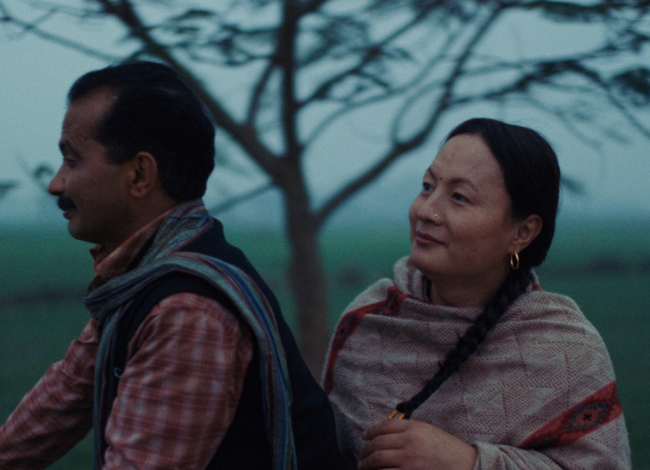
A still from BY HOOK OR BY CROOK
So there were conventions that we were trying to teach ourselves; there were conventions that we were experimenting with. Um, and then, and then, trying to flout them at the same time. It became clear that there were certain things that were working, there were certain things that weren’t working. And so we needed to go back and reshoot a bunch of things. And some of the Superman motif. I tried to save my dad, but I couldn’t save him, so I’m going to try and save you, that nagging Messiah complex. All of that was something that we needed to bring out.
And I think, Silas is a storyteller. I’m a storyteller. And it’s true that anybody – queer or not – is telling a story, if they’re good at it, they reengage you: ‘this is the part.’ So It could be a cheap trick, but there’s a kind of storyteller logic, the voiceover, and we’re like, ‘this is really where everything started.’
SH: It was also a time when we nobody was really telling our stories. There weren’t stories that we saw reflected so there was something comforting and powerful being able to just literally say ‘this is the story. Here’s where it we started.
HTN: Because we’re looking at the film 25 years later, have you gone back to any of those places that the montages start like, Oakland standing in for Kansas, those kind of starting off points since you shot there?
SH: Well, everything is such a personal – like because we had no money, every single article of clothing was our personal wardrobe or somebody’s friend’s personal wardrobe. The cars are (producer) Steak’s grandmother’s car and my neighbor’s car. All the cameos are these amazing artists. When I watched it again at the restoration screening at the Motion Picture Academy, I was like, oh my God; all these amazing people that are sprinkled throughout the film who have these incredible careers.
HD: I went back to watch the movie at one point, I had been hearing a lot about how much San Francisco has changed, but there’s also a lot of San Francisco that looks the same as it used to, especially along Mission Street.
SH: Yeah, we went by our old cafe, the same tile in the front is there. The same tile, yeah. It was a bit of a love letter to San Francisco, though, because, you know, the first tech wave came in and the rents have never dropped since then, even though that boom busted.
HtN: The film plays with Wizard of Oz as a reference and calls it out several times during the plot. Given the prominent place that Wizard of Oz has in the queer canon, can you tell me about the influence of that film?
HD: Yeah, like I said, we read a lot of books in order to learn – quote unquote – learn ‘how to make movies.’ And The Wizard of Oz lodged as this kind of trope where there’s a character introduced and there’s this kind of idea of ‘normal life’ that goes along. It’s not good enough, you’re not maybe happy there. But now, boom, the tornado comes and you’re thrown into the weird world. And then you spend the rest of the movie trying to get back home. And so there’s a kind of queer idea right in that. When you go into the weird world, you’re suddenly in this kind of queer space.
SH: The tornado of queer, is that what you’re saying?
HD: Yeah, the tornado of queer. And so I think that’s interesting. There’s something about the Technicolor and the kind of trio of, you know, weirdly gendered, guy in the tin, and like who are these guys, you know?
SH: And also not that long ago, with the Hays Code, things were coded and we had to either understand that that was queer and it was cut out like in Times Square (1980) or just it’s queer because it’s funny and they don’t know they’re being queer. But, you know, we’re always appropriating stuff from mainstream because there wasn’t much in the mainstream for us.

Harry Dodge, Stanya Kahn and Silas Howard at the Sundance Film Festival in 2002.
HtN I was thinking about how the film it kind of starts with this idea of the loss of family, the death of Shy’s father and not having a mother. And then by the end of the film, having rebuilt the family. So it’s still that idea of going home after the tornado of queer, but when you get to home, it’s a different kind of home.
SH: Yeah, when the three of them go to Valentine’s birth mother’s, yeah, that felt very much like a new home, actual home was built.
HD: Yeah. That was a sort of classic found family, queer narrative for sure. Shy showing up, not knowing where to go and sort of being taken in by these odd people. Odd, but totally loving and ready to ready to roll. And that was definitely my experience in San Francisco Silas’s experience in San Francisco as well. And in some ways the story of our friendship as well. So there was a little bit of like our rapport that we, we knew we could bring in. Because, you know, cameras are weird.
SH: We cast ourselves as a lead in our own movie, so it could have gone very awry.
HtN: But I think one of the things about casting yourself and writing the script just for you to play that makes the movie so special is that you don’t ever feel like you need to explain to the audience who you are. Like this isn’t a ‘let’s teach all the straight people about gender nonconformity’; it’s almost like we could care less if the straight people understand. this is our story. And I think that’s why, you know, it has held such a prominent place in people’s hearts.
SH: It’s very powerful to not explain yourself if you’re marginalized. It’s like a super big rule that we’ve broken and it makes the humanity more accessible, I think. People don’t like to be explained to, it turns out. It keeps people at a distance.
HD: Also the idea was to take out the ‘man’ characters and put us in and just have some people whose gender you don’t get to see on screen that often, you know, and see what happens. So I think, you know, not explaining was a huge part, but it was because in our community in San Francisco, we were so surrounded and so deep that, and we had grocery stores, we had movie theaters, we had video stores, we had whatever you needed, had the queer place to go for it and we were so we never had to leave —
SH: We were in a bubble. We were navel gazing and in our own bubble and created our own vernacular.,
HD: These people were smartest, funniest, most hilarious people. You know, hundreds, hundreds of people. And when it started to disperse, the kind of queer diaspora that happened after 2000, it was a rude awakening to see how fucking boring most people are. I thought the whole world was just full of hilarious, amazing adults. But not so.
HtN No, It’s only the queer people, yeah. So just a few years before the film came out, Berlant and Warner published “Sex in Public” and suggested criminal intimacy is a essential aspect of queer worldmaking and resistance. Your film seems to be in direct conversation with that idea as Shy plays with being a criminal. Talk to me about the ways the film deals with life outside ‘civil society.’
SH: Yeah, I mean, for one thing, all the scams in the movie are real and they work. Some of them don’t work anymore. I think I romanticize thievery and outlawishness. And also if wake up in bed in the morning and you’re illegal, like it’s not that big a step to product liberation and other ways of being outside the system. It was where we lived pretty comfortably. And yeah, it just felt like: The system was there to kill us, so why would we want to be part of that system? Why would we not just try to dismantle it? And also, you know, I think the impact of the AIDS pandemic before the good meds came out was a huge impact on us, I would say.
HD: Yeah. I mean, there was a bright line between civil society and the way civil society felt about our community. It was a bright line. there was not even a second thought about, I mean, we were very ethical. We were very moral. We were very kind, but on the other hand, there was a bright line, definitely, and we were not necessarily putting a lot of effort into following rules set out by mainstream society. In fact, that would have been a mistake. We would not have survived. So right away, like you’re saying, you wake up in the morning, you’re criminalized, there’s a way that you need to go out into the world. And some of that was scamming and sort of taking from – Robin Hood style – taking from the rich, giving to the poor kind of feeling. So we did, you know. start the coffee house that we ran with a bunch of scams. And we definitely funded a little bit of the movie with a bunch of scams. So there was a way it was narrative and we knew it was narrative and we were putting it in and it was a sort of like a caper movie. And then there was a way that it was also just drawing from our experiences as kind of a mischievous, marginalized, anarchist-style people.
SH: Our mentors, you know, anarchism and all of that. Bo Brown was a mentor or if somebody had met someone had been part of the George Jackson Brigade and had been known as a gentleman bank robber; they were butch, they’d wear a nice suit, and be real polite as they robbed banks for the name of… ending racial injustice. And I do feel like we protested for years and things changed. We felt like we could change things, you know.
HtN: So perfect segue into the question of 25 years later: you’re looking back at the movie, but we’re also living in a world that is actively trying to erase gender-nonconforming voices and erase our history and erase our existence. So if you talk about waking up in the morning and feeling illegal, what’s it like to wake now, 25 years later with this movie and feel like, “you know, society still hasn’t moved far enough”?
SH: Yeah, it’s a mix. I mean, there’s there’s days it just feels like, what? To pick on the most vulnerable parts of our population? Is just as devastating. I don’t know. I mean, I know that it was terrible in my youth, but it drove so many beautiful things to come out of that out of necessity. So I guess I try be optimistic in the apocalypse. Apocaloptimist.
HD: Apocaloptimist. I love that. mWe were used to it, and we were under the radar. There was some kind of weird world building that was going on under the radar, and it felt spacious. There was something—because we had never known anything else, we were, like, busy building these underground things. And figuring out how to do it and just having a lot of fun while it was happening, like keeping each other good company, keeping each other laughing. Humor was a huge part of our power, you know, making fun of mainstream people, making fun of mainstream culture, satire, parody. And what I wanted to say is, right now, we’re in backlash. So we’re losing rights. But I think what’s also different is like, what’s different for me, being old – older – being grown, I’ll say grown, being grown is that I also know how powerful we all are and how sturdy we all are. So there’s a part of me that’s like a little defiant, like the little mouse with the hawk coming at him or whatever. Like, yeah, bring it on, fucker.
SH: Yeah. I would just add to that. Success was nowhere in sight; so we couldn’t fail. Really, I think that was a great relief. Nobody expected anything from us. We had to build everything ourselves, and there was a lot of freedom in that. It was like no assimilation, no apology. Assimilation is a real bear it turns out. And then, you know, you know, I’m directing on TV; I’m getting a little into the machine and pushing stories, but it’s still not—we’re not in control of it. So the backlash doesn’t surprise me fully. But it is, it is important to remember what really matters, which is the community. I mean, it is how we made this film. And it’s how I’ve been able to do anything. A value of my life is, you know, having a community of people going where it’s warm and, you know, taking turns being the important person in the room and all of that is like powerful. It’s powerful.
HtN: The poet Cameron Awkward-Rich, who’s transmasculine, theorizes that dissociation is almost a precondition for trans male identification. a coping mechanism. He says disassociation functions as a formal strategy in transmasculine literature, producing fragmentation, doubled consciousness, and narrative discontinuity. He doesn’t mention By Hook or By Crook by name but it certainly sounds like he has it in mind. The way the characters in your film cope to make it through the day and to tell their own stories and to live their life in time and thinking about the past. And do you have any ideas about fragmentation and the use of sensory images and the refusal of tidy stories to show the trans masculine ability to survive in the world?
SH: I think as I’m trying to fit into the world, there’s just a part of me that does not fit in, and I’m not trying to hide that part, it’s just I can’t not… I have no choice about it. And fragmentation makes me think about, you know, any disruption, trauma, you know, all of the things that many of us go through, the fragmentation feels like part of that way of telling a story. Like, bad acting, like, as a man before, in my life, before I transitioned and was actually passing, then I was like, whoa, this shit’s different. Now I have to, like… really, think about that. But, but there’s this way of, like, playing roles and not really being seen in society. there’s a dislocation. When I finally transitioned, I felt dislocated from my community because I was passing as a straight guy, because my partner is femme, and so that was weird, because I just wanted inside to feel better, but then I was having this weird, like, ‘bro love’ everywhere, and I was not into it. And realizing all this performance that they were doing for each other, and how terrible that was, and how misogyny is really fucking… terrible. and real. Play-acting it; not necessarily enacting it. But um, but yeah, it’s interesting question. I think it’s just getting me going with thoughts, but not any conclusions necessarily.
HtN: Well, that’s one of the things he exactly talks about, about the way after you start passing, you’re taken out of your own community and you don’t fit into the community that you’re supposed to go into. And so there’s this real sense of being kind of two people at once and not being able to have those talk to each other.
HD: Like a fish in water, I don’t know what it’s like to be somebody else per se, you know, and I feel like there’s something about my brain kind of popping around, like I’m thinking a hundred things at once, and it feels more like a tree, you know, like a tree or, you know, \ some kind of super power about lateral thinking and lateral association. You know, my bread and butter is art school. I go into people’s studios and I listen to them talk about some weird sculpture that they’re making or these paintings or whatever, and I listen for a while and my brain just like produces 40 thoughts. And then I go, well, this makes me think of da, da, da, you know? And as I’m starting to learn more about the way different people think, Not everybody’s thinking 100 things at once and has to take 99% of my energy to make one thought. By Hook or By Crook, the temporal displacement is kind of in the convention of a flashback, right? There’s ways we do that where we’re using Super 8. So movies have done flashback and voiceover.
But I do feel like, in my art, sometimes people are a little bit like, “Why the fragments?” And I’m a little bit like, “Is it fragmented?” I didn’t know that. I didn’t know that was happening, but it is true: if I remember really liking stand-up when I was a kid and they’re just going from story to story, to story, to story. And they’re like, “Speaking of, speaking of,” now we’re talking about a goat. Now we’re talking about the bumper of a car. Now we’re talking about license plates. Now we’re talking about chocolate chip cookies. That’s perfectly fine with me. But the minute like Steve Martin got into like, you know, movie land or, you know, and suddenly I’m like, (yawns) oh plot like do we really have to be in story right now? I kind of think of it like that, like the excitement of the leap basically. I don’t think of it as fragmentation. Space is the interval that’s absent and the excitement of leaping over that space Feels like there’s there’s a lot of life there and I don’t it and it could be queer, but I’m not necessarily aware of that i’m more thinking there’s something about this interval this absence that’s full of presence and full of charge and full of possibility full of world building possibilities whatever happens in there it feels feels like the exciting like where i get all of my artistic Verve, excitement, charge, life force: what have you?
HtN: And if that response isn’t exactly what I’m talking about I don’t know what is. So I think that’s a good place to stop.
Future Playdates
- June 12 – 18 / New York, NY @ Anthology Film Archives Q&A with the filmmakers June 12th & 13th
- June 16 / Los Angeles, CA @ Vidiots Q&A with the filmmakers June 16th
- June 18 – 21 / Seattle, WA @ Northwest Film Forum
- June 19 / Houston, TX @ The River Oaks Theatre
- June 20 / St. Louis, MO @ Webster Film Series
- June 21 / Santa Ana, CA @ The Frida Cinema
- June 23 / Brooklyn, NY @ Nitehawk Williamsburg
- June 24 & 28 / Amherst, MA @ Amherst Cinema
- June 25 / Edmonton, AB @ Metro Cinema
- June 26 – July 2 / Chicago, IL @ Gene Siskel Film Center
- June 30 / Las Vegas, NV @ The Beverly Theatre
- July 15 / Nashville, TN @ The Belcourt Theatre
- July 19 / San Francisco, CA @ Roxie Theater Q&A with the filmmakers July 19th
- August 5 / Austin, TX @ Austin Film Society
– Bears Rebecca Fonté (@bearsrebecca.bsky.social)