





A Conversation with Garth Jennings & Jarvis Cocker (PULP: WHAT DO YOU DO FOR AN ENCORE?)
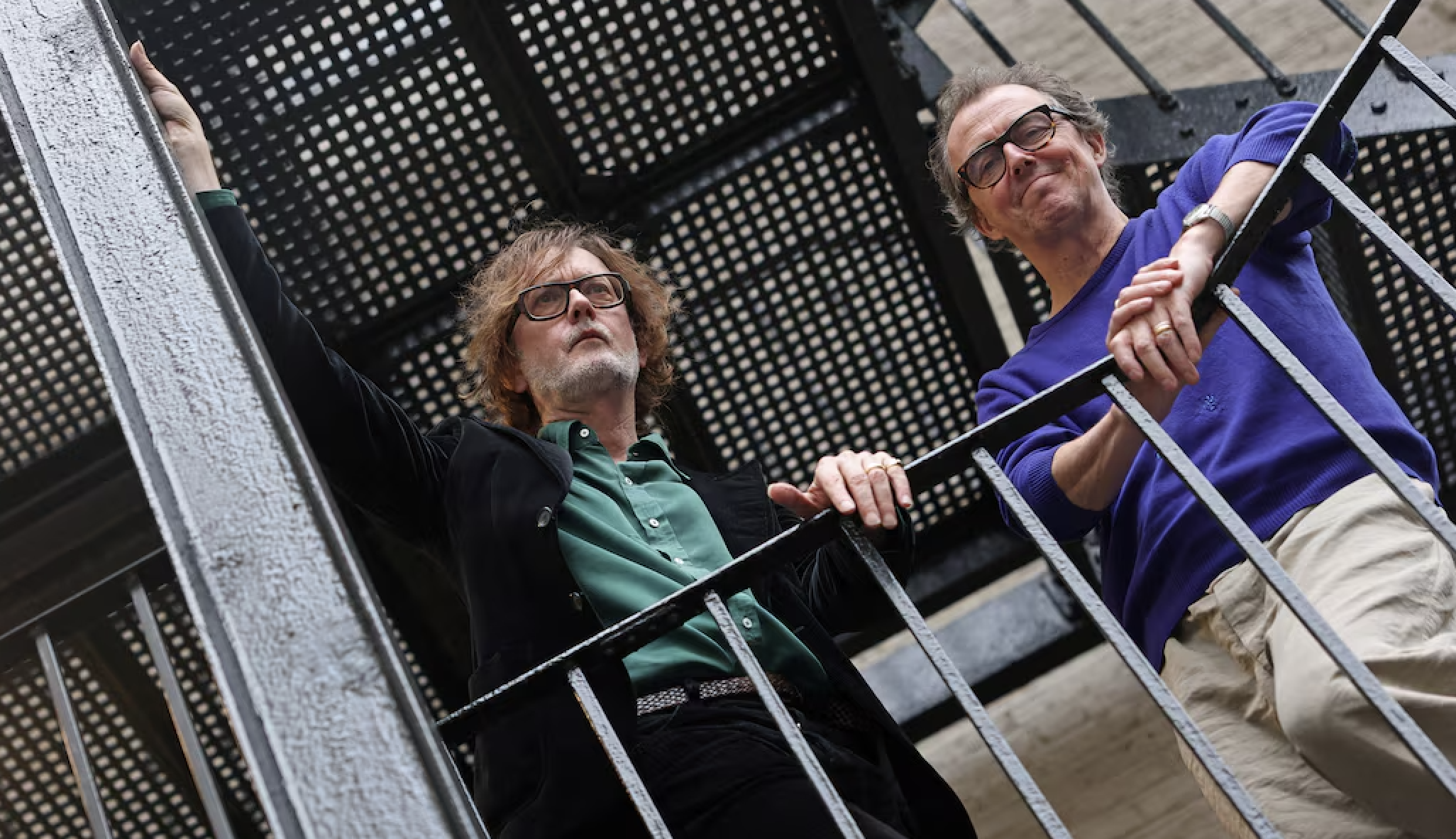
Pulp fans are a patient people. We’ve waited years between scant albums and tours. Their most recent album More, is only their 8th LP since they formed as teenagers in Sheffield, England in 1978. It was their first new album in twenty-four years. If anyone in Pulp ever feared fading into irrelevance, they’ve gotta be assuaged by now. In Garth Jennings’ new documentary, Pulp: What Do You Do for An Encore? Frontman Jarvis Cocker stands in front of 20,000 people at London’s O2 Arena, holding up a statuette that represents their #1 UK Album chart status. He sounds a bit incredulous as he gives the audience credit for the accolades. Obviously, he knows they’re famous. But no one in Pulp ever seems to buy into their own hype, despite having written numerous soulful anthems that tap into humanity in that therapeutic way that only perfect pop music can. And that’s why Pulp fans will continue to wait as long as we have to for “more.”
The good news is that Pulp season is here! Following the 2025 album release, Pulp embarked on a world tour to support the new songs, as well as celebrating the beloved back catalog. They played two sold-out nights at the O2 as part of the UK leg. Jennings uses concert footage from one of these nights as a jumping off point to look back through time to the band’s inception and tell how these awkward kids from Sheffield got to this point. The Pulp concept started with Jarvis, so he’s repurposed text from his 2023 memoir, “Good Pop, Bad Pop.” filling in the gaps with additional context as needed.
Entire numbers from the O2 show accompany archival footage to inform the narrative as it unfolds. The historical footage includes grainy VHS footage from very early shows and interviews, as well as UK TV appearances, and concerts from throughout their career. Jarvis’ early journals are also brought to charming life through animation by Arnau Sola Vila (The French Dispatch). The film is a delectable treat for Pulp fans because it not only gifts us with a loving Pulp retrospective, it captures something I’d previously thought was impossible to convey: The transformative feeling of attending a Pulp show. Instead of getting lost in a sea of people, you feel like part of a beautiful collective. It’s humanity at its best. And who couldn’t use a little dose of that right now?
Hammer to Nail’s Jessica Baxter recently got the chance to speak with Garth Jennings and Jarvis Cocker about Pulp: What Do You Do for An Encore? We touched on everything from Garth and Jarvis’ personal history (including an encounter with Paris cops), why Pulp fans have never lost their fervor, the magic of Pulp’s live experience, and the importance of snacking.
This interview has been edited for clarify and brevity.
Hammer to Nail: Oh, my goodness! Well, I didn’t expect to see Jarvis. Hello!
Jarvis Cocker: Hi.
Garth Jennings: You’ve got the two of us!
HtN: Yes, indeed I do! So, I was very excited to get this assignment because I have been a massive Pulp fan since Different Class. I was a teenager when it came out in America and at the time it felt like kind of a wonderful secret because even though they were huge in the UK, not very many people knew about them here. It feels like Pulp has been with me my whole life and it meant a lot to watch your film and be able to write about it. So, thank you, Garth, for making the film. And, Jarvis, thank you for, uh, birthing Pulp.
JC: [Good naturedly] Yeah…
GJ: Well, I’m grateful to him as well for making the music. I wouldn’t have made the film, otherwise. It’s lovely. It’s been a bit of a joy for me, as well. I share your enthusiasm for the band. I really do.
JC: I’m gonna get a big head.
GJ: Yes. We need to just offset this with some insults. Otherwise, he’ll get out of control.
HtN: [Laughs] Yes, we don’t want to be, uh, too self-aggrandizing. I did really enjoy the intro to the film, where the two of you have a conversation and you’re on the way to the venue… is that right? The O2?
Jarvis Cocker in PULP: WHAT DO YOU DO FOR AN ENCORE?
JC: No, well, it was actually shot more recently than that. We were playing at the Royal Festival Hall in London. We did a concert where we played the whole of the album “More” from start to finish, in order. We’ve never done that kind of thing before. And we filmed that [conversation] in the cab on the way there.
GJ: Yeah, it was supposed to be a sort of a bonus feature for people at the cinema who weren’t going to see the Q&A that we were doing afterwards.
HtN: I was wondering about that. It did seem like a bonus cinema intro, but you said so many wonderful things in it, that got me thinking while I watched the film. So, it was really kind of an invaluable addition to the film, I think. One of the things you said was that if you loved something and you’re curious about it, that’s a good recipe for making something…
JC: That must have been you [Garth] that said that…
HtN: [Laughs] Yes, Garth said that. But I do actually think it fits for Pulp’s music, as well, because the songs show a curiosity about life in general and the struggles of everyday existence. Garth, what was your relationship to the band before you started making the film?
GJ: Oh, yeah! I already loved the band. Back in the 1990s, I’d just left art school. Me and my two friends were making music videos, and our favorite band was Pulp. And when we heard that there was gonna be a new album – and we didn’t know the name of it, but it was gonna be This is Hardcore – we managed to convince them – [either] the management or the record company, I can’t remember who – to let us write an idea for the first [single], which was called “Help the Aged.” We pitched the idea to Jarvis, and it clicked with him. And so, we ended up making it. That was our first video with the band. And so, I’ve been a fan since I first heard them way before then. But this is when it all got really exciting to actually make something for this band [that] I loved. And here we are all these years later and, uh… I still love ‘em!
[Friendly giggles all around]
JC: Well, we’ve kind of kept in touch. Garth moved to France because [to Garth] you were making the Sing films, and I lived in France because I married a French woman, and I had a son. And so, I… Well, it wasn’t like an official welcome, was it? But I came over to Garth’s place with my son and we took some fireworks because it was around Bonfire Night in England. It’s the 5th of November, but Bonfire Night celebrates the time when Guy Fawkes attempted to blow up the English houses of Parliament. It’s not celebrated in France because it didn’t happen to them.
[HtN laughs]
JC: And Garth’s apartment was very near to the École Militaire [military training facilities in Paris]. So, when we started setting fireworks off, the police came and told us off *immediately*. So, it wasn’t the best introduction to Paris…
GJ: It started brilliantly! And then it went downhill fast. But we didn’t get arrested!
JC: No. And our relationship wasn’t destroyed by it.
GJ: It wasn’t destroyed by it. I still like him.
[Everyone laughs]
HtN: That’s a good testament to a friendship, if you’re facing the police together. So yes, I did watch your videos, as well. And I’d never seen them before. I loved the “Help the Aged” video. And you talked about your inspiration for that in the intro [a 1946 film called A Matter of Life and Death] – that it happened to be one of Jarvis‘ favorite films. Did you know that when you made the pitch, that it was something that would appeal to him?
GJ: No, I didn’t. It just happened to be one of *my* favorite films, and, as it was about going up to heaven… It still really is still one of my favorite films. It’s so clever and brilliant, and yet from the heart. I was just lucky that it just happened to click with you [Jarvis] as well.
JC: Yeah. It was probably the opening scene of being sat on the stair lift. You know these stair lifts that old people put in their homes to get upstairs when they can no longer climb upstairs? I liked the idea of singing the first verse of the song sitting down. I’m quite a lazy person.
[Garth and HtN laugh]
HtN: That’s such a nice reveal, too, because it looks like you’re on a dolly track or something but then the camera pulls out and it’s one of those lifts, and then it just keeps going and going. It’s so beautiful. I loved it. And then I also watched the “A Little Soul” video, which [Garth] directed. That was such a cool concept: the child versions of the band members, trying to rouse them to get to the studio.
JC: At that point, I think Steve [Mackey] was the only one of us who had had a kid. *I* hadn’t had a kid, anyway. And the song was kind of written about… I was taking on the character of *my father*, who I’d recently tracked down to a remote part of Australia. I’d gone to see him and it hadn’t *really* gone that well. And so, I was trying to kind of… get rid of that in some way. But… it was funny… The *little* Jarvis, the guy who tries to make me come and sing and I’m really nasty to him and everything… He became the drummer in an indie band. I think he’s the younger brother of uh…
GJ: Well, he’s Sophie Ellis Bexter’s brother.
JC: Yeah. And he’s now a drummer in a band and he came up and [reintroduced himself]. He’s, like, a fully grown man now, and it was a really funny thing. “Alright son, how you doing?” Like, I’ve been a very neglectful father… years later…
GJ: “You could’ve called.”
JC: Yeah, exactly. He seems to have turned out alright.
GJ: He turned out *great*. I think he actually even drums in his *sister’s* band now…
But it was lovely. These were lovely projects. And it’s great when you click with people you’re working with. Sometimes, in the past, I’d do something, and I was aware… I’d just have to finish it the best I can. Because I don’t know if [my collaborators] are on the same wavelength. Everyone was happy in the end, but it was a bit more of a push. Whereas this was more like that lovely thing when you’re in sync with somebody… and the *whole band*, actually. It was *lovely*. I really treasure those relationships.
HtN: At what point did you decide that Jarvis would narrate the film in the omniscient way that he does?
GJ: Oh, that was almost from the get-go. The idea was that it would be a concert film peppered with the story. So, this big show and then seeing the story that led up to that night. Not having… not that there’s anything wrong with this, but not having the talking heads or the experts… or even shoot the band [in present-day interviews] … It should feel like Jarvis is telling you his own story. So, that’s why a lot of it was based on the memoir that Jarvis had written, “Good Pop, Bad Pop.” That was the backbone for the first half of this script, really. And then, that informed the tone of what the second half would be. But yeah, it always felt like it should be Jarvis telling you the story of the band… How they all came together… all the changes, and the ups, and downs from that time. Not me, or experts talking about it.
HtN: Yeah. It worked perfectly. It almost feels like an addendum to a Pulp album or a Pulp song because so many of the songs are [in the] storytelling style. So, Jarvis, did you write all the narration yourself, or did you collaborate on that?
JC: I did write it, yeah. Like Garth said, a lot of the early stuff was based on the book but then I… having watched a kind of rough cut of it, I tried to… I wanted to try and make the archive bits… [to Garth] Well, you’d done it in the editing… I wanted to make [the audience] feel that two things were happening simultaneously. So, I expanded on the [idea] that my whole view of the world as a child came from watching TV. And how my ambition to be a popstar was also based on that thinking, that I would be allowed to *live* in TV Land if I became famous. And how that then led to me not liking it when we *did* become famous. So, I put a bit of that in it.
And at the end, I suppose, I wanted to say *why* I still do it. And the best thing I could say about that was that the songs, when you perform them live, the audience makes them come back to life. They kind of breathe *life* into them and they kind of reinflate and live again. And you can never take that for *granted*, you know. But when it happens, it’s a fantastic thing because… Well, I suppose it brings you *back* to that time in your life… As I say in the film, it’s like there’s a pocket of energy there, and the audience kind of lights a fuse and it explodes again. And you *feel* that energy again. And that’s a kind of *magical thing*, really, and I’m really glad that I… get to see it sometimes.
HtN: Wow. That’s so beautiful. And that really does describe what it’s like to be *at* a Pulp show. I’ve always felt like no matter where you are in the audience, you just feel like you’re really part of something… a collective of like-minded, passionate souls. So, it’s absolutely perfect the way it’s been depicted in the film. And I like how there are shots way out in the back [of the venue]. You know, the cheap seats. And you can still feel the energy.
GJ: Yeah! Oh my god! But it was *there.” It’s not manufactured. It’s extraordinary to be *that far back.” Cos often in a big arena *like* the O2 – no disrespect to the O2 – but sometimes it can be a bit of an old warehouse, and the vibe can sort of drop off the further back or the higher up you go. But it was like being in *church* or something. Everyone was completely glued [to the stage] from the very, very top of the back, right [down] to the front. And that’s why those shots were so important, as well, because you can be reminded, “Oh yeah, there’s 22,000 people here who all feel the same as the people in the front row.”
HtN: Yeah! It’s perfect that you said “church.” too, because in my review, I literally likened it to a tent revival.
[Garth laughs]
So, I think that’s what *it is*. It’s just a very ineffable experience for everybody involved. And it’s so nice to know that the band feels the same way. It’s not an act.
JC: Well, that’s why I like pop music, you know. It’s a thing that… anybody can *do it*, you know. There’s no kind of entrance exam. You don’t have to go to a college to be trained. I mean, they do have things like the BRIT Academy now… The music I tend to like is [when] people have *taught themselves* how to do it, you know. Like, sometimes they have a guitar that’s not even got the full number of strings on it. They just learned how to make a noise. And that’s what I like about it. It’s home-made. And I like that kind of thing that anybody… not everybody *will* become a pop star, but everybody *can* have a go at it.
GJ: Yeah, it’s accessible.
HtN: Yeah! So, one thing that was really striking in the film, was just how long it took for the band to get noticed. It was 17 years before the world embraced them. I was wondering if… I suppose, *either* of you had any thoughts about why it took that long for the world to be ready for Pulp.
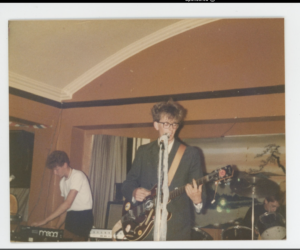
A young Jarvis Cocker in PULP: WHAT DO YOU DO FOR AN ENCORE?
JC: Well… It was probably the other way around, as well. *We* had to actually get decent.
GJ: You were *great*! You were *great*! It *is* weird though, how much time good stuff needs… I would always be wary about anything happening *too* quickly. But that *was* a while…
JC: Yeah… But… it’s been the way that I’ve managed to grow up, I suppose, being in a band. I was a bit immature. I mean, we played our first concert when I was 16… It’s been the way that I’ve tried to make sense of the *world* and tried to make sense of my *life*. And so, that’s why it’s got ups and downs in it… And that’s what makes the film interesting to me. And I do wonder what I would do next, actually. Because, looking *at* your life‘s work, you start to be able to discern patterns and things… When you’re *doing it*, you’re just trying to do it. And you’re trying to make a noise that is passible. And you only *really* get any kind of perspective on it with distance. So, this is the most comprehensive look at what Pulp have done. I don’t know where we will go next. I might have to go, like, heavy metal, or something.
GJ: You might try folk metal. It’s Rammstein time.
[Everyone giggles]
Honestly, though, I think that whole [concept] of [good] things taking a while and things being difficult, that is the *norm* isn’t it? It certainly is for me. And we’re talking about something that’s finished and we’re really happy with it. But most things I try to make will, at some point, collapse… do you know what I mean? Just be really hard… Like this *conversation* started four years ago, to make this film…
[There’s a knock on their hotel room door]
GJ: Somebody’s delivering something.
JC: [from off-camera] Did you order any prawns?
GJ: [To HtN] Did you order prawns?
HtN: Oh yes. I’m sorry, I forgot to mention it…
[Indecipherable off-camera talking]
GJ: PRETZELS! Not prawns… no shellfish is being consumed during this interview.
So… just in summary, [other projects have been] very tricky, and this [film] has been four years since we started talking about it. And, in that time other things have come and gone and fallen apart. So that feels normal. One of the things I like about this story is just how relatable it is. Trying to make something lovely and having to stick with it… And then when it comes together, it’s truly magical.
HtN: Yes, absolutely. And that is one of the most remarkable things about Pulp is how relatable they *are*, despite being such a successful band. And the lyrics have never changed [thematically]. They’ve always been about relatable things… With the exception of a couple of songs [i.e. when Jarvis sings about being a pop star]. It’s mostly like, struggling with getting older, and having kids, and relationships with your parents, and that sort of thing. So, to me, it seems like you’ve sort of you’ve made yourself immune to irrelevance.
JC: I hope you’re right.
GJ: I think you *are* correct. Those songs still mean the world to me, as well. That’s why I [made this film].
HtN: I did want to ask you, Garth, because every [fan] has that Pulp song that they sing louder than any other song, or that really speaks to their very soul, so I was wondering if you could name a Pulp song that did that for you.
GJ: You’re gonna make me answer that in front of Jarvis…
JC: I can go over here…
HtN: [Laughs] Well, I didn’t know he was gonna *be* here when I wrote the question…
JC: I’ll have one of the pretzels. They’re really loud…
GJ: You can have a crunchy pretzel
JC: I won’t be able to hear to hear what you’re saying. I’ll go off and get it. [walks off camera]
GJ: Let’s send him off… Just between you and me… Because I love them *all*, basically. But the first one where I really noticed them was “Razzmatazz”…
[Faint crunching from off camera]
…he really is crunching over there now…
JC: [off camera] They’re big…
GJ: He’s going for a big old crunch…
I remember them playing “Razzmatazz” in rehearsals and it was very moving. I found it *all* moving. When they played “Something Changed”… I would find that incredibly moving and… it all really matters. I really *love* it. And the best thing is… [As] Jarvis was saying earlier – it’s not just me. It’s when you see other people in the audience feeling the same way you do – that is *really*… you can’t quite describe that, but that is magical. I wish I had another word. I keep saying “magical.” But when [you’re] sharing the same feeling as everyone else, it’s *great*.
[Jarvis returns with a large Bavarian pretzel that is crumbling out of his hand. HtN cannot stop giggling about it]
GJ: That is very dry. You’re gonna need some water.
JC: [through mouthful of pretzel] I’m fine…
GJ: He’s all right. You’ve got this.
HtN: Thank you, Garth. I love that answer. Finally, I was wondering about the animation sequences by Arnau Solà Vila. What direction did you give for creating the animated sequences?
GJ: Well, Arnau had worked with Wes Anderson and he’d written some songs for The French Dispatch.
HtN: That makes so much sense…
GJ: He’d worked on the animated sequences for that, and I think you [Jarvis] did a video with him…?
JC: Well, he did a video of me as Tip Top [for The French Dispatch soundtrack; a song by Christophe sung by Jarvis, called “Aline”].
GJ: Our producer, Octavia [Peissel], had worked with him on the Wes Anderson films and so she was the first person who said, “it *must* be Arnau.” And it turns out, again, he is a huge [Pulp] fan. Everyone who worked on it is a huge fan. So, I never had to convince anyone, which is normally what I have to spend most of my time doing…
So, Arnau came on, and took Jarvis’s own drawings… Those sketches at the beginning are of the clothes that Jarvis had designed for the band. And then, the musical staves mutating as Pulp casts its spelt over music and the world. But then, there was a third piece which wasn’t based on Jarvis‘s drawings, but was based on the style that we, by that time, had set up. And that was the timeline of the band, and all the band members that had come through: at what time they came in, and who they were replaced by. [We tried to] do it in a way that felt like it was from the same notebooks that Jarvis had been drawing in as a kid. Just keep it simple.
HtN: Yeah. It’s very unified. I loved it. It kind of reminded me of Hedwig and the Angry Inch [both thematically and stylistically]. Career plotting as a child, and the journey of musical influences and discovery.
Thank you, Jarvis and Garth. I really appreciate you taking the time. It’s been a pleasure talking to both of you. And I’m glad you get to have a little sustenance while you’re doing it.
GJ: Yeah, we’re gonna both eat some snacks now before the next one.
JC: I’m sorry that I ate a pretzel.
HtN: Not at all! You have to take care of yourself.
– Jessica Baxter (@TheBaxter)