




A Conversation with Paula Gonzalez-Nasser & Mimi Davila (THE SCOUT)
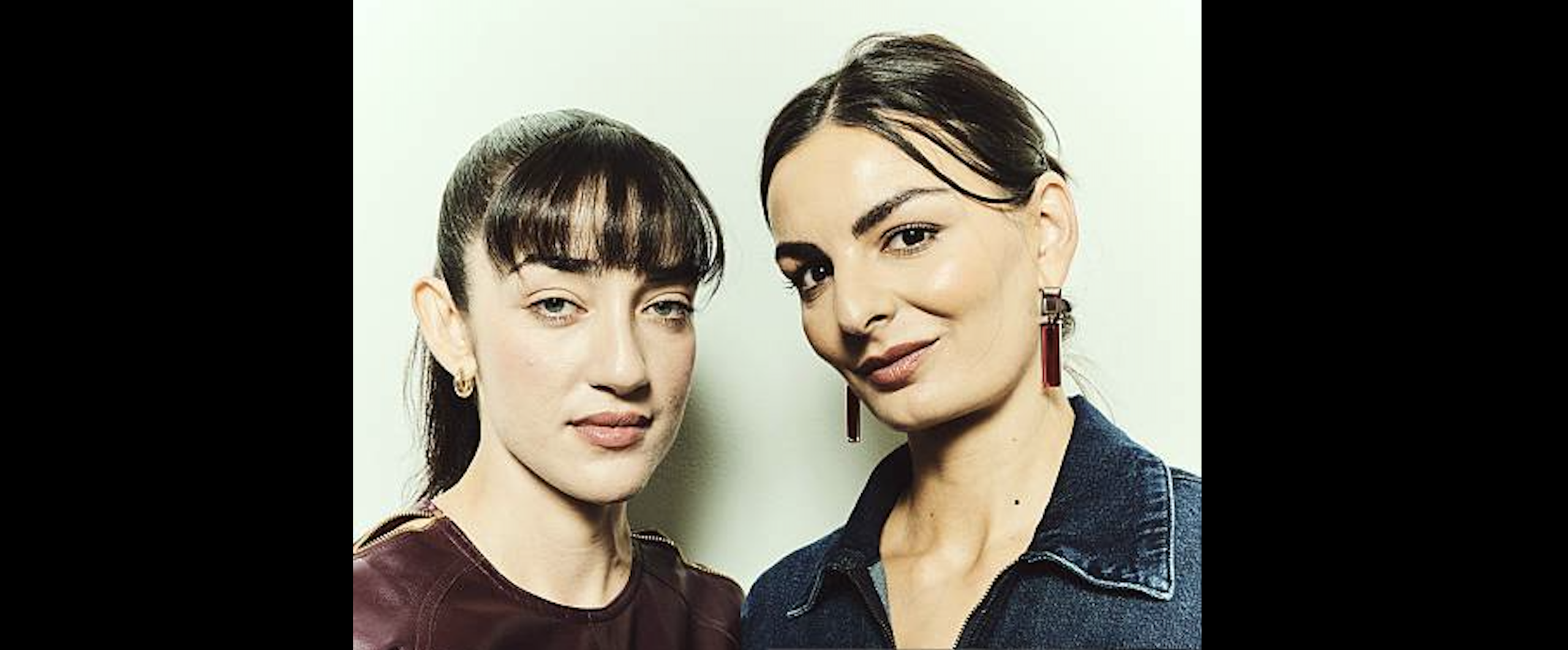
The Scout opens this Friday at Film Forum in NYC. Below is Matt Delman’s interview with Director Paula Gonzalez-Nasser and star Mimi Davila, edited for length and clarity. You can also read his full review here.
Hammer to Nail: I heard a little bit about Fifth Floor. Curious to hear more about this collective and how you decide who’s movie’s next and who is maybe coming up next in the collective? but also I just want to hear like, what was the decision? You know, “okay, we’re going to make The Scout.”
Paula Gonzalez-Nasser: Yeah, that’s a question we’re constantly asking ourselves. Like, what is Fifth Floor? Who are we? What do we want to do? It’s such an informal collective. It really was started as an entity to be able to put our films under an umbrella of sorts, but it has no formal sense whatsoever. When Justin Zuckerman, who was our classmate at Florida State, decided to make his first feature, we were like, okay, yeah, we can just make that a ‘Fifth Floor film’. And the idea was that whenever somebody checks out one of our films, they see ‘Fifth Floor’ and hopefully they’re asking what else have these guys done? And it’s more of a collective voice rather than like a single voice, because we make these films together. We wear so many different hats. Ryan, who made Free Time, was the producer, editor, and assistant director on this film. And so we hope that if you check out The Scout, you’ll also see Free Time. But as far as deciding what gets made next, that’s a really tough question because these films are so small and we kind of do these projects on the side and fold them into our lives on top of, you know, having day jobs. So it’s sort of like, what can we take on next?
HTN: Do you think you’re going to be next or Ryan or someone else?
PGN: Well, Ryan just made his next film.
Mimi Davila: He did. Yes, yes, yes.
PGN: He’s in the edit for that. Mimi was there on set. You were a very featured extra. But yeah, that just got sort of decided because we decided like, yeah, let’s make a movie. But if Justin tomorrow says, “I have a script,” we’ll figure out if we can make it and be a part of it.
HTN: Let’s talk about The Scout. The opening shot is just so lovely. I always love in a movie when the character is hiding in plain sight and you don’t realize they’re there, and then all of a sudden they start to move and you’re like, oh. I’ve seen that happen in theatrical plays too. Just talk about the opening shot and what your thinking was behind it.
PGN: Yeah. That opening shot. Every time I see the film again, I always get a little self-conscious of how long it takes for you to kind of spot that there is a human, a breathing human being in the frame.
HTN: That’s what’s great about it.
PGN: Well. Thank you. I always hope that people just have a little patience and give it a moment because it can take a while to get there. But yeah, I think so much of the beginning of the film up until I think like 5 to 6 minutes in, aside from the credits, the design, the photography is designed to sort of push this character aside so you really don’t get to see Mimi, who’s playing Sophia, her face really up until the first sort of conversation that she has with the office assistant or even when she’s talking to the residents, you’re still not sure, like, what does this person really look like? And I think that’s symbolizing how she feels in her own life. She’s sort of let this job take over her life. Nicholas, our cinematographer, did a great job at framing her in this way, where you kind of just see the back of her head or just a sliver of her eyes, and she’s not the main character in even her own life.
HTN: Great answer. Okay, Mimi, so you are basically playing Paula, who has been a location scout, but the character is very different from you, Mimi. So what was it like? Were you trying to imitate Paula, or was it a blend of you and Paula, or were you trying to create something completely different?
MD: I’m going to say something and I don’t know if Paula is going to agree with me, but I feel like Paula told me that she wrote the role for me. So I feel like it was a fusion. Like her experience, but we worked together and I guess she was observing me and she was able to tap into something about me. And so it didn’t feel like I was imitating her. When I read it, I was like, oh my God, how did Paula see certain little things about me? I don’t know, I can’t say, it just felt like a fusion. I was like, “how did she…?” How did she see these things about me even though it’s about her?
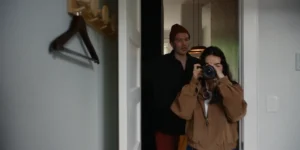
Mimi Davila in THE SCOUT
PGN: Yeah, I agree with that. I think I wanted to get it out and have her be this secondary character that wasn’t me, because I didn’t want to be defensive about what this character should or shouldn’t do. And so I vessel it through Mimi, and it became this almost third character. Yeah, it’s a third. It’s like, what would Sophia do?
HTN: Another thing I really enjoyed about the film is how much you’re shooting in and around the car, that’s a cool technique. And I’m wondering, was the car kind of a character in the film? How were you envisioning all these car shots?
PGN: Yeah, actually, that’s a great question. We haven’t talked about the car very much.
There was actually less car in the script. In my head as a New Yorker, and as a scout, I did this a lot where you would start out the day with the car, but then you’d park in a neighborhood and you do the rest of the job sort of walking, or you’d sometimes take the train to a different scout appointment and then take the train back, come back to your car. And so there were a lot of train shots that actually didn’t make the cut because people were confused. They were like, “if she has a car, why is she taking the train?” I was like, well, in New York you do that. But then we heard the notes and we said let’s simplify it and have the car be sort of like her safety vessel, the place where she can sort of be alone for the first time in the day and recharge in some ways. And the car became a great place to utilize the voicemails that she keeps getting throughout her day, as if she’s always catching up, always behind, always having more work on the horizon. We decided to make it a little bit of a car movie in that way. And it happened in the edit, really. It was not intended in the script or even while we were shooting. It just sort of structurally needed to happen to make it feel more cohesive in the end.
HTN: And was Mimi driving or was it being pulled on a trailer?
PGN: No, she was driving it. The girl was driving the car in New York.
HTN: How’s your driving?
PGN: I’ll answer that. It was actually good. There was that one scene in the tunnel where I think I was laying in the front of the passenger seat, and Nicholas was in the back, and I just got really dizzy being up there. But that does not speak to your driving, Mimi. You were a great driver. Remember that?
PGN: Now it’s blurred. I don’t remember if I was purposefully trying to be chaotic sometimes or sometimes there was chaos really happening. There was. Yeah, just driving around New York City, there’s always chaos. Remember when the bike almost…I almost got hit by a bike, but I didn’t really.
HTN: When you were in the car or when you were just standing?
PGN: She was leaving the car. Yeah, the bike lanes. Mimi lived in LA, so she came to New York to shoot this and everyone was like, oh genius, having an LA actress, you know, drive in New York. It was like, oh, I guess I didn’t think about that. I just knew Mimi drove because we grew up in Miami. Right? Yeah that helped.
HTN: I just want to briefly touch on the voicemails. I really love that as a narrative device as well. Are they real voicemails that you got?
PGN: They’re recreations inspired by real voicemails that I got. And I went through all my voicemails because I still have my voicemails from pre-COVID of when I was scouting and I was just listening to them laughing, being like, God, that was just so stressful to listen to these.
HTN: Would your voicemail fill up? Even mine fills up.
PGN: Yes, yes, yes. So much. And so I had to download them to keep them and thankfully most of the good ones were kept. I lost a few.
HTN: So because your voice mailbox was filling up so quickly, you would move them onto an external hard drive? And so now there’s an external hard drive full of voicemails from your whole career as a location scout?
PGN: Yeah, that’s pretty much it. But you know, when you listen to those, you’re like, “oh, great, we’ll just do it like that.” But when you try and recreate how people sound in a voicemail, it’s actually really hard because the way we speak doesn’t really make any sense. When actors would try to do it, it sounded too acted and, you know, performed. And so we had to get a little creative with how to get the performance right for the voicemails. But no, those are scripted voicemails that we recorded in post when we decided to go with the car.
HTN: Okay, so, Mimi, in this film, you get hit on twice, and, you know, you could have just had one scene where you get hit on, but I thought it was probably more realistic that you get hit on twice in this short time span. Right? Were you trying to underscore that this happens all the time and then the second time it happens, you actually go on the date.
MD: Well it’s so funny. This is the first time I’m clocking like when you just said you get hit on twice in the movie. I didn’t even. This is the first time I’m realizing that.
HTN: Were you thinking it was just once?
MD: I just never put it together as like, oh, this is something recurring that happens. And maybe that’s because as a female and because both of the ‘hitting-ons’, they’re not that good. They’re very icky. I think as a female that happens so often, like where you kind of get these, “do you really even….? Are you really hitting on me or are you like working something out within yourself and I’m just like here for that?” And I guess that’s why when you say, oh, it happens twice in the movie, I’m like, oh I guess it does?
HTN: I love that answer.
PGN: Well, maybe you could talk about how it was your idea to almost flirt back in the scene with the software developer.
MD: Yeah, because I didn’t want her to be a victim of her circumstances all the time. I wanted to show, like she does have agency, and she’s kind of getting herself into these little messes. And with that guy, I think it’s almost like wanting something, you know? Paula was talking about how Sophia is so pushed to the side. And when you’re overworked–you’re working every day– you’re not really taking care of yourself. Your standards sort of lowers, or whatever. You get attention, and you know, she liked the attention, I would say. She liked that attention until it turned icky and then it almost becomes like a power play. I thought that was probably more honest for me and how I would handle that. As scripted, she was a lot more serious once that flirtation begins.
PGN: I think the scene really transformed when you flirted back, it made it more interesting and like you said, more honest. So I was glad that we did that.
MD: I love working with Paula.
HTN: This one’s not a question. I just love the Moby Dick joke and burrito line immediately after that when he just switches to the burrito. I just thought it was hilarious.
PGN: Oh my God, that was the hardest scene to film. That was a really hard scene to get through because we were all breaking. Even our DP, who is like the most serious person you’ll ever meet, couldn’t keep it together with Matt’s performance. Oh my god, Matt. His little quirks. Yes, it was really funny because he’s so funny.
HTN: So for Otmara’s character, I was wondering, did she call the number on the flyer just to see Sophia?
PGN: That’s a good question. I think that once she realizes who it is, she’s like, “why can’t you know this is destiny? I got to hit her up.” And they have some unresolved tension in their distant friendship. And so she takes it as an opportunity to be like, I’m going to hit her up. But also I have this cool apartment, like I want her to see that I’m doing well and I want to invite her into my space. So I think it’s a little bit of like wanting to reconnect, but also a little bit of I’m going to bring her back into my sphere because there’s unresolved, you know, matters in our life.
HTN: How did you view that, Mimi, that relationship, was it just a friendship or was it something more?
MD: Oh my God. Well, Otmara is one of my closest friends in real life. And me and her actually were in a fight and we had to do a readthrough with Paula. And in the readthrough, me and her got into it and I was like, “that’s great.” No, I didn’t say that. I think inside I was like, “I can’t believe this is happening.”
PGN: This is the movie.
MD: Yeah, it really was the movie because it was a similar qualm. And so we ended up making up. But when we did the scene, it was so close to the chest for both of us.
HTN: What do you hope changes about the film production industry and specifically for location scouts?
PGN: Oh, wow. Yeah. I mean, well, first of all, there’s not even an Academy Award or any real recognition award in a real sense for what scouts and location managers do. And I think it’s a shame because it is such a creative role. They enable production designers and cinematographers to get the kind of looks and spaces that they want. And so you could say then that’s, you know, the work of a cinematographer or production designer, but you have to find these spaces, at least for, you know, shoots that shoot on location and not on a stage. The characters and the spaces say so much about these characters without you needing to say so, so much in dialog or anything. So I just hope there’s more recognition on the creative level. I think everyone knows how logistically involved it is, but even in film schools like you didn’t know that there was a locations department. I thought that was the producer’s job and production was like responsible for all that. But it’s a whole department and it’s like, I call it like the concierge of production because they deal with the real world and they sort of liaison between production people and real people, which sometimes feels like they live on opposite planets.
So I hope that there’s just more recognition and respect for what the job is, and especially not just location scouts, but assistant location managers and location managers, they’re the first people in on a set and the last people out, setting up shop and closing up. That takes a lot of work. It’s invisible work, just like I would say in a similar way for sound recordists and mixers. No one really appreciates good sound unless it sounds bad. Then you’re like, oh, that’s bad. But if it’s good, you don’t really notice it. It’s moreso just about film workers, and anyone working in a manual labor field, you know, I’ve had bartenders come up to me after watching this film and they’re like, “this is my life. I listen to strangers’ stories and then I never see them again. And you’re like a therapist to them.” And it’s true. People who work under the line, it is like a regular blue collar job. Outsiders don’t think about it that way. They think we’re hanging out with Tom Cruise, sending him photos of the location. It’s like, no, I’m literally on my own, kind of figuring things out.
– Matthew Delman (@ItsTheRealDel)