



A Conversation with Matthew Dougherty (THE NATURAL STATE)
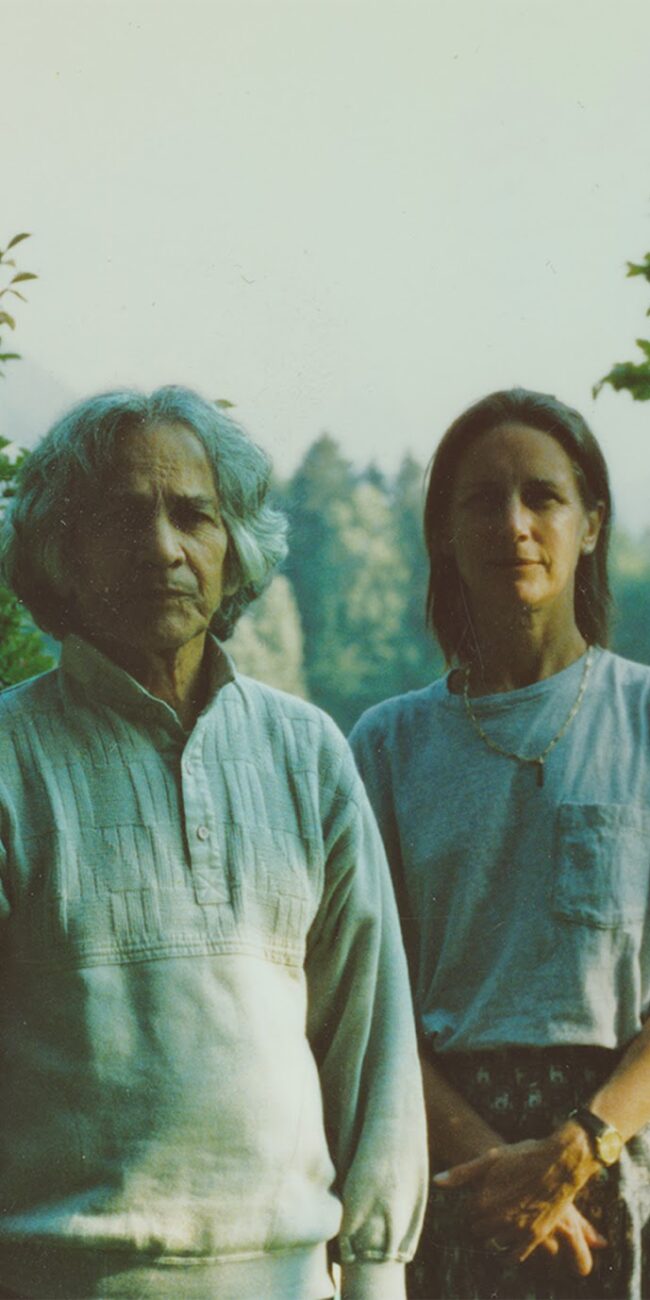
In 1989, Julie Thayer traveled to the Swiss Alps looking for something few people would willingly seek: the destruction of her own ego. There, she joined U.G. Krishnamurti, the radical Indian anti-guru who rejected virtually every convention associated with spiritual enlightenment. U.G. claimed to possess no teaching, offered his followers no path toward transcendence, and frequently told those who sought his guidance to simply go away. Still, people gathered around him. Julie not only stayed, she filmed everything.
Those recordings, alongside the intensely personal journals Julie kept during her time with U.G., form the foundation of Matthew Dougherty’s The Natural State. What initially resembles a portrait of an enigmatic spiritual figure gradually becomes something far more psychologically complicated. Julie moves from observer to the film’s emotional center as her search for transcendence oscillates between ecstasy and devastation. U.G., meanwhile, remains frustratingly resistant to definition: enlightened provocateur, manipulator, narcissist, philosopher, or perhaps some combination that renders the distinction meaningless.
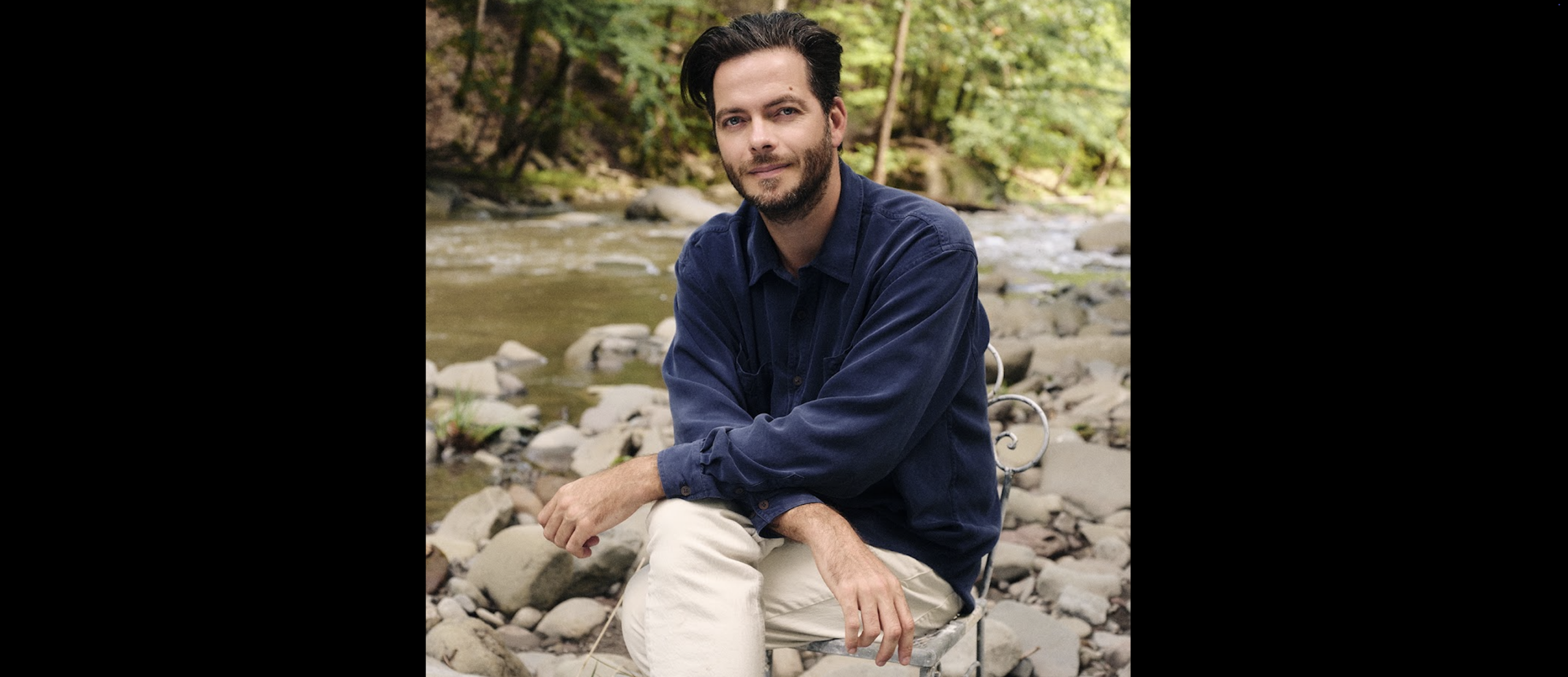
Executive produced by Jane Campion and Mahesh Bhatt, both of whom knew U.G. personally, The Natural State avoids providing an easy answer. Dougherty instead turns uncertainty into the film’s guiding principle. He pairs the immediacy of Julie’s lo-fi home videos with an energetic assemblage of archival imagery, split screens, montage, and humor, building a documentary as formally unpredictable as its subject. Ahead of the film’s premiere at the 2026 Telluride Film Festival, Hammer to Nail spoke with Dougherty about his 15-year journey making the film, the dangers of spiritual authority, finding Julie at the center of the story, and what happens when years of searching only make the answer harder to grasp.
Hammer to Nail: I’d love to start chronologically. How did The Natural State first come about?
Matthew Dougherty: I was personally interested in ego loss and ego dissolution. That came mostly through psychedelics and some casual meditation. You can get these glimpses of something and think, “What the fuck is that? That’s incredible.” It feels truer than normal waking life. Then the question becomes: How do you actually live in that state?
I started reading people like Eckhart Tolle and other New Age teachers who say the ego isn’t real and that there are ways of getting rid of it. I became very interested, but I kept running into skepticism. How much can I trust these people? Do they want money? Is it about expensive retreats? Is there manipulation involved?
That skepticism is also connected to my background. I was born into a fundamentalist Christian cult that my parents had been in since they were teenagers. It was very destructive in a lot of people’s lives, including my family’s, and I grew up seeing the wreckage caused by that kind of leadership.
Then I discovered U.G. and thought, “Holy shit, this guy is crazy.” He tells everyone to go away. He says you don’t want enlightenment and you’re never going to get it. It felt punk and underground. I trusted him more because he clearly wasn’t selling me anything. But then you start wondering: Maybe that’s his tactic.
Around then I found Julie’s journals online. They were incredibly candid. Nothing had been cleaned up to preserve the image of a holy man. She kept mentioning all this footage she had shot, so I contacted her. She basically said, “You’re interested? Help yourself.” I started digitizing everything and thought I’d finish the movie in a couple of years. Fifteen years later, here we are.
HTN: You came to the footage with an existing fascination with U.G. What happened when the person you imagined collided with this incredibly ordinary home-video archive?
MD: I had this idea of U.G. as awakened. His version of awakening wasn’t what we conventionally imagine enlightenment looking like, but I was still bringing that belief to the footage.
Then suddenly I’m watching hundreds of hours of home video, and he’s just a guy sitting around. I started projecting onto it: “Look at the vacancy in his eyes. Look at this strange body movement.” I was searching for signatures that proved something.
I’d show people footage and say, “Isn’t this amazing?” And they’d basically say, “No.”
That became fascinating because I realized how much meaning I was bringing to the image. There was also this formal problem: VHS tapes that have been sitting in a shoebox aren’t necessarily going to communicate some enormous spiritual realization. How do you use something incredibly lo-fi to depict something supposedly so lofty? Eventually that limitation became an exciting creative challenge.
HTN: I went into the film knowing almost nothing about U.G. At first, I expected a philosophical investigation, but Julie’s experience gradually became psychologically dangerous. Was that transformation surprising to you too?
MD: Definitely. Julie was always a framing device, but initially I imagined her almost like Virgil in The Inferno. She would guide us into this landscape, and then U.G. would be the philosophical and spiritual labyrinth we explored.
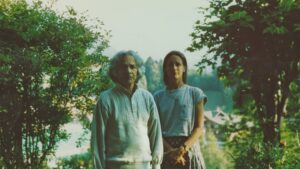
A still from THE NATURAL STATE
I made many failed versions of the film. What finally unlocked it was realizing that Julie was the emotional stakes. What happens to Julie is what keeps you watching.
By then Julie and I had become close friends, so I also felt protective of her. But I eventually understood that we had to embrace the candidness of what she recorded. There was enough trust between us that she knew I wasn’t exposing her just for the sake of it.
U.G. became the thematic element and Julie became the emotional element. I originally thought I was making a movie about U.G. in which Julie supported the story. Instead, it became this genuine two-person narrative. That was surprising to me, but it made the film much better.
HTN: Jane Campion and Mahesh Bhatt both knew U.G. personally. When people that close to your subject become involved, was there ever a sense that his image needed to be protected?
MD: There could have been, but my fascination with U.G. was genuine. I wasn’t showing up saying, “I want to make a cult movie about this crazy guru.” If I had, people would have told me to get the fuck out, and fair enough.
I think they recognized that I was sincerely asking questions that were already implicit in U.G.: Why is he behaving this way? Why is this upsetting or disturbing? People around him experienced those feelings too, and then they might wonder whether that disturbance was somehow part of the point.
Mahesh knew U.G. for decades and Jane has her own perspective, but if you spend enough time around U.G., the stupidest thing you could do is protect his image. There was actually a lot of freedom. People understood I wasn’t trying to throw anybody under the bus, but they also understood that whatever was there should be allowed to be there.
HTN: You had hundreds of hours of footage. How did you determine what could survive in a roughly 90-minute film?
MD: That’s a big reason it took so long. You do all these contortions and backflips because you don’t want to remove something you love, but eventually you realize that pain is necessary.
Once Julie’s psychological story emerged, this question of “What is going to happen to Julie? Is she going to be okay?”the film established a rhythm. I had to follow that rhythm regardless of all the other material I found fascinating.
If you spend too long away from that central question, you lose people. Once I understood where the pulse of the film was, those choices became clearer.
HTN: Some of my favorite moments break away from the home-video material entirely. You incorporate split screens, historical footage, montage, even material surrounding the Buddha. What did those sequences allow you to do that Julie’s footage couldn’t?
MD: Part of it was simply asking how you make a biography visually stimulating. A lot of conventional biographical documentaries can feel like animated Wikipedia entries: “He was born in 1918…” and you think, “Okay, I guess we have to sit through this.”
I didn’t want that. The image couldn’t just sit there flat on the screen. It needed to surprise you. That’s where the split screens and some of the archival choices came from. Using things like the life of the Buddha also gave us opportunities to take the piss out of the material a little bit.
Eventually there were really two editing styles: Julie’s home-video world and U.G.’s biographical world. The challenge became making those styles distinct while still allowing them to speak to each other.
HTN: After “spending” 15 years with U.G., how did your own opinion of him change?
MD: The film is almost designed to sabotage a final takeaway, and that reflects my own experience.
I would constantly think, “Okay, I believe this about him, but what about that?” I could never quite catch him. It’s uncomfortable, but I don’t think it’s ambiguous simply for the sake of making the audience uncomfortable. There might actually be something meaningful in that inability to take hold of him.

I went through periods where I thought U.G. was exceptionally enlightened and that people simply couldn’t understand him. Then I’d wake up in the middle of the night thinking about some detail and go, “Wait, was he actually just a narcissist? Did I waste years of my life constructing a mythology around some street-corner philosopher?”
That internal inability to reach a final answer is ultimately what I tried to dramatize. If you leave the film with your opinion feeling solid and then suddenly something destabilizes it again, that’s very much the experience I had making it.
HTN: That uncertainty really hit me in the final few minutes. By that point, I thought I had finally settled on an opinion of U.G., and then suddenly we’re in Vegas before jumping back to Switzerland. By the end, whatever conclusion I thought I had reached had basically vanished.
MD: That makes me so happy to hear, because that really goes into the takeaway. You can feel like your opinion is finally solid, like there’s no getting out of it, and then suddenly it isn’t anymore. That inability to arrive at a final answer was exactly what I wanted to preserve.
—–
Anders Ljung: That absence of resolution is precisely where The Natural State finds its most provocative territory. U.G. spent his life attacking the desire for spiritual answers, yet his refusal to provide them only made others search him more intensely for meaning. Dougherty’s film wisely avoids resolving that paradox. Instead, Julie’s camera allows us to watch belief being constructed in
real time: the moments when an ordinary gesture begins to look profound, when cruelty can be interpreted as instruction, and when refusing the role of guru does not necessarily erase the power one holds over another person.
After a 15-year journey through hundreds of hours of footage, Dougherty arrives at Telluride not with an explanation of U.G. Krishnamurti but with something considerably more interesting: a record of what happens when our desire to understand another person continually exceeds what the evidence can prove. In The Natural State, uncertainty becomes both subject and method, leaving the audience in much the same position as Julie, Dougherty, and those who gathered around U.G. decades ago, looking closely, searching for an answer, and wondering how much of what we see was already within us.
– Anders Ljung