


(The Vashon Island Film Festival ran August 13–16 for its fifth year. Check out Alan Motley’s The Life We Leave movie review, fresh from the fest. Seen it? Join the conversation with HtN on our Letterboxd Page.)
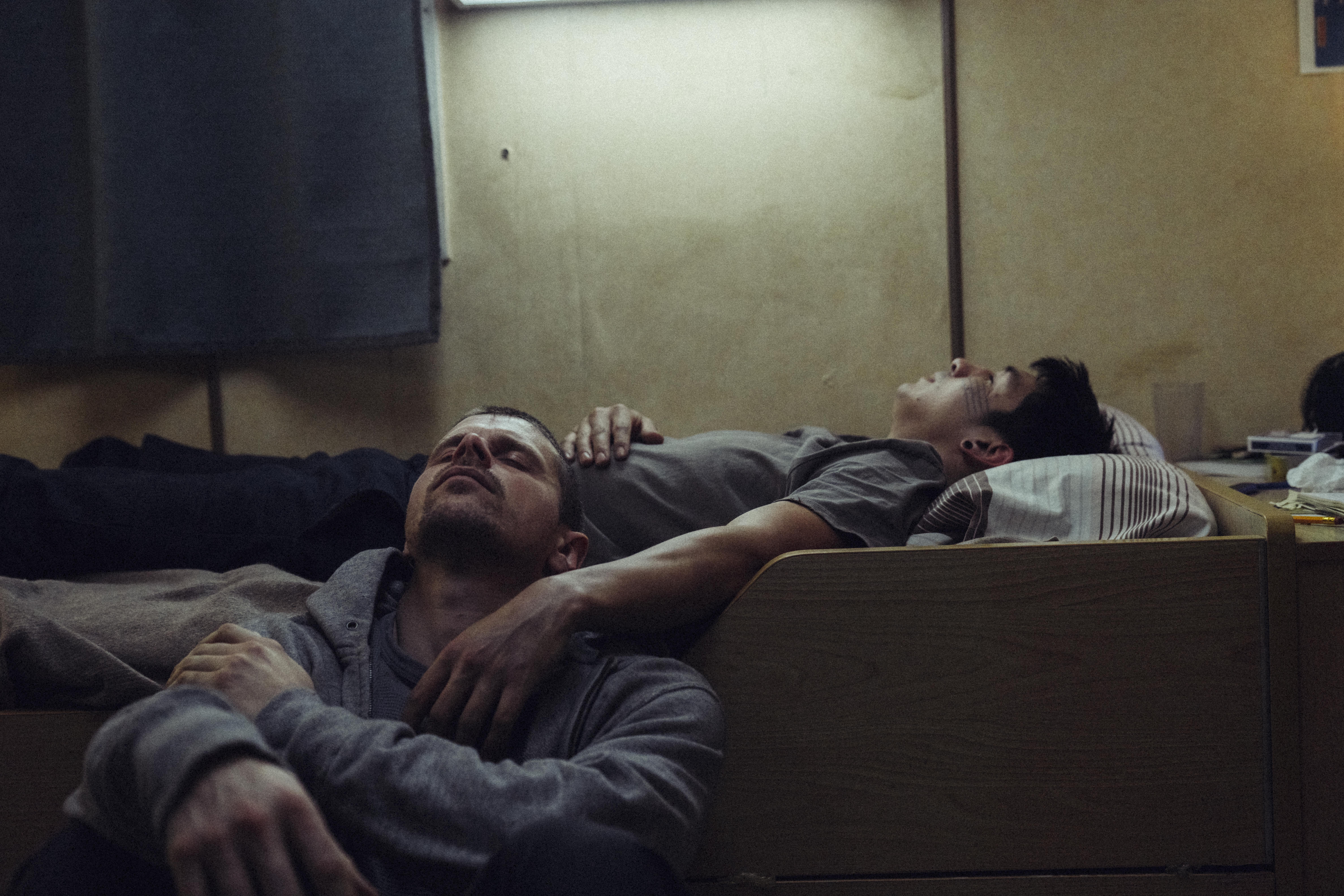
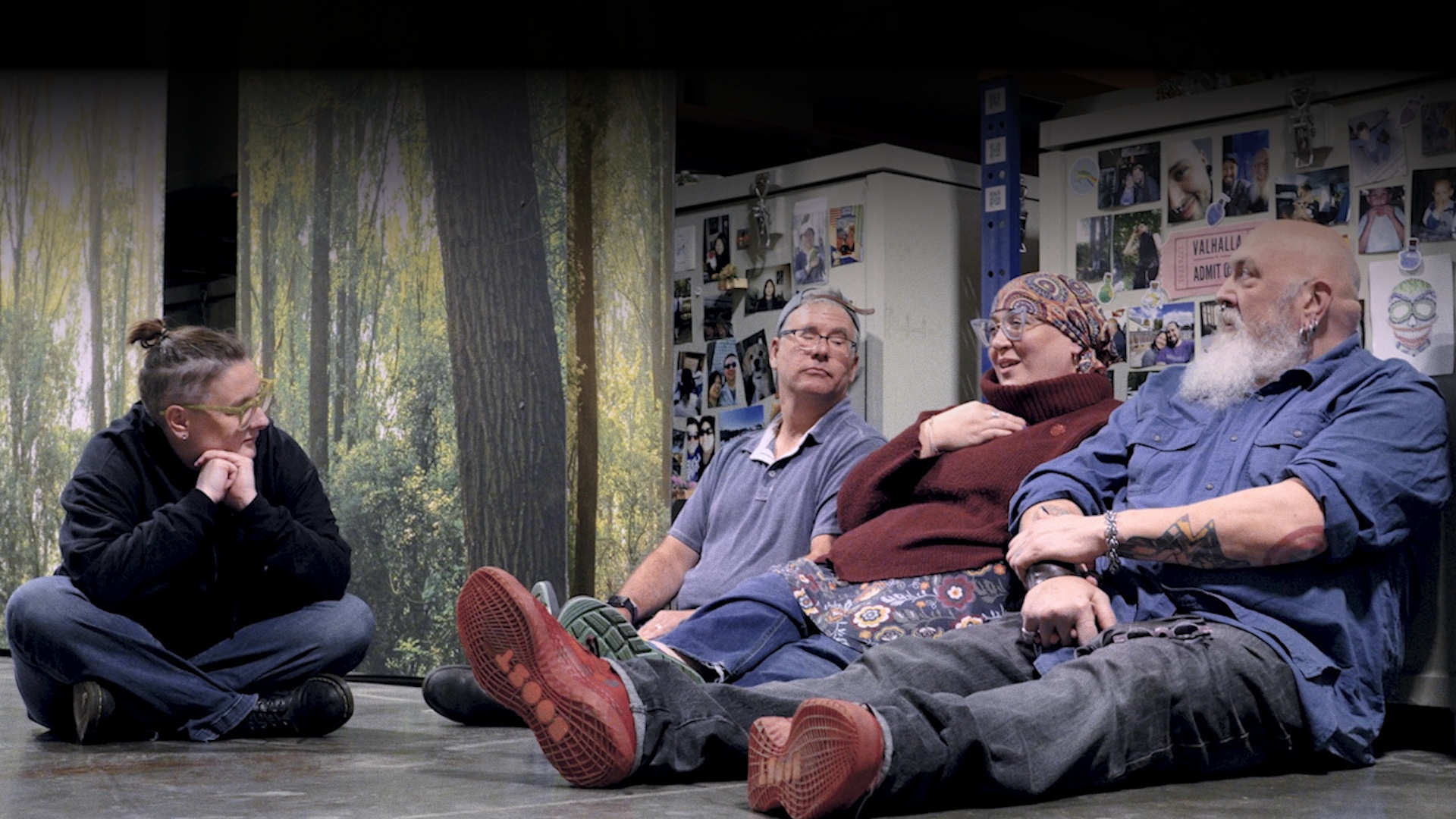
There is a moment in The Life We Leave when the parents of a deceased adult son visit the vessel holding his remains. Photographs of him cover its exterior. His mother reaches toward it and notices something unexpected: warmth. She shares the discovery with his father, and eventually the two sit on the floor with their backs against the vessel.
Their son is inside, undergoing the process that will transform his body into soil.
It is an extraordinarily intimate moment in a documentary filled with them, and one that captures what director JJ Gerber’s film understands so well. The Life We Leave may ostensibly be about natural organic reduction—the relatively new practice of transforming human remains into soil—but its deeper subject is something considerably older: how we care for our dead and how the rituals surrounding death help the living endure loss.
That landed particularly hard for me.
I lost my own father only a few weeks ago. Recently, I received his ashes. Watching families confront the physical reality of what happens to someone after death wasn’t an abstraction for me. The strange transition from a person you knew your entire life to remains you can physically hold is something I am still processing.
And yet The Life We Leave isn’t a morose film.
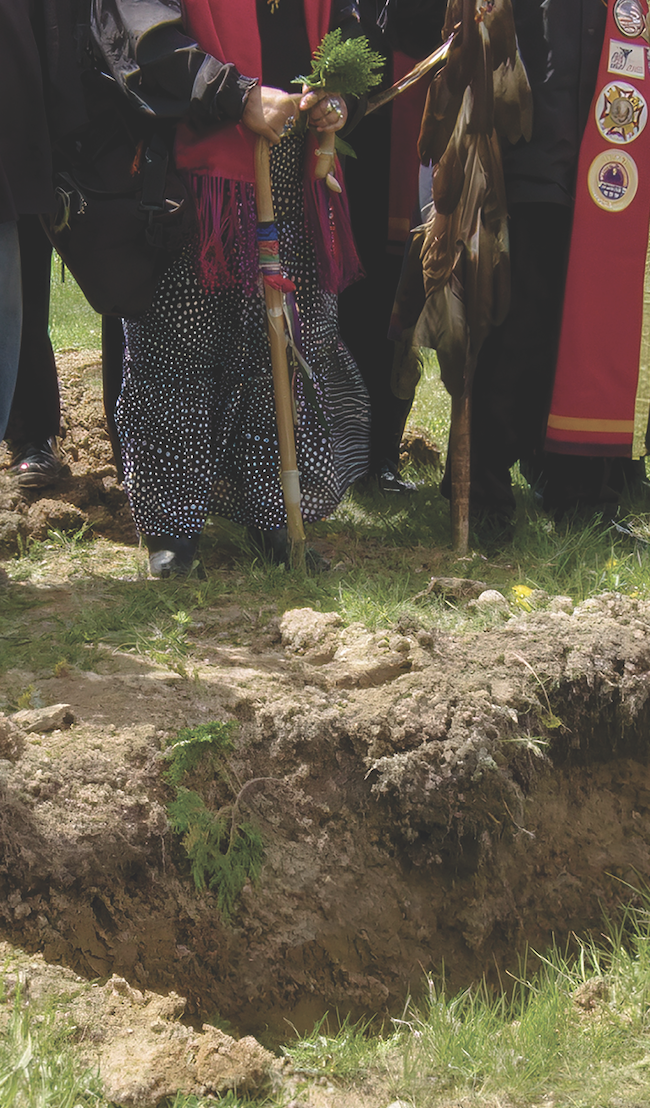
Instead, Gerber examines a movement attempting to reconsider one of the few processes in modern life that we rarely question. Burial and cremation have become so culturally familiar that their rituals can feel immutable. The people in this film are asking whether there might be another way—one that allows the human body to return naturally to the earth while creating entirely new rituals around that transformation.
The environmental argument is certainly present, but the film wisely understands that science and sustainability alone aren’t enough. Death is emotional. Ritual matters.
Some of the documentary’s most powerful sequences take us behind the scenes with the people preparing bodies for the process. There is tremendous tenderness in this work. That becomes almost unbearably affecting when the film turns to children. We learn that this care is offered to families who have lost children without charge.
These scenes could easily have become exploitative in another filmmaker’s hands. They don’t.
Gerber’s direction and the film’s editing demonstrate remarkable restraint. The camera understands when to observe rather than intrude. The film allows bodies to remain bodies and grief to remain grief without transforming either into spectacle. There is emotional weight in these sequences precisely because the filmmakers don’t appear interested in forcing an emotional response from us.
They don’t have to.
There wasn’t a dry eye in the theater where I saw it.
Running through all of this is the unlikely personal evolution of Micah Truman, the entrepreneur helping build what is essentially a new category within the funeral industry.
There is something almost gently comic about parts of Truman’s journey. He appears to be navigating his own version of a midlife crisis while simultaneously trying to rethink what happens to us when we die. Initially, much of his story carries the energy of an entrepreneur building something new: creating infrastructure, challenging convention and attempting to establish an unfamiliar idea in an industry built heavily around tradition.
But The Life We Leave gradually reveals something much more interesting happening to him.
The business changes Truman.
Over time, he begins becoming his own version of a funeral director—not because he adopts the traditional trappings of the profession, but because he begins to understand its emotional responsibility. The work isn’t simply about developing a better process for handling human remains. It requires sitting with people experiencing profound loss. It requires listening. It requires compassion.
He may have started out trying to reinvent part of the funeral industry. What he discovers is that he has entered one of humanity’s oldest professions: helping the living care for their dead.
That evolution gives The Life We Leave much of its emotional architecture. Technology and process can change. Our need for ritual doesn’t.
The parents leaning against their son’s warm vessel understand that instinctively. They aren’t simply waiting for a biological process to finish. They are spending time with their son. The vessel, covered with his photographs, has become something between a memorial and a place of transition. His body hasn’t disappeared behind the machinery of death. They are allowed to remain close to him as his physical form changes.
That distinction becomes increasingly profound as the documentary progresses.
After the screening at the Vashon Island Film Festival, Gerber was joined for a Q&A by Katey Houston and Truman. By that point, the audience had spent the film watching Truman learn how to accompany other families through death.
Then he told us something that gave his journey an unexpected coda.
Truman had recently lost his own father.
And he chose this process for him.
Suddenly, the entrepreneur who had spent years helping create an alternative for other families had become one of those families himself. The system he had helped build wasn’t theoretical anymore. It had become part of his own ritual of loss.
Sitting there, having so recently lost my own father and received his ashes, that stayed with me.
There are countless ways cultures have learned to say goodbye to the dead. We bury bodies. We burn them. We preserve ashes in urns, scatter them into oceans, place them on mantels and carry them with us. None of these rituals changes the fundamental fact of death. What they can change is how those of us who remain learn to live alongside it.
The Life We Leave makes a persuasive case for returning our bodies to the earth. But its greatest achievement isn’t convincing us that human composting is environmentally sensible.
It is showing us that even when we invent a new way to care for the dead, what we’re really searching for is a way to say goodbye.
– Alan Motley (@alanmotley)