





PULP: WHAT DO YOU DO FOR AN ENCORE?
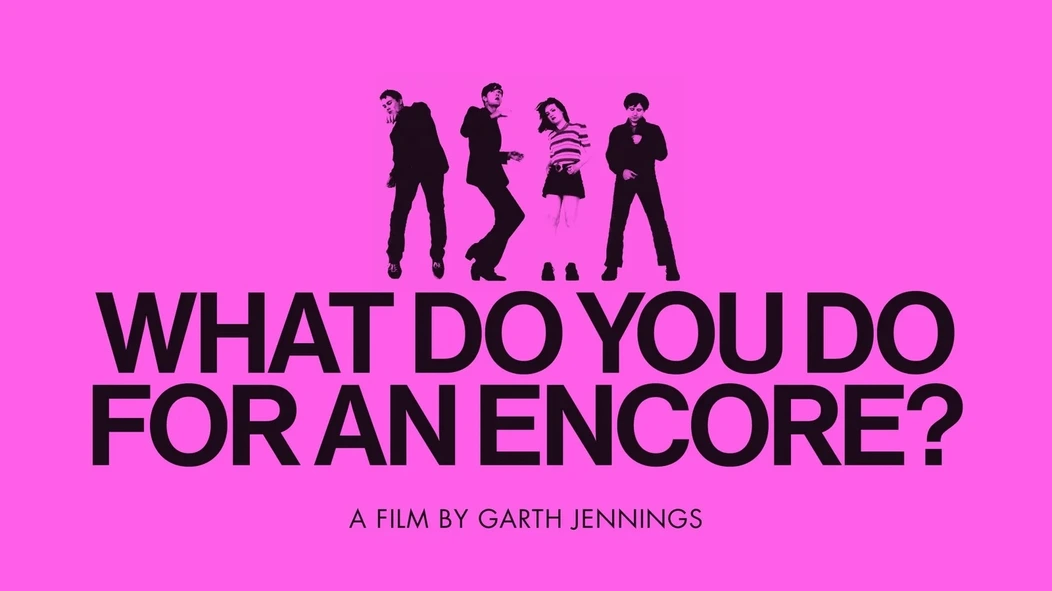
(Check out Jessica Baxter’s Pulp: What Do You Do for An Encore? movie review, it hits VOD Friday, September 25. Seen it? Join the conversation with HtN on our Letterboxd Page.)
Garth Jennings remembers Pulp frontman Jarvis Cocker from his days slinging coffee in obscurity at St. Martin’s college. But Jarvis doesn’t remember meeting Garth until the Hitchhiker’s Guide to the Galaxy director approached him with a treatment for the “Help the Aged” music video; their first single off their 1998 album, “This is Hardcore”. The video culminates in the band taking a cosmic journey that references one of Jarvis’ favorite films, a 1946 fantasy romance called A Matter of Life and Death. Jennings also directed the high-concept video for “A Little Soul” from the same record, featuring child lookalikes of the band members doing the heavy lifting to get the exhausted group to come together in the studio. This exceptional comprehension of the material makes Jennings the perfect choice to document the latest chapter in Pulp’s story. Pulp: What Do You Do for An Encore? spans the band’s lifetime, which began forty-eight years ago in a working-class town in northern England, and is still being written.
Pulp seemingly owes some of their longevity to long hiatuses. In 2025, they launched a worldwide tour to support their first new album in twenty-four years. “More” is only the eighth entry into the Pulp discography. It’s aptly named because the band’s m.o. is to dip out whenever their popularity reaches a fever pitch, leaving their fans gagging for… you guessed it!
Encore is centered around the “More” tour, particularly their 566th show in 2025, at the O2 Arena in London. There they faced the biggest crowd of their career: 20,000 people whose lives were forever changed by this extraordinary band playing infectious tunes about ordinary people.
Out of all the Brit Pop royalty, Pulp remains the most accessible. Sure, they have filled massive venues, smashed sales records, and won awards. Their charismatic frontman is recognized the world over. Their thirty-year-old hits continue to prompt group singalongs in bars and at parties. But what sets them apart from their rock star colleagues is that their humble beginnings lasted far longer than most bands’ entire careers. Pulp endured for seventeen years before the world embraced them en masse. In that time, their lineup shifted and honed into the core four who remain with us today: Jarvis Cocker, Candida Doyle, Mark Webber, and Nick Banks. (Bassist and founding member Steve Mackey sadly passed away in 2023). Their sound has changed a bit over time, but their early tunes are unmistakable. Jarvis Cocker has always utilized his signature toolbox of sexy whisper monologues, bird-in-heat wails, and wild on-stage shape-throwing to deliver Pulp’s oeuvre. And yet, the plebian subject matter of the lyrics keeps them tethered to their fans in a way that no other famous band can boast. Jarvis may no longer be able to walk down the street unnoticed, but he remains the Patron Saint of the Common People.
Fittingly narrated by Jarvis (who I suspect also wrote said narration), the film lays out the band’s journey starting with the “humble abode on Stanhope Road”, where they were outcast school kids trying to impress their peers and earn the notice of rock kingmaker, John Peel. It speeds through their career apex with the explosion of 1995’s “Different Class” and explains their reasons for shunning the spotlight at the height of fame, before returning to the stage over a decade later.
The chronicle includes Hedwig-style animations (by Arnau Sola Vila) of Jarvis’ early journals, in which he jotted down lyrics and plotted how to become a star. There are clips from shows throughout their career including those very early gigs when the band were basically babies (I’m happy to report that Jarvis has looked like that the *entire* time.) It also incorporates clips from Florian Habicht’s fantastic 2014 film Pulp: A Film About Life, Death, and Supermarkets, which told the Pulp story through the P.O.V. of the everyday citizens of Sheffield. The aptly named Encore does a little review but also brings the band into the context of the present day.
It’s remarkable how many times Pulp has metamorphized. Not just with band member turnover, but also several instances of “throwing in the towel” to live a normal life, only to find that they missed the stage and each other. These days, many legacy bands reform to scramble for retirement money, and play their hits, but their heart isn’t in it. Encore shows that Pulp is a major exception, with more to say and to offer audiences. They are a band to grow up and old with. They have songs for every stage of life, and they wrote them in real time. I look forward to their octogenarian record, even though it will mean that I too have become one of the Aged.
Jarvis Cocker in Pulp: What Do You Do for An Encore
It’s funny to think that such an obviously legendary band once needed professional encouragement, but Jarvis credits that early-days nod from John Peel as indispensable fuel to endure seventeen more years of languishing in obscurity. And thank the gods he did, because this film is filled with regular folk whose lives were improved by discovering Pulp. I count myself among them. You can see the demographic diversity on the 2025 concert footage: Young adults who grew up with the band playing in their household, middle-aged folk who heard “Mis-Shapes” at a pivotal point in their adolescence (“Brothers, sisters, can’t you see/ The future’s owned by you and me/There won’t be fighting in the streets/They think they’ve got us beat/but revenge is gonna be so sweet”), and even seniors who can no longer stand at the front, but still sing along to every word. Even though Jarvis is no longer able to count himself among the common people, he still remembers what it was like watching roaches climb the wall, and the band remains keenly aware that they would not be playing a massive stadium today if it weren’t for all the everyday people who bought Different Class with their scant income and kept the Pulp fires burning.
Jennings includes heaps of rare and never-before-seen footage of the band to fill in the picture of their legacy. There was a celebrity football (soccer) tournament they played for charity with the likes of Blur’s Damon Albarn and the Gallagher bros. There’s Top of the Pops, and a quick cameo on children’s television. We see the fishmonger shop in Sheffield where Jarvis briefly worked as a teen, and Mark Webber coaching youth soccer. There are house party shows, including Jarvis performing in a wheelchair after his infamous window stunt to impress a girl led to two broken legs. The film also credits this fateful faux pas with giving Jarvis plenty of downtime to hone his craft and write lyrics. It was here that he developed Pulp’s winning formula: “Barry White + Euro Disco + gritty Northern Realism”. I defy you to name a more sardonically self-aware multi-platinum artist.
Jennings also plays with aspect ratio symbolism and vintage commercials to covey the mindset of Jarvis as a young boy whose life’s goal was to live inside the television. The film repeatedly returns to the O2 show choosing songs to punctuate the topics from the narration. It’s a perfect meta structure for a meta band who just released their most self-referential album to date. On the first single, “Spike Island”, Jarvis declares, “I exist/to do this/shouting and pointing”. And indeed, he does make it seem like a calling. His lyrics are smart, deep, and referential, but they’re never pretentious or condescending. Pulp has always punched up, even when they were at the top of the heap themselves.
The concert footage in Encore does an exceptional job of conveying the energy in the room and well simulates the vibes of an actual Pulp show. Their live experience is truly unmatched. You can feel the electricity no matter where you are in the crowd. I’ve personally seen them three times, and each one of those shows resides firmly in my top ten. (At one point, you can even catch a glimpse of yours truly losing her mind at their 2011 Coachella show.) It’s no wonder they felt like quitting showbiz after every tour. The entire band puts their whole essence into the job. In some ways, it’s closer to a tent revival than a concert. Jarvis sings with intense emotion, as if he’s expressing these thoughts for the first time. He appears to have an existential panic attack on stage as he launches into the final stanza of “Grown Ups”.
One last sunset, one final blaze of glory
And I know it’s all about the journey
Not the final destination, but what if you get travel sick
Before you’ve even left the station?
They also include a sweet segment to fallen Pulp alum, Steve Mackey, who passed away in 2023 at the tender young age of 53. At the O2 show, they dedicate “Something Changed” to him. I’ve always thought of it as a love song, but it also works exceedingly well as a tribute to a dear friend and creative partner.
Jennings shunned present-day interviews, deciding to let the O2 concert footage speak for itself. This lends the film a “time capsule” ambiance, where the only current reflection comes from Jarvis’ stage banter and the audiences’ synapses making connections and drawing conclusions. It makes for an especially cerebral viewing experience, which is also very on brand for the band.
Jennings adds another inception layer to the meta-ness when Jarvis describes Pulp’s lyrics as “Using secondhand items to tell a brand-new story”. Said Jennings, “I found that if you love something, and you’re curious about it, that’s a good recipe for making something.” Isn’t that also the very nature of documentary? What could be more Pulp than that?
Jarvis ends the O2 show by saying, “We’ll see you another time.” Every time I’ve seen Pulp, it’s felt like the final opportunity. And someday it will be. But for now, it’s exciting to know that “the story of Pulp keeps going.” We may yet get another Encore.
Yes, I’d like to teach the world to sing
But I, I do not have a voice
And I’d like to buy the world some time
Some time, some time
And a choice
– Jessica Baxter (@TheBaxter)