



(The Tribeca Festival is back and celebrates its 25th year! Taking place June 3 – 14 in various screening rooms around NYC, HtN has tons of coverage coming your way like this Via Nagativa movie review from M.J. O’Toole! Seen it? Join the conversation with HtN on our Letterboxd Page.)
After making her mark at the 2023 Tribeca Festival with her tearjerking feature debut, The Graduates, writer-director Hannah Peterson returns to the festival this year with a different tale of grief, but with a little more surrealism. With Via Negativa, Peterson adapts Daniel Hornsby’s novel of the same name, giving her second feature a little more ambiguity, but with a fable-like quality. The story may seem modest in terms of plot, but beneath its surface lies a poignant blend of dry humor, melancholy, suspense, loneliness, displacement, and human connection. As a disconnected young priest who’s more in conflict with himself than with God, Young Mazino gives a powerhouse performance in this quiet character study on being consumed by the past and how it impacts one’s present. Peterson’s sophomore feature has her expanding her horizons as her damaged protagonist takes a road trip through the American Midwest on a secret mission. Its profound and melancholic atmosphere feels more reminiscent of Wim Wenders’ classic Paris, Texas, even though the scale in this film is somewhat smaller. Featuring surprise pop-ups from a top-tier supporting cast, this film raises the question of what direction a person goes in when they start to lose their grip on what they thought their purpose was.
It’s not long after we meet our protagonist, Father Dan, that he’s already losing his grip on his passion as a priest. Complaints have already been made about his sermons, and attendance at his church has started to drop. His bishop (Tony Hale) demotes him to a substitute priest position at other local churches, causing him to lose his parish of residence. It becomes clear to both his parishioners and the audience that Dan is starting to become somewhat of a nonbeliever. Even while drowning his sorrows at a karaoke bar, an encounter with a bartender (Zoë Winters, always fantastic) who begins confessing her darkest sins to him doesn’t really invigorate him in the slightest. It’s at this point that Dan, with nothing to lose, starts to hit the road with two noticeable things in tow: a letter from someone named Paul, and a handgun encrusted with human bone. It’s clear that Dan is on some kind of personal mission, and this becomes clearer as we learn more about Paul, a close friend of Dan’s from their days at a Catholic school who recently died. While Peterson’s previous film followed survivors of a high school shooting reeling from trauma, her new feature also shines a light on the mental and spiritual toll that stems from a different unspeakable crime against humanity. Those who are familiar with the Catholic Church’s controversies might have a pretty good idea.
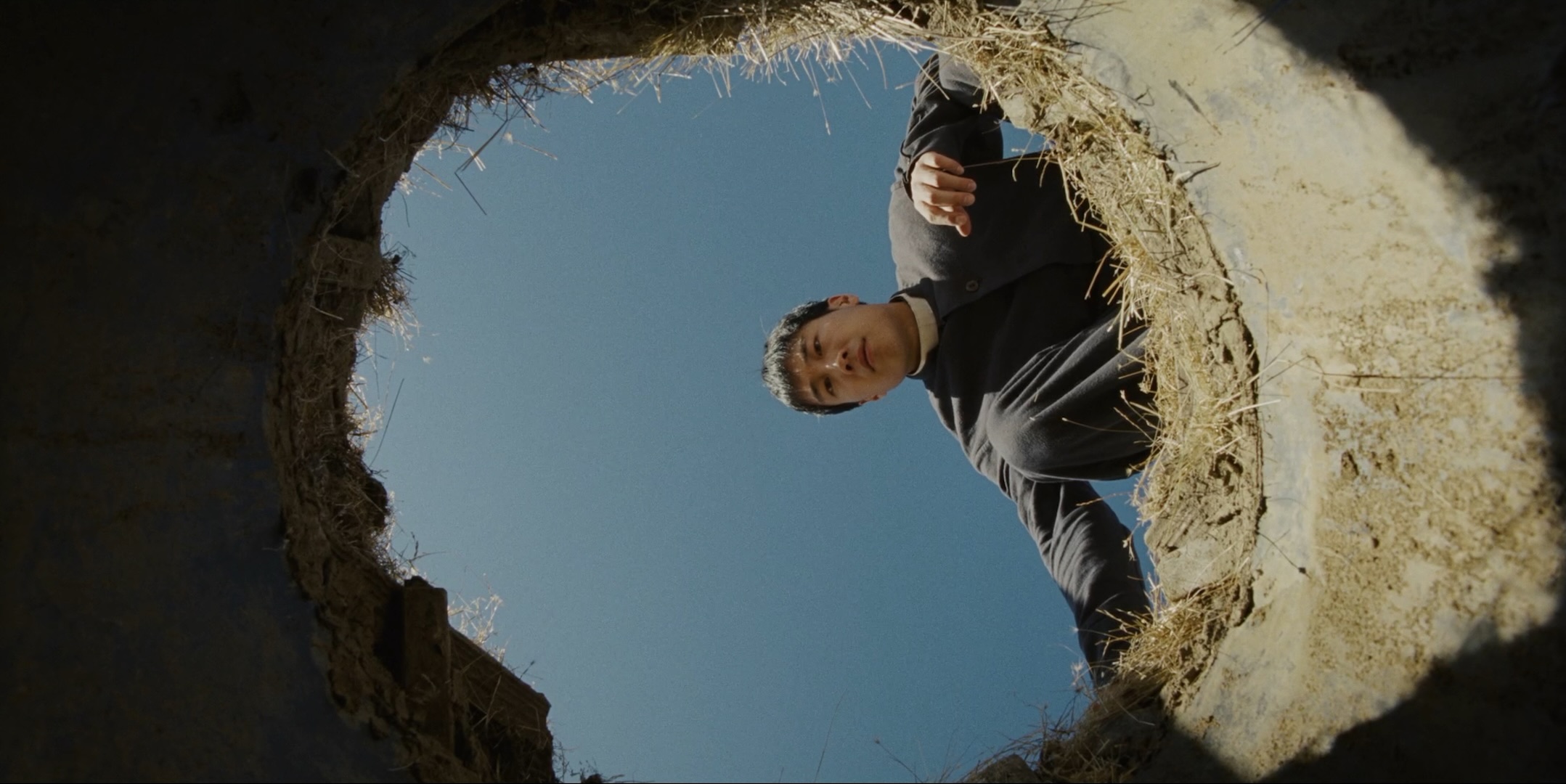
Dan’s travels on the road lead him to people who ask him for a blessing or a chance to confess, encounters which don’t touch his heart as well as they do theirs. He takes more of an interest in the attractions he passes through, the most memorable being the “Hole to Hell,” a bottomless pit where you can’t even hear the echo of a rock landing. Is this where Dan sees himself heading towards the end of his journey? It isn’t too long, though, until he gets unexpected passengers in the form of an injured coyote that he accidentally runs over (you heard that right), and a rebellious teenage runaway named Anna (MiMi Ryder), who’s trying to break free from her own confined settings. As the duo reluctantly warm up to one another, they make brief stops on the road, which include an impromptu visit to Paul’s recently widowed husband (Carl Clemons-Hopkins). Even an encounter with an ex-Mormon (Stanley Simons) reveals a part of Dan that he himself has likely long kept hidden, which could also provide more insight into what he and Paul really shared. But it’s not easy for Father Dan to be vulnerable around other people the way they are around him. As they attempt to get closer to him, he pushes them away before he can connect emotionally. What drives him and what has affected him spiritually are spread out like breadcrumbs throughout. As he gets closer to his destination, he begins to face memories he has long kept suppressed, which he originally attempted to reconcile through his commitment to a higher religious calling.
Director Hannah Peterson does not provide any concrete answers to what Dan went through in his past or what the future may hold for him. Instead, she trusts the audience to look closely at Dan and piece together the motivations behind his journey of redemption and revenge in her slow-burn character study. Despite his flaws, Peterson adapted this complex character for the screen with pure compassion, and Young Mazino’s quietly breathtaking performance makes it easier for us to sympathize with and care for him. The superb supporting cast makes this a worthwhile watch in its own right, though several performers are so compelling that I found myself wishing they had more screen time. Maximilian Pittner’s magnificent cinematography beautifully marries mood and setting throughout the road trip. Much like in Peterson’s previous feature, The Graduates, the deceased loom large over the story, their presence felt so strongly that they almost become characters in their own right. Once again, she crafts a deeply affecting drama that highlights the complexity of grief and what we wish we could’ve done differently. You may leave the film with more questions than answers, but its willingness to embrace ambiguity is one of its greatest strengths.
– M.J. O’Toole (@mj_otoole93)