




SCHOOL FOR DEFECTORS
(Check out m.j. O’TOOLE’S School for Defectors MOVIE REVIEW. It premiered at True/False and will next play at DC/DOX on Saturday, June 13. Seen it? Join the conversation with HtN on our Letterboxd Page.)
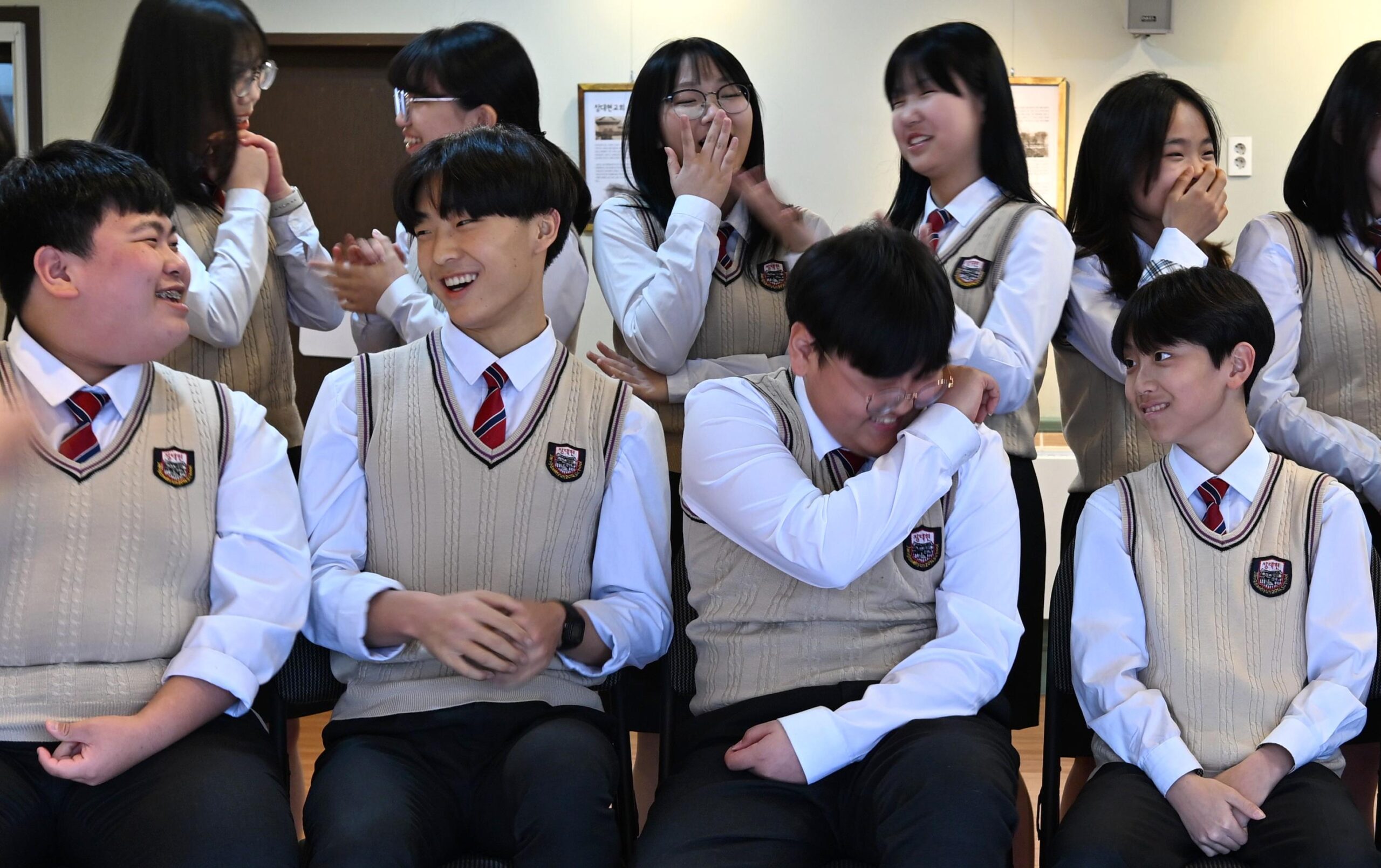
Documentarian and master movie-trailer editor Jeremy Workman has made films about a man who treks every inch of New York City, a domino-toppling prodigy, and a community of Rhode Islanders living secretly in a mall. He continues to spotlight the brighter sides of humanity in School for Defectors, traveling halfway across the world to Busan to intimately capture the lives of students in a tiny boarding school striving for a better future. Like his crowdpleasing Secret Mall Apartment, this one also centers on a community of sorts. School for Defectors takes us inside the Jangdaehyun High School (JDH), which houses a small student body of 20. The main commonality that these students share: they were all born in North Korea to parents who fled the dictator-ruled country to escape their grim circumstances. The environment the warmhearted teachers and administrators foster in this school is one filled with laughter, energy, and fewer limitations, a stark contrast to what was imposed on them in North Korea. Workman dives deep into who these kids are as individuals and how their families’ unfathomable sacrifices have shaped them.
Workman’s camera looks on with keen patience and attention, capturing the daily routines and dynamics of the faculty and student body. In this small, co-ed boarding school, the students and staff are presented as a collective rather than as the typical hierarchy found in most American public schools. We first get to know them individually when the kindly principal asks each of them where they see themselves in 10 years. As many of these students are in their final year of high school, the teachers work closely with them to find the right universities to apply to and improve grades needed to get accepted. In much of South Korean society, the word “defector” comes with negative overtones. To the surprise of the viewer, as well as Workman himself, many of those who fled the North have faced prejudice from born South Koreans. JDH serves as a haven of sorts, a place for these kids to find community with one another away from the isolation that they would likely face if they studied elsewhere. Through observing their day-to-day lives and candid testimonies, School for Defectors serves as a space for reflection on our own schooling.
Imagine having to flee from a totalitarian country, where being captured can result in either death or modern slavery. That is what the parents of these students had to endure to break free from their oppressive surroundings with their small children in tow. Most of the parents’ faces are pixelated to protect their identities. Their stories provide great insight into the contrasts of life in North and South Korea. A father of one student recalls the painful memory of his wife giving birth to their daughter back in the North without proper medical care. Even as they were fleeing, he feared making an unfathomable choice to save her from a fate worse than death – the kind of choice that no parent should ever have to make – had they been caught by North Korean forces. The parents of bright-eyed, vigorous student Phillip were forced to leave their eldest son behind as they could not afford to take him with them. One of the most emotional moments of the film is presented through an audio recording of Phillip and his older brother reuniting over a phone call arranged by a broker. While the perils and trauma of defecting to the South may still weigh heavily on the parents, they know that JDH is a great benefit to their children. Workman ties the parents’ stories in with their children beautifully, showing how their sacrifices are truly shaping their kids’ lives for the better.
With the perfect balance of joy and profundity, School for Defectors shows us a different side of the world. Workman, who admittedly doesn’t understand a lick of Korean, worked closely with a South Korean team of translators, camerapersons, and a Seoul-based producer (Sona Jo) to gain the trust of the school’s staff, students, and their families and give them the space needed to be their unapologetic selves. These kids refuse to let the world around them define them by the circumstances that they were born into. At a time when prejudice and circumstance can limit opportunity, the teachers at JDH remain steadfast advocates for their students, encouraging them to recognize their value and pursue their ambitions. Many parts of the world could use such support systems. The school, in a way, is a symbol of how education can be cherished when empathy, dedication, and bliss are fostered. School for Defectors exceptionally demonstrates what could be for tomorrow’s generation.
– M.J. O’Toole (@mj_otoole93)