





THE HAUNTING OF PENNHURST
(The Tribeca Festival is back and celebrates its 25th year! Taking place June 3 – 14 in various screening rooms around NYC, HtN has tons of coverage coming your way like this The Haunting of Pennhurst movie review from Chris Reed! Seen it? Join the conversation with HtN on our Letterboxd Page.)
Good haunted houses are a ton of fun. You never know what’s right around the corner and, if you’re lucky, your heart will stop in the best possible way. Quite often, these seasonal attractions include rooms set in psychiatric hospitals (what used to be called “insane asylums”). In those spaces, we see the gruesome results of terrible medical experiments gone very, very wrong, blood spatted everywhere. Imagine, now, going to visit a place that has been created on the grounds of a former such institution. Creepy, right?
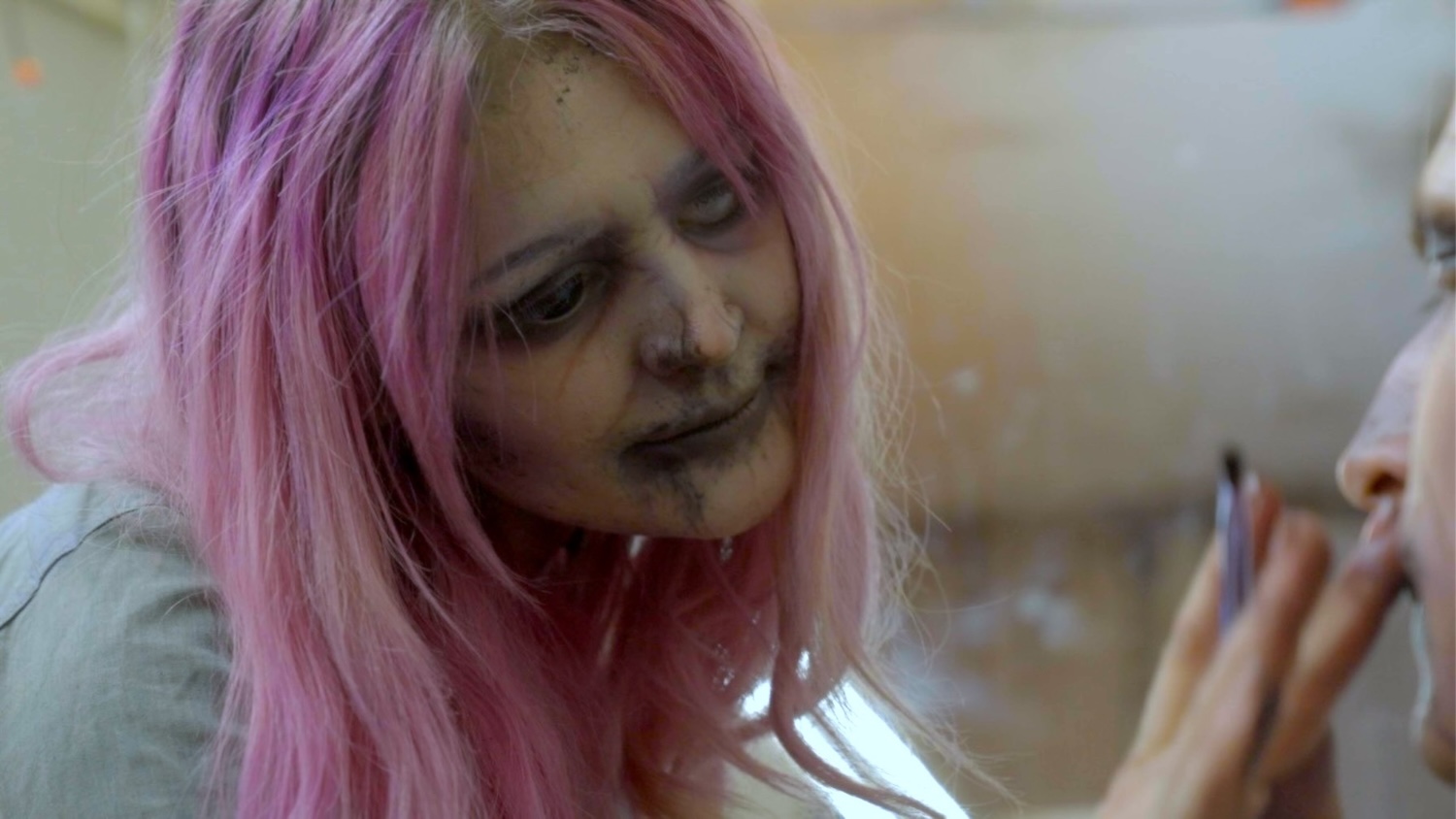
In The Haunting of Pennhurst—a new documentary from Mike Attie, Katarina Poljak, and Nathan R. Stenberg—we visit the Pennhurst State School and Hospital, located in Spring City, Pennsylvania, not far from Philadelphia. It was bought in 2007 by an investment group with the idea of turning it into a haunted house. About half the movie (give or take) shows us the fun of preparation and then execution of the jump scares that people come to experience. The other half presents the history of Pennhurst, in all its ignominious not-really-glory.
The directors open the film with a trigger warning for just about all the content, and with good reason. Pennhurst’s past is bleak, and thanks to period photos and film footage, we learn quite a lot about the horrors that took place there. The poor inmates (for that’s what they were, even if ostensibly patients) were people—mostly children, though many stayed far beyond the dawning of adulthood—whom we would today call neurodivergent but back then (not that long ago) were labeled as “feeble minded.” It’s very hard to process the tortures inflicted on them but not difficult to understand why someone would think Pennhurst the perfect spot for what it is now.
Except that those who suffered and died on the grounds deserve our compassion and respect, and The Haunting of Pennhurst wants to celebrate the employees of today—most of them also, and proudly, neurodivergent, and/or differently abled—while honoring the victims of the past. The two parts of the movie overlap, since some of the protagonists work at the site beyond their roles in the haunted house, giving tours of the facility and developing a museum. Financial and preservation needs coexist, sometimes uneasily, as Pennhurst plays host to an annual “Paracon” convention, where visitors attempt to talk to ghosts as they swagger through the halls.
Beyond the uncomfortable history lesson, it’s this tension—between the mercenary and archival—that drives the narrative forward. Cinematically, this proves a smart strategy, breaking up almost-unbearable stories with the fun of planning the next great fright. You’ll have a blast while also discovering the truth about something that will hopefully never happen again.
– Christopher Llewellyn Reed (@ChrisReedFilm)