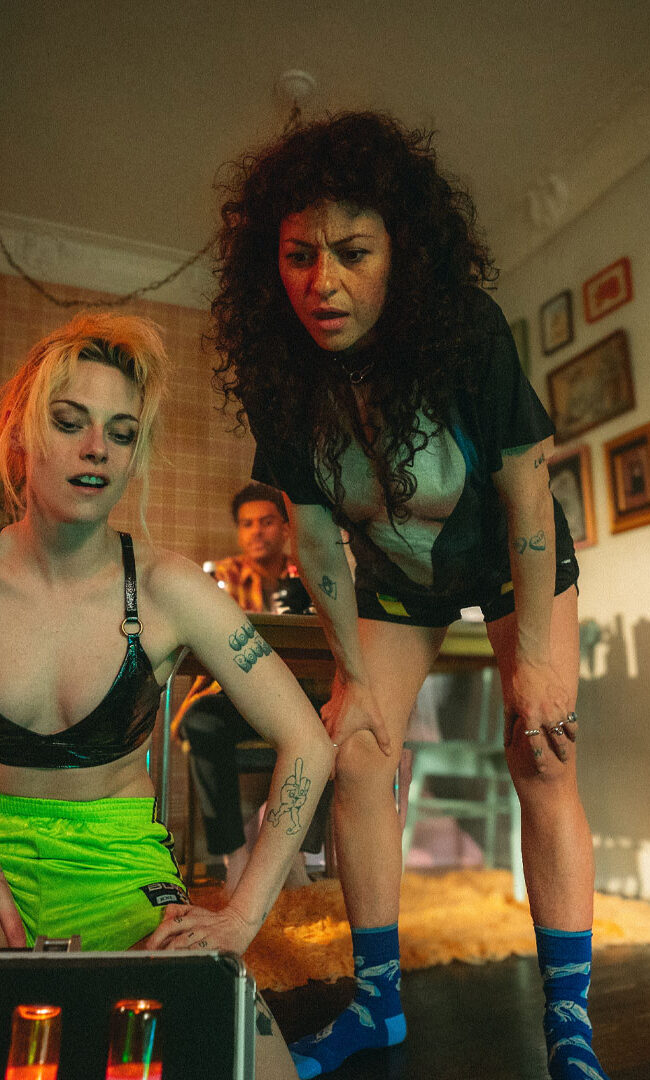






SEE YOU WHEN I SEE YOU
(The 52nd Seattle International Film Festival runs May 7-17th in and around Seattle. Check out Jessica Baxter’s See You When I See You movie review, fresh from the fest. Seen it? Join the conversation with HtN on our Letterboxd Page.)
The Duplass Brothers were quite prolific in the early aughts, releasing eight features between 2005 and 2012. Jay Duplass took a break from directing features after 2012’s The Do-Deca-Pentathelon. During Pandemmy Times, he (like a lot of folks) did some soul searching and found two projects in rapid succession. The Baltimorons came out in 2025. See You When I See You is the second film from the newly invigorated Duplass. Coincidentally (?) both films are comedies centered around suicide. They don’t sound particularly funny, but those Duplass boys are masters of tone juggling. Their films often pack an emotional punch but soften the blow with built-in humor along the way. The jokes mostly don’t come from the circumstances, but from the characters themselves. There’s an extra layer of comedy in See You When I See You, because the scribe who based the screenplay on his own memoir (Tragedy Plus Time: A Tragic-Comic Memoir), is comedian Adam Cayton-Holland.
Cayton-Holland’s 2018 memoir is about how his family fell apart and came back together after his little sister’s suicide. He adapted it into a slightly less autobiographical screenplay and gave it to producing pals Emily v. Gordon and Kumail Nanjiani to shop around. Gordon and Nanjiani are no strangers to this genre, having made their own reality-based tragic-comedy, The Big Sick. Duplass was hesitant to accept their directing offer because he’d never made a film that he didn’t write himself. But when he read the screenplay, it reminded him of the genre-straddling films he loved in his youth like Terms of Endearment and Kramer vs Kramer. Duplass did give the script an overhaul with his own proverbial pen, adding visual illustrations of internal conflict that are very effective, without being too expository or heavy-handed.
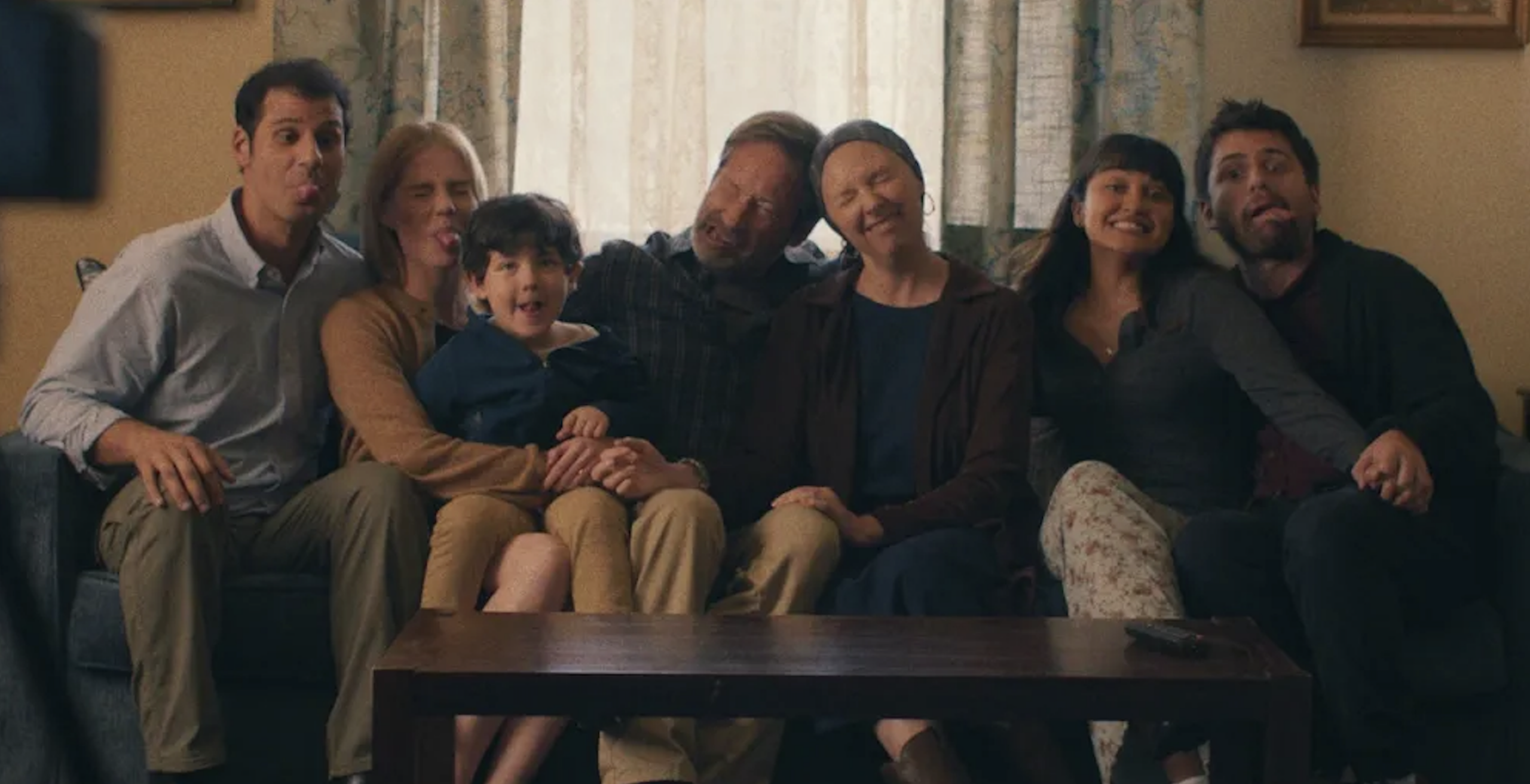
We first meet the Whistler family as they’re in the process of cleaning out the house left behind by Leah (Kaitlyn Dever), the baby of the family. Robert (David Duchovny) and Page (Hope Davis) are the grieving parents, arguing over how much of Leah’s childhood art they should keep. Emily (Lucy Boynton) is the oldest sibling, and we can tell right away she’s the one running the show. Inside the house, Aaron (Cooper Raiff) gets lost in the memory of a family photo taken on the dock of a Lakehouse. Right away, we know so much about who these people are. They’re close, but they also have trouble talking to each other about hard things and get bogged down in details. Aaron is too paralyzed by grief to be any help. His journey into the photo memory also hints at a recurring story device, which illustrates his despair and PTSD in profound ways. I can honestly say I’ve never seen anything quite like it.
Aaron didn’t just lose his sibling, he lost his best friend and closest confidante, and it happened in a very traumatizing way. The circumstances are such that it’s easy for him to plumet into a shame and blame spiral. Even when he’s remembering good times with Leah, the knowledge of her future creeps in and darkens the memory, literally sucking her up into the sky and away from him.
Aaron’s life devolves into alcoholism, responsibility avoidance, and toxic behavior at work and in his personal life. He shares some very tender moments with a woman named Camila (Ariela Barer) who he had just starting to date prior to Leah’s death. But Aaron’s pain is too fresh and unmanaged to get through even one date without disaster. I really appreciated how fleshed out Camila was with just a handful of scenes. She cares about Aaron, but she also didn’t sign up for a boyfriend who is hitting rock bottom before she even gets a chance to know him.
Because Aaron was the one who found Leah’s body, he partly blames himself for not getting there fast enough or seeing the signs before it was too late. His parents offer to get him professional treatment, but he refuses and engages in increasingly destructive behavior. This results in court-mandated therapy, which is every bit as ineffective as you might think. The court appointed therapist is at a loss after Aaron doesn’t respond well to his sports metaphors. He agrees to sign off for Aaron without completing the therapy.
Aaron then gets obsessed with an endangered bird his mom told him about called the Wet Leg Sage Grouse. He decides that writing about it allegorically for his online comedy journal will squash that pesky trauma. He assures his colleagues, “I’m gonna make it funny,” but it doesn’t seem like he can fulfill that promise.
At home, Robert and Page struggle to regain intimacy and unity. Emily feels like she’s been abandoned to handle everything, without any regard for her own grief or personal responsibilities. Then Page gets a concerning diagnosis which makes her withdraw from Robert even further. But Page does manage to get Aaron to try an unconventional PTSD treatment called EMDR (Eye Movement Desensitization and Reprocessing), which aims to recontextualize memories, and help the patient regulate when and how they remember their trauma. At first, this seems like it only exacerbates his pain. But as Aaron moves through the treatment process, we see some of his memories change. The depiction of EMDR reminded me a bit of Eternal Sunshine of the Spotless Mind, when Joel is trying to hide Clementine in a memory she wasn’t a part of to keep from losing her altogether.
Dever is fantastic as Leah, brilliantly illustrating through pure effervescence why Aaron is so distraught without her. Sometimes, the most fun people you know are also the ones struggling the most. Leah isn’t just a gauzy ghost defined by her death. There are hints of mental health struggles compounded by grade school bullies. But, like so many people who succumb to self-harm, the Leah we meet in Aaron’s memory is a vibrant, funny, brilliant, loving, talented person. In many ways, she seems better at life than the brother she left behind. This is such a kind and refreshing portrayal of depression, showing that it’s a disease like any other. It’s no one’s fault that she got sick, and it’s no one’s fault that she didn’t survive her illness.
Dever’s performance was also, perhaps, informed by the recent loss of her mother. In Duplass’ directors’ statement, he said that they started each day of production by circling up. Sometimes people shared tough personal experiences brought up by working on the film. They didn’t rush anyone through intense feelings to stay on schedule. Every member of cast and crew were treated like individuals who mattered, and that allowed them to come together to make an exceptionally loving and empathetic film. It sounds like Duplass is doing it right. I hope he doesn’t wait another decade to make another one.
– Jessica Baxter (@TheBaxter)