




(Check out Jessica Baxter’s Among Neighbors movie review, it’s available on VOD now. Seen it? Join the conversation with HtN on our Letterboxd Page.)
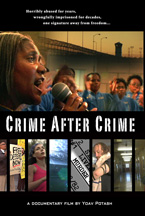
Early on in the compelling historical documentary, Among Neighbors, Polish journalist Konstanty Gerbert advises that if you want to hear the real stories about what happened to the Jewish people of Gniewoszów, Poland, you must be “willing to invest the time and the effort and the understanding that it takes… Nobody will talk to you on the first day. Not on the second, not on the third.” Ultimately, documentarian Yoav Potash (Crime After Crime) spent a decade interviewing the octogenarian residents of this rural town who still remember what it was like before, during, and immediately after World War II. But before the narrative gets mired in the past, Potash reminds us that history is really more of a flat circle.
In 2018, the Polish government passed a law outlawing any speech, written or spoken, that implicated the country or the people in holocaust atrocities. Potash had already been visiting Gniewoszów for four years and recognized this legislation as nationalist propaganda and historical whitewashing. Make Poland Great Again, if you will. Those who had lived in Gniewoszów through WWII, once again found it a dangerous prospect to tell the hard truths of their childhood experience. More determined than ever, Potash continued to invest the time, forging relationships that would become the spine of Among Neighbors. Though several town elders give their testimony about the rise of antisemitic culture, two people propel the narrative: A Christian woman named Pelagia Radecka and a Jewish man named Yaacov Goldstein were both teenagers when the Germans first occupied their town. Not only do they remember what happened, they can’t forget.
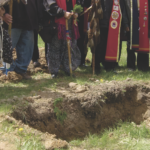
Potash first visited Gniewoszów in 2014 with friends Aaron Friedman Tartakovsky Anita Friedman to film the rededication of the Jewish cemetery in their ancestral town. This cemetery had been ravaged during the war and Gniewoszów was making amends for their part in it. Potash had no designs for a bigger project, and no clue that what he would find would consume the next decade of his life. He interviews some non-Jewish townsfolk who happen to have a Jewish headstone laying on the ground in their garden. They tell him they bought it for pennies at a market and plan to use it in an industrial capacity. They are at first confused as to why Potash wants to know about such a common practice. If you look around not just Gniewoszów but many other towns across eastern Europe, you will find these headstones paving the streets, propping up pillars, fashioned into grindstones for workshops, and even sometimes flipped over to memorialize another (non-Jewish) decedent. They never questioned it, and they didn’t know why these gravestones had been removed from the cemetery. This discovery is merely the top of the rabbit hole that contains a vast secret history of antisemitic violence in Poland. The very history the government was attempting to erase in present day.
As Potash speaks to anyone in town who was old enough to remember what it was like there before WWII, he is shocked to learn that Gniewoszów once had many Jewish residents and even a thriving Jewish culture established centuries earlier. They had once peacefully co-existed with their Christian neighbors. Potash wants to take his time handling such delicate material, but there is also an undercurrent of urgency because the people who witnessed this history first-hand are dying before they can tell their stories. Janina Jaworska, who was born in 1934 remembers playing with her Jewish friends as a child. She still has photos of them in school. Henryk Smolarczyk, born in 1926 remembers that his mother knew how to speak Yiddish. Jan Zieba, who was born in 1924 fondly remembers attending Jewish weddings and other celebrations. But when pressed about why there are no Jewish residents there today, their memories become hazy.
Even without watching the film, you can probably venture an educated guess as to what happened to the Jewish people of Gniewoszów. “Nazis” is the simple answer. But the whole truth is much more complicated. Especially when Potash meets Pelagia and learns that the most horrific violence she witnessed was perpetrated not by Germans, but by other people from Gniewoszów six months after the war ended. The victims were Pelagia’s neighbors. Their son was her friend and possibly her first crush, Janek Weinberg. She found small comfort in the fact that she didn’t find Janek’s body among his slain family that night, but she also knew there was a slim chance he had survived. She wrote down everything she could remember but never told another living soul. When asked why she is finally speaking out now, she says, “now I am not afraid because I am old, and I have seen too much.”
Yaacov expatriated to Israel after barely escaping Gniewoszów and the Nazis. He lost his entire family in the process, including his baby brother who his parents paid a Christian neighbor to look after. Yaacov’s story is harrowing and heartbreaking but peppered with flashes of hope. He survived through sheer will and catching a few breaks here and there. Some people showed him kindness, but for the most part, everyone was afraid of retaliation for helping him, so they simply did not. The amount of detail he recalls from this arduous period is staggering, but it’s also clear that his steel-trap recollection stems more from trauma than acumen.
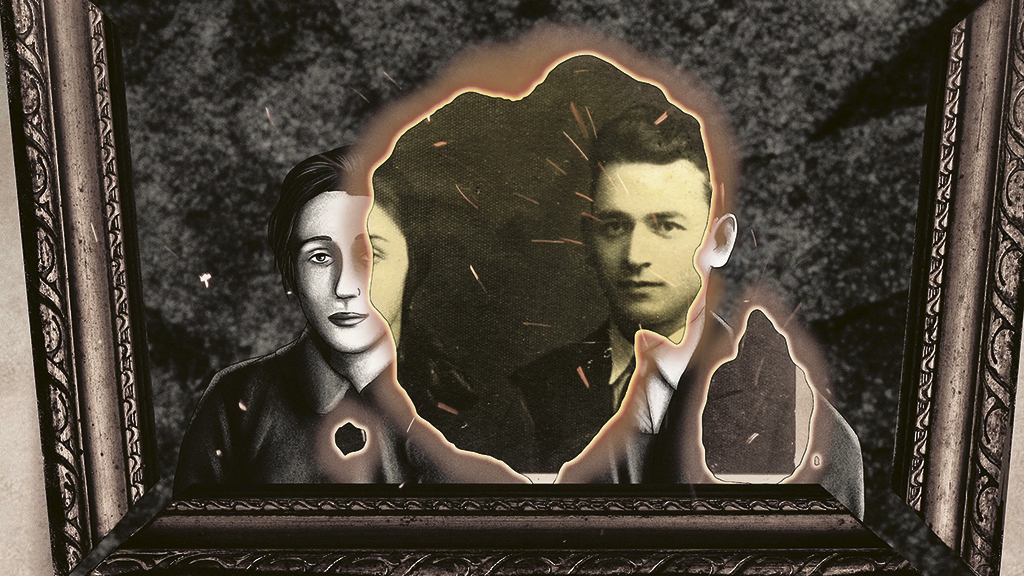
Potash utilizes the animation skills of two innovative artists to illustrate the vivid and powerful stories: José Garnelo for Yaacov and Marcin Podolec for Pelagia. Their respective animation styles are so complimentary, I didn’t even realize they were done by different people until the end credits. Pelagia’s story is black and white with pointed spots of color (a blue polka dot fabric is a recurring motif), and Yaacov’s is more Sepia-toned and shadowy. Both styles blend seamlessly into real film footage from the era, including bomber planes ominously flying over their heads, tanks rolling into town, and frightened people being forced out of their homes and onto wagons and trains.
Among Neighbors is not just about the pain these two enigmatic people experienced because of Nazi infiltration. The discrimination and hate-based violence toward the Jewish people encompassed not only Gniewoszów, but hundreds of similar towns across eastern Europe. Potash includes interviews with historians who trace antisemitic violence and diaspora back to the Middle Ages. Bigotry, it seems, is an indelible part of the human condition. Again, Gerbert hits the nail on the head when he says, “Victims can do evil things. In each town you will find both the most vile and the most noble of human behavior. The truth is in the totality of it.” It’s incredible how Potash can simultaneously focus on the micro story of Gniewoszów whilst keeping the broader context in mind. While it does, at times, feel like a tsunami of information, if you simply let the story wash over you, the heart of the matter floats to the surface.
Even though international opposition resulted in Poland softening the consequences of breaking the 2018 Holocaust Law, a postscript says that it’s still in effect and “a revisionist historian who supported the law became president of the country.” The same president has lobbied for Among Neighbors to be banned. In the United States, we know a thing or two about the dangers of revisionist historians holding high offices and enacting Orwellian censorship. To me, that speaks to the power of this film. If a fascist targets your art, you know you’re doing something right.
– Jessica Baxter (@TheBaxter)