



(Check out Chris Reed’s Orfeo movie review, it’s in theaters in L.A. and NY now before more dates soon. Seen it? Join the conversation with HtN on our Letterboxd Page.)
The Greek myth of Orpheus and Eurydice tells the tale of how the former traveled into the underworld of the god Hades to attempt a rescue of the latter, his wife, after she was bitten by a snake and died. A musician (he played the lyre), he so enchanted Hades that the god agreed to grant new life to Eurydice, on the condition that Orpheus not turn around to look at her as they walked out of the underworld. Thinking he no longer heard her as they approached the land of the living, Orpheus could not contain himself and broke that rule, sending Eurydice plunging back to an eternal death.
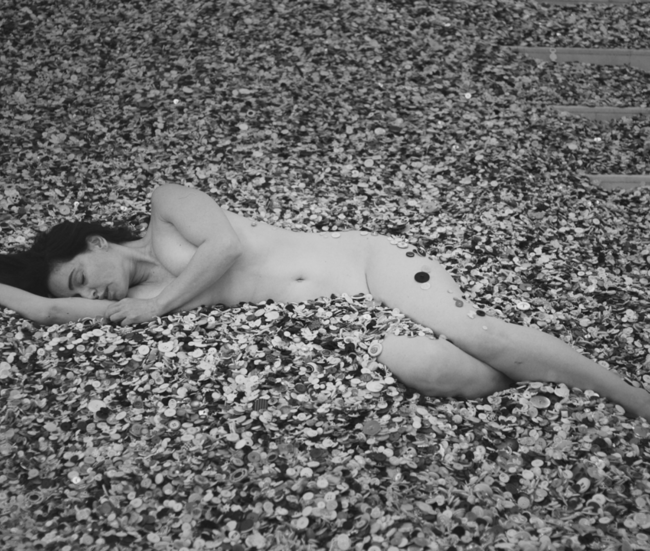
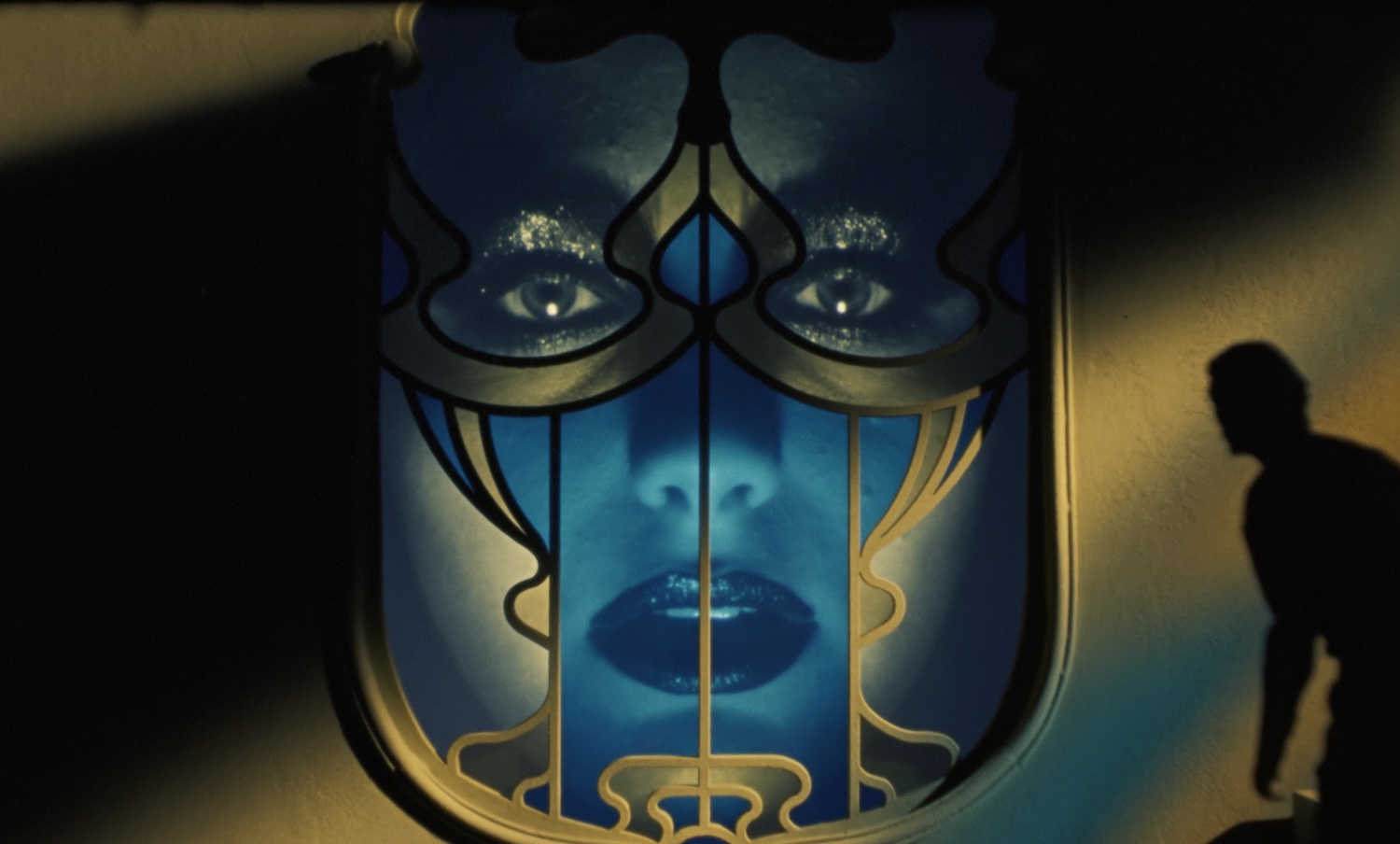
There have been many versions of the story since the time of the ancients, in literature, on stage (including opera), and on screen. In Orfeo, Italian director Virgilio Villoresi, making his feature debut, adapts the 1969 graphic novel Poema a fumetti, by Dino Buzzati, which offered its own unique take on the narrative, filled with film-noir influences and evocative imagery. Villoresi sticks to the general outline of Buzzati’s interpretation but makes the movie uniquely his own through an exciting mix of stop-motion and hand-drawn animation, practical effects, and purposefully mannered live-action performances from his leads.
He shoots on 16mm, which lends the affair an additional artisanal look and feel, each frame a work of art unto itself. Although he keeps Buzzati’s noirish aesthetic, he also repeatedly brings in other references, especially the paintings of the pre-surrealist Giorgio de Chirico (one my personal favorites), with hints of the later René Magritte and perhaps Paul Delvaux thrown into the mix. Whatever his inspirations, Villoresi offers a cornucopia of visual delights, an engaging absurdity of strangeness that always arrests the eye. And the ear, too, as the music, from composer Angelo Trabace, proves of equal measure to cinematographer Marco de Pasquale’s compositions and lighting.
Luca Vergoni stars as Orfeo—here a pianist—and Giulia Maenza as Eura, a ballet dancer whom Orfeo quickly woos upon first meeting. When one day, after their love affair is consummated, Eura vanishes without a trace, Orfeo is left bereft. Until he follows a trail of mysterious clues and voices that lead him to a door to the afterworld. From there, he plunges ahead through encounters with demonic figures until he eventually finds his love, though not before time folds in on itself like an ouroboros eating its tail. What’s past is prologue and present, though that doesn’t mean this iteration ends differently than expected. How could it? Their fate is preordained.
Speaking of prologue, the one part of Orfeo that leaves me a little confused is its opening sequence, where we encounter an old man who preys on young women, using his wealth as a trap. It’s in Poema a fumetti, as well. The narrator explains that what we witness could be just rumors and then proceeds to explain what is ostensibly the true history of the building. We do not return directly to this grotesque vision of unstable perversion; I would have loved to see Orfeo come full circle in some way. Beyond this quibble, the rest never fails to blow our minds. This is how to repurpose old fables, with stunning panache.
– Christopher Llewellyn Reed (@ChrisReedFilm)