



Few young filmmakers arrive with a voice as fully formed as Max DeFalco’s. He’s only a few years out of Chapman University’s film school, and there’s already no mistaking one of his films for anyone else’s. In Anything Helps, an out-of-work father named Doug Dinsman fakes cancer to raise money and win back custody of his son. In The Consequences of Taking Without Asking (or a Glimpse Into the Penetrating Insightful Examination of the Delusions of a Bottom Dwelling Dreamer), a middle-aged man puts his relationship on the line for his dream of becoming a famous rapper. And in Follow Me Wherever I Go, which played at Palm Springs ShortFest and Beyond Fest, a deeply religious single mother sets her sights on her son’s best friend. Those premises set up raunchy, anything-goes misadventures, but what sneaks up on you is how beautiful and strangely affecting they turn out to be. That comes from the humanity at their center, and from the way he and his cinematographer, Brandon D. Hill, shoot these people, in close-up, in their full glory. The faces are ones you won’t see anywhere else, often caught on a long lens from across the street. The scenes run well past where most filmmakers would cut, and that’s often where the biggest laughs are.
Ten Will, his debut feature, stretches that sensibility across all of Los Angeles. It follows Tennessee “Ten” Williams (Mikul Robins), a recently released convict who has to race across the city to register as a sex offender on time after his van breaks down. Over one long, increasingly unhinged journey, he washes cars in a downpour, turns up at his estranged sister’s door, trades stories with a fellow ex-con, and finally makes his way to Bakersfield to meet the family of his girlfriend, Lillian, aka Cookie Puss (Peggy Fields Richardson).
DeFalco made it the way he’s made his shorts, with his regular collaborators, Hill, editor Riley R. Scott, and producer Cheyenne Slowensky, over 13 days of weekend shooting, without permits, and with a cast made up mostly of nonprofessionals he met around the city. Robins has been acting since 1985, with bit parts in television shows Teen Wolf and Weird Science. It’s an incredible film, often very funny, often distressing, and it has what I think is one of the greatest endings of the decade, which I won’t spoil here.
Ten Will world premiered in the Narrative Features competition at Slamdance 2026, where it received an Honorable Mention from the Grand Jury, and it has since screened at Beyond Fest. It’s still looking for distribution, so catch it at the Laemmle in Los Angeles from November 13 to 19 while you can.
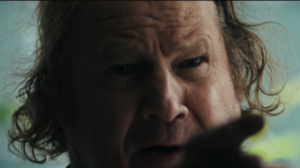
Hammer to Nail: I wanted to begin with the car wash montage. It’s such a funny sequence, but also incredibly overwhelming and distressing because of the editing, the sound design, and that slow zoom. Can you talk about crafting that moment and how it worked logistically? And can you talk about your collaboration with your editor, Riley R. Scott?
Max DeFalco: We looked at the weather the day before and saw it was going to rain, and I was really hoping it would not. That was our first day of filming. I think, no joke, it was the first scene we shot. The first shot was him in MacArthur Park with the bucket, scooping up water to go wash the cars. It wasn’t raining during that, and then it started torrentially downpouring. And I’m like, “All right, I guess we just have to do it,” because I had about 15 actors lined up for that scene. My co-producer, Cheyenne, made a route for the actors, basically a square, and showed them, “Okay, this is the light you’re going to stop at if it’s red, but if it’s green, you just have to keep driving,” because we didn’t have permits or anything to shut down the street. One of them got a green light and had to go right through, and we were on such a tight schedule that it was like, “Okay, that was the take.” That made it into the film.
We were hiding the camera in a car with the window down, partly to protect it from the rain, so there wasn’t a camera in sight. No boom, no mics in sight either. We put a lav mic in each car so we could pick up all the interactions. I don’t think Mikul, who plays Ten, was mic’d, because of the rain. The people around us had no idea we were filming, other than the actors he was interacting with. People were literally taking the jackets off their backs and trying to give him five dollars, because they thought he was actually homeless. He’d say, “No, no, we’re just filming something,” and they’d say, “No, we insist.” We only had two of those sandwich-board car wash signs, and they were getting so wet they were falling apart. I was standing on the side going, “I hope this works with the rest of the film, because it’s just downpouring for this one part.” We filmed the connecting part, where he finally gets a ride, days later, because that actor wasn’t available that day. But because it’s a montage and it jumps in time, it kind of worked.
A still from TEN WILL
Editing that sequence with Riley was one of the first things we tackled. We’d made a film together called Anything Helps, where our main character, Doug Dinsman, is collecting money from people by faking cancer, and there’s a montage where he jumps from interaction to interaction. A few of the people in that sequence are actually in the car wash scene in Ten Will. So we went in knowing it was going to be a collection of moments. Then our sound designer, Jacob Flack, did such a gorgeous job. I don’t want to speak for other filmmakers, but I think most of the time people want to take sounds out, like planes flying over. I always say, “Let’s add that.” I add helicopters flying over, we add bass to the cars whooshing by, we really punch in on that stuff. Between the rain and amplifying it with the sound design, especially in a theater in 5.1, you feel the cars rushing by and the rain coming down, and it’s just madness. I want the world to be grounded, but amping up the sound design builds the world out.
HTN: The rain feels like a total happy accident, since the whole bit is that he’s trying to wash cars in the rain.
MD: It actually gave the actors a lot to improvise off of. All of their lines in that part were improvised. I wasn’t telling them what to say. However the interaction unfolded, it is what it is. One guy said that washing cars in the rain is like mopping up the beach. These were genuine interactions, because it was so nuts. Of all the days of living in Los Angeles, it’s downpouring. What are the chances?
HTN: Shortly after this, we have this amazing interaction between Ten and his sister as he tries to get her to give him a lift to the registry. The framing is so tight, and it delivers such intensity, but it also really accentuates the human qualities despite the absurdity of the situation. What was important to you there? Alicia Hecht playing his sister gives a truly pitch-perfect performance.
MD: I love her. She’s just starting to get into acting, so she really hasn’t done that much. I first met her on a short film I did called Follow Me Wherever I Go. She’s in it for about two seconds, crying, kind of like how she is in Ten Will. Very hysterical. Then I saw a self-tape she did for a different project, and she was so hysterical, she’s wonderful. So I told her, “For this film, I kind of want you to be hysterical throughout the whole thing.” She said, “This is a lot you’re asking for.” I said, “I know, but your brother, who’s a sex offender, who you haven’t seen in years, is suddenly at your door. That’s a very intense moment.” She said, “Okay, I understand.” I’m the director, so I don’t know if I’m allowed to say this, but I think it’s a standout performance in the film. In the whole film, not to spoil anything, everyone around Ten seems like they’re the problem, like they’re the outlandish ones. Then when you see what happens at the end, it kind of justifies it. There’s a reason she was acting the way she was.
I also like how we shot that scene. It’s head-on, right on Ten’s face and right on Alicia’s face. Brandon, our DP, and I approached it as a confrontational situation, compared to the next scene, which is him and Roberta going for the toaster, where we did more of a side profile, because it wasn’t confrontational at that point. Then when he goes back to Roberta’s house after the whole toaster situation unfolds, we flip to the confrontational, head-on setup again, like we did for Ten and his sister. That framing amplifies the confrontation, mixed with the height of her performance.
HTN: Her range is also so impressive when the daughter comes in and she drops the hysteria for a second.
MD: She was really great. Emily, who plays the daughter, I know she’s in it for one shot, but it sells it. That’s all you need. The kid is there, and she drops the whole thing, because she’s trying to seem like everything’s all right. It’s really not. “You remember your uncle, Ten?” And the daughter has no idea who this is.
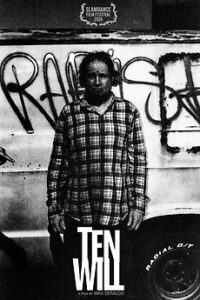
HTN: Can we talk about Maryut Pocket from Finland? Is that fully a concoction of your mind, or where did that story come from? That whole stretch, with the faces Ten is making, had me dying laughing. Can you also talk about the strangely sweet bond these two characters form, and what Sonny Frank brought to the character that you couldn’t have found on the page?
MD: I’ve been talking to Sonny for a long time, and I hear all these stories he has. He’s lived a full life, basically. The Maryut Pocket love story was pretty similar to something he told me in the past. He met this girl, and it led to the way it was. I thought that’s a great reflection point for the character. He’s sitting tucked away in prison, thinking about what’s going on, and he says, “I kind of deserved it.” That’s such an interesting way to justify why you think you were there. Meanwhile, in the film, he’s bonding with Ten over their similar situations. I thought it was funny, not in a ha-ha way, but in the sense of, is he justifying in his head what he’s done? Character-wise, there’s probably a reason you ended up where you did. Ten’s reaction is just like, “What are you telling me right now?”
By the way, that whole sequence went on for 45 minutes, and I think Sonny forgot he was filming a movie, because at a certain point he turned to the camera and started talking directly to it. I’d be tugging at his ankles, like, “You’ve got to look at him.” When we were filming the alleyway scene, we were all on the other side of the road, and Sonny and Ten are walking through the alley, and the line is, “Can you shut the fuck up?” Sonny thought Ten was saying it to him personally while he was trying to tell his story. He stopped the whole take in the middle of the alley and screamed at me from across the street, “Hey, come get your man. He’s not doing what he’s supposed to be doing. He keeps interrupting me.” So I crossed the street, and he goes, “He’s not letting me tell my story.” I said, “Sonny, you’re supposed to tell your story, but he’s supposed to interrupt you. That’s the line.” And he goes, “Oh.” So we did it again. We only worked with Sonny for about a day.
I’d heard elements of his story, but I knew I wasn’t going to be able to write it out specifically, so while we were there I thought, “Let’s just get the genuine story,” and then we matched it with Ten’s reaction. I think that was a genuine reaction from Mikul. I don’t even think he was acting. He was just listening. That was the last part of the day. That always gets the biggest laugh in a theater, when he goes, “What’s the point of all this?”
The reason I put that line in is that, and I’ll protect myself here, someone I kept submitting my films to finally gave me feedback once over Zoom, and he said, “What’s the point of all this?” Every time I had a film, he’d say, “What’s the point?” So I put it in the film specifically for that reason. He hasn’t even seen it, because it’s barely been anywhere. The story goes on for five minutes, kind of like the “Can I use the phone?” part. It’s funny, then it stops being funny, and then it goes back to being funny because of how long it keeps going.
HTN: Shortly after being kicked out of the car for touching that woman’s leg in the back, Ten is sent on an odyssey through the night to Cookie Puss’s house in Bakersfield. As he walks, he asks for directions and gets mixed messages, but he eventually finds his way. On my first watch, this was the moment I sat up and thought, “Wow, this is beautiful.” The pace is so relentless up to this point that when it slows down, at least by this film’s standards, it’s very impactful. Can you talk about your collaboration with your cinematographer, Brandon D. Hill, and the logistics of shooting the sequence? You really caught quite the sunset.
MD: Brandon and I intentionally slowed the film down, by our standards, once it moved into the Bakersfield sequence. The Bakersfield part is very quiet. The zooms calm down. We were trying to control the camera a bit until things went off the rails again at the house during the family reunion. It almost feels like he’s entering a safe haven, like all is well. But it lingers, and the camera keeps zooming in, so something still feels off, until shit’s about to hit the fan.
Filming that sequence was awesome, because we really had no plans for that day. I found the location, I think it was around Tujunga, and it was gorgeous, with the mountains. I wrote it to match the sunset on purpose, and then we got lucky with how the sky looked. Working with FotoKem, we amped up the colors a bit, punched it a little more, brought out the blues and the hot pinks in the sky to get that burning sunset feeling. Even in the car, when he’s touching that lady’s leg, there’s that gorgeous, burning, highlighted sunset feel.

A still from TEN WILL
We had a crew of three people that day, I think: the sound recordist, Brandon, my co-producer, and me. She was driving us around, and we’d get out of the car, go over to people on the street, and say, “Hey, would you be interested in being in the film real quick?” I was carrying around wads of five-dollar bills that day. I’m paying people out of my own pocket. One of the first guys I went up to, I said, “Do you mind being in my film?” And he goes, “Oh, I’m actually on the run from the police.” I said, “Come on, no one’s going to see this film anyway.” And he goes, “All right, I’ll do it.” I told him I’d give him five dollars for a one-minute take, and he said okay, went into the encampment he was living in under the underpass, and said, “Let me grab a friend.” The two of them are the opening shot of that traveling montage, and they were great. I didn’t give too much detail. I just said, “He’s going to ask for directions to Bakersfield,” and I backed away. We’re zooming in on a 24-250mm lens with a 1.5x extender, all the way at the other end, in a field, so far away I can’t hear what they’re saying. I know my audio guy, Jack, would have hooked me up with the audio, but I didn’t ask, so I had no idea what they were talking about until after the fact. I’d go over to Jack and ask, “Was it good?” And he’d say, “Yeah, it’s funny.” One of my favorite parts is when Ten asks how to get to Bakersfield and says he’s trying to get to Pemberley Passage Avenue, and the guy goes, “Yeah, it’s in Bakersfield.” That comes naturally from an unscripted human interaction.
Then another guy, wearing a number five jersey, walked in out of nowhere and said, “I want to be in this too, and I get five dollars too, right?” I said, “Of course.” I gave him a prompt: “Tell him to go this way, then second-guess yourself and tell him to go the other way.” And you saw the reaction that came from that. The guys in the liquor store parking lot were genuine too. I asked if they minded being in the film real quick, and they did it, about two minutes with each person, one take. We did not plan any of those people. That was the most unplanned day out of everything we did, and we got really, really lucky.
HTN: The first interaction with Cookie Puss’s dad is definitely one of the great moments in the film. How did you two even meet?
MD: Harvey Fisher is wonderful. I absolutely love him. I was golfing with Riley at the Los Feliz Par 3, and I don’t even golf. I heard this guy’s voice carry over, and I look over and he’s downing IPAs from a glass bottle, wheeling his bag around, pushing back his hair like he does in the film, and telling people how they should swing. I was enamored by him. We were tailing him from behind. Then I went over and said, “Would you ever act?” And he goes, “I am an actor. I’m in SAG.” What are the chances? I guess it’s not uncommon in Los Angeles, but he didn’t feel like an actor type.
I kept seeing him around the golf course, and I got his contact information. Then I told him, “Hey, I have this part for you in this film. I want you to do it.” And he said, “Okay.” Then he dropped out three or four times. He’d come up with a different reason each time for why he didn’t want to do it, between traveling and this and that, and I’d fix each problem to get him back on board. He said, “I am not going out to Bakersfield.” I said, “Fair enough. Now we’re filming in Echo Park.” And he goes, “Oh, okay.” Then he goes, “This is SAG?” I said, “Yeah, it’s SAG.” He was skeptical, so he called SAG himself and asked, “Is this a SAG production?” He’s telling them he doesn’t have a lot of money, that it’s a very, very low-budget thing, and SAG goes, “Yeah, no, he’s approved.” And he goes, “Really?” They go, “Yeah.” So he was back on board. Then it was a whole back-and-forth, until one day I guess he totaled his car or something. I have no idea what went down, but I saw him posting about it on Facebook, and he dropped out again. That was four days before we were going to start filming his scene. There was no one else I wanted for that part.
I also wanted him to do his song, because he wrote that song. He told me he does music, and I found his songs online after I first met him, and I thought this one would be perfect. Our script was only 58 pages long, so I needed to pad it somehow. I was influenced by the sequence in Nashville where they’re singing “I’m Easy,” and all the women in the bar think the singer is singing about them, and their reactions each tell a different story about where they are in their lives. That slow zoom on Lily Tomlin. So I thought, “I’m going to have Harvey perform a song alone on his couch, and we’ll have Ten staring at him, kind of like Lily Tomlin.” I guess it does look a little creepy, with the lighting, him spying on his soon-to-be father-in-law in half profile in the dark. But I think the lyrics complement the film pretty well, and he wrote that ages ago. There was a little pushback on using the song, because he thought I was going to profit off of it. I said, “Harvey, I’m not making any money off this. I just want to highlight you and your talent.”
Long story short, here’s how I got him back. I saw on Facebook that he needed to find a new car, and I told him, “Oh, I know all about impound auctions.” I know nothing about that. I just wanted to talk to him. So I went with him to one of those impound auctions, and we’re walking around the cars, and he’s asking me questions, and I’m searching things up online, trying to play it off like I know all this information about cars. He didn’t end up wanting any of them, because it was a little bit of a weird situation. I don’t know if I would have trusted those cars either. But we had a whole conversation, and then I said, “Can you do the film? We’re so close to filming.” He started laughing, and he did a 180 and came around. That whole week, I was terrified. I was literally on edge, waiting to get a call each day saying he was dropping out. When he showed up, I thought, “Thank God,” because he’s so freaking talented, performance-wise and music-wise. He brings another layer to what’s going on, and his line deliveries are hysterical. With him, it was really just about getting him on set and getting him to trust me, and then he ran with it. Now he’s thrilled. He shows up to all of the screenings, and he’s so excited. People really resonate with the song too.
HTN: It’s the longest sequence in the film, right?
MD: Yeah, it is. I just think the song is so great, I didn’t want to cut anything. And to your point, it’s a nice breather.
HTN: It’s very searing.
MD: I think it’s just so unexpected, given how the film is, and it’s not a song everyone knows. It’s an original song from Harvey, so it brings another layer to his character, but it’s a part of him as well. I’m really thrilled for him, and I definitely want to keep working with him, as long as he wants to work with me, and it sounds like he does. At the end of the shoot, he apologized for dropping out as many times as he did, and he said, “You know what you’re doing.” He’s brutally honest, so coming from him, that means the world.
HTN: I also love his line, “You do whatever you want with her. I don’t care.” That’s a crazy line. It hits so hard. You get so much backstory from it immediately.
MD: It’s an interesting dynamic between Peggy, who plays Lillian, and Harvey, who plays her father. I like the line, “You never even leave the house. How did you get a boyfriend?”
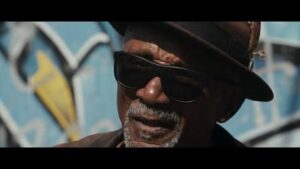
HTN: The big blowup at the dinner party is obviously an essential moment. It seems very difficult to shoot, because it’s all about timing, and you do such a good job of making it feel alive while giving each of these incredible actors their moment to stand out. It’s beautifully arranged, particularly the food fight outside, which smash cuts to that gorgeous shot of him hitchhiking that you’ve used as a promotional still. Cousin Paul in particular makes me piss my pants laughing. Can you talk about crafting that sequence and how it came to life in the edit? And is he actually sweating?
MD: He was actually sweating. My whole crew was like, “Max, do you see he’s sweating?” I went over and asked, “Everything’s all right?” And he goes, “Yeah, I’m having a great time.” His name’s Sean, and he drove all the way from Idaho for the film. We filmed the family reunion over two days, the dinner on one day, and the smaller interactions and the family entering the house on the other. On the last day, I went over to pay him and have him sign the release forms, and he said, “I don’t want all that. I just want one dollar.” And I didn’t even have one dollar. I said, “Does anyone have a dollar?” He was screaming at the top of his lungs in front of everyone, “All I want is one dollar.” It was very sweet. He sent me a picture afterward of it hung up on his wall, his first acting role. He said no one had ever given him an opportunity like this.
A still from TEN WILL
I just like highlighting people who feel like real people. The people are the texture of the film. There’s a reason all of those close-ups are in there. I have such an infatuation with these people, and I truly love all of them and what they bring to it. With the family reunion, it was like sculpting. I don’t want to sound pretentious, but it’s a broad approach, where I step away a little so it doesn’t feel manufactured, and let the series of events unfold. The stuff coming out of these people’s mouths is wild, so it leads to genuine reactions. You almost don’t need to amplify it. Brandon and I are always trying to be a fly on the wall, and with these long lenses, we can capture people’s genuine reactions. A supporting role in one of my projects never feels like a supporting role, because these people are so integral. I want everything coming out of their mouths recorded, so we’re mic’ing up every single person, and I want a shot on each person. These are the people building the film. They’re not in the background. Whatever comes out of your mouth is going to be used. For the family reunion, we had all those audio tracks overlapping, and every single person has their moment to shine, because that’s how we film it. We let everything unfold, and then we dial it in with each person.
HTN: I’ll ask one more question, and I won’t get into the specifics of the ending, for anyone reading this who hasn’t seen the film. But I wouldn’t have any journalistic integrity if I didn’t ask about what is truly one of the greatest endings to a film this decade. Was this always where you saw the story going? Can you talk about your screenwriting process, and when along the way you found the ending?
MD: It was literally the last part of the film I figured out. I didn’t have an idea of how it was going to end. I got up to a certain point, after the family reunion, and it dawned on me that he’s going to get a dog. I’d originally met a guy at Walgreens when I was picking up my prescription, and I was going to write this film with him as the lead. He was going to be Ten. Then we did a camera test, and it wasn’t great. He wasn’t an actor. He said to me, “I don’t want to play a sex offender,” and he drove off in his van, and I never saw him again. He lived out of his van, and he had a dog named Zeus. I asked where he got the dog, and he said some lady saw him with it and said, “You want it?” And she gave him the dog. I thought, “That is so strange.” Then, months after we finished filming, I was walking down the street with a friend, and some guy with a dog goes, “You want it?” Exactly how it plays out in the film. My friend goes, “It’s just like your movie.”
I just thought there was such a nice through line that comes in, that you wouldn’t expect, but then you kind of would. I guess a lot of people just wouldn’t think this was going to happen, which I find so interesting. We disarm people with how Ten is, whether or not they feel sympathy toward him, so they don’t expect the ending to unfold like that. And I don’t think they expect us to actually go where we go with it. The ending was kind of birthed from that point on, and I was so thrilled when I got there, because I didn’t know it was going to end like that myself. I figured out the dog, and I’m like, “Oh, the dog is the connecting tissue.” He moves onto the LA River, and then he goes to a park to walk the dog and do what he does… I think it’s even spookier because we know his situation. We know there’s no house. We know he’s living out of a tent on the LA River at this point. He’s wearing this filthy-ass suit. All these red flags culminate in this last part. There are no zooms in that part. It’s a very chill moment, almost like the Bakersfield section.
HTN: It reminded me of Happiness, in how it’s presented.
MD: I get the Todd Solondz comparison a lot now, which is funny, because Happiness was never a reference for Brandon and me. Filming that sequence was crazy, because we were shooting from the top of the Grove parking structure, and I was always worried about security coming over and asking what we were doing up there with a camera. No one ever did. There was not a camera in sight in the park, no boom op, no mics. The craziest part of the whole situation is that no one stepped in. If people ask, “What was the point of making this film?” I say, “There’s your point.” Stuff like this could happen, as revolting as it might seem. It’s a warning sign. I’m not a commentary-heavy person. I refuse to make a film that’s jamming a message down people’s throats. But the conversation that comes out of the film is the best part. I would hope it’s about how this happened, and how the registry system almost allowed it to happen, because it is truly broken.
That’s how I came up with the idea. There was an NPR investigation that found more than 25,000 sex offenders across the country had gone missing, and there’s no way to keep track of them. One of the stories in it was about a guy who got stopped for traffic violations, and it turned out he was a sex offender who hadn’t registered in years. We have no idea what’s around us. So if it comes off as distasteful or shocking to people, the sad thing is that it does happen.
If this were a studio film, I don’t know if they would have allowed this ending. We didn’t have to answer to anyone. It was literally a team of six people, including me, running around for 12 or 13 days, shooting on our own. We didn’t get into the top-tier festivals, and we had no idea it would get the traction it’s been getting. I’m happy there are people like you championing the film. If it doesn’t get distribution, I don’t think I’m going to put it out there, because I don’t want to throw it up on YouTube or a streaming service and hurt its chances later. So it’s one of those things where if you saw it, you saw it.
– Jack Schenker (@YUNGOCUPOTIS)