



A Conversation with Maiken Baird (EDWARD SAID: BETWEEN WORLDS)
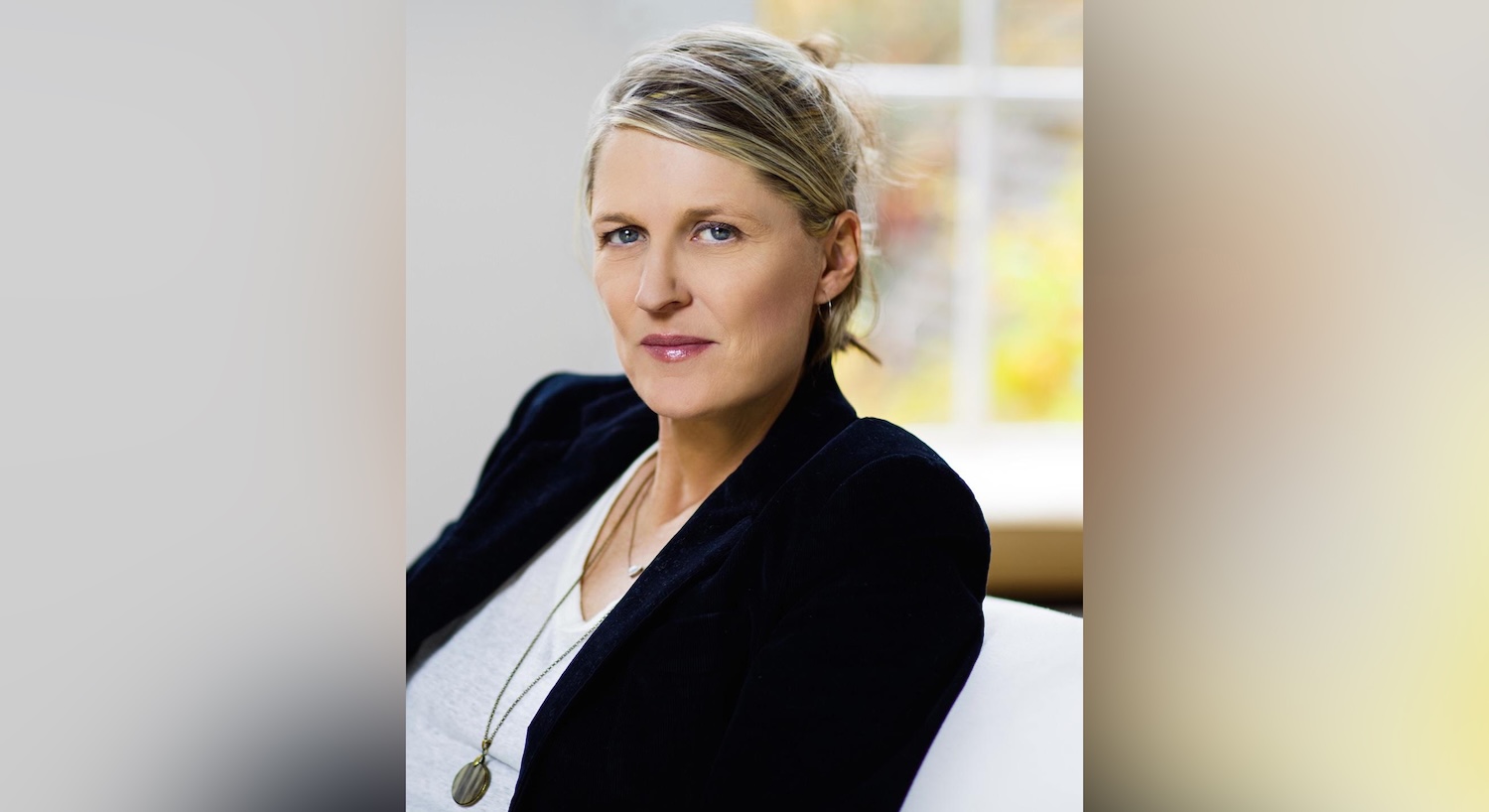
I watched (and reviewed) Maiken Baird’s latest documentary, Edward Said: Between Worlds, at the 2026 Toronto International Film Festival. The film is an engaging and thorough profile of the late, great academic and proud Palestinian advocate, author of books such as the 1978 Orientalism and 1993 Culture and Imperialism. I had a chance to speak with Baird at the 2026 Middleburg Film Festival, and here is that conversation, edited for length and clarity.
Hammer to Nail: I was reading in the press notes that you studied at Columbia in 1985. Did you take any classes with, or interact in any way with, Edward Said at that time?
Maiken Baird: We moved to New York in 1981 with my family and when I was a teenager my father had given me the book The Question of Palestine, which had just come out in 1981, in order to understand what happened to the people of the land of Palestine, which then became Israel. And I knew Edward Said because he became a family friend in New York. And so when I went to Columbia in 1985, I was partly going inspired by his teaching, his knowledge, his wisdom, and just from hearing him around the dinner table.
HtN: Speaking of your family, you also mentioned in the press notes how your father was a Scottish engineer who moved the family around the Middle and Far East. How do you think these early travels affected your present-day worldview?
MB: I grew up all around the world. My father worked for a company called Schlumberger, which was an oil-services company. We moved every year for many years of my life, all over the Middle East and the Far East. So when I came to New York in 1981, we read together The Question of Palestine to understand what really happened to the indigenous people of the land of Israel.
HtN: Your film begins with the question, “Who owns history?” I think we can all agree that the answer can shift over time. As far as Israel and Palestine are concerned, the ultimate record has yet to be written. Do you see anyone today filling Said’s shoes as such an articulate voice for Palestinian rights?
MB: I think there are people today, like Rashid Khalidi, who studied with Said when he was young and took over his Chair at Columbia when Edward Said passed in 2003. He’s an amazing spokesman for the cause. There are others, but I think there was something unique about Edward Said and his ability and his skill to communicate to a Western audience in an elegant and eloquent way that was easy on the ear. And also, it didn’t hurt that he was so handsome.
HtN: What further complicates the issue is the occasional conflation, and the accusations thereof, of antisemitism and anti-Zionism, though opposing genocide without attacking Jews should be simple enough. If Said were alive today, what advice do you think he would give to those trying to stop the horrors in Gaza? Because I feel like he threaded that needle of being anti-Zionist without being antisemitic quite well.
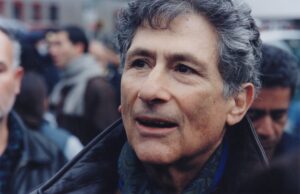
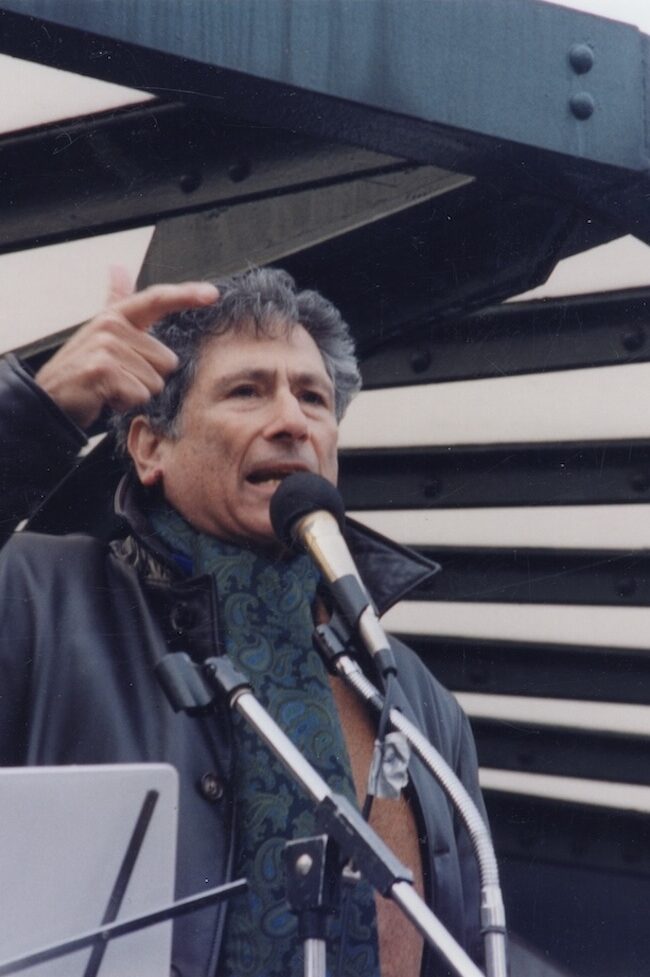
Academic and lierary critic Edward Said
MB: I mean, I think he would say what he always said, which is that the Palestinian people have a right to live freely and equally on their land. And I think he would say the same thing today. I don’t know. I can’t speak for him. I wish he was here. I think the film brings him back in a certain way, and I think it’s important to understand the history, but I think it’s important also to get back to the narratives. Who owns the narrative? Why do we learn things like “a land without a people, for a people without a land”? There was all this sort of nonsense that we learned, which I knew, having lived in the Arab world, was nonsense. And so that’s why The Question of Palestine was really revolutionary. And I think it also showed me how tightly controlled the narratives are, how we learn only certain narratives that suit the people in charge and we don’t learn the full story of what happened here, but also of many other historical events. So I think it’s time to kind of liberate knowledge.
HtN: You have had a chance to screen this film in front of audiences. What kinds of responses have you been getting?
MB: We’ve shown the film now at four festivals—we’re booked for 30 so far—and we have been getting the mostly positive responses, because I think people appreciate truth and they appreciate understanding the real history of this conflict and this story in a way that people are more ready for now than they’ve been in the past, perhaps.
HtN: In the press notes, you mention Raul Peck’s I Am Not Your Negro as an inspiration. Like that film, this is an entirely archival effort. And I just want to say kudos to you and your editors for sifting through what I’m sure was a lot of material. Why was it important to you to only have it be archival? Because you could have potentially included some present-day interviews.
MB: I think that having met Edward Said and spent time hearing Edward Said in the 1980s, I knew that there was really nobody else who could speak to this issue in the way that he could, with the wisdom and the knowledge and the sort of eloquence that he had. So I felt like it was better to just keep it all in his voice and have people make up their own minds once they heard him and have the same experience that I did in the ‘80s of just completely being blown away by learning the true history here from someone like Edward Said.
HtN: I ask this question of a lot of documentarians and the answer is not all that different depending on who I ask, but I’ll ask it anyway. What were the particular challenges that you faced with this archival material in terms of choosing what you wanted to have in the movie?
MB: Everything we chose in the movie was meant to bring us to this point to give us the understanding of how this genocide could happen, what led us to this place and giving the context really for where we are today. So that made it simple, in the sense of we could have gone off on his opera and his English literature and all these other amazing topics that he taught and that he was very, very knowledgeable about. But we tried to stick very much to the history of Palestine from his perspective, having lived it himself.
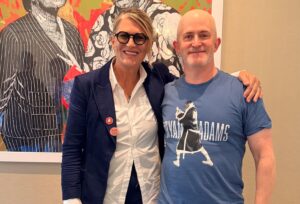
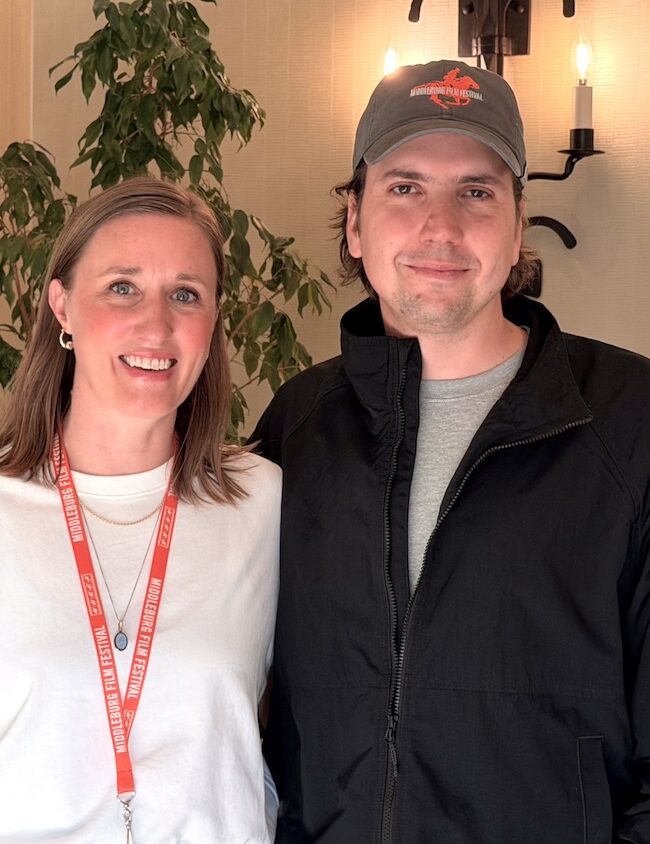
Maiken Baird and our Chris Reed
HtN: If there was one area of his life that I felt I still wanted to know more about by the end of the film, it was his musicianship. He’s a pianist and you have a little bit of that at the end. Were there, for you, storylines that you had to cut in the finished film that you found particularly painful to cut?
MB: There were a lot of storylines that we cut, like his response to 9/11, his response to the Iraq War right before he died, his opera, his musical talents. But we have actually made little teasers, one-minute to two-minute teasers, on our Instagram, which have popped. I mean, 30,000 people watching, actually half-a-million people watched one of them. So every week we put up these teasers of the material that we were not able to include in the film, at @edwardsaidfilm on Instagram.
HtN: One thing that’s always interesting to me in a documentary, because we think of it as just purely nonfiction, is the sound design and scoring. And I’m wondering if you could talk about some of your choices in post-production to enhance the archival.
MB: I had heard the music of Max Richter, the amazing British composer of classical music who composed for a lot of very big movies, including his composition for the Iraq War, and I thought it was so beautiful and so devastating that I reached out to him—or his people, rather—and asked if he would be interested in collaborating on Edward Said. Did he know his work? And of course he was a big fan of Edward Said, or at least I was lucky that he was a big fan. And so he opened up his library to us. So basically half of the film is Max Richter’s score. And then we complemented Max Richter’s music with a composer named Kareem Roustom, who basically took Max Richter’s Western classical music and brought in an Eastern, beautiful, Arab-sounding flare to it. So the combination of the two was really kind of a West and East melding, which is what Edward Said was.
HtN: This archival material that you were working with, a lot of it came from Edward Said’s family. What advice would you give to a filmmaker who is taking footage like this or has the family’s involvement in some way, even peripherally, to make sure that you can be true to the subject but also true to your vision?
MB: That’s always the issue with documentaries on people, especially people who are still living or their families still are. And actually, I’m sure fiction films are the same, but I think it’s very, very important to maintain editorial control while also respecting the family and their desires. I think it’s a very difficult line to thread. And I think that it’s different with every film. And with this film, I feel like the family trusted me. They knew me as a teenager; they knew my family. I think that they knew that I would do the best I could to make this a very powerful and positive film. That’s not always the case. We were lucky here.
HtN: It must have been pretty cool for them, too, having known you as a teenager, to now complete that journey.
MB: Yes, it was really cool.
HtN: Thank you so much for talking to me.
MB: Thank you!
– Christopher Llewellyn Reed (@ChrisReedFilm)