


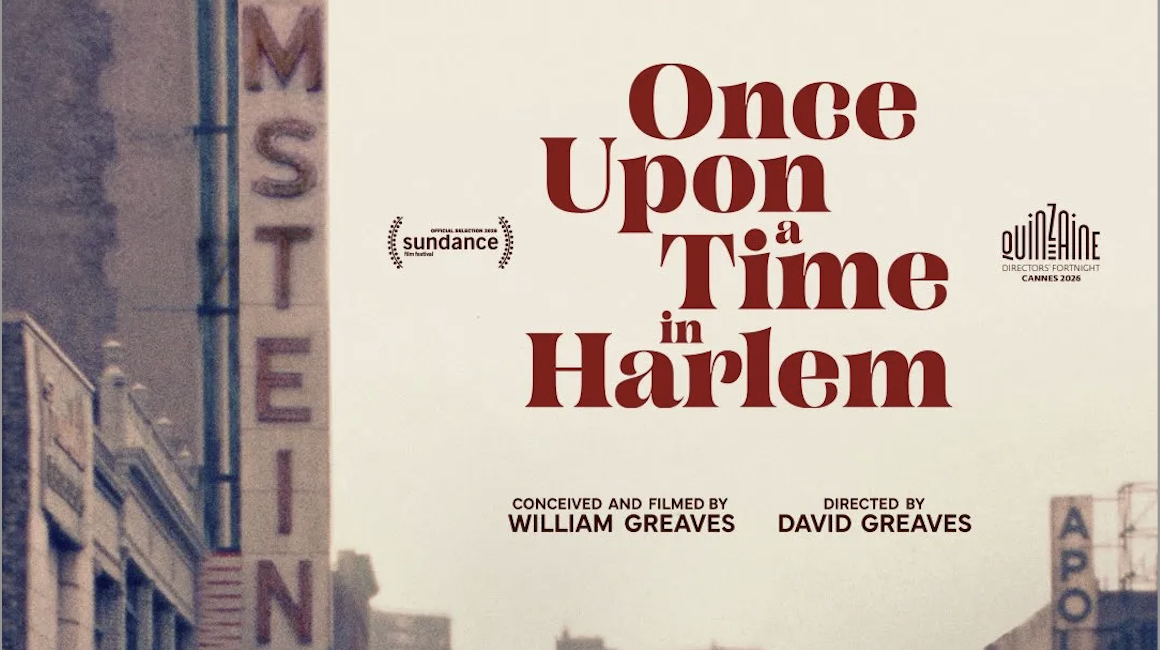
ONCE UPON A TIME IN HARLEM
William Greaves feels like a fictional character, hatched in the mind of an African-American writer who contributes regularly to the New Yorker. It almost strains credulity that someone can manage to release one of the year’s best films 12 years after their passing and right in time for the centennial of their birth. But William Greaves, with the help of his son David and his granddaughter Liani, has done just that. And also remarkably, this is not the first time Greaves has made a film that feels brand new while also being decades old.
After establishing himself as a respected documentarian and chronicler of Black life during one of its most dynamic periods, Greaves decided to do something unlike anything he’d done before. Drawing on his early career as an actor (he was a member of the American Negro Theater, then studied at the Actors Studio) he took a crew into Central Park in 1968 to shoot a documentary-fiction hybrid that was so original and audacious its first audiences were left flummoxed. It took decades for Symbiopsychotaxiplasm: Take One to find an audience. But it did, and Greaves finally got his due for making one of the most brilliant, complex, original films in an era defined by such work.
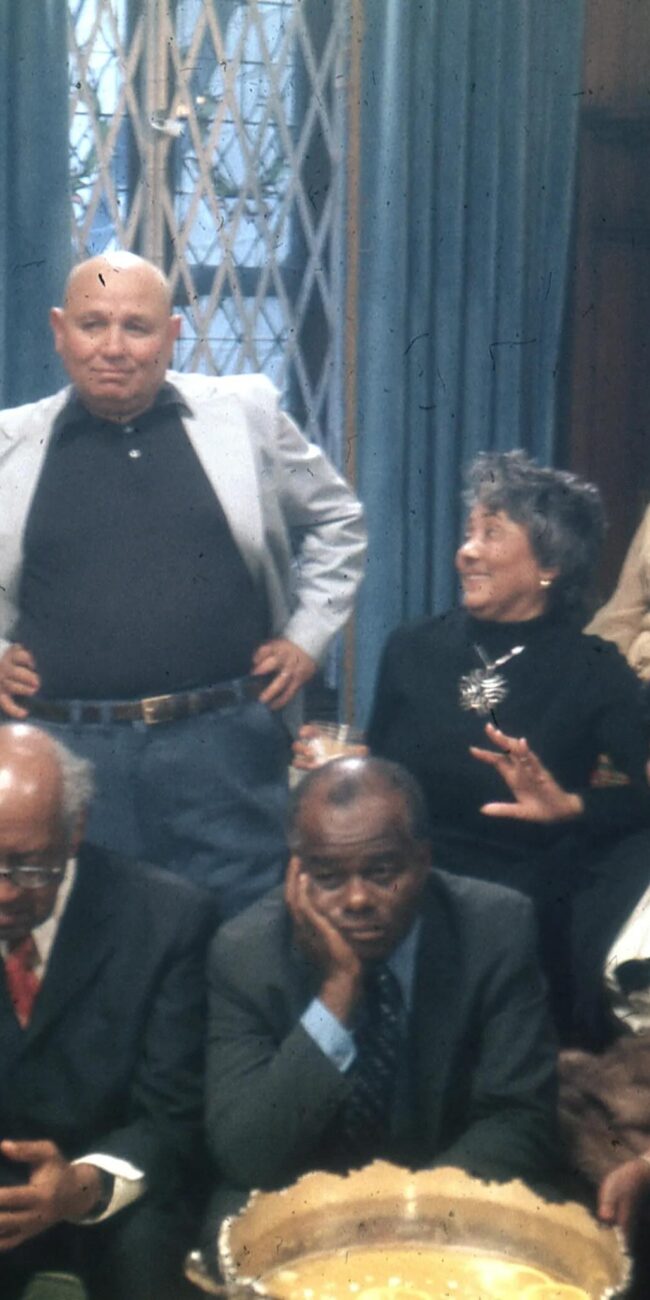
So then it was fairly stunning to hear in January that a long shelved project by Greaves was finally hitting the festival circuit after David Greaves stepped in to complete the project. Not just because we are getting a new William Greaves film in 2026, but the subject of the film itself. Once Upon a Time in Harlem was shot in one day in August 1972 in the Harlem apartment of Duke Ellington (though Ellington was not there).
In that apartment, the remaining luminaries of the Harlem Renaissance assemble, probably for the last time, to discuss the significance of the movement 50 years later, to remember the artists long gone and all but forgotten in 1972, and to talk about their individual life’s work. As an African-American studies major who named his son after one of the artists that appears in the documentary, I found this film to be nothing short of colossal. I am still trying to absorb its meaning and significance, and I will probably continue to do so for the rest of my years. Seeing these names I had heretofore only known from the pages of precious books come to life again crystallizes the ways in which cinema, particularly non-fiction cinema, is the closest thing to magic we have. Through it, we are allowed to commune with our esteemed and long gone ancestors.
The film opens with shots of Harlem in the “present day” which is now over half a century ago. Greaves (whether the credit belongs to William or David, I cannot say) puts 1920s music over these 1970s street scenes, brilliantly setting up what we were about to see. Like the dignitaries we will be introduced to, Harlem herself has aged.
Color was a relatively new tool for Greaves. He used it on both Symbiopsychotaxiplasm and Nationtime (1972). The latter film documents the National Black Political Convention held in March of 1972 in Gary, Indiana. Attendees included Rev. Jesse Jackson, Coretta Scott King, Minister Louis Farrakhan, Bobby Seale, Betty Shabazz, Harry Belafonte, and Amiri Baraka. So it’s a safe guess that seeing a veritable who’s who of contemporary Black political figures in one space inspired Greaves to create another assembly of the forerunners of today’s Black activists.
The color in the film is incredibly fortuitous. Black and white, though beautiful, would have kept us distanced from the subjects of OUATIH, and it would have blunted the beauty of Ellington’s apartment, the sartorial splendor of the guests, and not brought them back to life quite so vividly.
And then there are the voices. Listening to these writers, poets, socialists, artists, and society folk is an aural feast. Quite simply, people don’t speak this elegantly anymore. It made me keenly miss the older generations and the formality and poetry of their everyday speech.
I don’t want to say much about the conversations or even name many of the participants. I think it’s best for viewers to experience their words as the attendees of the party experienced them. Because if these people matter to you, their dialogue with one another is as thrilling as a championship game. But one of the central questions these aging intellectuals pose is a weighty one: are the people who lived a moment, the best people to talk about it? Unsurprisingly, many of the attendees think not. They speak from a grace that wants to allow for new perspectives. But after watching this film, it is impossible to agree with them.
Greaves employs his signature split screen to give us dual perspectives on the interactions. Greaves the younger also uses archival footage sparingly to illustrate some of what the subjects conjure through their words. Greaves the elder shrewdly begins one-on-one interviews at a certain point to allow for more intimate conversation. In it, one of the oldest at the party reveals his belief that his work and the work of the Renaissance is being forgotten and discarded by the young. It’s a compelling moment.
When we return to the main salon for the last leg of the party, it is clear these brilliant people understand the significance of the day. They literally bring up names to enter into the record, particularly the deceased women of the Harlem Renaissance. And the dialogue is not always convivial. Richard Bruce Nugent (a queer writer/artist fictionalized in Rodney Evans’ 2004 Sundance entry Brother to Brother which starred a then unknown Anthony Mackie) is delightful but also rather contentious. But the disagreements caught on camera are just as nourishing and edifying as the unanimous tributes.
As the party winds down, I experienced a melancholy watching these elders leave the warm space of the party and return to the world outside. We know that many of the guests only had a handful of years left. But of course, they will live on through their work, but only long as that work is remembered. Once Upon a Time in Harlem will likely help keep that work alive. The Greaves family has given us one more example of film’s prodigious ability to fulfill the Proustian idea that art is the only way to reclaim Lost Time. My sadness at seeing the party end is lightened with the thought that thanks to the film, we can return to that party whenever we need to.
Be sure to read Jack Schenker’s interview with David Greaves, Liani Greaves, Anne de Mare & Lynn True from Sundance, ’26
– Brandon D. Wilson (@GeniusBastard)