



TEENAGE SEX AND DEATH AT CAMP MIASMA
(Check out Matt Delman’s Teenage Sex and Death at Camp Miasma movie review. The film just had its premiere at the Cannes Film Festival. Seen it? Join the conversation with HtN on our Letterboxd Page.)
In their new film, Jane Schoenbrun proves there is no right or wrong way to have an orgasm. Teenage Sex and Death at Camp Miasma is firstly a beautiful, romantic, and funny slasher. It also has a lot to say about a lot of different topics, many of which will be relatable to women and queer folks. Rather than attempting to parse meaning with this review, as a cis-white male, it’s better to focus on the audio and visual elements that make the film so striking. Audiences had never seen anything quite like Schoenbrun’s We’re All Going to the World’s Fair (2021) or I Saw the TV Glow (2024), and the director keeps their ‘unique streak’ alive while exploring uncharted territory. While the absurdity levels are high, the film is Jane’s most accessible yet, and should garner them a new tidal wave of fans.
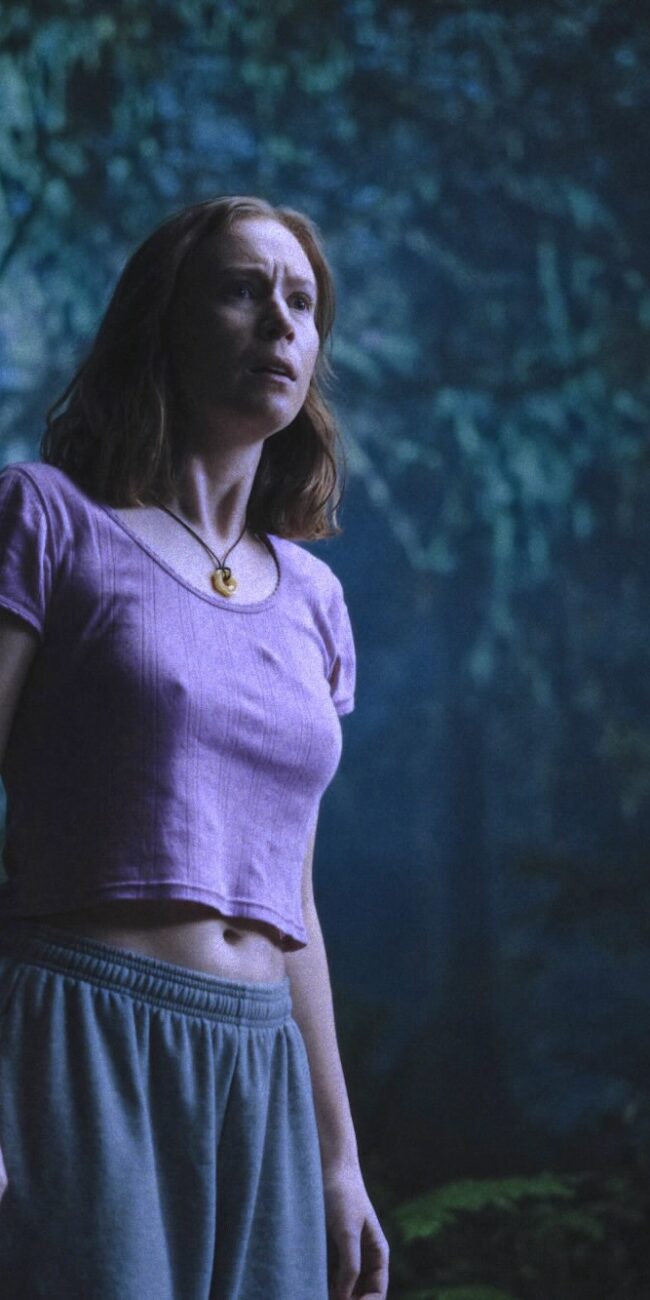
The opening sequence of newspaper and blog headlines tells the story of a B-movie franchise that starred a killer named ‘Little Death’ –which is also a euphemism for an orgasm. (The entire film is a bit on the nose, but in a fun way). He has a vent for a head and kills people with a Darth Maul inspired double sided spear. The studio wants to revive the zombie IP once more, and they’ve hired a queer director to helm the reboot. This is Kris, played by Hannah Einbinder, in her meatiest role yet (and who all genders can agree is sexy AF). Jane fulfills her B-movie fantasy, giving the audience what they want; guts, gore and boobs.
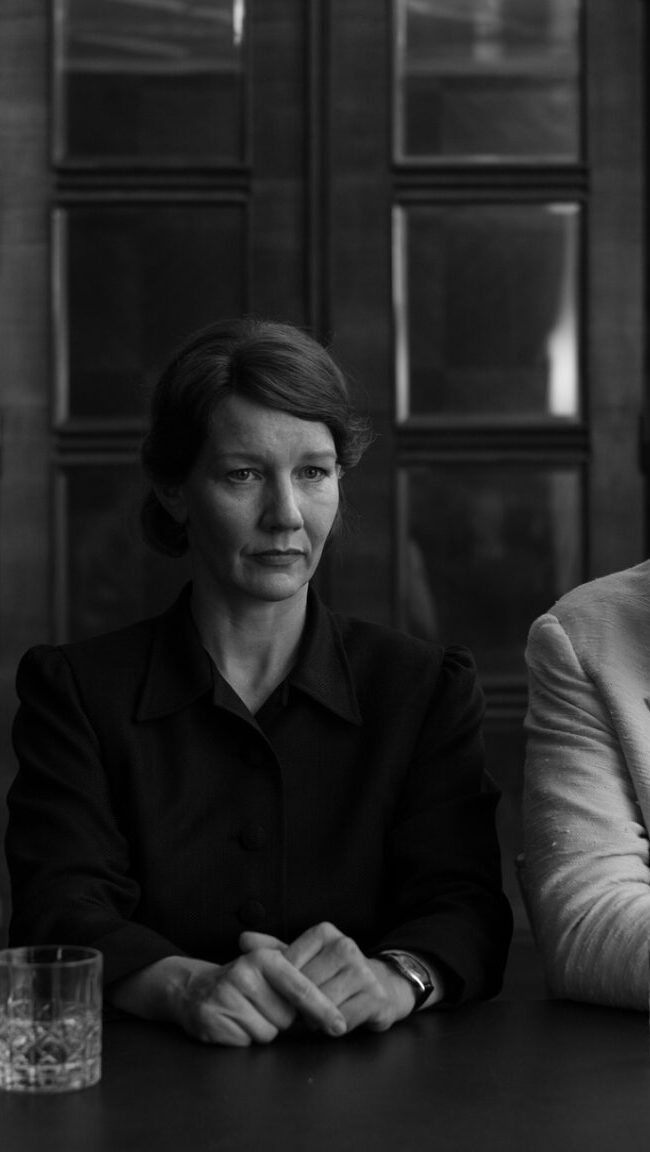
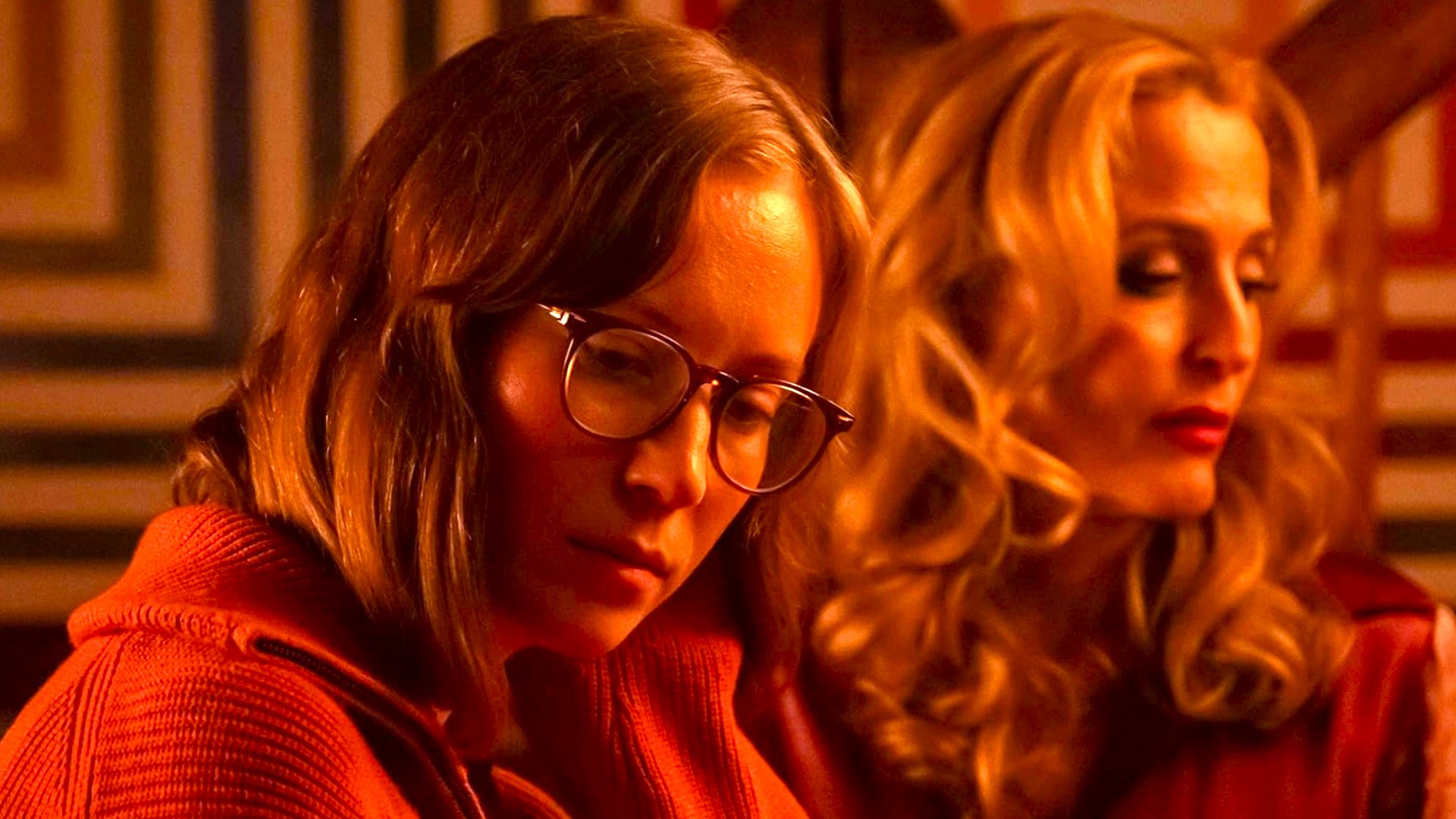
But there’s a more romantic storyline at play in Jane’s film. Kris travels to the titular Camp Miasma, where she meets Billy (Gillian Anderson) who was the star of the original film as a teenager, and now lives as a recluse in the abandoned camp. Kris and Billy hit it off right away, connecting through deep conversation, and Kris immediately wants to cast her in the remake as the lead. (A hilarious zoom call with the producers is probably realistic, and cringe-inducing). Kris and Billy attempt to have sex but Kris gets too in her head about it and pulls away, embarrassed and ashamed. Billy comforts her and we understand there is some underlying trauma that they both share. Sex is not easy for many people, and Jane’s brave depiction of that makes this scene a standout.
Witchy things begin to happen. Kris starts seeing herself outside her own body, which in psychology terms is ‘dissociating’ and Schoenbrun does a terrific job of evoking that feeling through visual hallucinations and cinematic distortions of Kris’s reality. The movie is coming to life, but who is really in charge? The lake beside the camp holds a secret in a room below the bottom of the floor. ‘Little Death’, our killer, will emerge again and this time Kris herself is on the run.
Kris and Billy’s romance anchors the film with real heart, which elevates it above its B-movie tropes. But those B-movie tropes are also kind of the point – Camp Miasma is so referential it will have your mind spinning in circles. The nostalgia for VHS or even DVD players (?!) hits hard, and the beautifully painted backdrops blend seamlessly with the rest of the real location. There’s a reference to the classic ‘diopter shot’ which gets paid off towards the end. Aside from being a visual delight, there’s a lot to laugh about. In TV Glow we entered inside a television, now we’re going inside a slasher movie. As cinephiles we’re naturally inclined towards voyeurism, and Schoenbrun’s new film delivers the ultimate voyeuristic experience.
– Matthew Delman (@ItsTheRealDel)