



SILENT FRIEND
(Check out Frank Yan’s Silent Friend movie review, it’s in theaters now. Seen it? Join the conversation with HtN on our Letterboxd Page.)
A ginkgo biloba has stood in the botanical garden of Marburg University since 1832, and for most of that time nobody has bothered to ask what it was up to. Ildikó Enyedi’s Silent Friend, the Hungarian auteur’s most contemplative since the Oscar-nominated On Body and Soul, spends nearly two and a half hours making up for the oversight. Across three eras: 1908, 1972, and 2020, three passing visitors fall under the tree’s shadow and learn, separately and incompletely, to attend to what they cannot fully see. What separates Enyedi’s film from other ecocinema is that it never claims to see it either.
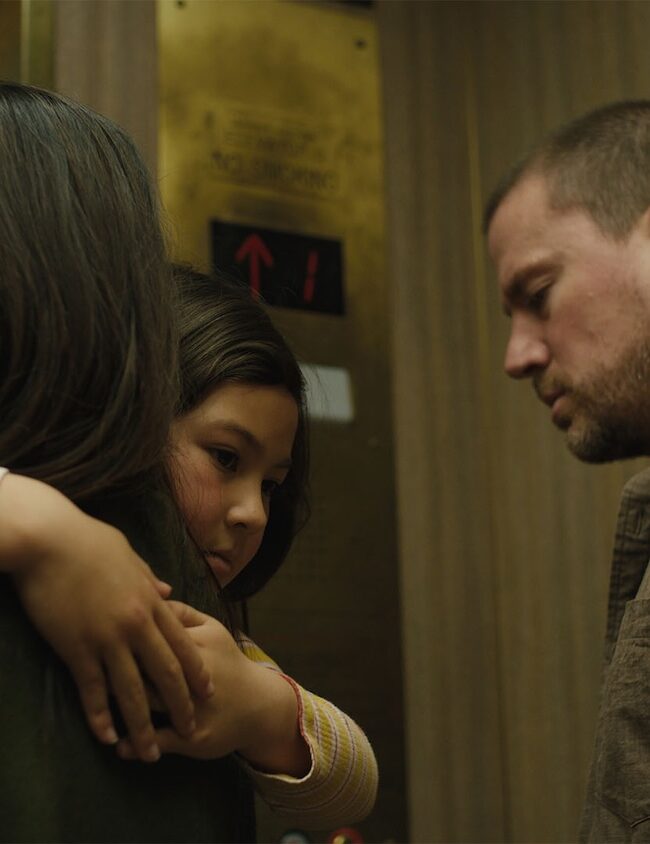
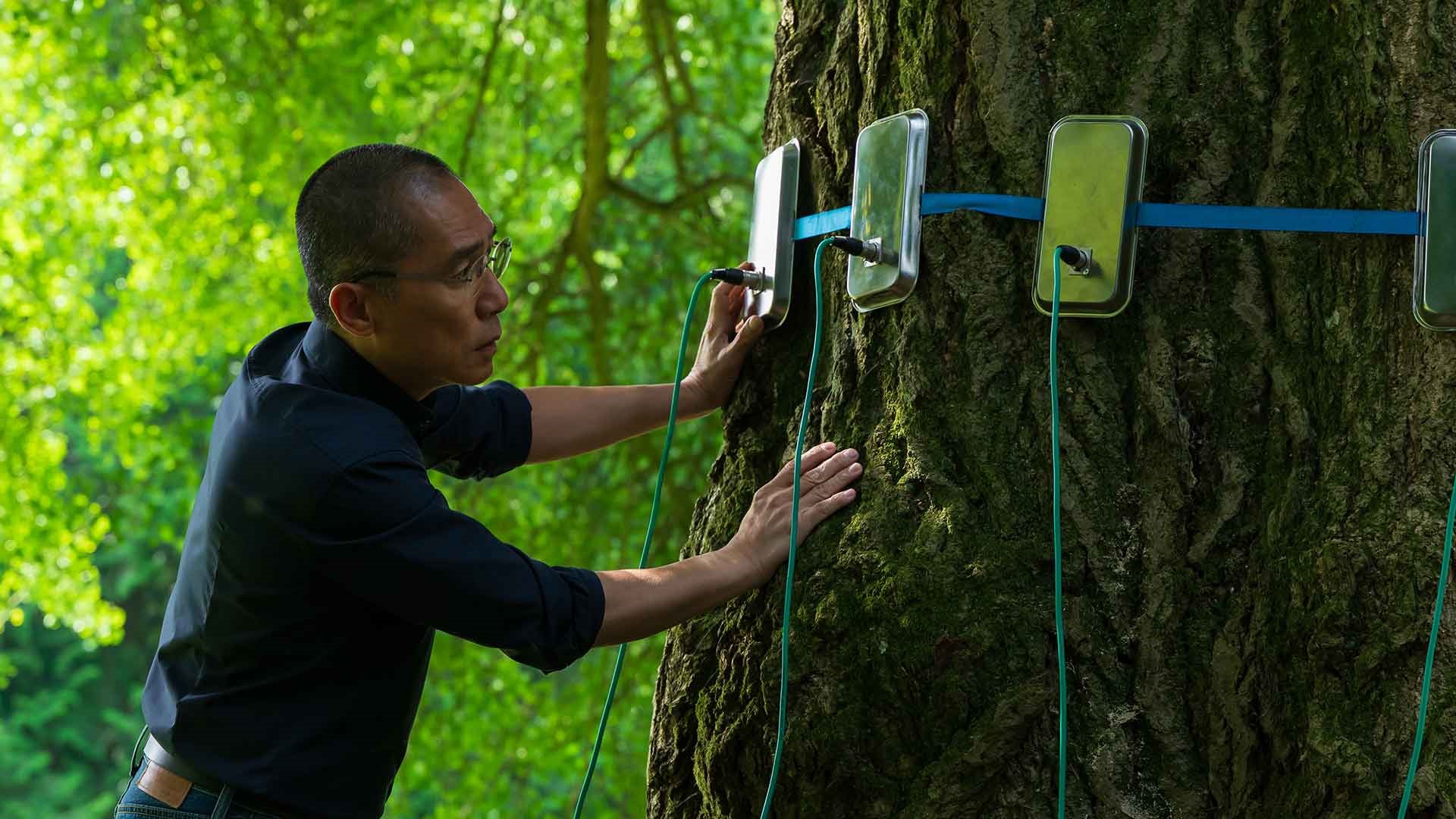
Enyedi’s century-spanning triptych weaves together three Marburg outsiders who find the human world too small for them. In 1908, Grete (Luna Wedler), the university’s first female science student, escapes the casual sexism of her male examiners into a darkroom where the geometry of leaves consoles her. This chapter returns Enyedi to the fin-de-siècle terrain of her Camera d’Or-winning debut My Twentieth Century (1989), where two orphan sisters navigated the same era’s appetite for electricity and its appetite for diminishing women. In 1972, the awkward ex-farm boy Hannes (Enzo Brumm), who now studies at the same university, is asked by his crush to babysit her potted purple geranium, wired to an activity sensor. Reluctant at first, he is soon mesmerized by the plant and begins to care. In 2020, Hong Kong neuroscientist Dr. Tony Wong, stranded in Marburg by the pandemic lockdown, straps a homemade EEG to the old ginkgo and Zooms with a French botanist (Léa Seydoux, reuniting with Enyedi after The Story of My Wife) for guidance. These three protagonists come from different time periods and different backgrounds, yet all three of them would rather attend a plant, a photographic plate, a sensor reading than to the human business of flirtation, political activism, or the prejudices grinding around them. Romance is offered, but they decline, or fumble it, and return to the leaves.
Each era carries its own distinct visual style. The 1908 part is shot on 35mm black-and-white that imitates the silver-halide patience of early plate photography. The 1972 segment switches to 16mm in saturated, sun-warmed color, evoking the psychedelic hippie vibe. The lockdown of 2020 is rendered in high definition digital cinematography against the chilled, glass-and-steel library and laboratory of a depopulated campus, so aseptic that even though, viewed from 2026, this chapter technically counts as a period drama, it feels more akin to a futuristic science fiction. Despite the different looks, plants are always present in frame, whether they are pushed into the foreground as bokeh blooms or flickering as shadows cast on the wall in the background. They are a constant tap on our shoulders, reminding us of whose house we are guests in. In fact, in the end credits, the credits for all the plant “actors” are much longer than the ones for the human actors.
Speaking of which, we have to talk about one human actor. Tony Leung, playing largely opposite a tree, a Zoom window, and all the empty buildings, delivers what may be the year’s most generous solo performance. His face and his gaze are doing the work of an ensemble: bafflement, grief, faint amusement, or a child’s awe at fertilization captured on a monitor. That the actor, like the ginkgo, has Chinese origins and ended up rooted abroad in a foreign botanical garden is a rhyme Enyedi is too smart to underscore but too precious to waste.
The willingness to let a rhyme breathe rather than spell it out is the same tact Enyedi extends to the film’s larger project. The refusal to perform an ecstatic non-human turn is the smartest decision she makes. Recent cinema has fallen hard for the conceit of decentering us: Jerzy Skolimowski’s EO trailed a donkey’s odyssey through continental Europe; Andrea Arnold’s Cow lashed its lens to bovine eye-level; Mati Diop’s Dahomey ventriloquized the looted Beninese statue on its journey home. These gambits, however provocative and eye-opening, always founder on the same simple fact: a camera held by a human and a script written by a human cannot really see or think as a donkey, a cow, an artifact, or a tree sees or thinks. Enyedi knows this and takes the inverse approach, working from the outside in. Rather than pretending to transcend the anthropocentric gaze, she carefully catalogs the devices we humans invented for reaching across the species line: Grete’s glass-plate photography, Hannes’s twitchy geranium polygraph, Dr. Wong’s brain-scanning rig and laptop. The film places its faith in observation, not mysticism, and that humility is what separates it from its more hubristic cousins. Its closest spiritual relative may be Apichatpong Weerasethakul’s Memoria, which similarly planted another global star, Tilda Swinton, in an unfamiliar country to listen patiently for a signal that she cannot quite locate.
International arthouse cinema is crowded with films eager to speak for the voiceless. Silent Friend, on the other hand, does something stranger and braver: it admits it cannot hear them either, and stays in the room anyway. Enyedi’s ginkgo will outlive us, her film, and this review. What she offers, in the meantime, is a way of being briefly worthy of its company.
– Frank Yan (@frankyan2)