




(Check out Jonathan Marlow’s NAZA movie review, it’s in theaters now. Seen it? Join the conversation with HtN on our Letterboxd Page.)
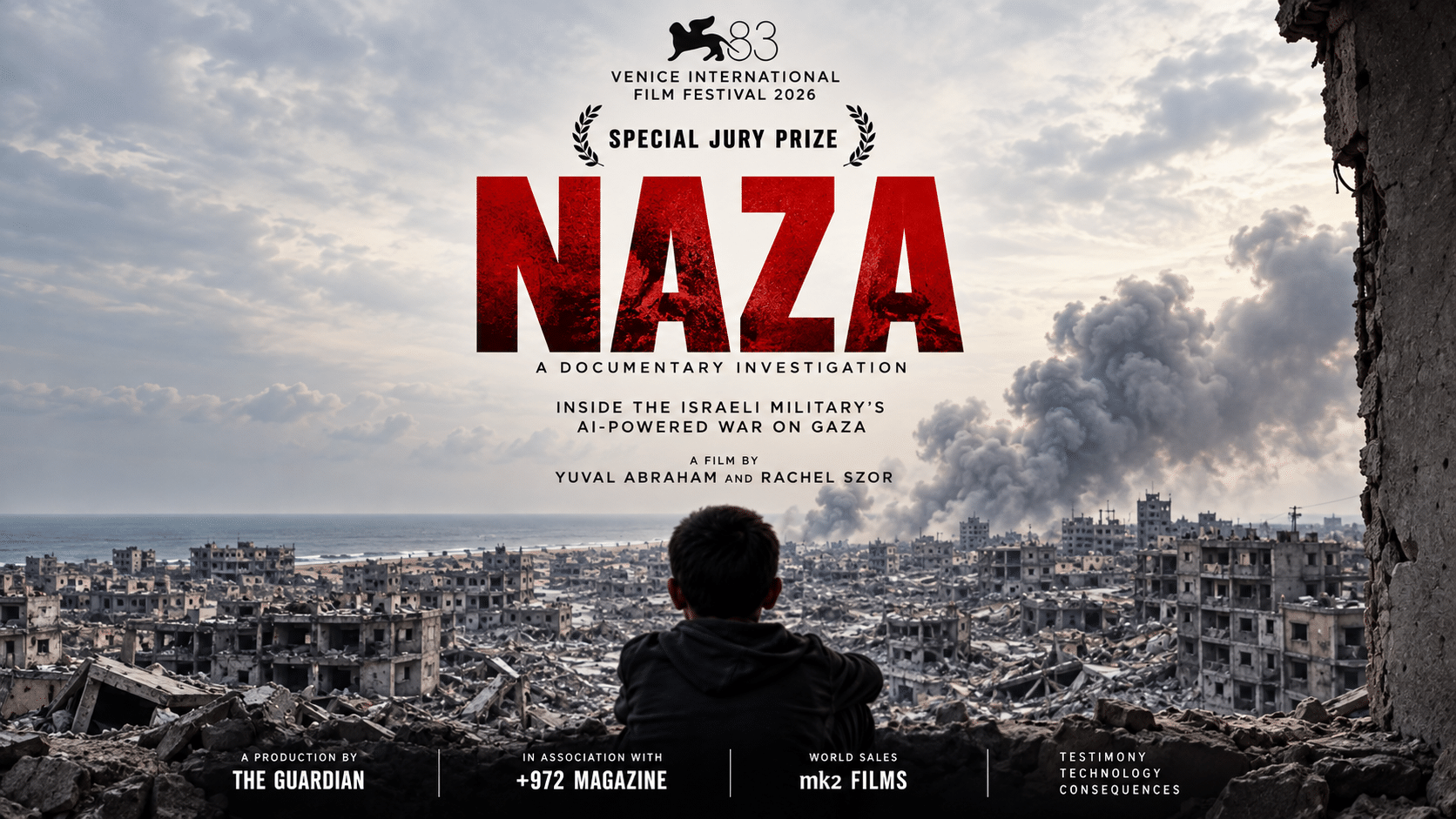
A documentary can frustrate. A documentary can potentially motivate as well. NAZA, a late-addition to the Venice International Film Festival at the start of September (where it won a Special Jury Prize), does both and considerably more. If the foundation of a motion picture is showing and not telling, this is intentionally its opposite: consisting almost entirely of conversations with unidentifiable interviewees photographed over the past two years by Yuval Abraham and Rachel Szor, two of the filmmakers responsible for the Academy Award-winning documentary No Other Land (2024). Uncharacteristic of a typical release cycle, NAZA debuted in the U.S. at the New York Film Festival a handful of days ago, mere weeks after its premiere, and begins its theatrical release almost immediately thereafter.
NAZA is a colloquial (in certain circles) shortening of “nezek agavi” (translated from Hebrew as “collateral damage”). Replace the first letter of the term with a “G” and you arrive at the territory in question. Replace other letters and arrive at other results. The U.S. military equivalent could be considered “Non-combatant Casualty Value” (NCV), a reprehensible mechanism for dehumanizing the “enemy” and quantifying “acceptable” civilian losses in planned attacks.
Two-dozen Israeli soldiers—interviewed in silhouette on various rooftops in Tel Aviv, their voices subtly distorted to disguise their identity—matter-of-factly describe the relentless killing of Hamas targets. That these efforts inevitably resulted in the indiscriminate deaths of tens-of-thousands of bystanders is not incidental. Post 7-October-2023, the innocence of those individuals depends on your point-of-view, although a perception of unarmed civilians as indefensible casualties is not an opinion shared by many of the respondents. What is a justifiable response? There is an argument for the need for defense but when does defending become grievous aggression on its own? Regardless, NAZA is less a film to be viewed than heard, though several of the soldiers occasionally scribble haphazard line-drawings of the grim activities they bluntly describe. There is a certain mundane banality to their answers to these questions and their responses are less a revelation of the unexpected than a confirmation of atrocious anticipation. As a work of investigative journalism, should the viewer imagine that these individuals are motivated to confess to their unease in what they’ve done, there isn’t much of that. A few prolonged pauses, perhaps. “Good luck to them” tends to be a prevailing sentiment, spoken or unspoken.
Throughout it all, the word “genocide” is mentioned only once (with a soldier agreeing that this, indeed, is that). A clarity comes from an accumulation of wanton devastation. What can one honestly expect from their process of hacking the mobile telephones of teenagers to determine when their parents have returned home in order to proceed with the bombing of a residence, executing an entire family? Or the notion of an “Annihilation Zone” where the buildings in an area are leveled whenever the population density drops below a particular number, thus killing everyone who has remained? What of those unable to leave? Where, exactly, are these zones? Unmarked, residents discover these forbidden areas when the bullets begin to fly or the bombs begin to drop. By then, it is generally too late.
That this release arrives prior to an election in Israel (and the U.S.) is not exactly coincidental. Israeli Prime Minister Benjamin Netanyahu in a frequent presence in NAZA, featured in an assortment of news broadcasts surreptitiously seen through the windows of various apartments and condominiums featured throughout the hour-and-a-quarter running time. In an archival sequence lifted from the television program Firing Line (discussing his book “Terrorism: How the West Can Win”), Bibi defined terrorism as “the systematic and deliberate attack—the murder, maiming and menacing of innocents, of civilians—for political goals.” Hypocrisy knows few boundaries.
— Jonathan Marlow