



THAT DAY, ON THE BEACH
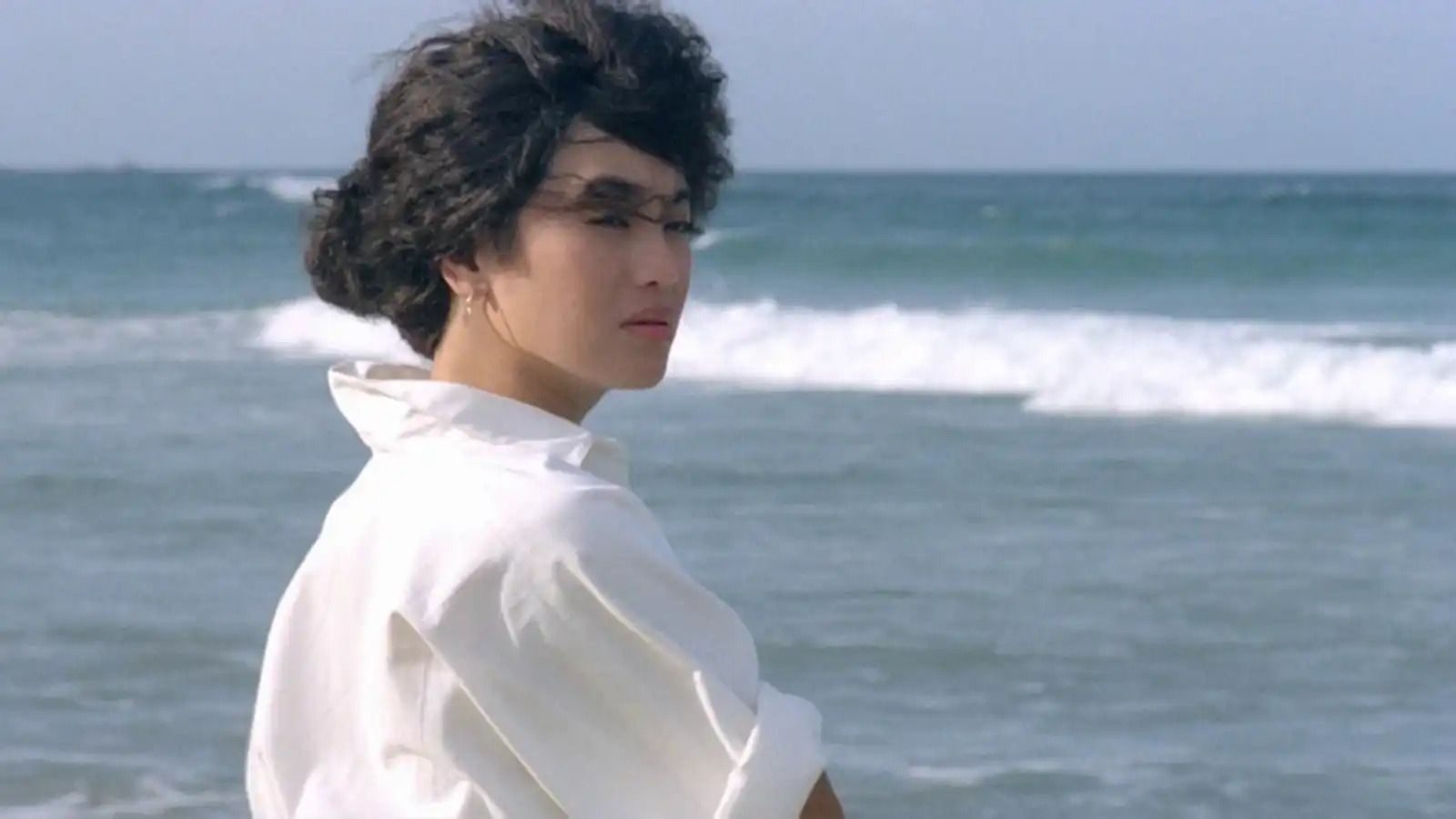
(Check out Jonathan Marlow’s’s That Day, on the Beach movie review, it’s playing NYC’s Metrograph now through Wednesday. Seen it? Join the conversation with HtN on our Letterboxd Page.)
Story-within-a-story is not a generally recognised genre. Perhaps that should change (as “Drama” or “Comedy” or anything of that sort are far too limiting).
There are many fabulous examples of the form, whether (chronologically) Alain Resnais’ beguiling L’Année dernière à Marienbad [Last Year at Marienbad] (1961), Wojciech Has’ legendary Rękoopis znaleziony w Saragossie [The Saragossa Manuscript] (1965) [with the Jan Potocki novel as the urtext of such multilayered tales, One Thousand and One Nights notwithstanding], Raúl Ruiz’s mesmerising Les trois couronnes du matelot [Three Crowns of the Sailor] (1982) or even Shahram Mokri’s recent, wonderful Black Rabbit, White Rabbit (2025). To this worthy quartet, slot a remarkable fifth in-between the final pair: Edward Yang’s debut feature-length* That Day, On the Beach (1983).
*[Duckweed (1981) [aka Floating Weeds], a one-hundred-fifty-ish minute two-part episode for television miniseries Eleven Women, produced by Sylvia Chang—who stars in That Day, On the Beach—predates, as does his contribution to the In Our Time omnibus film, the short Desires (aka Expectation).]
Yang, in North America, is arguably best-known for his extraordinary final film—Yi Yi (2000) [aka A One and a Two]—along with Terrorizers (1986) and the extraordinary A Brighter Summer Day (1991), all excellent (as could be said for the entirety of his work). Possibly the most justifiably celebrated of the New Taiwanese Cinema (circa-1980s) filmmakers along with Hou Hsiao-hsien (who starred in Yang’s Taipei Story and, blink-and-you’ll-miss-him, That Day, On the Beach as well). All of which, if outside affirmation is a requirement, are available from the Criterion Collection… all, that is, with exception of That Day, On the Beach.
In a sense, one should expect his work to be even more celebrated state-side. Though born in Shanghai in 1947 (with his family relocating to Taipei two years later), Edward Yang attended graduate school at the University of Florida in the 1970s, later enrolled in the film program at the University of Southern California and, thereafter, disappeared to Seattle to work as a computer engineer. Why Seattle? His parents had settled there. It was at the disappointingly long-defunct Harvard Exit where he encountered Werner Herzog’s Aguirre, the Wrath of God (1972) and that, as is said, was that.
“I had already given up on my desire to become a filmmaker at that time but his [Herzog’s] work reignited my passion. […] His independence and perseverance, in particular, convinced me that a film could be accomplished through the determination of one person, a belief that remains steadfast to this day.”
[“…this day” circa 1994 (from an essay entitled “The Movies I Like”).]
Yang returned to Taiwan in 1980 where Wei-Cheng Yu, one of his former USC classmates, asked him to write the screenplay for The Winter of 1905 (1981). That, in turn, led to the aforementioned made-for-television Duckweed, then the Desires omnibus short and, subsequently, That Day, On the Beach.
As Yang later noted, “There are two waves of film movements that have deeply impacted me: the Japanese films of the 1960s and the New German Cinema of the 1970s.” The influence of both waves, European and Asian, is apparent in his work from the very beginning. A synergistic stew of the two, perhaps.
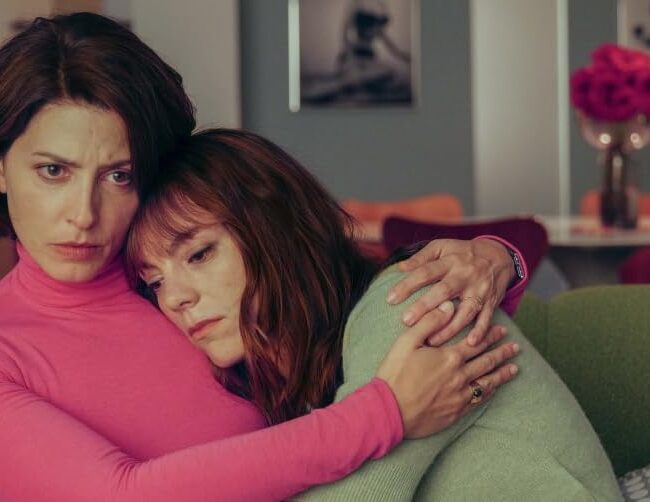
In That Day…, Terry Hu and Syliva Chang star as two female friends: accomplished pianist Tan Weiqing and the adrift Jiali, respectively. Weiqing is on tour, returning to Taipei after a thirteen year absence. Jiali hears about her forthcoming performance on the radio and sends along an invitation to meet-up during her stay. Weiqing agrees, in part, to reminisce about Jiali’s brother, Jiasen, as they had once been romantically involved. The relationship, however, was halted due to a marriage arranged by Jaisen’s and Jiali’s father, a provincial doctor. Jiali, in contrast with her brother, refused a similar arrangement and married her boyfriend Dewei. Follow all of that? When Jiali reveals that a handful of Dewei’s possessions were found (discretely silhouetted within That Day…’s opening images) at the titular beach, their discussion spirals through shared pasts, separate presents and a largely uncertain future.
Exquisitely photographed by Christopher Doyle (his first non-television screen-credit, prior to his celebrated work for Wong Kar Wai) and Chang Hui-Kung, who was the director of photography on many subsequent Yang films, That Day, On the Beach looks terrific. It is terrific, among the finest of feature film-debuts. Sylvia Chang is luminous, as is regularly the case. Despite grand plans at the time for further Yang / Chang projects, this was the end of their collaborations.
Edward Yang passed far too young in 2007, at fifty-nine, with seven rewarding films across his career. The same* as Andrei Tarkovsky, coincidentally enough. One of Yang’s many unrealized projects was a film that would have returned him to Seattle, set in the city in the early-2000s. What could have been. What can never be. Yet we will always have That Day, On the Beach.
HǍITĀN DE YĪTIĀN [THAT DAY, ON THE BEACH] (1983)
dir. Edward Yang [166min.] Radial / Shout Factory (restoration) + American Genre Film Archive (theatrical distribution)
— Jonathan Marlow