



A Conversation with John Trengrove (THE SMELL OF APPLES)
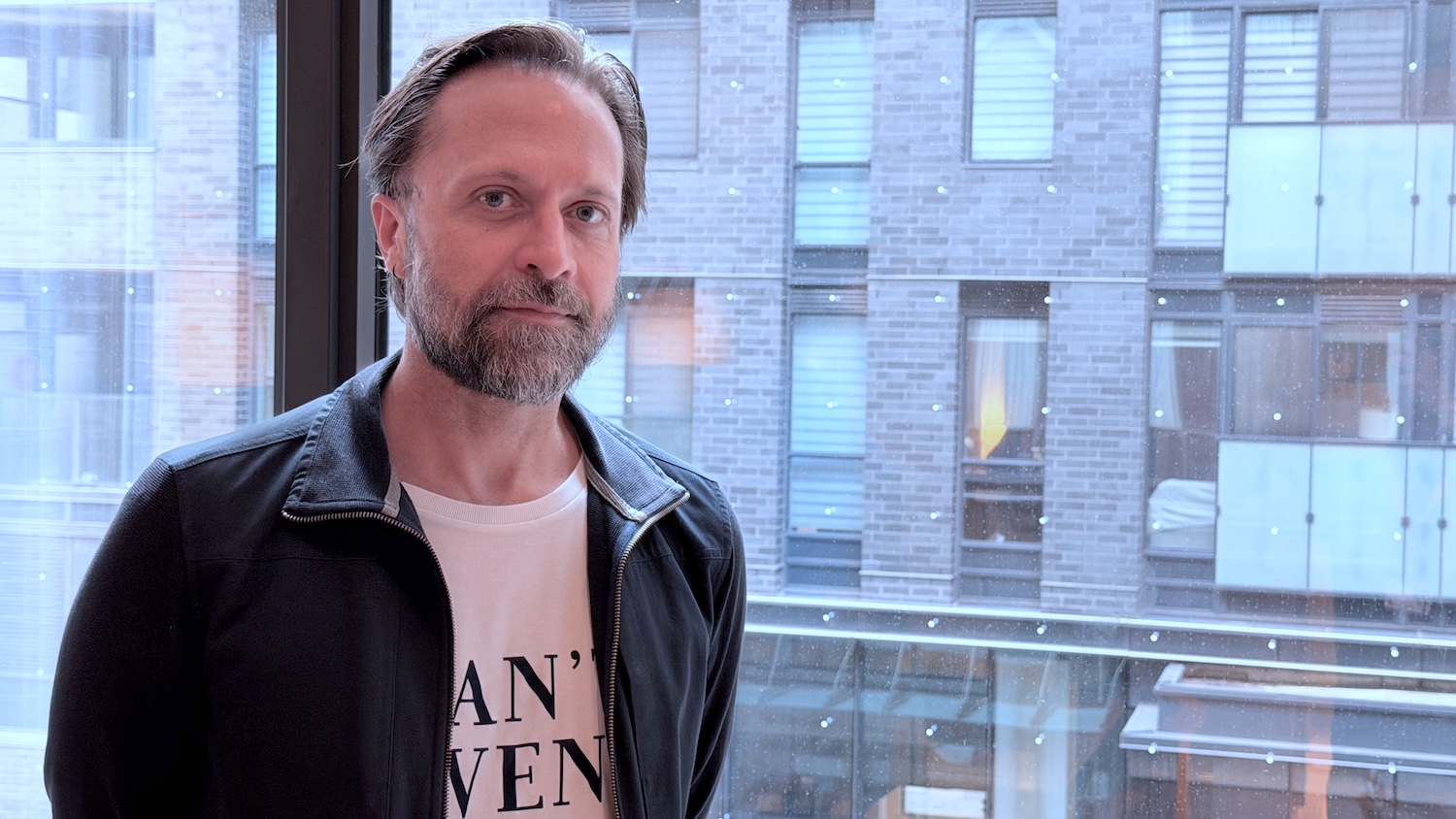
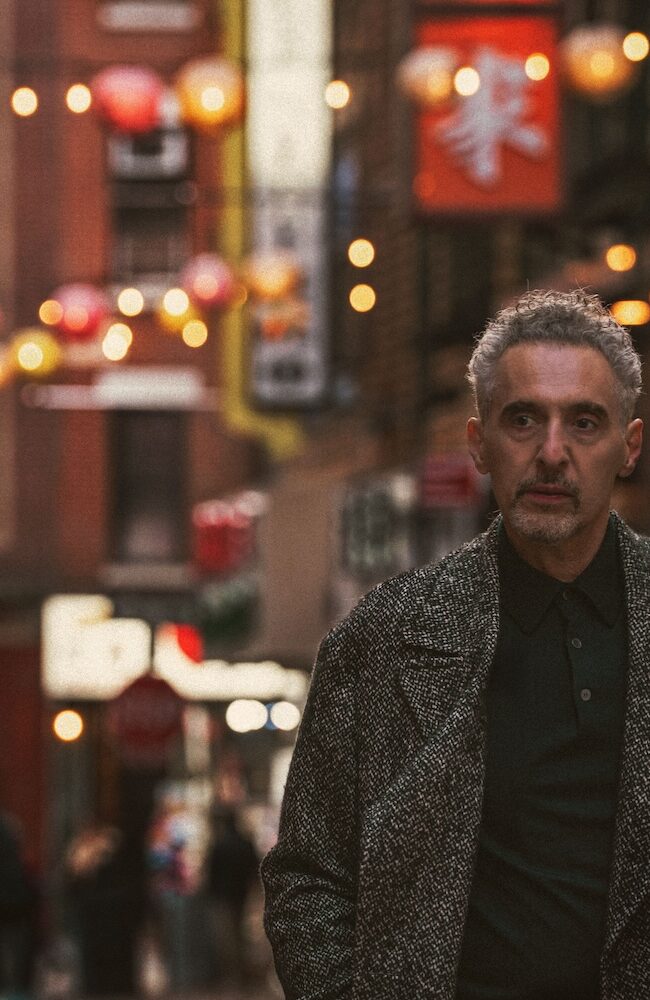
In The Smell of Apples, South African director John Trengrove examines the dawning consciousness of an Afrikaner boy as he begins to realize the horrors of the apartheid system. An adaptation of the 1993 book by Mark Behr, the movie features a tour-de-force performance from its young lead, Dawian van der Westhuizen, who carries much of the emotional heft of the narrative on his slim shoulders. Trengrove and cinematographer Lennert Hillege deliver vivid visuals that perfectly capture the 1970s time period, the sun-drenched locations set in opposition to the dark truths hidden in plain sight. The Smell of Apples just premiered at the 2026 Toronto International Film Festival (where I reviewed it), and during the fest I spoke with Trengrove. Here is that conversation, edited for length and clarity.
Hammer to Nail: Please tell me about Mark Behr’s 1993 book, from which this movie is adapted. When did you first encounter it and what made you want to adapt it?
John Trengrove: It was the mid-1990s and Mark Behr published this book and it created quite a sensation when it first came out. A lot was said and written about apartheid and this was the first book that attempted to describe the strangeness on the inside of the white, utopian bubble or the so-called white, utopian bubble. And it’s a very compelling, very beautifully written story and account of an 11-year-old boy growing up on False Bay, in Cape Town, and his growing awareness and unease with what is going on in his country that’s not visible to him. He’s living in a kind of idyllic world. It’s summer 1974, first day of his summer holiday, and he’s looking forward to his time with his father. So there’s something kind of sun-kissed and glorious about this boy’s experience. And then slowly the cracks begin to appear in the walls of this world.
I think I was about 15 when I read it. I grew up in the last 10 years of apartheid and the book resonated with my experiences. I remember that thing of not really understanding what’s going on, but from an early age knowing that there was something wrong with the country, that there were dangers out there, there were unrests in the townships and that the rest of the world didn’t like us, this kind of naïve concept of something, but none of it manifesting where you are. So it always remained in the abstract. And what I loved about it and what I really wanted to try and capture was that feeling, that unease that comes from the tension between what you can see and what you know to be true.
HtN: And how oppressive systems poison everybody, not just the people being oppressed. It eats away at the center.
JT: Absolutely. Not to take away from the true suffering of the oppressed.
HtN: Of course.
JT: The bigger picture is an incredibly disturbing one and it’s essentially an image of white supremacy. But what the story does is show us—or at least this is what I wanted to focus on in the film—how in order for a system like apartheid to exist and to be sustained, it requires the beneficiaries of that system to adopt a kind of willful blindness and to teach their children the rules of what can be spoken about, what needs to be ignored, to dismiss the humanity of people that are different, to protect and uphold father and his authority at all costs. There’s a kind of Christian-nationalist doctrine that was imposed on white South Africans in schools and churches and universities, something that I remember very well. And so it’s a kind of rule book for how to protect our own and how to protect the system.
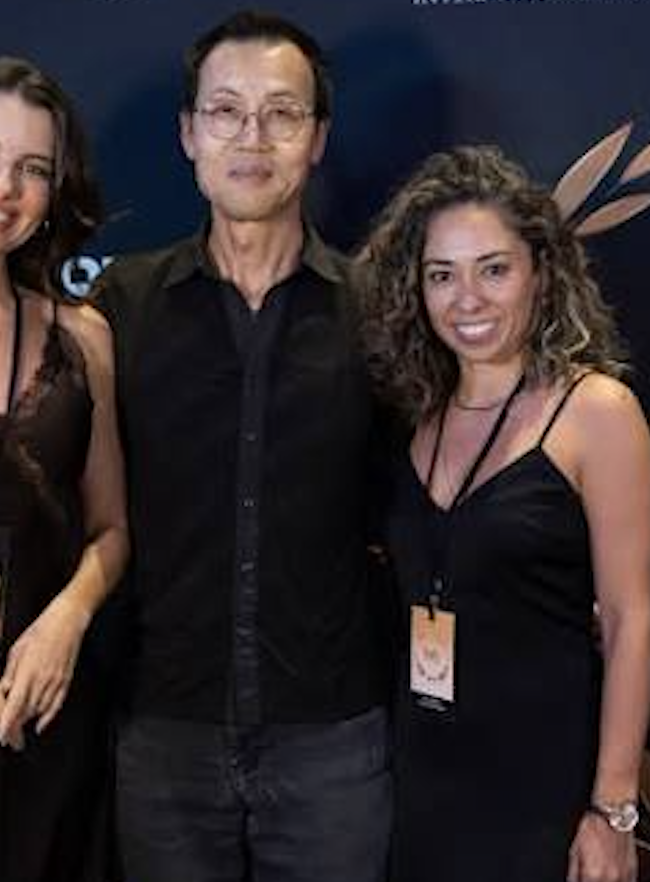
Our Chris Reed and John Trengrove
And the story is really about how this rule book is taught in the home from a very early age. Often people aren’t even doing it consciously, but through demonstration and constant reinforcement, kids learn how to uphold and participate in a system of white supremacy. And I think that’s the real tragedy of the story: you watch this boy who is beginning to kind of understand what’s going on. He doesn’t quite understand the full implications, but there’s an awareness of the power imbalance. And before he fully even grasps what’s going on, he’s already a kind of perpetrator and a participant in the machinery of oppression.
HtN: How would you describe the differences between the book and your film? Are there different emphases? Are there things you chose to focus on more in the movie that are different than in the book?
JT: I think it’s almost always the case with adaptations that you really have to kind of home in on an aspect. The novel is a very free-flowing internal monologue. It describes the events that happen over the course of five or six days in December 1974 but then it flashes back. There are memories from the past. There are stories that his parents told him about their parents. And so there’s a kind of generational layering that is narrated. And then there are these flashes into the future where we get glimpses of who Marnus will be as a young adult. And so the decision was made quite early on to strip those layers away and really just home in on the events of those five days.
And then you’ve got this emotional engine that is the internal monologue of this boy. And so you have to find a way to translate those ideas into cinematic scenarios. So there was a fair amount of taking elements of the story and re-appropriating them and reconfiguring them to get the same ideas across. It can be a little bit painful at times, especially when you love the source material as much as I do. But ultimately it’s about chasing an idea and a feeling and an end destination and you make some changes and alterations along the way to get there.
HtN: I would say that’s always a better approach to adaptation than simply a slavishly faithful sort of chapter-by-chapter version. I want to see what someone has to say about the work.
JT: Absolutely.
HtN: So the cast of your film is really quite remarkable, especially your lead boy, Dawian van der Westhuizen. What was your casting process like?
JT: It’s not the first time that I’ve worked with kids and I must say it’s an incredibly rewarding process. With children, you have to go searching and we always cast the net as wide as we possibly can. We ask kids to submit self-taped videos of, not rehearsed scenes, but of things telling us who they are, introducing us to their friends, cracking a few jokes. It’s just an opportunity to get these little snapshots of kids’ personalities. And what I’ve learned from experience is you have to look at 500 kids to find that one that has a certain elusive quality and it’s not something that can be taught or really even put into words. But there are certain people, children and adults who, when a camera rolls, something happens and you feel like you can read their thoughts. And Dawian is one of those. There’s just something extraordinary about this kid. On top of that, he is incredibly smart and witty.
And what’s extraordinary, not just with Dawian, but with all the young people that we worked with, is you get a little window into their development over the course of the shoot. I guess I met Dawian six months before we shot and then we shot quite intensively for six weeks. It’s just amazing to see a young person growing and evolving and taking in so much information. It was a very special experience. And there was a very specific challenge with this film because it’s not a film for children, but it’s propelled by a very young cast. So we had this tension that we needed to manage that it was very important to us that these kids have a good experience, that this would be something meaningful for them.
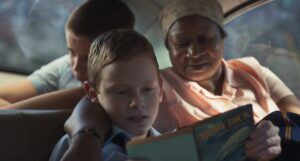
A still from THE SMELL OF APPLES
At the same time, we had to take a lot of precautions to shield them and prepare them for the kind of darkness and the maturity of the subject matter. So that was a huge priority for our production. And we had a lot of support, thankfully—child minders and social workers and tutors—and we created a little camp for our young actors to be safe and to be held. And so the process was quite magical in a way because you’re telling this dark story, but there’s a lightness and a sense of play on set. And kids just surprise you. They’re absolutely extraordinary with what they can understand and appreciate and intuitively respond to. I have a deep affection and nostalgia for the process I had with these guys.
HtN: The film is set in 1974 and there really is a palpable sense of that time and era. You do a great job evoking that. And that is due in part to the work of your cinematographer, production designer, art director, and costume designer. Can you just talk briefly about how you approached that time period with your creative crew?
JT: Well, huge props to Birrie le Roux, our production designer. She’s Afrikaans and she remembers Cape Town in that era, so she was able to draw from very personal references. I delved into my grandmother’s photo albums and there were some close-to-home references that we could draw from. It felt in many ways like we were tapping into family and personal memories. So that was a very rich and rewarding experience.
In terms of cinematography, Lennert Hillege is just extraordinary—such an incredible talent—and also a phenomenal collaborator. We spent a lot of time thinking about the story, thinking about the perspective of the film. And this is not so much about period, but what Lennert did—I think one of his many contributions—is he brought on board this idea that we shouldn’t get too immersed. We shouldn’t seduce an audience into a childhood movie, that the camera needed to maintain a little bit of distance and a little bit of detachment, asking the audience to keep watching and to keep thinking about what they’re seeing, a kind of critical distance.
And from there, we sort of playfully developed this idea of Opa’s Ghost; there’s a brief mention in the story of the deceased grandfather. And we had this notion of a deceased ancestor kind of creeping around the house and observing. There are a lot of observational shots shooting through doorframes and through windows and that’s where those ideas came from.
HtN: I really like that idea. Opa’s ghost. So final question: I love that location with the rock that they swim out to. Where is that?
JT: It is all shot in and around Kalk Bay, which is a small town just outside of Cape Town, which is where the novel is actually set. And that’s a particularly beautiful location with all these rocks jutting out into the ocean. So much credit goes to Lennert for that sequence. We just did so much scouting and so much preparation and so much returning to try and anticipate weather and tides. And you don’t understand how tricky it is to not be overwhelmed by the natural elements when you’re shooting stuff like that. But yeah, it worked out incredibly well. And I also love that scene. It really gets to a certain feeling and a certain crux of the film: Marnus’s obsession with his father and a sense of him being just out of reach.
HtN: Well, thank you so much for chatting with me, John. I really enjoyed the film.
JT: Thank you.
– Christopher Llewellyn Reed (@ChrisReedFilm)