


(The Vashon Island Film Festival runs August 13–16 for its fifth year. Check out Alan Motley’s Aanikoobijigan movie review, fresh from the fest. Seen it? Join the conversation with HtN on our Letterboxd Page.)
There is a point when the language used to describe something becomes part of the problem.
Human remains. Collections. Specimens. Archives.
Aanikoobijigan, screening at the 2026 Vashon Island Film Festival, is a documentary about Native American ancestors held in museums and institutions and the ongoing work to return them to the communities and lands from which they came. Beneath that history is a remarkably direct question: Who owns the physical past?
The film traces part of this practice through the history of cabinets of curiosities, where objects from nature, distant cultures, archaeological sites and even human bodies could be collected, categorized and displayed. That impulse eventually became institutionalized. The cabinet became the collection, the collection became the archive, and human beings could become accession numbers.
Aanikoobijigan is most affecting when it strips away that institutional vocabulary.
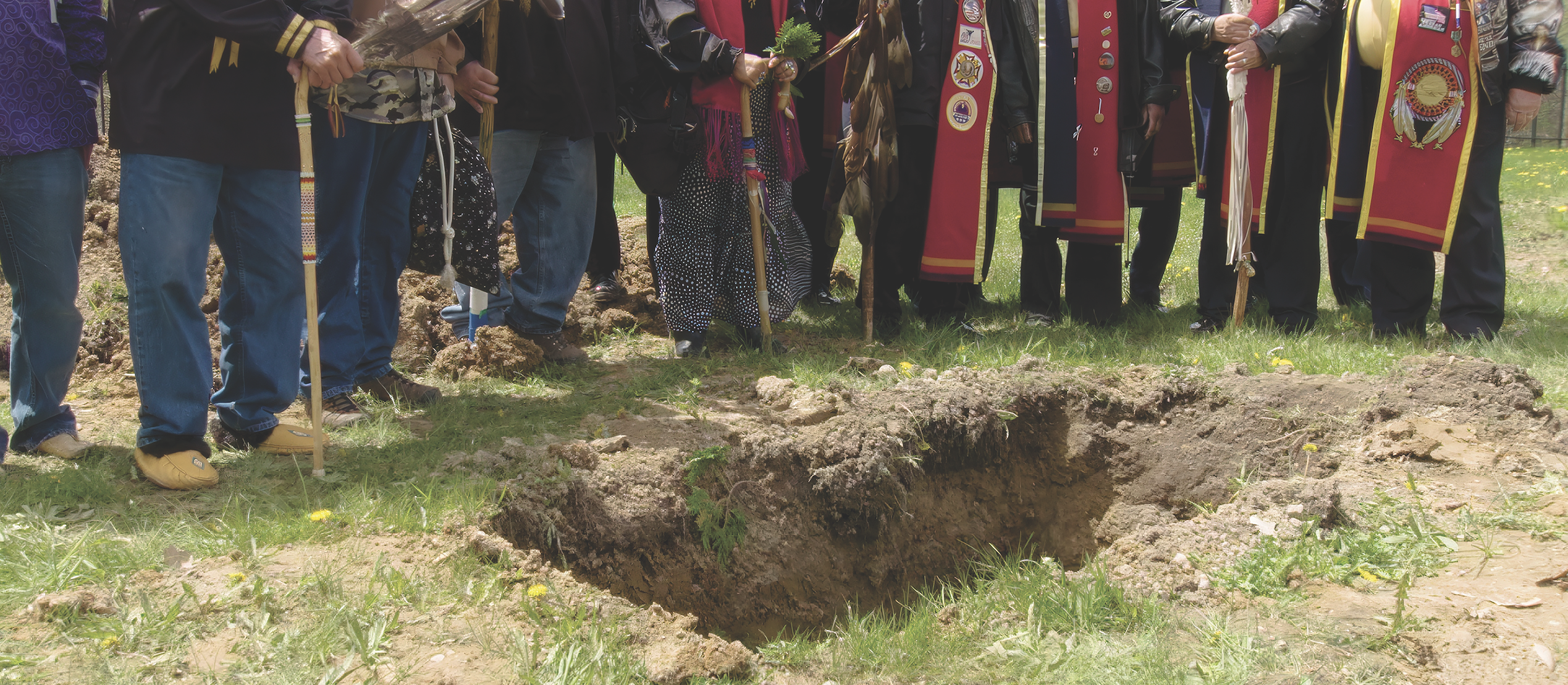
One Native interviewee recalls her father receiving a box containing ancestral bones. He took them into the forest and returned them to the earth. Against the complicated history surrounding repatriation, it is an extraordinarily simple act. What had been removed, studied and contained was finally returned.
The moment also exposes the tension between preservation and possession running throughout the documentary. Museums exist in part to preserve history, but Aanikoobijigan asks what preservation means when what is being preserved is another community’s ancestor. At what point does preservation become continued possession?
The film finds an unexpectedly effective way into that question through American horror movies. It examines the familiar trope of the disturbed Native American burial ground, including Poltergeist, where disrupting the resting place of the dead unleashes supernatural consequences.
The contradiction is difficult to miss. American popular culture has long understood the disturbance of Native burial grounds as something terrible enough to build horror stories around. Meanwhile, actual Native ancestors have remained removed from those burial grounds and stored in institutional collections.
It is one of the documentary’s sharper observations because it makes an enormous historical subject immediately recognizable. We already understand the fundamental transgression. Popular culture has been telling us for decades.
But Aanikoobijigan is less interested in haunting than in return.
Its examination of repatriation ultimately brings the documentary back to the earth. Returning an ancestor is not presented as the destruction of history or the loss of an artifact. It is the restoration of a relationship between body, community and place.
That is why the story of the box lingers.
For all the institutional complexity surrounding these collections—scientific research, provenance, museum policy, DNA and generations of record keeping—the final act can be remarkably elemental: taking someone’s ancestor out of a box and giving their body back to Mother Earth.
Aanikoobijigan documents how these collections came to exist, but its more difficult and immediate question is why they continue to exist.
Perhaps the measure of successful repatriation isn’t a more thoughtfully managed collection.
Perhaps it is an empty one.
(Be sure to check out Jack Schenker’s interview with Aanikoobijigan director Zack Khalil)
– Alan Motley (@alanmotley)