





SHEEP IN THE BOX
(Check out Savina Petkova’s Sheep in the Box movie review. The film just had its premiere at the Cannes Film Festival. Seen it? Join the conversation with HtN on our Letterboxd Page.)
The newest film by Japanese director Hirokazu Koreeda may be set “in the not too distant future,” as per its epigraph, but at its core, Sheep in the Box is a very familiar, rather than dystopian story. By looking at the future, Koreeda turns back to a past continuous tense, an arrested childhood so wonderfully encompassed by French aviator and author Antoine de Saint-Exupéry’s novella The Little Prince. The film’s title itself refers to a part of the book where a drawing of a box is discussed, claiming that what’s not depicted is the content of said box: a sheep. As goes the famous quote – “the most beautiful things in the world cannot be seen or touched, they are felt with the heart,” The follow-up to Koreeda’s 2023 Cannes Best Screenplay winner, Monster, Sheep in the Box aims to get to the heart of a parent-child relationship while appealing to the senses.
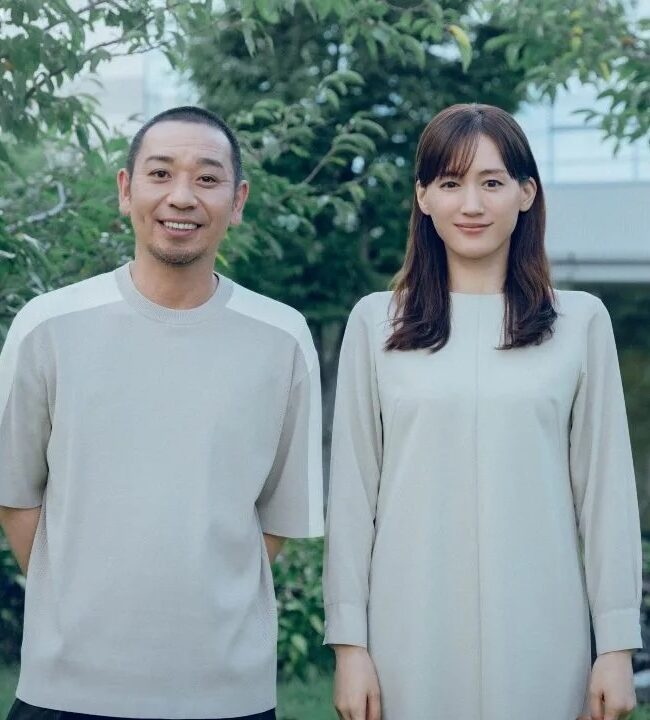
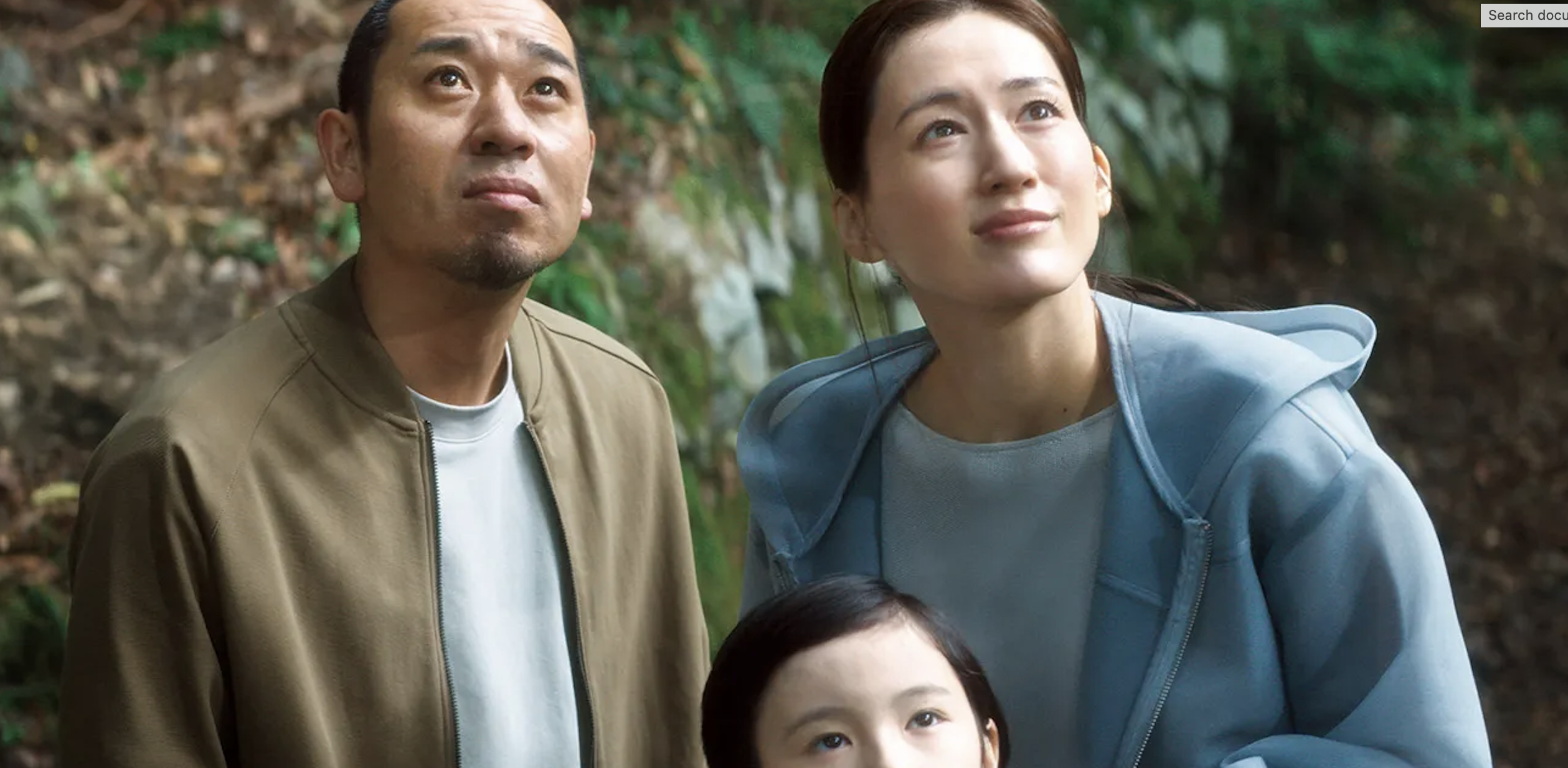
Unlike Monster, Sheep in the Box is written by Koreeda and presents us with a gambit familiar to proponents of AI, posthumanists, and Black Mirror fans: a special service replicating your deceased loved one as an identical humanoid. This is the proposition sent to Haruka Ayase as Otone Komoto (Haruka Ayase) and her husband Kensuke (Daigo Yamamoto) in the shape of a heart-shaped device, “REbirth” projects a soft AI voice and butterfly holograms promising help to anyone who “doesn’t want to forget.” Cut to a framed photo of a boy holding up the family cat, and the mother’s longing stare, and you can already guess it – this family has lost a child and finds moving on impossible. Through a slow-burn exposition, typical for the Japanese director, the audience can piece together that the so-called “accident” which befell the Komoto family two years ago was tragic and unresolved, so of course, our sympathies are with them from the get-go.
Otone, on the one hand, insists on giving the REbirth service a try—especially since the couple is eligible for complimentary humanoid rental—while Kensuke, on the other hand, is reluctant, both forming a predictable dichotomy in parental reactions. Dithering between those two drastically different attitudes, the humanoid version of their seven year-old son Kakeru (Rimu Kuwaki) seems suspiciously calm, gracious, and understanding. In this regard, Sheep in the Box is a distinct example of an AI/android film where the stakes are not as high: there is very little context about the robot’s make-up and however puzzled they are at first, the parents seem largely unperturbed. Perhaps it’s because Otone, who is an architect working alone with an AI assistant and designer, is used to the synergy between humans and AI; or perhaps she just really wants her son back.
A curious result of this simplified set-up is how much more attention one can pay to performances and the subtle shifts of human behaviour we are so used to calling “uncanny” in a Freudian fashion, but Koreeda brings the reality of this concept to the fore. In a scene where Kensuke finally lets his prejudice go and we see him play with Kakeru, as if it was his deceased son, the actor’s speech and gestures loosen up and time comes to a halt. While not actually slowed down (no slow-mo, or editing tricks employed), time is then measured by the parents’ desire to seize the moment, made palpable in the performance. Similarly, Rimu Kuwaki as Kakeru comes across as imperturbable and confident in his skin so that the few instances where we’re reminded his character is not, after all, human, feel even more impactful. Cinematographer Kondo Ryuto (Shoplifters, Monster)’s instincts to bask the look of the film in sun, while keeping the focus soft yield a delicate, papery result – not unlike the wood shavings in Kensuke’s carpenter studio.
Wood plays a crucial part in the film, as part of the father’s trade and in Otone’s approach to architecture and design. Koreeda’s attempts, though, to ground a film about AI companions in such an obvious “nature/culture” metaphor end up lowering the stakes for Sheep in the Box a bit too much. What’s equally transparent is an allegory for parenting as relinquishing control framed as a question about humanoid autonomy, stretched too thin over the last act, but at a time when nothing scares a critic more than the suggestion that a certain film could have just as easily been made by/with AI, at least one can take comfort in the fact that Sheep in the Box is as man-made as The Little Prince.
– Savina Petkova (@SavinaPetkova)