

A Conversation with Jay Duplass, Adam Cayton-Holland, Cooper Raiff, David Duchovny, Kumail Nanjiani & Emily V. Gordon
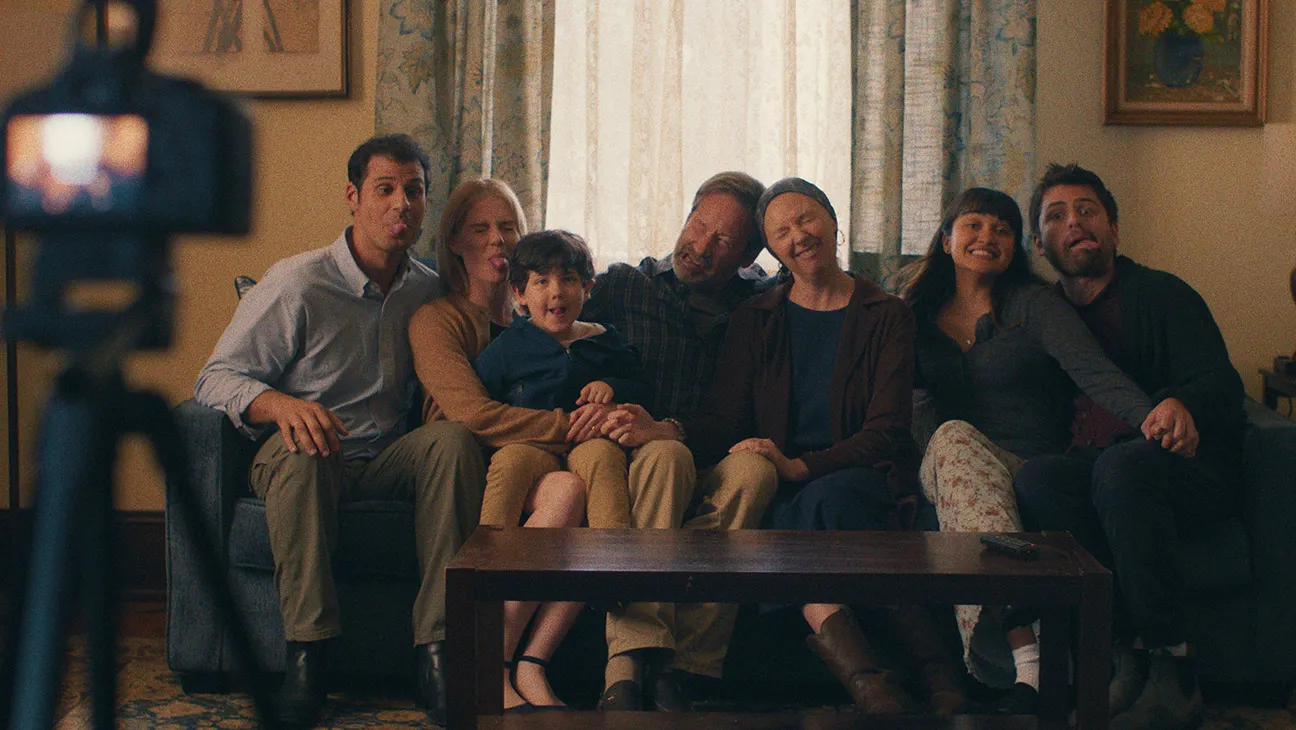
See You When I See You was directed by Jay Duplass (The Puffy Chair, Cyrus, Jeff, Who Lives at Home, The Baltimorons) and written by comedian Adam Cayton-Holland. It adapts Cayton-Holland’s 2018 memoir Tragedy Plus Time: A Tragi-comic Memoir into a warm, deeply original, and fiercely funny meditation on grief, mental illness, and the uneven path toward emotional healing. Aaron Whistler (Cooper Raiff) is a young comedy writer whose little sister and best friend Leah (Kaitlyn Dever) has died by suicide after years of struggles with mental illness. Aaron was the one who found her, and now he battles severe PTSD—drinking to numb his sorrow, ghosting his new girlfriend Camila (Ariela Barer), and adamantly refusing to even consider a funeral. His family is smart, loving, and well-resourced: his mother Page (Hope Davis) is a former journalist, his father Robert (David Duchovny) and sister Emily (Lucy Boynton) are civil rights attorneys who share a practice. But when your brain is broken, it does not matter how smart you are. Even a family as capable as the Whistlers cannot outsmart trauma.
The film premiered in the Premieres section of the 2026 Sundance Film Festival, marking Duplass’s return to the festival where his career began 23 years ago with a $3 short film that changed his life. After a decade of acting and television work—including his acclaimed role in Joey Soloway’s Transparent, which earned him a Critics’ Choice Award nomination—Duplass returned to feature directing with last year’s The Baltimorons, which won the Narrative Spotlight Audience Award at SXSW. See You When I See You continues that creative renaissance, and Duplass has described it as the heir to The Big Sick—but darker, harder, and funnier. Like Robert Redford’s Ordinary People or the James L. Brooks tragicomedies Duplass grew up on (Terms of Endearment, Broadcast News), the film is personal, heartbreaking, and funny, all at once.
Cayton-Holland—one-third of the Grawlix comedy troupe, creator of truTV’s Those Who Can’t, and one of Variety’s “10 Comics to Watch”—makes his feature screenwriting debut with a script that transposes his real-life experiences (his younger sister Lydia died by suicide in 2012) into a work that captures the spirit of his memoir while finding its own cinematic language. The “psyche sequences” that visualize Aaron’s broken brain—ghostly fantasies where Leah appears only to be sucked into the sky—give the film an almost sci-fi quality, inventively portraying the inner journey of trauma and recovery.
The film is produced by Kumail Nanjiani and Emily V. Gordon—the Oscar-nominated writers of The Big Sick, who have launched their own production company Winter Coat Films—alongside Duplass Brothers Productions, Astute Films’ Fred Bernstein, Rick Jackson, and Cayton-Holland himself. Nanjiani and Gordon served as creative godparents to the project, having known Cayton-Holland from the stand-up circuit and recognizing in his memoir the same raw, lived-in authenticity they brought to their own story. At Sundance, I spoke with the director, writer, star, and producers. These interviews have been edited for length and clarity.
JAY DUPLASS (Director/Producer)
Hammer to Nail: This is your first time directing a film you didn’t originate. What was it about Adam’s script that made you feel you could find your way into someone else’s deeply personal story?
Jay Duplass: It was just tragic and funny, and that is the tone that I love. This is more tragic and more darkly humorous than I had tackled before. I could say a bunch of reasons, but Kumail and Emily sent me this script. I read it. I laughed. I cried a ton. It felt really big and scary and exciting, and I just felt like I was called to do it.
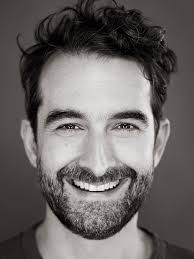
Filmmaker Jay Duplass
HTN: The Baltimorons won the SXSW Audience Award and got you back into feature directing after fourteen years. How did that experience inform your approach to this film? And what is it like premiering at Sundance, where your career started with that $3 short?
JD: The Baltimorons definitely gave me the confidence that I could direct a movie without my brother, and it would not be terrible. Just to be frank, that was the biggest fear. He is still with me—he is the best creative producer alive, as far as I am concerned—and he produced this for me. Being back here, 23 years after our first short film… I would not have a career without Sundance. I would not be here if they had not accepted that short film. I would not be making movies, hands down.
HTN: You mentioned holding morning prayers on set where crew members shared personal connections to mental illness. How did that ritual shape the production’s atmosphere and the performances?
JD: When you make a movie, especially an independent film, you are up against a lot. It feels like war a lot of times. But this movie is about the human condition and the subtlety of how do you get through a day when terrible things are happening? How do you be funny when terrible things are happening? Those things have to live on a human scale. I think it just helps the movie. I think it helps the actors. I think it helps everybody to feel included. It was not just sharing people’s own mental health stories or traumas—it is just anything anybody wants to share that is going on in their life. It brings the fever pitch of how challenging it is to make a movie down to: okay, we are just a bunch of people making some art.
ADAM CAYTON-HOLLAND (Writer/Producer)
Hammer to Nail: Kumail and Emily gave you the advice not to name your character Adam. How did creating that distance between yourself and Aaron free you creatively?
Adam Cayton-Holland: It was everything, and it was such a lived-in lesson—because they put their life on screen, and I think everyone thinks The Big Sick is the story of Kumail and Emily. There are different parts that just serve the script. You are trying to write a great script, tell a great story. This movie is clearly my story and what happened, but that tip freed me to write the best script I could, to tell the best story, because it is a whole different language writing a script.
HTN: Jay would not move on from a scene without checking in with you. What is an example of a moment where your input changed something in a take?
ACH: There is a stigma of “writer on set”—that you are finger-waggy, like “that is not my word.” So I got to set, learned that was a thing, and quickly wanted to show that I am an asset, not a detriment. Jay knew because we are homies and had been working on this for years, but the crew did not know. There was one moment where we were filming a complex thing—we needed to show a hand opening a door to match that on the other side. I did not think they got it, but I did not want to speak up because I thought that is not my lane. I asked the DP, and he said, “Tell Jay, young Jedi.” I was like, all right, I am helping here, not just in a writerly way. That felt cool.
HTN: Hope Davis and David Duchovny pulled you aside for thirty-minute conversations about your real parents. What did they bring to the roles that surprised you?
ACH: It was more Hope that did that than David. David would ask questions, but I told him I am here if you need me—I am not telling you how to do anything. He had a firm grasp of what he wanted to do, and I loved it. Hope pulled me aside day one: “Tell me everything about your mom.” And I just downloaded her. I watched her on screen—she never met my mom, it was a half-hour conversation, but she really pulled a lot out of that. My mom was like, “Wow, she has got my vibe for sure.” It is just cool to see how different actors approach the process. Hope wanted the info.
COOPER RAIFF (Aaron Whistler)
Hammer to Nail: Hal and Harper premiered at Sundance last year and dealt with sibling trauma and abandonment. How did exploring those themes in your own work prepare you for Aaron’s grief over Leah?
Cooper Raiff: It was interesting. I tried to not let it inform anything because Hal and Harper are such different people and their trauma was so different. But I guess we are all trying to figure out how to get rid of the trauma in our bodies. I did not really take anything directly, but I was feeling a lot of the same things throughout filming that I was feeling when I was filming Hal and Harper. But they feel very different to me, in a nice way.
HTN: Jay called you an independent filmmaker who gets it, in terms of being patient with finding the story. How did your experience directing Shithouse and Cha Cha Real Smooth prepare you for this kind of collaborative discovery?
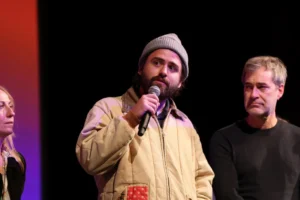
Actor and filmmaker Cooper Raiff
CR: It really helped me. Sometimes I work with actors who I wish understood how hard making an independent thing is. I really enjoyed knowing what Jay was going through and knowing exactly how to help him each day. There are so many things that benefit the whole production if the actors know what to expect—how slow things can be or how fast things can be. Independent filmmaking is very interesting.
HTN: Jay mentioned building believable family dynamics through casting. What was the process of creating that sibling relationship with Kaitlyn Dever and Lucy Boynton?
CR: I love Kaitlyn. I love Lucy. It was crazy because the movie is so intensely sad, but the days when I was working with Kaitlyn were so fun, and we laughed so much. She is just a really fun person, so it is really easy to have that sibling bond with her—I think we feel like siblings in a way. Right away we felt like that. And Lucy, I love and adore working with her. We played siblings that do not get along all the time, and that was hard because I get along with Lucy so well. We had to really settle into our characters.
HTN: The press notes mentioned that you contributed to the script getting better as the production went on. What is an example of something you brought that changed a scene?
CR: I do not know if I brought anything other than just affirmations. I would read the script and talk about what I loved about it. I think that is always helpful for a writer and a director—to know what he thinks is landing is landing. So I was more just giving him validation. Just telling him it is working. I wanted to be supportive of him. I think he has worked with a lot of actors who come in and bring a lot of ideas that give him headaches, and I was trying to do the opposite of that.
DAVID DUCHOVNY (Robert Whistler)
Hammer to Nail: You have written five novels and released three albums. How does your experience as a songwriter and storyteller influence how you approach a character like Robert?
David Duchovny: It is a good question. It is hard to answer. In terms of songwriting, you want to be as specific as you can be, but also as universal as you can be. I find the more specific you can be, the more universal it actually is. It is kind of a magic trick. Acting as well. You want to be super specific so that you can be universal.
HTN: Fail Better features conversations with people like Bette Midler and Ben Stiller about their relationship with failure. Did any of those conversations inform how you approached this character?
DD: I do not think consciously. I think the work you do filters into your life unconsciously in ways that you do not really know. What I have learned or unlearned from the podcast is that I think there is no such thing as failure and success. They are just snapshots in time. Something that you might deem a failure today—tomorrow you go, oh, it is different. Or something you deem a success today, tomorrow it is different. It is a snapshot.
HTN: Jay says part of the design philosophy was showing that when your brain is broken, it does not matter how smart you are. Robert is clearly brilliant. How did you embody that helplessness despite capability?
DD: Those are very intellectual ideas that are good, but it is that idea that you cannot perform brain surgery on yourself. I think that is probably the key to the character. I do not know that I ever thought of it that way. It is a guy who is very capable, very successful, and is completely helpless in this situation.
HTN: You recently directed Reverse the Curse. How did that experience behind the camera inform how you approached this role?
DD: I have been directing for quite a while. When I do direct and then go work as an actor, I am just so fucking thankful that I got less work to do. When you are directing yourself as an actor, there’s a freedom that you get because you are thinking about so many other things. You are not sweating your performance so much. I am the least of my worries. There is a nice thing about not obsessing over your performance, however, there is also a nice thing about only having to obsess over your performance like I did for this film.
MARK DUPLASS (Executive Producer)
Hammer to Nail: You produced Wild Wild Country, which won the Emmy for Outstanding Documentary Series. How does your documentary work influence how you approach personal stories like this one?
Mark Duplass: What a Hammer To Nail question that was. You just get right to it! It was a little bit backwards, a little bit horse before the cart. Because Jay and I love documentaries, and we love watching them. That informed the way we shoot our early movies, which you can see—the handheld camera work, the improvisation, trying to chase what is working as opposed to exact it like a narrative filmmaker. I did not get into making documentaries until about fifteen years later. I did not want to make documentaries because they are so goddamn hard. It is a way to lose your health insurance, your mental health, and your spouses, generally speaking. But that story came to us and we could not deny it, and the brothers who were going to direct it, the Way brothers, were so good. They were like 24 and 28—the same age Jay and I were at our Sundance premiere. We did not have help. They tried to sell it all over town, no one would buy it, they needed somebody to grab them and take them through the gates. So we just crashed through the Netflix gates with them. By and large it was those boys doing it. Once we did that we got involved in a lot more.
HTN: Jay called Cooper his filmmaking son, someone you have both mentored since that tweet. What have you seen in Cooper’s growth from Shithouse to this?
MD: For me, watching him grow as an actor is really interesting. As someone who was always a writer-director-performer, I feel that I was not really taken seriously as an actor for a while because it almost felt like, well, you just cast yourself in your stuff because it was cheap. A little bit of that was happening with Cooper. To watch him be directed by Jay, who is the master of the thin lane of comedy-drama overlap and getting it right—which Cooper happens to love—that was the real fun growth to watch.
HTN: Jay mentioned the morning prayers on set, which created a culture where crew members shared personal connections to mental illness. How did that atmosphere affect the day-to-day production?
MD: Mental health is big for all of us. I talk about it all the time. It is endemic to the nature of this project, the personal story that Adam wrote. I think it is really endemic to what we need right now. I do not want to get haughty about it, but I am always looking for some way to cross the aisle to people that I do not agree with, and mental health has been like the best singular thing to connect with men who are literally as diametrically opposed to me socio-politically, ethically as can be. That morning prayer thing is emblematic of that, and what we kind of hope to take out to audiences—as well as some giggles too.
KUMAIL NANJIANI & EMILY V. GORDON (Producers)
Hammer to Nail: You just launched Winter Coat Films with a mission to make emotionally intelligent entertainment. How does this film exemplify that vision?
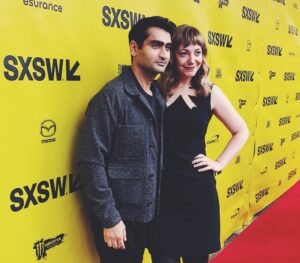
Kumail Nanjiani & Emily Gordon
Kumail Nanjiani: This is exactly perfect. This is the exact kind of stuff we want to make. It is the first film we have produced as Winter Coat Films. The second thing we made was my stand up special, which is also like this. It’s funny but hopefully there’s some other more emotional stuff in there too. We are also big horror, sci-fi fans— we want to make stuff like that too, but also have these elements to it. Funny, moving, real. But then, you know, maybe a ghost too. And fun to watch.
HTN: The Big Sick was your story. Here you are producing someone else’s deeply personal narrative. What is different about shepherding another person’s truth to the screen?
KN: It’s a lot easier!
Emily V. Gordon: It is lovely to have a bit of distance from it.. It is lovely to see it from the outside and be like, oh, I remember feeling weird and like this thing that was mine was being taken away from me and turned into something else. So I think we have been able to impart to Adam that yeah, it is going to be separate from you at some point. It is going to be its own thing. There is a period of weird mourning that happens with that, that is kind of necessary, because it needs to become something else. You do not want your actual life story out there. You do not want every single detail of your personal life on screen. It would not be good to watch, and it is not good for your soul, I do not think. So we have just done our best to be there for him as he has gone through that process.
HTN: You guys gave Adam the advice to change names, to see these as characters. What other guidance did you offer from your own adaptation experience?
KN: Part of it is truly separating it from yourself and really understanding that you cannot mess with your own past. You cannot go in there and fuss around with it. You have to be able to do that when you are making a movie. That has been it—being emotionally there for him as that has felt weird. It does feel weird.
EVG: But I also think: trust yourself, because he has lived through it. He knows what feels truthful and what feels false. You have to change details. You have to fit it into a ninety-minute narrative. It is different from life. Life does not really have that kind of clean narrative. But always make sure that whatever you are doing feels emotionally truthful to you.
– Jack Schenker (@YUNGOCUPOTIS)