





(The 2026 Sundance Film Festival kicked off Thursday, January 22 and ran through Sunday, February 1 for, sadly the last time, in and around Park City, Utah. Check out Chris Reed’s Public Access movie review, fresh from the fest. Seen it? Join the conversation with HtN on our Letterboxd Page.)
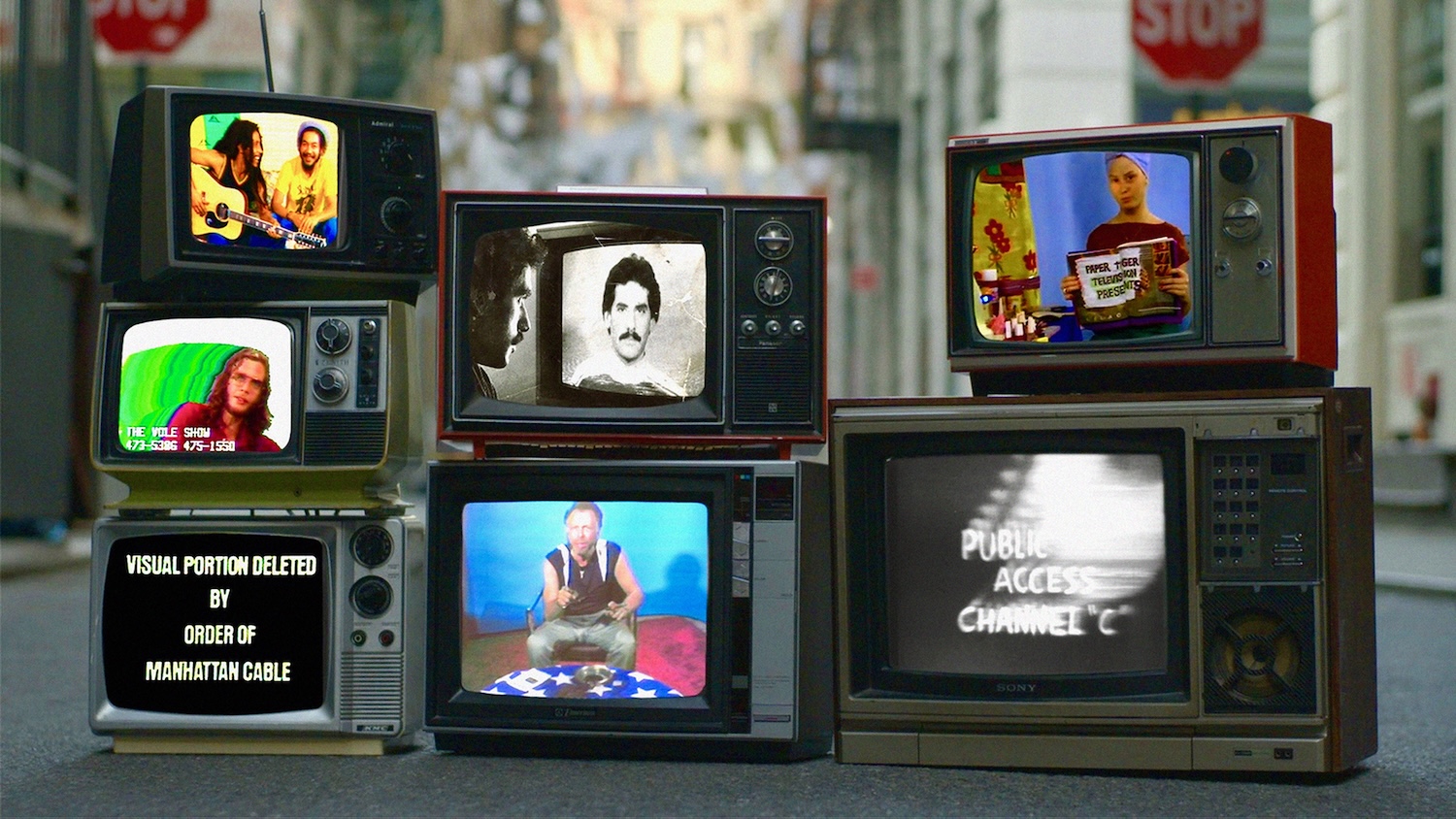
Starting in the early 1970s, big media companies in New York were required to provide public access to the then-new cable networks as part of their mandates. One such channel that grew out of this condition was Manhattan Cable, which soon became home to all manner of alternative programming, including—eventually—porn. In his feature-documentary debut, Public Access, director David Shadrack Smith examines this Wild West of the airwaves, with all the mayhem and fun that comes with it.
The beauty of the movie is in the archival, which consists of contextualizing footage of New York City of that time plus copious amounts of rough-and-tumble broadcasts of all varieties. There are the call-in shows, the variety acts, the experimental performance artists, and soon a hefty dose of erotica. If you never thought that full-frontal nudity was possible on American television screens, think again.
The film takes us from the exciting beginnings to the conflict-filled 1980s, when the expected conservative pushback led to court cases attempting to limit what could appear. One proposed change was to require viewers to opt in to the explicit content. The creators objected, pushing back with gusto on the pushback. Among them was the Big Apple’s finest purveyor of unfettered sleaze, Al Goldstein, who, in addition to generating pornography for Manhattan Cable was also the publisher of Screw magazine. Amazingly, Goldstein and company won. Score a point for free speech.
You may wonder where we stand today, and the short answer is that though such channels still exist, the demand for what they offered was offloaded to the internet. Their heyday persisted, with twists and turns, well into the 1990s, however, as we see through the eyes of Jake Fogelnest. At 14, he started his own program, Squirt TV, which would be picked up by the more-established MTV in 1996. Sure, he developed a heroin problem, but it was fun while it lasted.
Smith never interrupts the visual cacophony with talking-head interviews, though Public Access is replete with the voices of the era. They just remain as voiceovers, only, allowing the material to shine in its beautiful and awkward glory. How often do we get to witness artistic democracy in action like this?
In the end, the film is both celebration and cautionary tale. What the history reveals is that people’s tastes are more diverse than the homogeny of popular culture would have us believe. But excess is excess, no matter who makes it, and sometimes the loudest voices are just loud and not as interesting as they think they are. Here, they all come together in a vibrant, frequently funny, and always entertaining mix.
– Christopher Llewellyn Reed (@ChrisReedFilm)