





Another Angle On: NATCHEZ
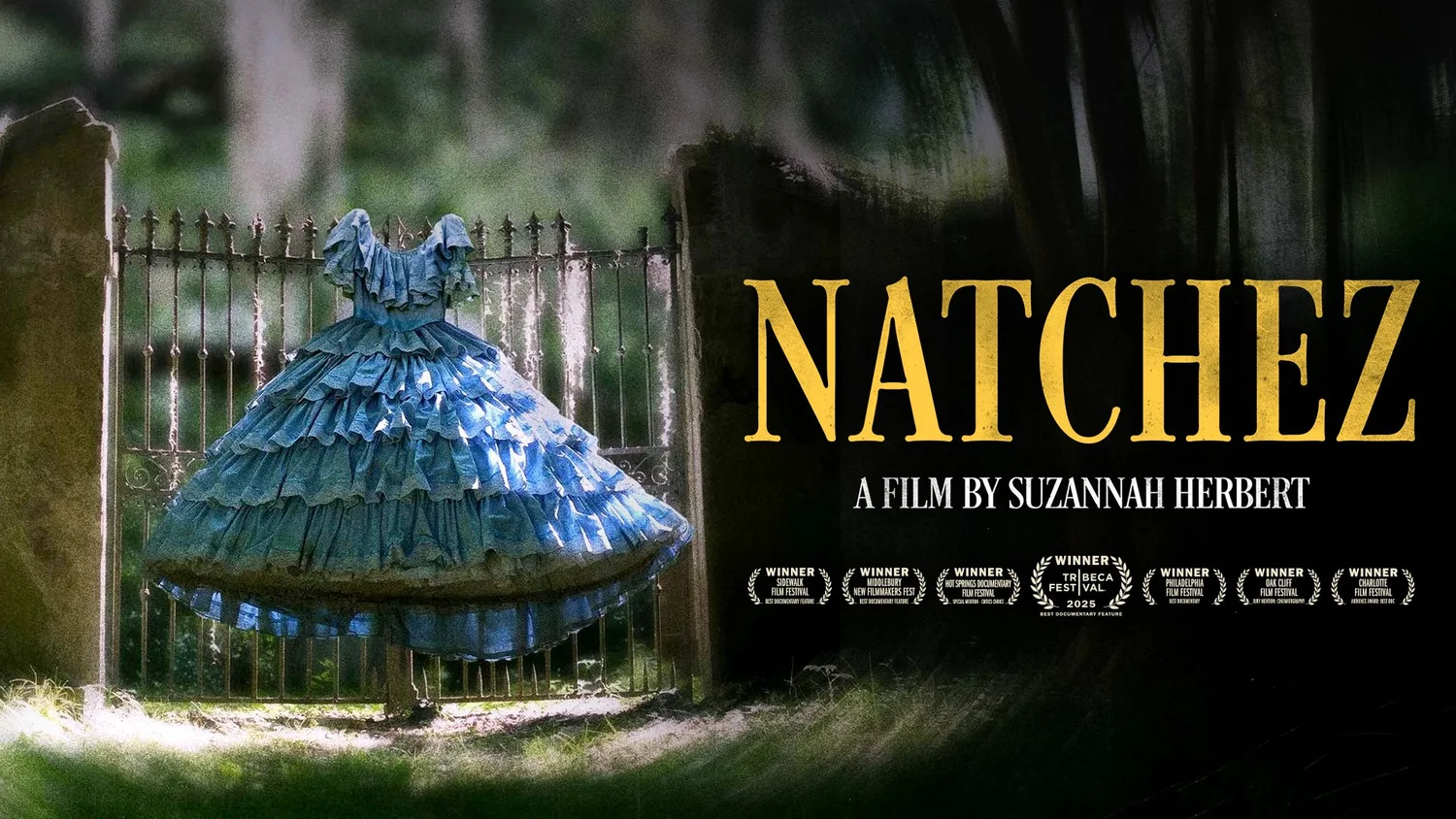
Natchez, Mississippi has a wealth of history, and a history of wealth – perhaps the only two facts its residents can agree on. Throughout much of the 19th century Natchez was one of the richest areas in the US thanks to the cotton boom – and the enslaved labor that kept its capitalism wheel churning. Today the small town is wholly dependent on tourism, especially its century-old tradition of “Pilgrimage” – when twice a year an onslaught of overwhelmingly white visitors descend upon the antique-packed antebellum mansions to gaze at pretty objects; and to hear the houses’s history, delivered by docents in full Scarlett O’Hara drag.
It’s a romanticized account that includes benevolent white plantation owners like “Dr. Duncan” who “was good to his people.” At least according to one hoop-skirted guide featured in Suzannah Herbert’s captivating cinematic chronicle Natchez, a patient and unobtrusively-lensed look at a complicated community through the myriad characters that call the place home. The docent is pointing to the photo of the enslaver’s prized slave alongside the man’s writing – evidence he was given an education.“Which was illegal at the time!” she exclaims.
Though “behind the big house is the rest of the story,” notes Debbie, the first African American member of the powerful Pilgrimage Garden Club, referring to the slave quarters she owns – and gives clear-eyed tours of. It’s a necessary corrective she provides along with the doc’s only other Black main protagonist, Rev, a preacher and citywide guide (and a former county commissioner). Indeed, the two bear this burden of public service since so many of the town’s older white folks are, as Rev puts it, reluctant to muddy “Southern pride narratives with truth and facts.” He also points out that in the grand antebellum tours the word “servant” is used to describe those forced into servitude. (Which is where we cut to that introduction to the good Dr. Duncan’s “servant.” The film’s editing is not only swift but designed for maximum impact, to say the least.)
Unfortunately for Natchez, its highly varnished history has been going out of style for awhile, as Rev likewise mentions that Gen X’ers and Millennials prefer hard truths to hoop skirts. Which means the tourist dollars aren’t coming in like they used to in the golden olden days – a fact not lost on the older white townswoman who sees the writing on the wall. As much as she would like to freeze time, she knows that, “You can’t live in the past.” (Though another prefers to “continue history” instead of “rewriting history.”)
Then there’s Tracy, a Southern belle with a lullaby voice who admits she felt transformed – indeed, that she finally “belonged” – when she first put on her Gone With the Wind-style attire. This lovely dame longs for the compliments, the attention the constricting outfit garners – something she doesn’t get from the troubled marriage she’s stuck in. That said, Tracy is also a relative newcomer, one of the more openminded Southerners the place has always counterintuitively attracted. As Rev explains to the group of visiting ladies happily peppering him with questions from the back of his tour van, Natchez is a “blue dot” in a sea of red – even electing the first openly gay mayor in Mississippi. (Though he also tells us that the mayoral office is relatively symbolic. It’s the Garden Club “blue-haired mafia” that’s really in charge.)
Then again, having a gay mayor with actual power would hardly guarantee a progressive vision for the economically declining town. Choctaw Hall’s owner David, a good ole queen who runs his old money family’s home with his partner, clings to the narrative that his ancestors worked their butts off for generations, earning every penny of their riches (and thus the right to be “arrogant”). He insists that Natchez would “fold” if all the gays left. “We’re the only ones with the money and the taste,” he sniffs.
For David, who still welcomes visitors despite being slowed down by Parkinson’s, wields obliviousness as a strategic weapon. Indeed, he doesn’t even blink when his “Y’all Means All” fundraiser is met with angrily shouting protestors holding anti-LGBTQ+ signs outside. (The drag queen show must go on!) He’s just another member of the aging white demographic that has a hard time processing the fact that “the history I learned is a Southern construct that was used to sell tickets.” It’s a spot-on assessment from a no-nonsense older white woman, the superintendent of the Natchez National Parks Service sites. Kathleen’s been eager to expand Forks of the Road, the location of the second largest domestic slave market in US history; and has been bumping up against a white owner of a muffler shop who refuses to sell to accommodate unsavory history.
In fact, perhaps unsurprisingly, it’s the government workers that seem to take the most pride in their truth-telling. A Black park ranger delivers a dynamite monologue (to a group of mostly Black tourists) about a child once tasked with the job of “punkah wallah.” The enslaved boy went from operating the ornate dinner table fan for his oppressor and assorted guests, to furtively listening in on those mealtime conversations, to disseminating that information amongst his fellow enslaved, to eventually growing up to become a history-making politician from Natchez. (John R. Lynch was the first African American speaker of the Mississippi House.)
It’s an anecdote we hear after cutting from the Choctaw Hall house tour, which solely entrances us with the virtues of the beautifully-crafted punkahs. So when its owner finally goes off on an unhinged tirade laced with the n-word – with no pushback from the startled white visitors he’s railing about Blacks to – it’s shocking but not surprising. (David even ends his racist rant by clarifying that he does love to wear black – black tie.) The angry white man’s allyship is tied not to the African Americans (there only to serve him), nor even to the gender benders (there strictly for his entertainment). Like many in his white privileged camp, he wants only to write history, not make it.
– Lauren Wissot
Be sure to check out Chris Reed’s interview with Natchez director Suzannah Herbert and producer Darcy McKinnon as well as his review from the 2025 Tribeca Film Festival.