


NADJA (1994)
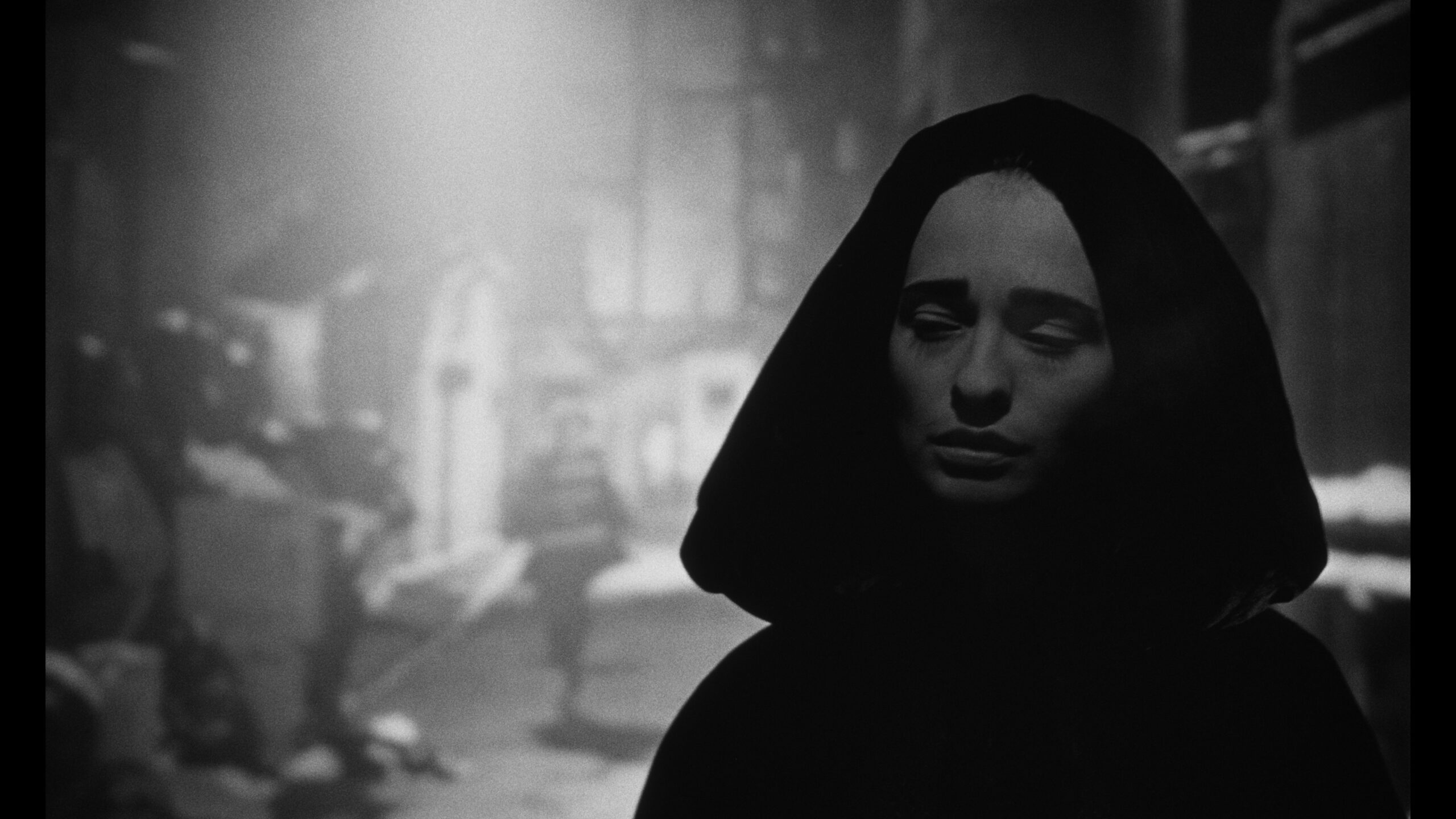
(Check out Jonathan Marlow’s Nadja movie review. Michael Almereyda’s 1994 vampire film has been given the 4k restoration treatment and is in theaters now. Seen it? Join the conversation with HtN on our Letterboxd Page.)
Our season of the vampires. Predisposed to vampiric inclinations. Would you doubt it? If the bloodsucking undead are limited to rising at night, it stands to reason that the winter would have immense appeal. For a vampire, Let the Right One In-wise. I have no first-hand experience in the matter.
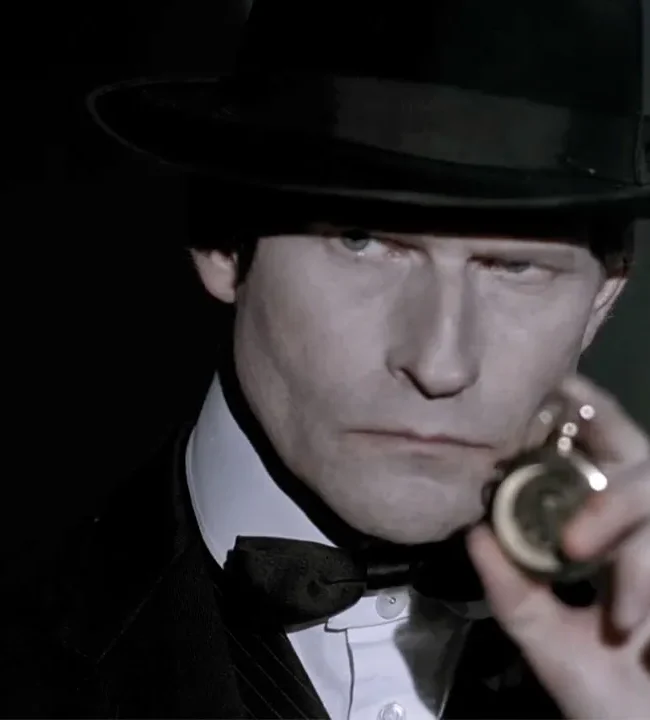
I have plenty of experience with Nadja, however. The book and this loosely-adapted film. I first watched it in my youth but I fail to recall why. Perhaps it was the connection to David Lynch, who generously financed the film (and briefly appears on-screen) as well as producing along with Mary Sweeney, Lynch’s longtime collaborator / editor (and, briefly, spouse). Twin Peaks and its ancillary Fire Walk with Me had come and gone in the early-1990s and then there was this, shortly thereafter. You’d be forgiven for imagining Nadja as Lynch-ian. It is, ever-so-slightly. It is arguably more Hartley-esque, given that Hal Hartley then-regulars Elina Löwensohn—for whom writer / director Michael Almereyda wrote the title role—and Martin Donovan (for whom he didn’t) star. It doesn’t much resemble a Hartley film otherwise, though (outside of this aspect of the casting and its grand use of New York locations).
If it has much of an antecedent at all, you could claim it was somewhat Maddin-like (if there had ever been a period when Guy Maddin was recruited by Roger Corman to direct a psychological horror-drama, his own Dementia 13 by way of Gimli Hospital if you will), whereby this odd interpretation of André Breton’s surrealistic novel-of-the-same name is shoehorned into a quasi-remake of Dracula’s Daughter (1936), less a five-years-later sequel to Dracula (1931) than Bride of Frankenstein (1935) is to the original Frankenstein (released the same year as Dracula and nearly a full decade after Nosferatu yet, in retrospect, seemingly centuries apart). Cleverly, though, when we briefly witness (in flashbacks) the father-of-the-daughter, we see Bela Lugosi, albeit from White Zombie (1932) instead (since the latter had slipped into the public domain)!
In any event, following a convoluted fashion. Martin Donovan’s role had been considered for Eric Stoltz. Stoltz wasn’t available but he happened to be dating Bridget Fonda at the time and she (or he) passed the script along to her father, Peter Fonda (which is how the latter ended-up considering and then pursuing his apt casting as the acerbic Abraham Van Helsing). In this telling, Donovan’s Jim is Van Helsing’s nephew—or [spoiler] something more—and Jim is married to Lucy (author / occasional actor Galaxy Craze) who happens—not by chance but, rather, design—to hook-up with Nadja. Complications ensue. Spurred by the demise of her father, Nadja goes searching for her twin brother, Edgar (played by a youthful Jared Harris, son of Richard Harris), who is being nursed back to health—long story—by nurse / love-interest Cassandra (Suzy Amis) who, coincidentally enough, is Jim’s [spoiler] sister (although he doesn’t know that when they meet).
If this sounds like the framework for a telenovela, the source material was always soap-opera-ish (hence the wonder that was Dark Shadows way-back-when). There is more to it than all that, of course, involving vampirism (naturally), wooden staking, bodysnatching, absence from—or presence in—mirrors, blood transfusions and an abandoned hospital as a stand-in for a Southeastern European castle.
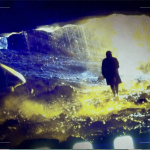
Perhaps of particular interest to cinematographic cineastes, the VPoV (vampiric point-of-view) is generally accompanied by footage photographed in Pixelvision. The idiosyncratic low-tech video camera was modified from its usual audio-cassette tape format to output to Beta SP (resulting in a sharper pixelated image). With this restoration, now even sharper! Many folks have attributed, then-and-now, the choice of black-and-white as a budgetary concern but it plays largely as an aesthetic choice since the Fisher-Price PXL2000 could only shoot in B&W, allowing the footage to transition from 35mm to Pixelvision with relative ease.
Thankfully, the fine folks at Arbelos—in collaboration with the similarly remarkable folks at Grasshopper Film—have teamed to restore-and-distribute this extraordinary oddity! Timed to hit theaters during these colder months of longer nights, appropriately enough. Remain highly aware as you leave the cinema! Ice (and ICE) and other things that might cause a bump in the night might be about.
NADJA (1994) / (4K restoration 2025)
dir. Michael Almereyda [92min.]
— Jonathan Marlow, Executive Director | SV Archive [Scarecrow Video]