




(The 2026 Sundance Film Festival kicks off Thursday, January 22 and runs through Sunday, February 1 for, sadly the last time, in and around Park City, Utah. Check out Chris Reed’s Barbara Forever movie review, fresh from the fest. Seen it? Join the conversation with HtN on our Letterboxd Page.)
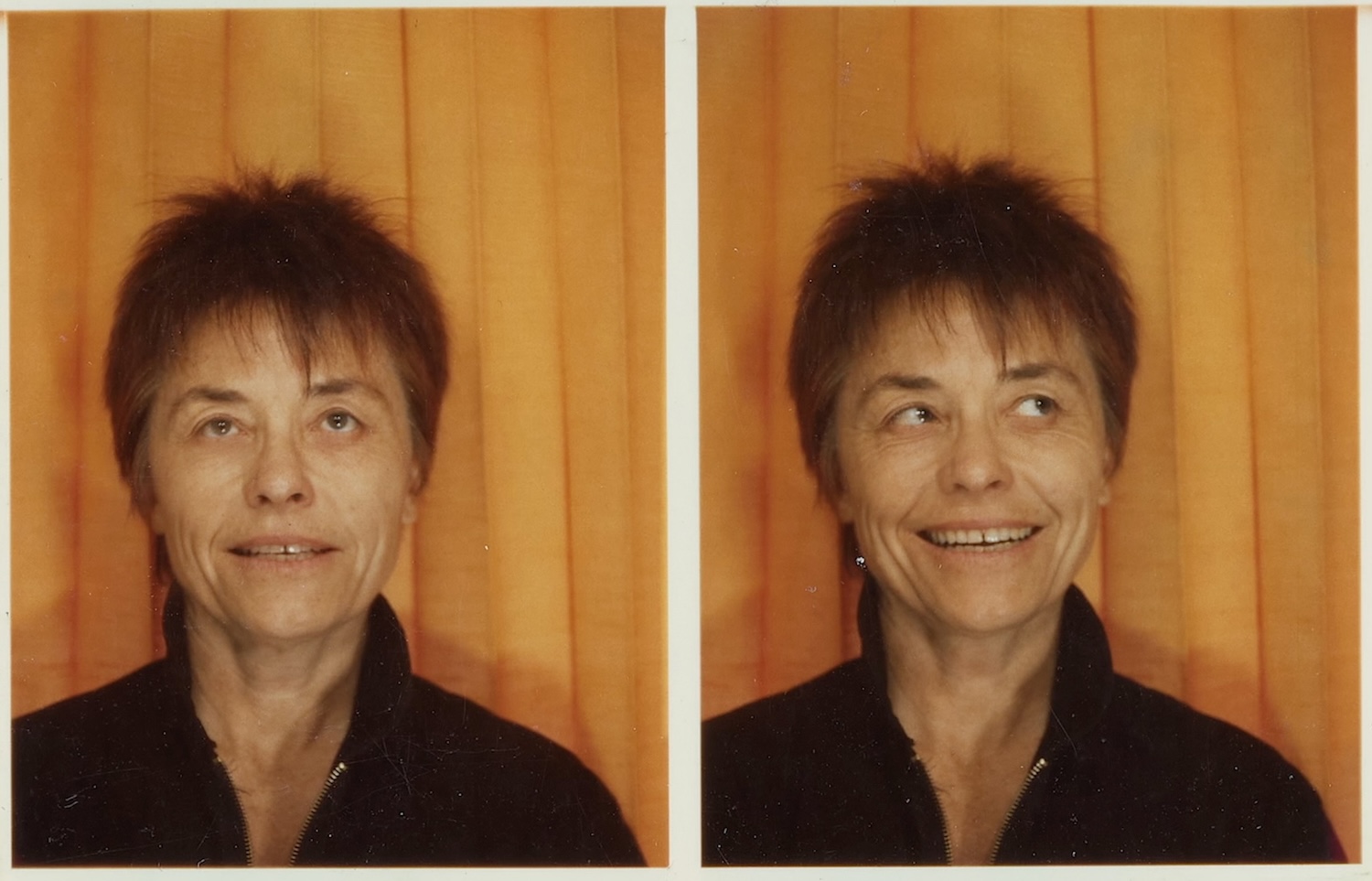
The late, great experimental filmmaker Barbara Hammer (1939-2019) left behind a treasure trove of work worthy not only of exhibition but of preservation. This is exactly how Brydie O’Connor’s documentary Barbara Forever begins, in a museum—Yale University’s Beinecke Rare Book and Manuscript Library, where the films and other material now reside—as Hammer’s life partner, Florrie Burke, pays a visit to commune with old friends. From there, we proceed on a comprehensive journey through the life and career of a seminal artist.
Hammer was known not only for her unconventional storytelling techniques but for her focus on lesbian narratives, showcasing sapphic love and sex in often explicit images. She placed herself on screen as much as anyone, using her own romantic dalliances as subjects worthy of study. She was extraordinarily prolific, though she did not make a feature-length film until Nitrate Kisses in 1992. Her movies spoke to the then-hidden world of queer desire and were a lifeline to those folks tired of being invisible.
None of it might have happened had Hammer stayed in her post-college marriage to Clayton Henry Ward, with whom she traveled around the world on motorbikes before settling in the San Francisco Bay Area. It didn’t take her long to find her role as housewife stifling, so she went back to school and began exploring avenues for creative expression. That’s not all she explored, and by the 1970s she came out as a lesbian, divorced her husband, and embraced a new identity as a queer artist.
As much as her early work found a hungry audience, it would take her over a decade to finally achieve more widespread recognition—courtesy of her inclusion in the 1987 Whitney Biennial—and be able to earn a comfortable living through her work. It was around that time that she met Florrie, whom she would later marry. From then until her death, she continued to make movies about the topics that interested her.
With copious footage of Hammer herself—she was an obsessive documenter of her own life—Barbara Forever offers an intimate look back at what made Hammer tick, though the line between public and private personas remains blurry. This is by Hammer’s own design, in a way, since she was always as much behind as in front of the camera. Still, it’s hard not to see her as something of a construct, at times, and to wish that O’Connor could peel back just one more layer to find a truth not refracted by the lens. Who would she be without the cinematic gaze? It’s a fitting conundrum to ponder for a director of Hammer’s considerable stature.
– Christopher Llewellyn Reed (@ChrisReedFilm)