



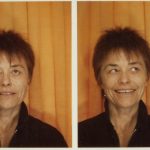

A Conversation with Rebecca Zlotowski (A PRIVATE LIFE)
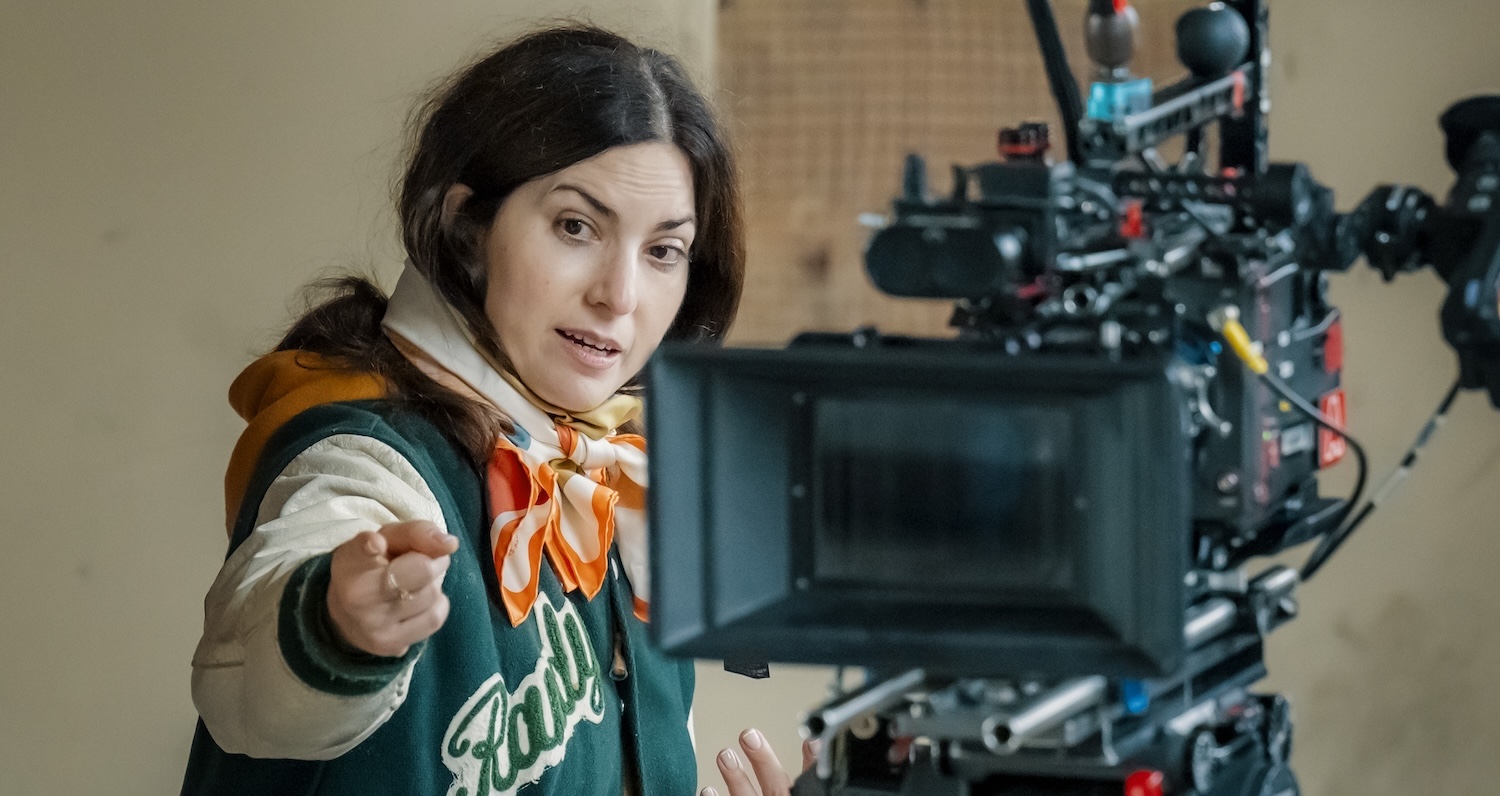
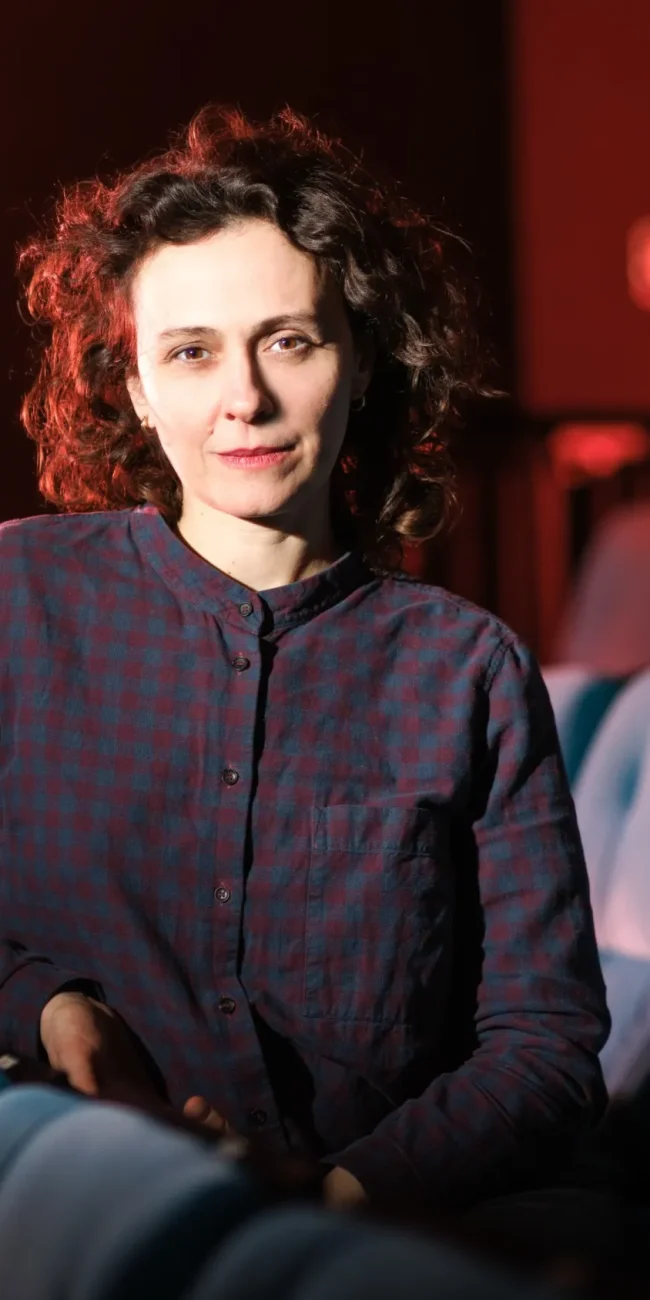
A Private Life, the latest feature from French director Rebecca Zlotowski (Other People’s Children), stars the great Jodie Foster as an American psychotherapist living in Paris. When a patient of hers commits suicide, she is forced to reevaluate her entire life and career. Despite that description, the film is not as bleak as you may think (in fact, it’s often quite funny), buoyed by Foster’s (as always) brilliant performance (in French, no less), a purposefully oddball narrative (co-written by novelist Anne Berest), and terrific supporting work from folks like Mathieu Amalric, Daniel Auteuil, and Virginie Efira. I recently had a chance to speak with Zlotowski via Zoom, ahead of the movie’s American release, and here now is that interview, edited for length and clarity.
Hammer to Nail: I just want to start by letting you know how much I enjoyed your television series Les Sauvages and your film Other People’s Children.
Rebecca Zlotowski: Thank you.
HtN: And thanks in part to directors like you, I have grown to love Virginie Efira as an actress.
RZ: We all do.
HtN: Speaking of amazing actresses, what came first, you wanting to work with Jodie Foster or the idea for this script? Or are the two inextricably intertwined?
RZ: The answer is in the question, but if I had to choose, I would say it was working with Jodie. It’s my sixth feature, and when you make your first and second films, it’s the story that drives you. At that point, it’s an anomaly in your life to create a film, and you need to be so focused on the story and stuff. And then, eventually, you notice that you need to hang out with the people that you love and have drinks with them and have dinner with them, and so the actors and actresses may be at the beginning and center of a project.
In that sense, I would say that the desire to work with Jodie Foster was at the origin of the film. It could not happen without the script and without the beautiful character that Anne Berest sent to me, though. It was like an encounter with a character I fell in love with, a title that haunted me—“A Private Life”—and Jodie Foster and the idea that it could be for Jodie. And then I rewrote it for Jodie and it became more interesting, about an American in Paris. What do we do with this Jewish person disconnected from the history of the extermination of the Jews in Europe? And what do we do with this person who wants to create a new life? And the son doesn’t speak the same language … and what if, what if, what if … And then it becomes … a film!
HtN: Speaking of the themes of Jewish identity and culture, which are fairly central to the narrative, I know that a lot of times in the United States, people worry about casting actors who are not from the group being represented on the screen. Did you hesitate at all over the fact that Jodie Foster is not Jewish, playing this character, Lilian Steiner?
RZ: Not at all. First, I strongly believe in the power of artifice in cinema. I’m a lover of fake. (laughs) I love that! I’m a filmmaker, so I love fake, and I love when fake creates truth. On the other hand, I am not disconnected from our current era, and I understand that if you are gay or trans, when you’re in a minority that is not seen, you may be angry when you don’t have access to parts that are written for you and then taken by other people.
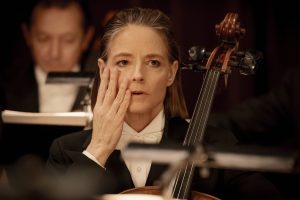
Jodie Foster in A PRIVATE LIFE
But I would not say that Jewish people, even if it’s just as an ethnicity … we don’t have the same debate in France. And also, we have very few Jewish actors here. (laughs) We are like 0.5% of the population, so if you want to find a Jewish actor to embody a Jewish character, you don’t make the film. And also, my desire to work with Jodie was stronger than the desire to have a Jewish actor. It’s a layer of the personality of the character, but it’s not the center. So no, this is something that did not occur to me, but I’m willing to think about it if it offends Jewish actors or actresses in the U.S., though I don’t think it does.
HtN: I was more curious than anything else, and I think she is amazing in the film.
RZ: She is amazing, but a friend of mine said, “Oh, but you gave this character to the most Gentile actress in the U.S. (laughs) But we do not have the same perception of Jodie in France.
HtN: (laughs) I just love watching her speak French. The rest of your cast is strong, as well, including Daniel Auteuil, Mathieu Amalric, Virginie Efira, Irène Jacob, and of course Frederick Wiseman …
RZ: My muse!
HtN: He popped up in another film recently where he’s also playing a kind of muse, Jane Austen Wrecked My Life.
RZ: Yes! By Laura Piani. And he’s also in Other People’s Children, as a gynecologist.
HtN: That’s right! I haven’t watched the film again since I bought the Blu-ray, but now I remember. So, how did you assemble this marvelous ensemble? I also like Luàna Bajrami, whom I did not know before.
RZ: Thank you for mentioning her because she’s an amazing actress and she’s also a director. Do you know that she’s 23 years old and she’s already directed three films, two of them features? She’s from Montenegro and she directs films in her country of origin. This is pretty impressive. I would say that what connects this cast is that 95% of them are directors, as well. Jodie Foster is a director. Daniel Auteuil is a director. Mathieu Amalric, too. Wiseman, obviously. So … (laughs) … I suppose I’m pretty masochistic, because when you direct under the gaze of actors who are legends, that is tough enough, but then when they are also directors, this is terrible. I don’t know, maybe I like to create a certain symmetry on set. When you are a director, you are too powerful. But when you work with Jodie Foster and Daniel Auteuil, you need them to choose you. And this is an interesting sort of leveling, for me.
And it’s not about pinning big names on your lapel—it’s not about bragging about your sparkling cast—and it’s not even useful for box office, sometimes. I was lucky enough to make a film with Lily-Rose Depp and Natalie Portman [the 2016 Planetarium] and it bombed. (laughs) It’s not connected. It has to make sense. So, when you know exactly why you cast certain actors and actresses, it makes sense.
For instance, Daniel Auteuil creates this Latin/Mediterranean vibe around Jodie Foster that was absolutely necessary to the movie. Vincent Lacoste adds comedy; it’s in his bones. Mathieu Amalric brings the mystery and the danger and the fake criminality that he has. And Virgine Efira? Who else to create a question mark? Because she cannot commit suicide: she’s too sunny, she’s too gorgeous, she’s too alive, she’s too fleshy. So it becomes a mystery. And also, you need an amazing A-list actress when she has just two scenes, in order to haunt the movie.
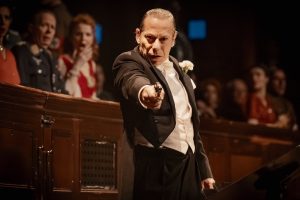
Frederick Wiseman in A PRIVATE LIFE
And Wiseman is there because I want him to be alive forever, especially when American institutions are vanishing, are cancelled, are threatened the way they are. The fact that I could encapsulate, for one minute, the person who spent his entire life documenting and praising those institutions, to say that they existed. I feel like I want Frederick Wiseman to live forever.
HtN: And he will, of course, live on on the screen. You mentioned the comedy with Vincent Lacoste. I really appreciate the way you mix comedy and drama here. How did you work to find that balance? Because your film has very serious themes, as well.
RZ: I’m not sure that I succeeded, but it was worth chasing it. I feel like these multiple layers of genre and tone are literally the kind of music that I like, and a kind of mix of meaning and pleasure that we need to offer to the audience if we want the collective theater experience to continue to exist. And I’m also looking for that in my normal life. I love going to movies not only to be entertained but also to be fed.
I feel like this balance was hard to find, exciting to write, and the thing that made it all cohere was the music, thanks to the composer, ROB [aka Robin Coudert]. We went in the direction of Stanley Donen’s Charade, a Mancini-esque score. We needed, for the first 20 minutes, to say: “Hey, you’re allowed to smile. Yes, this is Jodie Foster, who is not famous for being this super-comic actress. Yes, this is Rebecca Zlotowski and I am not famous in France as a comedy writer. And the beginning of the film starts with a death, she’s a psychiatrist, she’s such a tight-ass person. But you know what? You can laugh.” And this was something that the music allowed.
HtN: And you open the film with “Psycho Killer,” by Talking Heads, which has its own meaning that it brings.
RZ: Guilty! Guilty!
HtN: (laughs) So, what are your own personal feelings about psychotherapy vs. hypnosis? There’s this interesting dialogue between the two in the movie.
RZ: What do you think? I don’t know. I don’t care, actually. As a filmmaker, it’s an amazing playground. It’s a place where you can play with denial, frustrations, libido, secrets, and memories, the past and the future, and plastic images. It’s a field of experimentation that I really loved. As a person, as Rebecca, I had hilarious conversations with Anne Berest, because she’s a strong believer in those past lives, which I think sometimes is bullshit. And I was like, “OK, that’s interesting, but do we agree on the fact that it’s bullshit?” And she would go, “What are you saying?” And she’s into Tarot and stuff. I’m a very rational person, but as a highly rational person, I strongly believe that I do not know anything. So, I don’t know, I don’t care. I feel like I’m the last person to be able to get involved in those parallel therapies but I truly believe that for a filmmaker, it’s a beautiful field.
HtN: So then, as a follow-up, within the world of the movie—leaving aside Rebecca Zlotowski’s belief system—how literally should we take the past-life sequences or are these a metaphor for past cultural trauma?
RZ: It’s an image, and you take it as you choose to.
HtN: There we go. Thank you so much for talking to me!
RZ: Thank you!
– Christopher Llewellyn Reed (@ChrisReedFilm)


Post a Comment