



A Conversation with Noah Segan, Rian Johnson, John Turturro, Giancarlo Esposito, Tatiana Maslany (THE ONLY LIVING PICKPOCKET IN NEW YORK)
Noah Segan is a fourth-generation New Yorker who has been a part of the independent and genre film community for nearly two decades. Early in his career, filmmaker Rian Johnson cast Segan in the Sundance Award-winning hit Brick, beginning a friendship and creative partnership that has spanned nearly all of Johnson’s films, from a supporting-lead role in Looper to a cameo in Star Wars: Episode VIII – The Last Jedi, more recently the blockbuster Knives Out and its sequels, Glass Onion and Wake Up Dead Man. Now, Segan steps behind the camera for his latest directorial effort, The Only Living Pickpocket in New York.
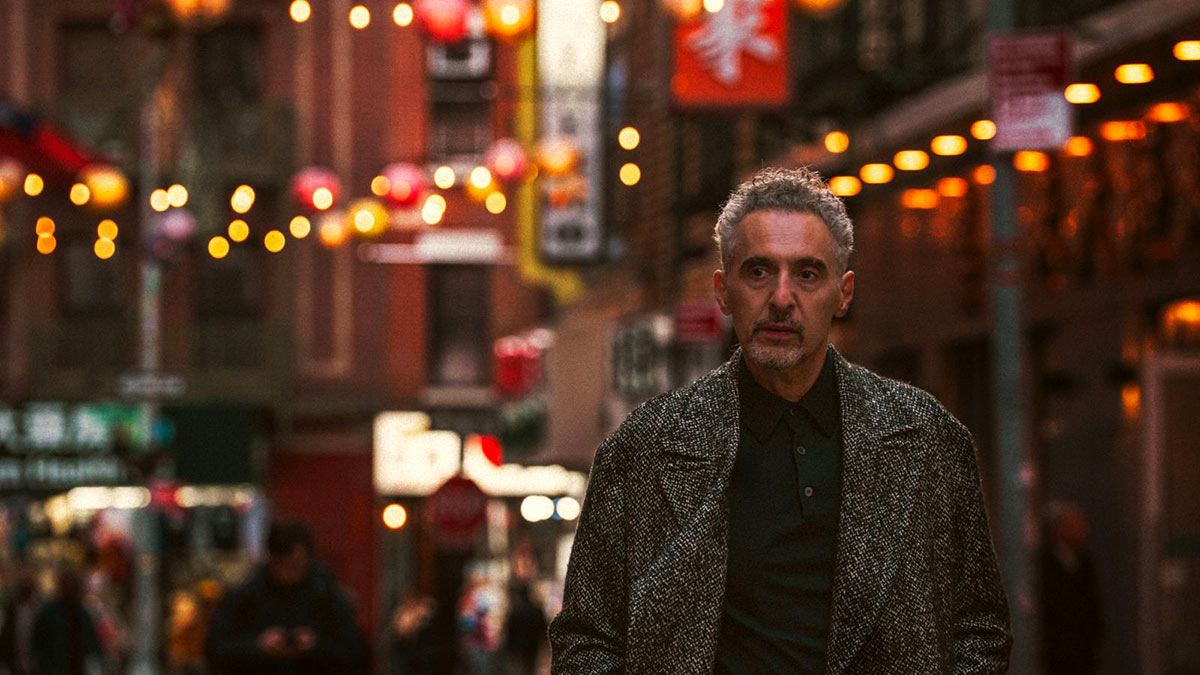
The film follows Harry Lehman (John Turturro), an aging pickpocket struggling to get by in a drastically changed New York. Back in his glory days, the exquisitely honed skills and infallible street smarts of the expert pickpocket made him a master of his craft. Now approaching 70, he is living in a much-changed city where the average citizen no longer carries large amounts of cash or wears expensive watches, where credit cards can be canceled instantly and mobile phones tracked just as quickly. Harry remains an analog guy in a digital world, struggling to make ends meet while caring for his disabled wife, Rosie.
When Harry unwittingly steals a valuable USB stick from a hard-partying rich kid, he finds himself in a race against time to return the loot or face the rage of a vengeful crime family. Unfortunately, his mark turns out to be Dylan Diamond (Will Price), the heir of a ruthless crime organization that will stop at nothing to get their property back. The journey to retrieve the stolen data card takes Harry through all five boroughs as he revisits the rapidly fading world of his past.
Both a crime caper and a character study, The Only Living Pickpocket in New York is produced by Katie McNeill, Leopold Hughes, and Ben LeClair, with executive producers Rian Johnson, Ram Bergman, and Johnny Holland on behalf of T-Street, the production company founded by Johnson and Bergman that has championed such acclaimed films as American Fiction and Fair Play. Director of photography Sam Levy, whose credits include His Three Daughters and Lady Bird, brings a grounded visual sensibility to the film, inspired in part by Robert Bresson’s 1959 classic Pickpocket. The film features incredible performances by Giancarlo Esposito, Tatiana Maslany, and Steve Buscemi.
I spoke with Segan, Johnson, Turturro, Esposito, and Maslany about this feature in the following conversations edited for length and clarity.
NOAH SEGAN (Writer/Director)
Hammer to Nail: You’ve been in every Rian Johnson film, from your major role in Brick to Trooper Wagner in Knives Out. Now you’re directing John Turturro after 20 years in front of the camera. What’s the strangest thing about being on the other side?
Noah Segan: I think I look better as a director than as an actor…that’s a joke. But really, it’s about trying to create an environment for people that would be like an environment I would want to be in. I’ve been very lucky being in that environment many times, working with Rian. I try my best to do that for others.
HTN: The press notes mention you cited Spike Lee, Scorsese, and Ferrara as influences, but also Coppola’s The Conversation, which is set in San Francisco. What specifically about that film informed your approach?

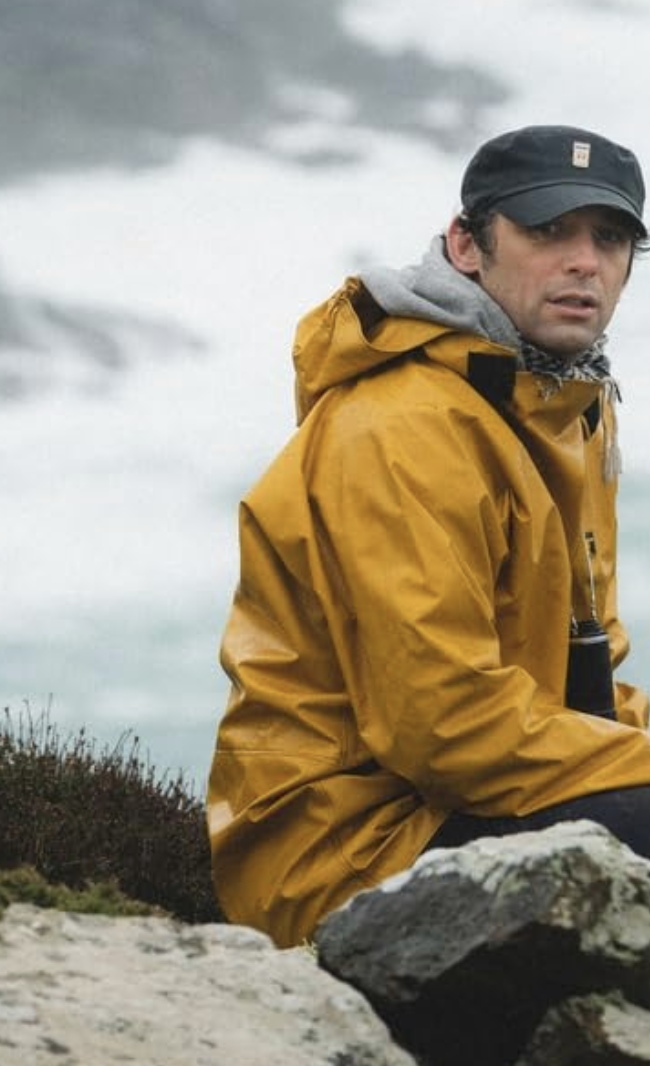
Filmmaker Noah Segan
NS: The marquee answer is that The Conversation is very much about a city. San Francisco is very much a part of that movie, and the San Francisco vibe of that era is integral to it. But also, it’s about a very skilled person being drawn into something. Is it scary? Is it hyperactive? Or is it a test of one’s skill? Both Harry in The Conversation and Harry in my movie—they’re not everyman characters. They’re very specific guys with a very specific set of skills. That was a huge influence. The camera work, that sort of realistic approach, was a big part of it as well.
RIAN JOHNSON (Executive Producer)
Hammer to Nail: You and Noah have been friends since Brick premiered at Sundance in 2005. He’s appeared in every one of your films, from Looper to Knives Out. What’s it like being on the other side, watching him direct rather than acting for you?
Rian Johnson: It’s so much fun. This is a full circle moment, and I’m just so proud of him. This movie is about New York. Noah grew up in New York. If you talk to Noah for five minutes, he won’t shut up about New York. He loves it so much. It’s in his blood, and the movie is steeped in it. To see him jump in and do something personal, to see him get the kind of performance he did out of John Turturro, and just collaborate with that guy—it’s like watching your kid succeed. I feel like a proud parent.
HTN: T-Street’s mission is about supporting filmmakers throughout the entire process. With American Fiction and Fair Play, you’ve championed directors early in their careers. What made Noah’s script different from other features you’ve produced?
RJ: What makes it different is the same thing that makes it similar to all of them: it’s personal. With all of those movies, whether it’s Chloe’s movie or American Fiction with Cord doing that adaptation—everything we do, we’re looking for voices. What defines a voice is the fact that it’s drawing from a well of something inside, and it’s expressing that in a way that nobody else on the planet could. That’s what’s unique about this movie, and I hope everything we try to do is unique in that way.
HTN: Noah mentioned that he took full advantage of your friendship, asking for guidance from the script stage through cuts. You’re known for giving very specific notes. What’s an example of something you pushed back on or suggested that changed the film?
RJ: I never push, but I always give an opinion if he asks for it, especially in the editing. To me, the editing is where you’re really honing in. That’s the place I can be most useful in terms of giving suggestions. I’m never going to push or insist on anything, but I’ll always give suggestions like, “If I were cutting it…” The thing to do is to try and be specific, but always say the general thing behind the specificity. Don’t just say, “I would lose this shot” or “Lose this scene,” but give a reason. Say, “At this point in the movie, I was losing the emotional connection to this person. If you make this adjustment, that’s one way of addressing that.” That’s what I try to do.
JOHN TURTURRO (Harry Lehman)
Hammer to Nail: You met with the great Apollo Robbins and watched Bresson’s Pickpocket many times. You even have Bresson’s Notes on the Cinematographer on index cards in your office. What did finding the joy in those incremental, detailed movements unlock for you physically?
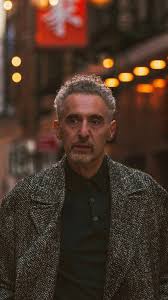
John Turturro in THE ONLY LIVING PICKPOCKET IN NEW YORK
John Turturro: Everything. My father was a builder. My mother was a dressmaker and a singer too. So everything is detailed. It’s stitch by stitch. That’s how it is. Then you put it together and you hope it flows. The body moves. It works. But it’s trial and error. You’ve got to get past certain things. Then you’ve got to get the right shoes and the right clothes. Apollo’s hands are like a concert pianist’s. I knew I could never get to that level, but he showed me the basic tenets of it—and how he sizes someone up psychologically. That was very helpful. I had some wonderful books on the history of pickpockets. It had interviews with all these different pickpockets. It’s very interesting because they had a real code and they took care of each other if they got arrested. It was a grind. It’s a non-violent profession, even though you are violating someone’s rights.
GIANCARLO ESPOSITO (Detective Warren)
Hammer to Nail: You directed your first TV episode on Better Call Saul and won an NAACP Image Award. Did directing change how you approach being directors early in their career like Noah?
Giancarlo Esposito: It always does, in a certain sense, because when you read the script as a director, you want to see it, you want to feel it. Before I get to the set, I feel the room, I feel the environment, and I’m wondering where he might set up the camera. But then I forget it all, because I don’t want to direct and act at the same time unless I’m directing the movie myself. If I’m an actor, that’s where I’m at. I don’t want to second-guess. I want to listen. I want to be inspired by a director. My relationship with Noah was really great in that way, because he brought some new ideas that I hadn’t thought of. I don’t want to be thinking about anything other than fulfilling the obligation of serving the material and the director’s vision as an actor.
TATIANA MASLANY (Kelly)
Hammer to Nail: The film was shot entirely on location across all five New York boroughs. What did that authentic setting bring to your performance?
Tatiana Maslany: I’m a very Canadian person, so New York, no matter what my experience is there, always transports me in some way. It always feels like something I’ve never felt before—a size of city, a size of story that I’ve never felt before. For me, it was just very exciting to see a part of Queens that I’d never seen before. It was amazing.
HTN: You trained as an improviser for 10 years and are a certified improv trainer. The press notes emphasize how Noah and Sam Levy improvised shots on set. How did that background help you find Kelly?
TM: For me, improv always factors into everything I do because it’s about listening and being present. John was my scene partner—what better person to get to listen to for a day? It was a total dream.
HTN: Osgood Perkins directed you in The Monkey, and now Noah Segan directed this. Both are actor-directors. Is there something specific that actor-directors understand about performance?
TM: Both of them are such different guys, but they both have this nerdy obsession with film. They just love it, and they love actors. They’ve lived it themselves and know what it feels like, so there’s a lot of sensitivity toward holding space and allowing for freedom. That’s the thing I would connect the two on—this sense of what are your impulses, and how do I allow you to express those without embarrassment or without censoring yourself? They’re both very much centered on that.
– Jack Schenker (@YUNGOCUPOTIS)