


Coming from a rapturous premiere at the Cannes Film Festival (and the highest rating on Ioncinema’s international critics grid), Sirāt has already been nominated for 2 Golden Globes for best Foreign Language Film and Best Score, and has just advanced in the international Oscar race as Spain’s contender. Matt Delman highlights the score and soundtrack in his rave review, and collaborator Tristan Kneschke interviews Sirāt’s composer and all around electronic musical genius David Letellier, better known as his artist name Kangding Ray. Kneschke, who performs as Metamyther, is an expert on modular synthesizers and other electronic music gear and dives deep into the craft in this conversation with Kangding Ray, edited for length and clarity.
Hammer to Nail: You were living in China for a time and that’s where your artist name came from. Can you talk about how that came about?
Kangding Ray: I was just backpacking for a while. It was more like a temporary thing. But I spent quite a bit of time in China, that was a long time ago, like 2003 or something, more than 20 years ago and it was a different country. I was in the mountains in Sichuan near a town called Kangding when the label was pressing me for a name because I didn’t have a name at that time. I was in the process of becoming an architect, finishing my studies and then I was just doing music on the side and got this proposal from the label but I didn’t have a real artist name. I happened to be in Kangding at that time so I just took the name of the city I was in.
HtN: Was it kind of like a ray of light in the morning? That’s what I imagine.
KR: Yeah, something like that. There was a lot of beautiful light. There’s a river going down, it’s like a mountainous city with a really wild river in the middle. I don’t know, I really didn’t think much about it, like I never thought I would even discuss that name 20 years later. The idea of me becoming a professional musician and composing music like I do now every day was very far away from my reality then.
HtN: That first album took you three years to complete for Raster-Noton. Were you just cutting your teeth on producing at that point?
KR: I was coming from a rock background. I was a guitarist in a rock band. I was into My Bloody Valentine and Nine Inch Nails and I had long hair and I probably did say things like, “I hate electronic music” back then. I probably bashed a few DJs for not being a real musician and look where I am now making music with machines. So things change. But back then it was like a transition of a lot of new influence coming from me moving to Berlin because of architecture.
HtN: Talk about how architecture figures into your music. Do you feel they’re kind of separate? I’ve heard that creativity is one central core and whatever activity you’re doing whether it’s architecture or music or basket weaving or singing, it’s kind of all the same genesis.
KR: Architecture is kind of my core way of thinking, or the core culture. It’s a beautiful culture because you can’t be a specialist in one thing when you’re an architect. You have to know a lot of things, like very different subjects which is very close to the work of a film director. You’re managing a lot of problems and very different talents, very different skills of people and organizational creatives. This is the culture. But the reality of being an architect is vastly different than the culture is itself, so I wouldn’t really make a direct connection, it’s more like it’s inside me and I keep it with me and I use it in my practice whether it’s making music for installations or for contemporary art or for films or for the club. It’s there always, but there’s no direct transition or direct connection in the day-to-day practice.
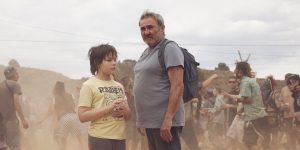
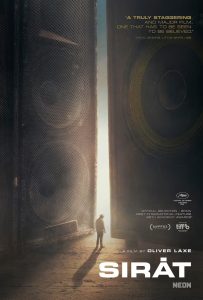
A still from SIRĀT
HtN: Sirāt is Spain’s Oscar contender this year, right?
KR: Yeah, it’s amazing. It’s pretty crazy. When you enter a project like that you never know where it’s going, so for me it’s been an adventure since the start. I knew it could be something because of the type of director that Oliver Laxe is. When I read the script I thought it could be something very profound and radical, but you never know what the end product is going to look like or feel like, or how it’s going to be felt by the audience. So it’s always a risk, you roll the dice and you hope for the best. I just tried to do my best at conveying those concepts and feelings that were in the script. And then we just send it into the world and here it is.
HtN: The film feels like something that you would do, it feels stylistically consistent. There’s this kind of allegorical feel. I get kind of a Tarkovsky thing from it.
KR: Oh, very much. Yeah [Tarkovsky composer] Eduard Artemyev is a huge influence for me. I cite his name in pretty much every interview. I think whoever sees the film and the way I treat sound, the minimalist but spiritual film way of using electronic sound, is very much my core influence. Techno is not even half of the score, the rest is fully ambient immersive spiritual non-danceable music. So obviously the first part is banging raw intense techno, but the rest contain a lot more influences from Vangelis’ “Blade Runner” or Artemyev.
HtN: You kind of have to have the pounding techno for the beginning part because it is a rave, so it’s diegetically in the scene. But the other stuff pulls back but it’s very much of the environment where you’re setting up this kind of desert that’s this arid, brutal, unforgiving place and the music echoes that.
KR You got it. The slow shift from extra energetic music towards the end is the main concept of the whole score. There’s a gradual disintegration of the score until it becomes very feral and spiritual towards the end.
HtN: Was that something that you came into the project with or did Oliver have really concrete ideas about what he wanted?
KR: He had a very clear idea of what he wanted for the first part, because that’s how he came to me. He really liked some of my tracks and especially one album that I released 10 years ago, Solens Arc. He came to me with this idea for the opening scene, basically the first track, which is called “Amber Decay,” which is one of my most popular techno tracks. He wanted to use it for the opening scene. From this we drew the core textures from that album, this very raw analogic sound, these distorted granular things. Then I extended it to become this score. Because of that the music became more important, especially in the second half of the film where music becomes a sort of character that explains things. It’s because there’s very little dialogue in “Sirāt” so music is there to express many things that dialogue can’t.
HtN: As far as the initial conversations that you guys had together, did you work together with a lot of reference tracks? I know he had some of your tracks in the temp edit, but did you develop a kind of new shared musical language?
KR: Totally. That’s what we did for the first few sessions. He was coming to Berlin and would stay at my house for a few days and we just listened to music basically. We were drinking coffee and basically checking my vinyl collections and going back and forth, sort of “musical hiking” or something you know? Like when you go into nature, you don’t know where you’re going. Through this we really managed to get a common culture or common ground because I felt it was very important for me to also show him where I come from and what is my culture. Dance music culture, especially underground techno, is very protective of its history for many reasons, because it’s been where a lot of minorities go for a safe space. It’s also a culture which has been massively oppressed by governments and police, so whenever they are talked about in the mainstream, they’re very cautious. I understand that, and because we are making a film which is based in this, I felt a lot of responsibility to portray it in a very respectful way, in a very true way, and not making a circus out of it. This was one of the main points that I wanted to come across with Oliver.
I had to get deep in the very small details of the sound, where it comes from, what is Detroit techno, what is Berlin dub techno, what is UK rave, all these things that shaped the sound of modern techno now. What is played in the free party scene right now is a mix of all these references. It’s very important to make it as true as it gets because the images are very documentary-like in the beginning. They are very true to what really happens, so the music has to follow this.
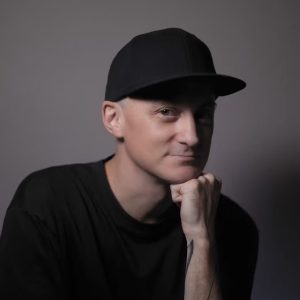
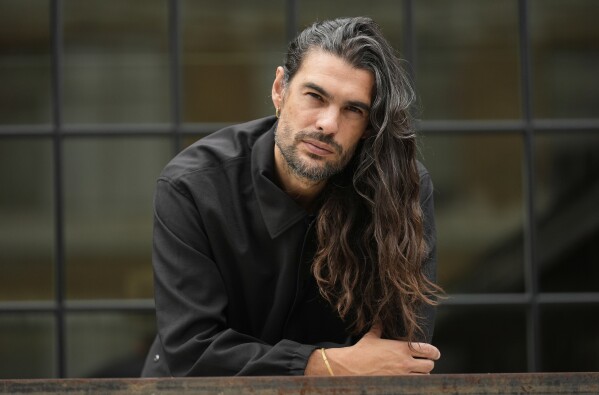
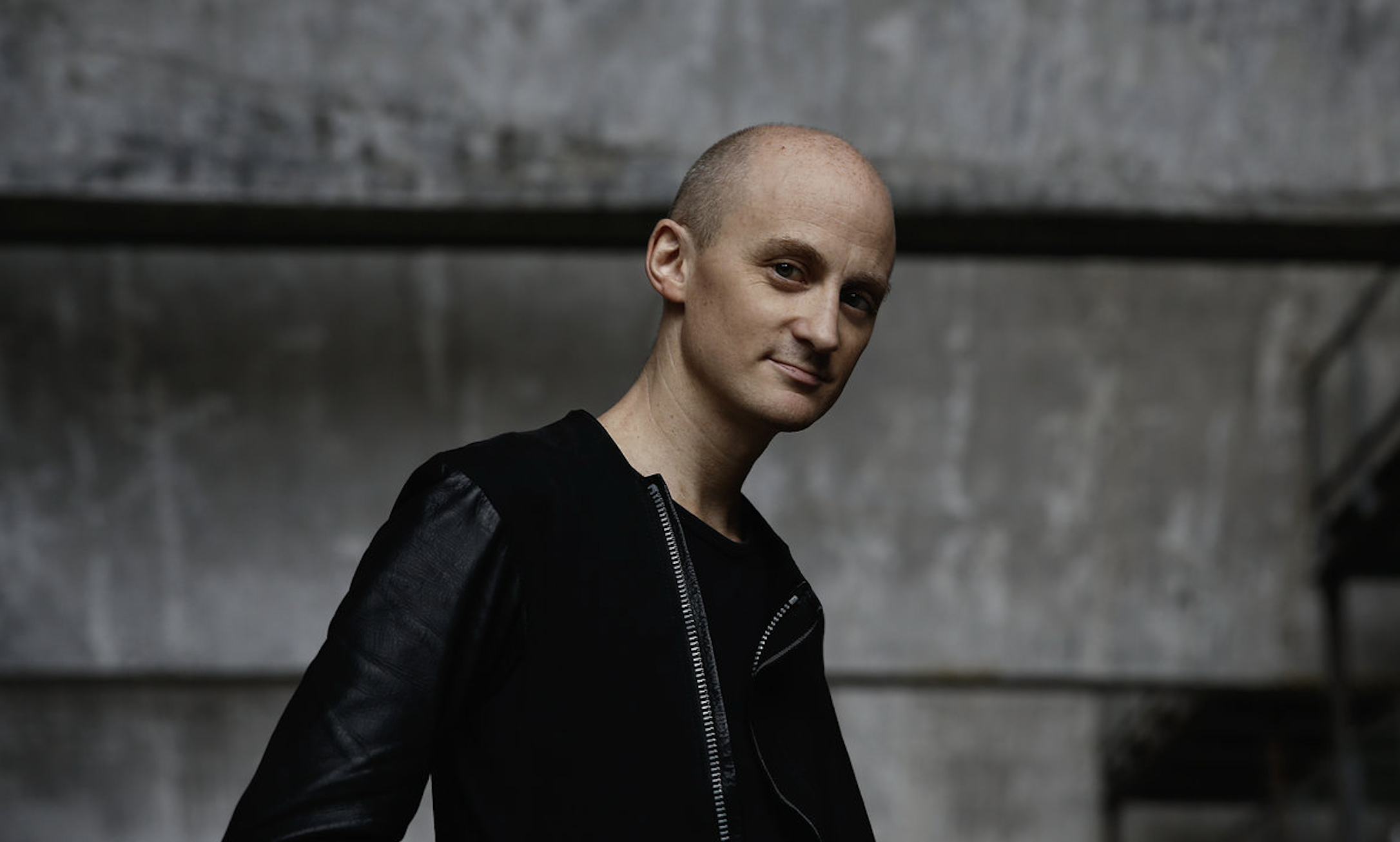
Musician Kangding Ray
HtN: Most of the music, like 80 percent of it, was created ahead of the shooting which is kind of an atypical workflow. In addition to Oliver sitting with you in these listening sessions, what was the workflow? Would you create tracks with him right there or would you send him stuff?
KR: I’m always working on my own. I don’t like when someone’s behind my shoulder. Sometimes we would edit things that are already there, doing small edits, like can we push this here and there. The compositional part and especially the sound research part, was too long and complicated, like whenever we tried it, it didn’t really work. I remember sometimes it was there and I would tell him to leave me for two hours and then show him at the end. Also it’s a very boring process, let’s be real. You understand what I mean, you have someone who doesn’t know and they’re like, “this is not the right direction,” and then you have to explain that it’s supposed to sound like crap first!
HtN: Yeah, sometimes you’re trying something and you know the modular does weird things and you’re like, “hold on, we’re gonna get there.” I just need to fiddle around.
KR: And you can’t have someone watching you waiting for it to happen because the magic otherwise might not happen at all.
HtN: I definitely wanted to ask about that because I was wondering how it all worked, since directors are very particular. For that 80 percent of music, how long did that take to develop?
KR: A year and a half at least to get to when they started to shoot. During this time I was just like producing and sending stuff. We had a really natural selection process, where only the fittest survive. But it was very time-consuming and totally inefficient but also proved to be very artistically interesting because we had the time. It was not just the execution of something, like making a wallpaper around nice images. It was very integrated with the ideas and the script and how the story could evolve. When we received the first images at the end there were not so many surprises. Some scenes were a little different but most were pretty close to what was imagined.
HtN: You had a cameo in the film. Were you there for most of the shooting days?
KR: No, I was there for the rave scene which wasn’t really a set, it was an actual rave the production asked a three-party collective to organize. It was a real rave with real people, not actors. That’s why it looks so true, because it is true. They shot for three days while the rave was happening non-stop, so the scene you see is me before the rave trying to see something on my screen and the sun was so strong and there was so much dust I couldn’t see a thing. Then someone said the military was arriving, and I was playing the track that was supposed to be there on that scene, which is called “Sirāt” actually. I didn’t know I would appear in the film.
HtN. The whole film looks very real and it doesn’t surprise me at all that all of the actors are non-actors. It reminds me a lot of Iranian films and middle eastern films, they have that aesthetic where they just use all non-actors. How did you and the sound designer Laia Casanovas work together? Was there a lot of back and forth with her as well or was she kind of just mixing your stuff in context?
KR: I worked a lot less with Laia than I did with Oliver. It was a lot more technical with her, but we had some good interactions to mix sound design especially on textures. We tried to blend the wind, sun, sand, and the sound of the trucks. They had to fit, and they were resonating with the score sometimes, so we worked quite a lot on these subtle fades and blending to really integrate the score inside the sound design so that it’s not either overpowering or too much a tapestry in the background. We worked quite a lot on the Atmos mix, which is not so common for an arthouse European movie. We didn’t use it like the typical helicopters flying around kind of thing. We used it as a tool to immerse people in the score like with reverb moving slowly in the background. Things like that really bring the audience inside the film, because Sirāt is supposed to be a very sort of immersive experience and not a typical narrative movie based on dialogue. It’s something you’re supposed to feel in your belly.
HtN: Did you have to work with the editor of the film as well in a similar capacity? There’s some audio cues that happen on beats and so on.
KR: I’m based in Berlin but I went to Barcelona a few times to mix and then also to Galicia and Madrid for editing, especially in Galicia where they had set up an editing room near Oliver’s house. Mostly they edited on the music so I didn’t have much re-editing to do, it was more like composing and making it strong enough to get the emotions across. We started this process of having most of the music before, so we really used the music as the core for cutting and the rhythm of the film.
HtN: Did you hand them stems or just full stereo mixes for them to work with?
KR: First only stereo mixes for the cut, and then when we went into mixing we transformed the stereo mixes into stems especially for Atmos. That was very useful to get the bass right in the center and the kick hitting hard in the front.
HtN: For the Atmos it’s totally necessary to have stems.
KR: Yeah, I mean it has some drawbacks because the Atmos algorithm tends to phase a little bit, especially between formats, you have to really take care when you’re mixing down to stereo, you lose quite a lot of power compared to a proper stereo master that I do especially for things that are really impactful like the techno tracks. I’m still a big advocate for proper stereo mixes but for film, it’s different because you don’t necessarily look for absolute club impact, you look for something else. It works on an emotional level for sure.
HtN: No question, it’s a completely different thing altogether. I see a bunch of modular gear behind you. As far as working with a director there’s going to be revisions. The modular environment is not really great for that because you might be able to capture something and then you just can’t get it back ever. Did you use a lot of modular for this film? I know a lot of composers are more in the box, so I’m wondering if you thought about that because you could revise easier later.
KR: It’s a big subject. So in the box as you know you can always go back and you can tweak anything, but it is also the problem. Most of the sounds on Sirāt are modular as far as the sound sources. When I do revisions they were mostly made based on all the effects that come after the initial take, so I try to have my original sound very well recorded first, with strong converters, preamps, pre-compression and so on. In a way, like an old-school way of recording, but treat it for modular, but I also don’t apply all the effects on it which makes it a lot easier to rework afterwards. I love to work with audio first, especially for this kind of score it’s a lot more real, more raw, more workable and more interesting for me. But I do a lot of post-processes like filtering, delays, and reverb that give me the possibility to revise things afterwards. Of course, if I have to change completely, then I have to change completely. The good thing is I record so much more than I need, so I always have in my back pocket hard drives full of sound that I can replace or provide more sketches or ideas that I can replicate again in the studio afterwards.
HtN: I think we’re kind of the same way because of this kind of ephemeral nature of modular. Let’s say I need five minutes, I record 20 minutes because you can’t go back.
KR It’s also fun because before long half an hour is gone and the tape is running – a.k.a. the computer. Then you get these giant files where 98 percent is garbage. Two percent might be where the magic happens. It sounds cheesy.
HtN: I don’t think it sounds cheesy at all, that is the way, there’s no other way. It’s not like Oliver was like “I need five tracks for this,” and you made those five tracks and collected a paycheck. It’s just not how it happens.
KR: It’s not how it happens, but that’s what a lot of people think composing is! They think you sit at your desk and you’re like suddenly you’re a genius. I need to search and look. What I have is a good ear for what works and I’m very focused. I’m in the present and that’s what the practice is, it’s listening to exactly what you’re doing and then detecting when that little spark is happening.
HtN: Do you work with just single sounds or do you build up a whole patch?
KR: Yeah, I do single sounds. Sounds that I make, I don’t even know what they’re going to be at the end. The sound might be a bassline but it might also be a melody or a hi-hat at the end. There is no conceptual difference, that’s what I like with working that way, you have no preconceived ideas. It’s a lot more efficient to set out to make a drumbeat and it’s made out of a kick and a snare and a hat, but if you just make sounds, that opens a lot of possibilities of thinking very angular. Like with Brian Eno’s “Oblique Strategies.”
HtN: You’re not somebody who likes to talk about specific types of gear necessarily, but is there any module that you continue to go back to that is part of the Kangding Ray sound?
KR: I felt like I should really make a tutorial on how to make the Sirāt drones – the growling, moving things in the back. A lot of them are made with only a few modules from Make Noise. I’m lucky enough to know them, especially the main designer, Tony Rolando. I think he’s an absolute genius and he makes so many incredible tools for the scene to provide artists with. Sometimes you have to give back the credits also to his incredible creation especially. The drone, if I remember, I used the Erbe-Verb, which is a collaboration with Soundhack and the XPO and the QPAS. Sometimes I add some Serge waveshaping and Soma Lyra 8 effects delay. This is the secret sauce I just gave you.
HiN: I’d love to see that tutorial.
KR Yeah I should do that because it’s probably interesting. I don’t mind sharing it. There’s these beautiful things happening when you’re filtering and making the Erbe-Verb feedback. It’s unpredictable and it’s a mix of analog and digital which I really like. It’s very futuristic but you can feel it in your belly. There’s something beautiful in it.
HtN: You wrote a lot of music that didn’t make the final cut or the album. Do you have any plans to release that stuff?
KR: I’ve been preparing some Sirāt live shows in different places and we played that show in Santiago de Compostela with Oliver that started with an ambient part from the score where I added some of the things that didn’t make the cut at the end. They were fitting very well together and with what Oliver was doing because he was showing some b-roll from the movie. This material is really beautiful so I should definitely do something with it. I think this music should be out at some point for sure. It’s possible it might not even be recognizable to the score.
HtN: Are you trying to get more dates on the live Sirāt tour?
KRy: We’ll see, there are some ideas on selected places where we would do that. We already did a few, one was in Los Angeles not so long ago, but it was a lot more like a DJ set. But we want to do a proper live Sirāt experience.
HtN: I’m located in a little city called New York if you come by. I know it’s a small town…
KR: Yeah, it’s a tiny village! There’s an idea about doing it in New York next year.
You can watch the full interview on YouTube below.