

A Conversation with Hlynur Pálmason (THE LOVE THAT REMAINS)
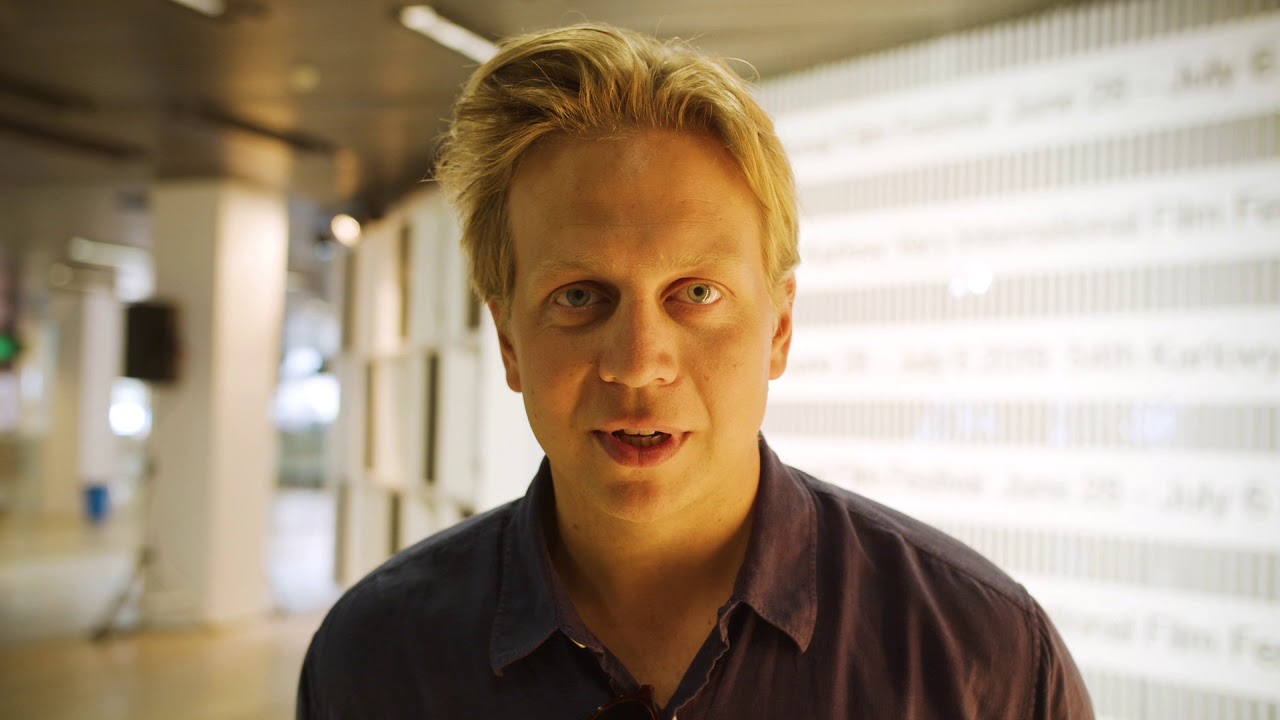
Hlynur Pálmason is an Icelandic writer and director. For his latest project The Love That Remains, the filmmaker delivers a poignant, domestic drama that observes life’s changes with humor and whimsy, set against the majestic, ever-shifting Icelandic landscape. Pálmason is a graduate from the National Film School of Denmark. His debut feature Winter Brothers was released in 2017, boosting him into the upper echelon of European filmmakers. His next film, A White, White Day, made a splash at the International Critics’ Week of the Cannes Film Festival in 2019. In 2022, he returned to Cannes, this time in the Un Certain Regard category with the masterful Godland. I had the pleasure of speaking with Pálmason about Godland three years ago for my second interview ever. Now, for my one hundred and first interview, we reunite to discuss The Love That Remains, which premiered in the Cannes Premiere section at Cannes 2025 and was selected as an Official Selection at the 63rd New York Film Festival. The film features visual artist Anna (Saga Garðarsdóttir) and fisherman Magnús (Sverrir Guðnason), teenage sweethearts who have recently grown apart. As long as the newly estranged parents put on a good face, the children—and their adorable sheepdog Panda (who won the prestigious Palme Dog award at Cannes)—seem to take the split in stride. This interview has been edited for length and clarity.
Hammer to Nail: It is great to be reunited with you. I had such a great time speaking with you and Elliott for Godland. I love that movie so much. I love all your movies, including this one. I thought this movie was so special. The opening moments are so striking. We begin inside this empty house in silence. Within seconds, the roof is ripped off from its base. First, the roof sinks into the home. We then cut to Anna and Panda in the car watching the destruction from afar. A construction worker urges Anna to move and she drives away. We then cut back to the home as the roof is fully suspended in the air. The piano theme comes in and the title appears on the screen. Was this always the opening and what was important to you in executing this moment?
Hlynur Pálmason: It was a really important part of the film. When I filmed the roof being ripped off my old studio, I did not know that I was going to use it for anything. I did not know that it was part of a film, but I shot it many years ago. When I saw the image, when the film was developed, I saw immediately that it was a very powerful image and that it really connected to this family portrait film that I wanted to make, called by the working title The Love That Remains, that I had kind of on the wall. It just fitted the beginning of that film completely, so I wrote it into the script. It was easy to write because I had already filmed it. I just had to write what I saw afterwards and what I saw in between—Panda in the car and then the things that happened afterwards. It is nice when it is possible to capture moments or images that kind of inspire you to write something around it, surrounding it. It was a very important trigger in the process of making this film.
HTN: Well, it is a great moment, and it was great to go back to it on my second time watching the film. At the 18-minute mark, we get this amazing montage of what feels like some home video. This is directly after that hilarious cut to the chicken wings. I love how it opens with one small frame and then slowly floats to the left, giving space to the second frame to appear. It ends the opposite way with the frame on the right disappearing and then the frame on the left floats back to the center as we cut to the boat that Magnús works on. Can you talk about crafting this montage sequence? And again, just what was important to you? There are just so many great images.
HP: I think it came from when we had decided on making this portrait of a family, that was kind of the core of the film. I just started to explore that. What is a family and who are these people? Who is the male and who is the female and how old are the children? Then I started looking even further out and seeing, okay, what is surrounding them? Okay, there is a car, there is a house, there is a chicken coop, and it is filled with chickens. What is their story? Then I just take a small 16-millimeter camera and start exploring the chickens and the rooster. Who are these animals and how do they communicate? This is what happens often when I am working on projects. I just explore the things that I am interested in. Then I try to find common threads in between the narrative—the story. How do these chickens connect to the family? That often really works for me because it kind of stimulates your imagination and you find yourself just writing scene after scene. Things just kind of emerge very naturally. So it is an exploration. I remember when we looked at the 16-millimeter material of the chickens and the roosters, it was a very natural process of putting it together in these two images on the screen. It felt very natural.
HTN: Well, I really love that moment. I also love at the 30-minute mark this conversation between Anna and the art collector. They sip wine and eat their dinner. He talks about this study, how people who drank more wine were healthier and lived longer. He says, “Why is this not common knowledge? Because it is not politically correct.” He says he confronts doctors in his wine club, and asks them why they do not tell people the truth. He ends by saying, “We are talking about some of the most free countries in the world and we still cannot tell the truth.” Anna’s performance is so good here as well. What was your thinking with this discussion?
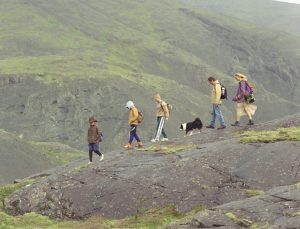
A still from THE LOVE THAT REMAINS
HP: I think it is a way for me to go through life. Sometimes when you go through life, you have to do all kinds of things. It would be great just to create things, but you also have to present them and show them and you have to travel and meet people, which is all great. But there are a lot of moments that are funny, sometimes humiliating and strange. You meet people that are great and people that are irritating. All of these colors and nuances that you go through. My approach is that you use it. Everything you go through colors your life and colors the things you make. When I go through life, I steal, I record, I use. If someone says something funny, I take it. If I hear someone talking about a wine club or drinking wine, I steal it. This monologue that we call “the monologue of death”—it is true. So much of it is just copied from things I have heard. It is probably a blend of three people I have met, all of them great, but also have a side of them that is very annoying.
HTN: At the 44-minute mark, we have this fun moment by the water with the family. Anna has her face all tied up and asks the kids, “Would you still love me if I looked like this?” One of the kids responds that you look the same and the other says not exactly the same, but still very ugly. She asks the same question to Magnús. She stands up and steps over his face. The piano theme comes in as we get this slow-motion shot, starting from his POV, looking up her skirt, then cutting to him lying down, looking up in a close-up. This leads us into this amazing surrealist moment where he is absorbed by the material of her dress. And he looks up again to see pure light. Can you just talk about crafting this sequence?
HP: It is an important key scene for me with this film. It was one of these, because often when you are making a film, there are a couple of images that are almost burned in my retina or something, that I really want to execute, that are really important expressions in the film. I think one of these was this kind of safe place underneath the dress that I wanted to create, kind of like a state of grace or something that is almost like nature itself. It is like the beginning and the end of everything. How can you make an image of that? How can I make an image that is beautiful and not perverted? It is a very interesting place to be and to make an image of, because you can make it both ways. You can make it either really beautiful and kind of bigger than anything in the world, or you can make it as if it is rather perverted and annoying. So I thought it was just a very exciting place to be, and I really wanted to capture it well because I think it is a very beautiful scene. There is energy because the kids are right there and he is there. All of these things just work together to make this scene work. So it is a scene that I am really happy with.
HTN: At the 53-minute mark, we have another amazing montage sequence. This time a poem is read: “Blue and bloody, mushroom poison, shot in the head, raw meat, dark deed, a punctured brain, digging a hole, sex in a car.” This goes on as we have countless incredible images such as the two kids separating the fish, the dead whale on the ice, everyone’s face tied up. “Bloated world, waves of violence, no mercy.” It is just such a great sequence. Where did this poem come from? What was important to you in crafting this moment?
HP: It was actually just reacting to the world, or like what is going on in the world. I just really feel that when you are creating something, and especially if you stretch that over a long period of time, and you are creating something over, let us say, a 10-year period, you cannot go through life and not be affected by all of the things that go on in the world. It somehow colors what you make—whether it is your temperament, or the film’s temperament, or a storyline, or a comment, or whatever it is. I do not see myself as being a political filmmaker, but it is more like irritation. It is the energy that you want to express. I think the images you see and the words especially are reactions to that, because there is something about the world that has a very dark side. That is obvious to everyone, that we have both a bright side and a very dark one. I think that poem and those words and these images are like an exploration of that—what is going on parallel with all of these other things. It is also just a way to keep me grounded, not becoming too sentimental or happy-go-lucky. You just have to listen to the global news, then you stop whining and get a little bit rooted again.
HTN: Definitely. I think that comes through, and it is definitely a moment that you bring your own personal experiences to as an audience member. At the hour and 20-minute mark, we get maybe my favorite moment in the film with this massive rooster. Magnús is asleep watching Creature from the Black Lagoon as this massive bird slowly peeks his head into his apartment. Magnús wakes up frozen in fear as the bird attacks him, flinging him all around the room. The bird slams him up against the wall, causing him to pass out, and the bird drags him out. This is all depicted in one take, and the sequence ends on the TV as we watch one of the famous sequences from Creature from the Black Lagoon. Can you just give us a little peek behind the curtain on the movie magic here? How did you guys pull this off?
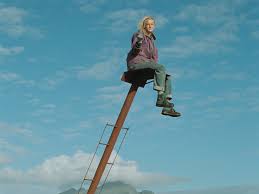
A still from THE LOVE THAT REMAINS
HP: I was working with Peter York to help us, who is a brilliant artist and is really good at working with both SFX and VFX. We got him to help us create it, and he was really good at finding the right people to do that. Because I wanted to direct the scene practically. I wanted to shoot something and see step by step how it would evolve, add things and change things while we were making it. So we made it completely handmade, step by step. Then we got the VFX to help us in the end after the shoot. We tried to do it as physical as possible, like really feel it. The stunt people went through hell, went through really rough takes, many takes, because we had to find out what would happen. It is hard to make it really feel rough. If it would feel too fake or too soft, I did not think the impact would be good enough. It was supposed to be a little bit of a shock. The reality of life is quite brutal, it is very brutal. I really wanted that to be felt in the film. Then afterwards, cut to this beautiful scene in this film that I really love. It is actually amazing footage—the underwater footage of the monster from The Black Lagoon. It is really, really beautiful.
HTN: For sure. I really love that moment. So did my crowd at MoMA when I saw it a couple weeks ago. They really ate that part up. At the hour and 28-minute mark, we get this scene with the arrow stuck in one of the twins’ chest. I really love how you execute this, having one kid say “Don’t shoot” and the other responding “Chill, I was not going to.” We kind of see him start to load up and then this cuts to Magnús and Anna doing some work on her art. She gets a phone call and we cut to her in the car driving him to the hospital. At first, he is very brave, saying “I cannot even feel it.” The camera slowly pans to the other brother who looks mortified. They go into the doctor’s office and the effects seem to be weighing in on the kid. Now they begin the process of removing the arrow and he screams in agony. The camera pans over to the other brother who is horrified at what he has done. This is really one of the funniest and craziest sequences of the year. Could you just talk about crafting it?
HP: Well, because my kids play in the film, there is this way of screaming that my third kid really knows how to annoy me with—this certain kind of scream. It really strikes into your ear. It has this high-pitched thing. I have heard him scream like this before. I asked him if he could scream like that in the film. And he said, “Yeah, I can do it, but I can only do it like two or three times. And then I am completely done.” So I really wanted to capture exactly that scream and record that and have it in the film. Then I was just very interested in this dynamic between the brothers. He shoots his brother, but it is actually the one that shot the arrow who is the traumatized one. It is not the one that receives the arrow—or both of them in their own different way. I was just playing with that and having fun with that. What was really fun also is that I did not tell them who it was. I just asked them who wants to get the arrow and who wants to shoot it. Then they just decided who got the arrow and who shot. It was totally up to them.
– Jack Schenker (@YUNGOCUPOTIS)