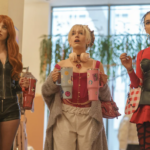

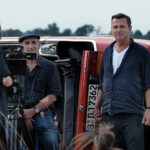
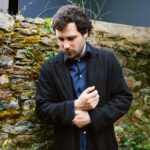

A Conversation with Patrick Bresnan & Amy Reid (FIRST THEY CAME FOR MY COLLEGE)
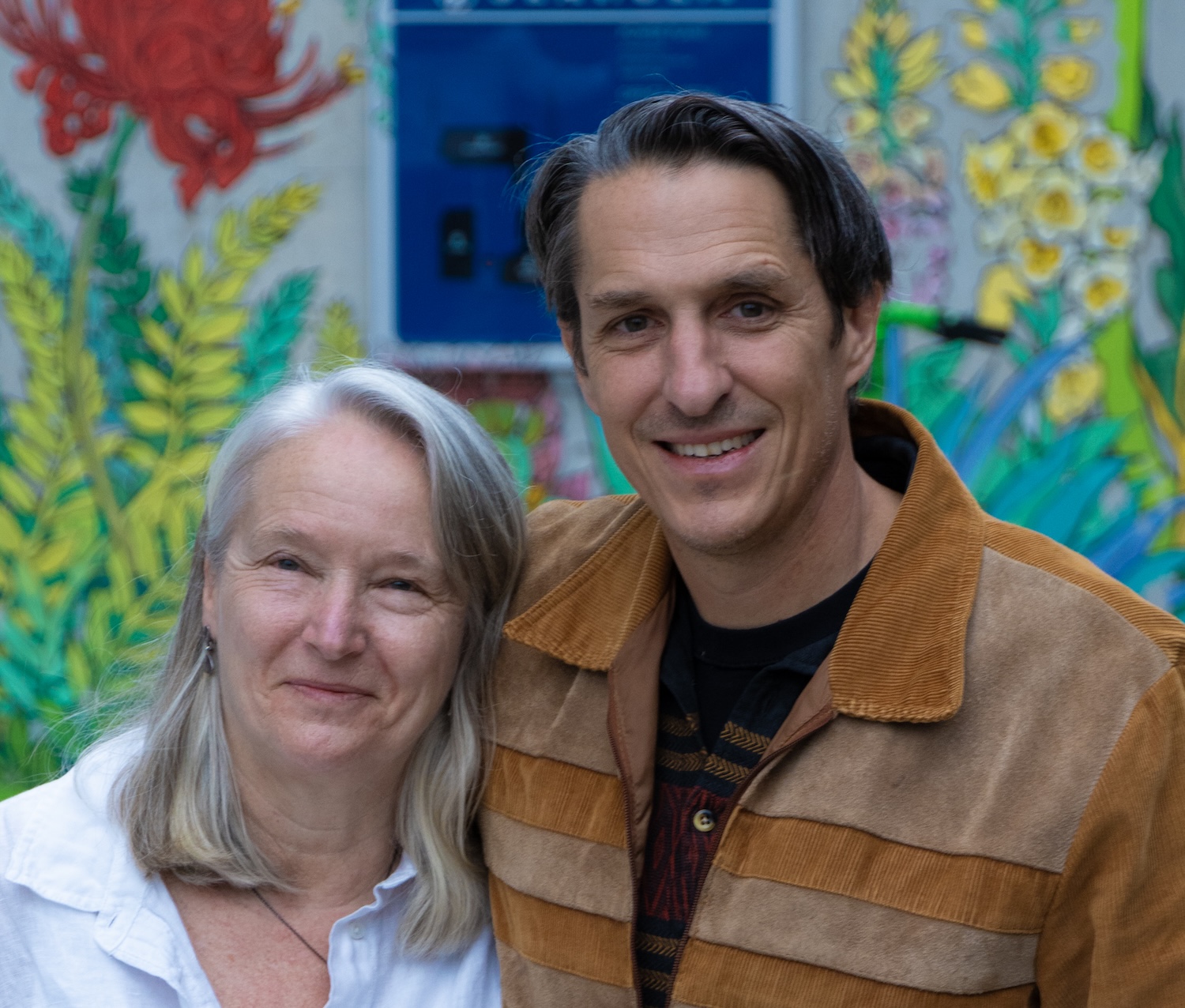
First They Came for My College is the latest documentary from director Patrick Bresnan (Naked Gardens) and it follows the takeover and transformation of the New College of Florida by the state’s governor, Ron DeSantis, and his conservative cronies. Deeply opposed to anything rooted in a commitment to diversity, the new board gets rid of many landmark programs and recruits athletes to change the culture. For anyone who believes that education should offer as broad an array of choices as possible and support every kind of student in all their identities, this is a nightmare tale. Front and center in the fight is Gender Studies Program Director Amy Reid (with whom I went to graduate school many years ago), who eventually loses her job when that program is eliminated. I spoke with both Bresnan and Reid at the recent SXSW Film & TV Festival, where the movie premiered (and where I reviewed it), and here is that conversation, edited for length and clarity.
Hammer to Nail: Your movie’s title paraphrases Martin Niemöller’s 1946 poem “First They Came.” When did you land on that for the film’s title?
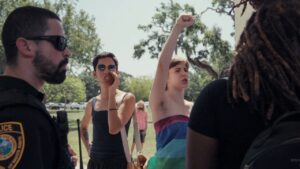
Patrick Bresnan: On my first production shoot in Sarasota at the New College of Florida, I was filming a Board of Trustees meeting where it was predetermined that five qualified faculty—who had qualified by the measure of the Provost at that time for tenure—were going to be denied their tenure. And the students were protesting, parents were protesting, and faculty were walking on eggshells because they didn’t want to lose their jobs. They were trying to support their students to graduate, but the word “fascism” came up throughout the shoot: it was on signage, students were yelling it, parents were yelling it. And at first—I would say for the first year-and-a-half—I was very careful with classifying this as fascism.
After a year of shooting with students and faculty, I went to the administration and I said, “You look terrible in this film. And I’m not trying to make a film that railroads you people. We need to shoot your side of the story.” I told President Richard Corcoran, “We need to interview you.” He said, “Sure. Let me know the date. I’ll be there.” So we adapted the film production to have interviews, which I don’t do and I don’t believe in, but the story deserved it. It was much bigger than me. So we brought on a co-director, raised $10,000 to bring an interview crew from Los Angeles, like the best you could get, to interview Richard Corcoran. He canceled the day of the shoot.
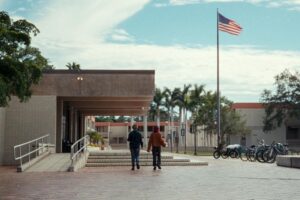
And around that time, he started destroying these safe spaces that I had been filming in. The students’ Gender and Diversity Center was completely gutted, everything thrown away without them even having a say in it or a chance … he just totally destroyed this space.
Amy Reid: The week before students came back to campus.
PB: Yeah. At about that same time, there was another safe space that I’d been recording in with students for two years. It is an epically beautiful campus and there is a student food forest where students go to garden and decompress and had been working through a lot of the stress of this. That space was not hurt by a hurricane that hit, but subsequently after the hurricane, they drove trucks, excavators, and chainsaw crews all through that space, destroying a 30-year-old community garden with mature trees. And there was just a complete … I had seen a complete destabilization of student life. I think something like 30 to 50% of teachers had to leave. Everybody was in fear. And it was at that point that I started to think, “This is fascism.” That is a really long answer, but we were in the edit with 300 hours of footage, and it was just so clear to me. After having lived through it, I just wasn’t there yet, but being in the edit with it and watching the 300 hours of footage, it was so clear this was fascism.
HtN: And it certainly is, and hearing you describe those extra details makes it more so. Before I get to you, Amy, just how did you pick New College of Florida as the subject of your film, Patrick? At what point did you decide, “I’m making a film about this”?
PB: The film picked me. I was living, and do live, in Asheville, North Carolina. I got a call one day from Holly Herrick,* who is the Head of Film & Creative Media at the Austin Film Society, and she said, “I have a shoot for you to go on.” And I was totally perplexed. “You run a movie theater, you run grants, and you have a shoot for me to go on? I don’t even live in Austin.” And she said, “My college has been taken over by Governor Ron DeSantis and I’ve raised some money and we want to make a sample to see if we can make a film about this. And I need you to go down and shoot this tenure hearing.” So that’s how I came to the project. And I feel incredibly blessed that she brought me in.
HtN: Amy, you’re not initially featured in the film. There are other faculty members, but you step up in the film because you have to, because someone else leaves. At what point did Patrick pitch the film to you and you realized you were going to be at the center of a documentary?
AR: So, I was in the fight from the start. Faculty started organizing as soon as the takeover was announced. And actually, I had worked with the faculty union to set up a seminar for faculty on teaching about race and gender. And we planned that in November and December to hold in January. We didn’t know that the takeover was coming, but we knew that the legislation that had been passed under DeSantis was so constricting to higher education that we needed to do something to support each other and to ensure that we would continue to talk about race and gender in our classes. And so that was planned for January 23rd or something. So I was in the organization working with faculty and then working with students from the very start. By the time the film crew came, we’d been on this for three months.
And I, as the Director of Gender Studies and as a senior faculty member, took on the responsibility of talking to the press. When we organized what faculty were doing what, I was part of a team that worked on press relations and we came up with talking points that we distributed to any faculty member who wanted to have them so that everybody could feel like they could speak up, but it became pretty clear that most people weren’t comfortable speaking up and I took that on. So then, when [Faculty Trustee] Matt Lepinski stepped down, colleagues asked me to stand in for his position.
A still from FIRST THEY CAME FOR MY COLLEGE
Working with the film crew, these guys were fantastic. They’re not the first film crew I worked with on this. The Dutch team was ahead of you and there were a set of just newscasters who were in. And I just decided that that was what I could do to help, that somebody had to speak up and I’m a gray-haired woman. I had nothing to lose. (laughs)
HtN: Nevertheless, it’s a challenge to put yourself out there. And once you do, it’s out of your control. Did you have any reservations about doing this?
AR: Yes. I had reservations about it. A lot of what I did was talking to people who were working with the written press. You get used to it after a while, but I think I’m always going to be concerned about whether—even here—whether I’m able to say what I need to say effectively. But these guys were easy to trust because they came in to build community with people at New College, and I knew Holly from when she was a student. So it was a very natural sort of progression to work with them. I am very glad that they centered student stories; you have four or five students who are really featured in the film, but there are so many other stories that could have been told. And Patrick worked with so many people—you said 300 hours of footage—there’s a lot of stories and it’s going to take more time for all of those stories to come out.
HtN: And one has to make tough choices when you’re making a film. So, you mentioned how Corcoran canceled the interview, but you are still given access to some really uncomfortable and unflattering moments vis-à-vis the administration. Did there come a point where you were given a hard time for continuing to be there with your camera?
PB: So Corcoran canceled that first interview and at the end of two years of shooting, I made one last plea to the administration. I said, “Richard, we have to film you.” And there’s a gentleman who runs the Sarasota Film Festival whose name is Mark Famiglio. And Mark has become very close with Richard Corcoran and this conservative administration. I ran into Mark Famiglio on the campus one day and I said, “Mark, I need to film with Richard Corcoran.” And Mark said, “Well, I was in Richard Corcoran’s cigar room next to his office in College Hall drinking till 1:00 AM last night and he’ll do anything I ask him to do.” And I said, “Great.” And so the next day, Corcoran agreed to a sit-down, two-camera interview. We booked the same crew out of LA, $10,000, and we get there, we’re in our Airbnb, and he cancels. So I just want to be on the record. This was not meant to be a hit piece. It’s not a hit piece. I don’t feel that it’s one-sided because it’s the story that was presented to us.
AR: The things that are said in the Board of Trustees, that’s public. So most of the footage you have of Corcoran, there’s some stuff that came from television news, but most of it is what he said in public, on the record.
HtN: Or when he’s walking around with students.
PB: Yes. And I just want to also say that what’s so interesting about this new administration is that they don’t come from academia. The previous President of the college would sit in the cafeteria with students every week. Her door was always open and the student newspaper was always able to interview her. So one of the spines of the film is the student newspaper The Catalyst. The reporters at that newspaper spent two years trying to get an interview with Richard Corcoran and the press liaison of the school considered them outside hostile media and would not sit down with a student newspaper, students who are paying to go to the college. All of these things add up to this idea of fascism that the title creates.
HtN: That’s incredible. It seems at one point in the film that Chris Rufo, the sort of Board Chair who was put in there by Ron DeSantis at one …
PB: Not a Board Chair.
HtN: Sorry. Please correct me.
AR: He was a member of the Board of Trustees. And for the record, after May, he pretty much only Zoomed into his meetings.
HtN: That was going to be my question. It seems like he no longer shows up in person once he is spit on by a student. And I’m wondering if that is the correct impression I take away from the film, because he’s in there, physically present, and then like so many of these so-called warriors, he just vanishes and only Zooms in.
AR: I think he started Zooming in before he got spit on because he had a fellowship in Hungary and so he started Zooming into meetings when he was in Budapest. And so he flew in for the signing of 266 [Florida Senate Bill 266, which heavily restricts universities’ ability to teach “diversity, equity, and inclusion”], but he had been not present already before that.
HtN: Understood. Speaking of centering student stories, I really enjoy the trajectory of that one student, Josh, who starts off as a conservative, but seems to change over time, which I think is this lovely sort of secondary narrative in your film, like what can happen to people when they’re exposed to those who are different than them, and in particular to art. So at what point did you know that you really wanted to continue to focus on Josh? Because you had no way of knowing that’s where his story was going to go. I’m so happy it’s in the film.
A still from FIRST THEY CAME FOR MY COLLEGE
PB: Yes. I really wanted to film with an athlete or athletic team or a conservative student, and we had heard that there were a number of conservative students who had been brought in on scholarship by several trustees. And I was pointed in the direction of an article in something called like The Reformer by a new student named Josh, and it was a pretty scathing review of his visit to New College and his desire to join the fight against woke liberal ideology. And so I would see Josh—he’s strikingly handsome, he has a mustache and he looks like something out of the X files—and he always had a suit on and a trench coat, and he would be smoking outside the cafeteria. And when you read an article by a conservative person and it’s so critical, you have a lot of trepidation like, “Oh, yikes, am I going to go up to this guy and is he going to dox me?” There are so many tactics by the right that are intimidating.
And so I walked up to Josh and he was so kind and so gentle and kind of massaging his mustache in a nervous manner because I had read this article and I just asked him if we could go get a meal at some point. And like I had told the administration, I told Josh, “I don’t want to tell this story from one vantage point. I really want you to have a voice. If you’re here to fix this college, I want to document that. ” And so we had breakfast. At that time, I think he was still fairly conservative and I asked him if I could give him an iPhone so that he could film his story. He had the courage to say yes, which not many people would.
HtN: Well, I find him, in the middle of this otherwise nightmare of a story, to be a note of encouragement and a silver lining. And speaking of hopeful developments, Amy, you have found another line of work. You work for PEN America now, right? You’re their Program Director for the Freedom to Learn Program. Can you tell me a little bit about what you do now?
AR: In some sense, I do what I was doing at New College, just now on a national level. So, I was a professor of French and Director of the Gender Studies Program at New College, and I was getting ready to retire. That was where I was when the takeover happened. And instead, I found myself needing to advocate for higher education and specifically for public education. And when it became clear that I could no longer stay at New College, happily a job came open at PEN. And so now I am doing my best to make sure that as these attacks roll out to other schools, people are aware of what’s at stake and know that they have some support for the resistance.
HtN: Well, thank you for the work you do, Amy. Patrick, thank you for making the film. It was a pleasure talking to you both.
PB/AR: Thank you!
*Holly Herrick is married to filmmaker Michael Tully, who is the former editor of Hammer to Nail.