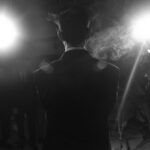
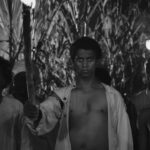
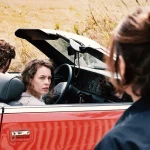


A Conversation with Anna Boden and Ryan Fleck (HALF NELSON)
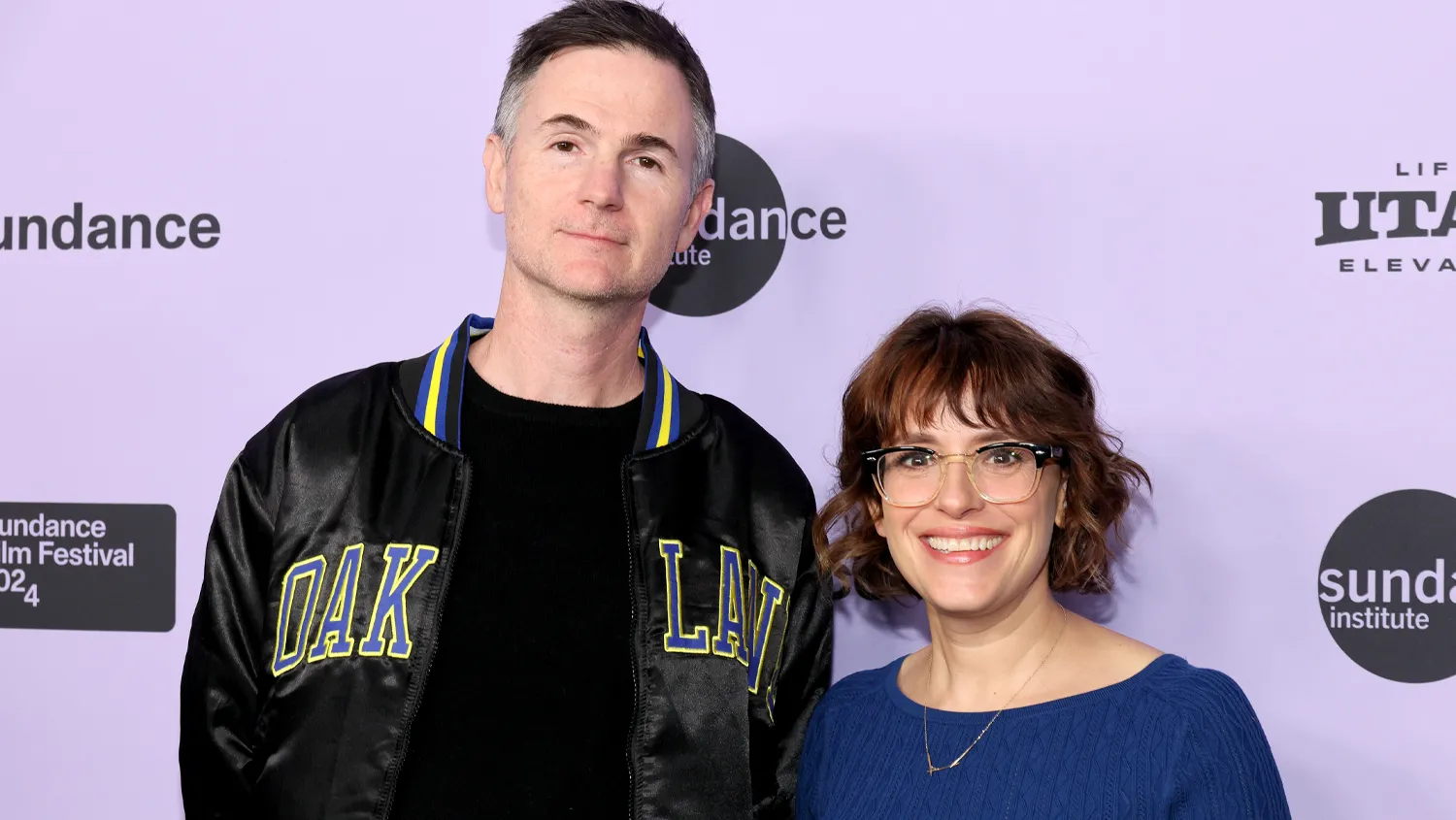
Anna Boden and Ryan Fleck are an American filmmaking duo whose partnership spans over two decades. Boden, originally from Newton, Massachusetts, developed a love of movies, English literature, and photography at a young age. She discovered filmmaking as a medium when she joined an upperclassman “Intro to Film” class and wrote a report on Robert Altman. She went on to study cinema and English at Columbia University. Fleck was born in Berkeley, California, and grew up there and in Oakland. He attended Castro Valley High School and Diablo Valley College, focusing on theater, acting, writing, and directing, before moving to New York to study film at NYU’s Tisch School of the Arts. The two met during a summer filmmaking course at NYU, bonding over their shared admiration for Altman.
Together they made the short documentaries Have You Seen This Man? and Young Rebels before writing and directing the short film Gowanus, Brooklyn—a proof-of-concept piece aiming to attract potential financiers for their script, Half Nelson. The short won the Grand Jury Prize at the 2004 Sundance Film Festival, and Boden and Fleck were subsequently invited to the Sundance Writer’s Lab to receive professional feedback on the screenplay. The film did not receive adequate financing for years, with Boden and Fleck often returning to script revisions between other projects. Fleck later stated: “We were trying to get it off the ground so we had plenty of time to keep writing and rewriting. I think the time was valuable because I think we made it as good as we could.”
Half Nelson finally premiered in competition at the 2006 Sundance Film Festival. The film stars Ryan Gosling as Dan Dunne, a young inner-city middle school teacher in Brooklyn whose idealism is complicated by a serious drug habit. When one of his students, Drey (Shareeka Epps), catches him using in the locker room after a basketball game, the two form an unlikely friendship. Anthony Mackie co-stars as Frank, a neighborhood drug dealer connected to Drey’s incarcerated brother. Shot on a minuscule budget over 23 days with Andrij Parekh’s intentionally bleached-out cinematography and scored by Canadian band Broken Social Scene, the film became a critical sensation. Gosling, then 26 years old, was nominated for the Academy Award for Best Actor, becoming the seventh-youngest nominee in the category at the time. Epps won the Independent Spirit Award for Best Female Lead. The film also won Movie of the Year at the AFI Awards, Best Film at the Gotham Awards, and received Spirit Award nominations for Best Feature, Best Director, and Best Screenplay.
“We wouldn’t be here if it weren’t for Sundance,” Fleck has said. The duo went on to collaborate on Sugar (2008), an introspective sports drama about a Dominican baseball player that also won Movie of the Year at the AFI Awards; It’s Kind of a Funny Story (2010), a coming-of-age comedy starring Zach Galifianakis; Mississippi Grind (2015), a gambling drama starring Ryan Reynolds and Ben Mendelsohn; and Captain Marvel (2019), which grossed over $1 billion worldwide, making Boden the first woman to direct a live-action film to reach that milestone. They also directed and executive produced the Emmy-winning limited series Mrs. America (2020) and most recently released Freaky Tales (2024), inspired by Fleck’s childhood in 1980s Oakland.
A restored presentation of Half Nelson screened at the 2025 Sundance Film Festival as part of the inaugural Park City Legacy program to mark the film’s 20th anniversary. I spoke with both filmmakers about the craft behind several key sequences in this interview, which has been edited for length and clarity.
Hammer to Nail: At the 13-minute mark, after a somewhat awkward interaction with Rachel, Dan goes into the locker room at school after dark. Unnerving music begins to pulse as he calls out to see if anyone is around. He enters the bathroom, takes a beat, comes back, and looks out contemplating his decision. The soundscape becomes more ghostly and despondent as we cut to Dan smoking out of his vial. There are various shots of Dan smoking as the camera dangles around him, focusing and unfocusing. Dre enters the bathroom and uses the stall to the left of Dan. Dan, completely out of it, tries to stay silent and not be detected. Dre asks if anyone is in there and when she gets no response, she opens the door. In her POV, we see Dan’s sweaty eyes bulging out of his head, frozen in fear and embarrassment. Dan tries to get up and sits back down. He looks at Dre and says, “I’m fine, I’m sorry.” He’s really beginning to sweat now. He takes out his hand and reaches for Dre, asking her to help him up. He gets up but can’t stay there. He fully lies down this time. He asks Dre if she’s okay and the scene ends with a shot outside of the bathroom where we see Dre pressing the wet paper towel on his head as he assures her everything is going to be okay. Can you talk about crafting this really hard-hitting moment? What was important to both of you?
Ryan Fleck: That scene we shot the first week. The first week of our 23-day shoot was all in the school. We did everything that takes place in that school that first week, and I think that happens midweek. So it’s fairly early in the shoot. We just got that scene out of the way. We rehearsed that scene—it’s written where she comes to the door, opens it, says, “What are you doing?” and they have a back and forth. Not a lot, but there’s some talking between them.
We rehearsed that scene in our little Fort Greene apartment where Ryan Gosling was staying when he shot the movie. We tried something where we took the lines out and we just had Ryan play it like he was sick and needed help from her. Like she just needed to take care of him. And it was kind of powerful. Even in the rehearsal, we thought it was just going to be an experiment and we’d come back to the script. But when we got in there and started shooting, we were like, “Hey, let’s just do that thing like we did in the rehearsal and take the words out.”
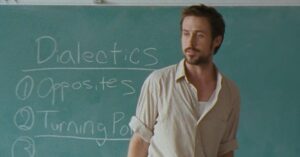
Ryan Gosling in HALF NELSON
We have these long, extended moments where she’s watching him sort of trying to get it together. He’s trying to get it together, embarrassed, humiliated, feeling shame, but trying to cover for it, be responsible. He’s doing all the things that he can’t quite do because he’s so high. I remember thinking when we were shooting it—Shareeka was focused in, she was locked in, and Ryan was just amazing. We were just blown away by what he was doing. I remember thinking, “This is really good.” I was uncomfortably moved and I was feeling everything. It was a lesson in filmmaking that you need to feel the things you want the audience to feel while you’re doing it. You can sometimes manufacture it with music and stuff later in the edit, but to be feeling those things in the moment was really profound for me as a first-time filmmaker.
Anna Boden: Shareeka, because it was in some ways just Ryan going through the idea of him having gotten high and then all of a sudden freaking out because he’s in this situation he didn’t expect to be in. He has a student in there and it’s all of a sudden too much for him and he can’t quite handle it. So he’s kind of doing that and Dre—or Shareeka as Dre—is really reacting to what Ryan is doing in real time. She doesn’t know he’s going to ask her for water. There are no cups in the bathroom. So she doesn’t know how to get him water. She’s really reacting to him. It’s not planned. We don’t tell her, “Go get a paper towel and soak it in water.” We’re really allowing her to react and be with him in the moment. Maybe we did whisper some help to her when she started to feel a little bit stuck. But there are big parts of it that are really them just being together in the moment and reacting in real time. I think that’s part of what is so powerful about it.
RF: Do you remember if we shot her side first so that we got her reaction, or his side first?
AB: I think we did her first to get the reaction. But I also think that we did a lot of panning once he gets to the ground. So it wasn’t just one side and then the other. For when she gets to the door, I think we tried to do her first. Once he’s not stuck in the stall, we did a lot of panning and kind of got them both at once.
HTN: At the 36-minute mark, Dan teaches a short lesson on the so-called “machine.” He first shows a clip of Mario Savio giving an impassioned speech about stopping the machine. “You got to put your body on the gears, on the wheels, on the levers, on all the apparatus, and you got to make it stop.” Dan asks the class, “What is this machine he’s talking about?” Someone suggests robots and Dan says, “Sure, but what if it’s a metaphor? What keeps us from being free?” he asks. Jay responds “Prisons.” Other students say “White” and “the school,” and he agrees with all of it. Another student flips it on Dan and says, “Aren’t you the machine? You’re white. You’re part of the school.” Dan says, “Okay, you got me. I’m part of the machine. But if I am, so are you. We all are.” I love this line. Everything is made of its opposing force. We may be opposed to the machine, but we’re all still very much a part of it. The scene ends with him making the kids laugh by saying, “Holla back if you heard me.” This is a smaller moment in the film, but one that has really stuck with me. Can you talk about what your thinking was?
RF: All that stuff is the Mario Savio famous speech from the Berkeley Free Speech movement in the ’60s. That’s all scripted in the way he talks about it, but his little ad-libs with the class, like “Holla back if you heard me”—he’s going off of what they’re giving him. That was ad-libbed by Gosling in the moment, and I think it adds a nice little playful vibe between him and his students that says a lot about who he is as a teacher. It’s just about connecting. It’s about showing the kinds of lessons that he’s interested in and going a little bit off-script in terms of the curriculum he’s teaching. But you can see how he connects with the students, and I think that was the key to that scene.
AB: Also, the whole thing that he is teaching them in class is him trying to teach himself something—which is how does change work? He is somebody who is desperately trying to figure out how change works in his own life and create change in his own life. He feels so stuck. He’s like, “Some people change. My ex-girlfriend can change. How do these people change and how come I can’t change?” That’s also an element of what those classes, the subject matter in those classes, keep coming back to.
HTN: At the 53-minute mark, Dre comes over to Dan’s house. He makes her wait in the hall as he does a quick cleaning job. Dre takes a peek around and asks Dan, “Why do you have so many books about black people?” “I got books about all kinds of people,” he responds. Dre asks if Dan needs any help in the kitchen as they begin chopping some carrots and crushing the canned tomatoes. Dre asks Dan if he’s got a lady coming over tonight. He says, “Yeah, she’s all right.” “You think she likes you?” Dre says. Dan responds, “I don’t know. I’m hard to like sometimes. You got to have jokes. Women love jokes. What do you call cheese that’s not yours? Nacho cheese. It’s yours if you need it.” This rather silly, lighthearted conversation gets flipped on its head when Dre then asks Dan, “What’s it like when you smoke that stuff?” Ryan and Shareeka’s acting here is incredible as he contemplates how to respond to this question, and we cut back and forth between their facial expressions. Dan decides to just pretend the question was not asked and tells her to keep mashing. It’s really just such a brilliant moment of filmmaking. Can you again just illuminate your thinking?
RF: It is so good. And those actors are so good. Maybe Anna can jump into the kitchen stuff, but I remember being on the set and we were blocking out—we love the image of her in the hallway while he’s trying to clean up on the other side of the house. As we were rehearsing, Ryan kept feeling like, in terms of the blocking, he wanted to move away from her. She’s coming at him. So she’s in one room and then he tries to get into the kitchen. He’s like, “I’m gonna go in here” because he’s just a little uncomfortable with her coming at him with so many questions.
That little moment ends with her finally in the kitchen doorway and he’s completely backed up against the blinds in the kitchen. He’s got nowhere else to go. He’s got to deal with this kid in his house. It’s a fun little thing. I think that came out of the discussions with Ryan when we were blocking it. He wanted to be moving away from her. It’s very subtle. It’s not obvious that he’s trying to get away from her. But that last little moment, he’s literally backed up against the kitchen blinds. And then it cuts to them at the table with the tomatoes.
AB: We get into that back and forth, which is so playful, and they’re talking, and she’s starting to feel comfortable—comfortable enough to ask this question, which is maybe what she really wants to ask. She’s curious. Maybe there’s somebody else in her life who’s also smoked that stuff before. We know that her brother is in jail for selling drugs. We know that she’s not unfamiliar. She knows immediately what it is when she sees it in his hands. So she’s not naive. She has this curiosity. She finally gets comfortable enough to ask the question that’s been making her curious: Why does he do this? What’s it like when he does this?
I can’t quite remember, but I feel like there was once an earlier version where we cut away, or she asked the question and he got up and did something, or he left the table. I think we experimented with different things that involved him leaving after she asks the question. We decided that we liked it better when he sat with it and had to sit with it. When he didn’t make an excuse to get up and leave. When we didn’t cut away right away. We just have him sit with it and he doesn’t answer, but he also doesn’t avoid it. I’m really glad we landed there because I do remember experimenting with other blockings where he stood up and left after she asked the question. I think it is nice that he kind of sits there with it.
HTN: At the hour and 22-minute mark when Dan comes home, Dan’s sister’s boyfriend asks, “How’s the novel, Dan?” Dan responds, “It’s a kid’s book. I’ve not started yet.” Dan’s mom begins dancing, playing something on vinyl, and Dan’s dad acts in an annoying, eccentric dad way. The camera finds Dan as all he can say is “Jesus.” The camera sits on Dan’s face, everyone around him having fun, enjoying the company. He’s deep in his own head. This is intercut with Dre and Frank talking about Dan. “Don’t you think your relationship with your teacher is a little inappropriate?” “We are friends.” And then Frank responds, “That man is a basehead. Baseheads don’t have friends.” We cut back to Dan with his family as they dance. His dad, very drunk, says, “Teach me something, Dan. Teach me some Ebonics. Is that what they got you teaching in that zoo? How do you say asshole in Ebonics?” Dan tries to escape and his dad grabs him and says, “You know I love you, right?” A few other things happen while he’s home, like the chat with his mom about Rachel and getting caught smoking by his sister. Can you talk about what was important to you in this homecoming, as well as intercutting it with this hard-hitting conversation between Dre and Frank?
RF: In the design of the screenplay, we were saving a lot of exposition in terms of why Dan is the way he is. This isn’t really an attempt to explain that by any means, but it was nice towards the back half of the movie—something that might traditionally be up front—to be like, “Hey, let’s slow down the movie, let’s take a little diversion and go home and meet the family.” We see their idealism, where they came from, their sort of activism, their sort of hippie vibe. The song that’s playing is “It’s Alright to Cry.” It’s from an iconic feminist album that most of us kids listened to in the ’60s, ’70s, and ’80s. Grew up on that stuff.
And yet his dad still gets drunk and becomes somebody else. His dad is probably not a hardcore racist, but he’s saying some awful things. I think that just plays into the complexity and the both sides of the machine at play with all of these people. That’s what we were interested in with that sequence.
AB: It’s a loving family, but they’re not really seeing him. There’s some kind of willful ignoring going on, especially very clearly with his mother at the end there, where she’s like, “I just want you to be happy.” And he’s like, “I’m so happy.” It’s so clear that he’s not. She just won’t hold that. It’s not that they’re bad people or not loving people, but they just can’t really see him for where he is. We wanted to give a little taste, a little glimpse of where he comes from and why he might be like he is. In some ways with Dre, it’s a little bit of what could be a family scene for her too—what could be a familial atmosphere for her. She’s also seeking family and seeking somebody who understands her. Being able to intercut those things was part of what we were playing with. It ends up unexpectedly bringing them together, that intercutting.
– Jack Schenker (@YUNGOCUPOTIS)