





(The 2026 Venice Film Festival ran September 2-12 on the island of the Lido di Venezia (Venice Lido) in Italy. HtN has coverage coming in like M.J. O’Toole’s Woman Unknown movie review. Seen it? Join the conversation with HtN on our Letterboxd Page.)
While the end of World War II in Europe marked a beginning of hope and new opportunity for many, it also brought reckoning and persecution for some, forcing them to do what they had to do to survive. Danish-Egyptian filmmaker May el-Toukhy (Queen of Hearts) revisits this period in history to highlight the secrets women had to bear under Nazi occupation and the brutal treatment they received from the public who played judge and jury. This rarely explored topic comes in the form of a compelling, moralistic drama, Woman Unknown. Co-written by el-Toukhy and Maren Louise Käehne, this fraught character study builds tension and unease through a lack of music and by cultivating an atmosphere where brutal consequences come swiftly. Echoing other profound post-WWII dramas like Christian Petzold’s Phoenix and Stephen Daldry’s The Reader, it subtly observes a postwar country trying to move forward while grappling with trauma, denial, and seeking some idea of justice against those who fraternized with the occupying German forces. Spearheaded by a captivatingly profound and mesmerizing performance by Mathilde Arcel, this winner of the Golden Lion at this year’s Venice Film Festival raises the question of how far one would be willing to go to hide their checkered past and maintain their status in a world where even the slightest rumor can put one’s life at risk.
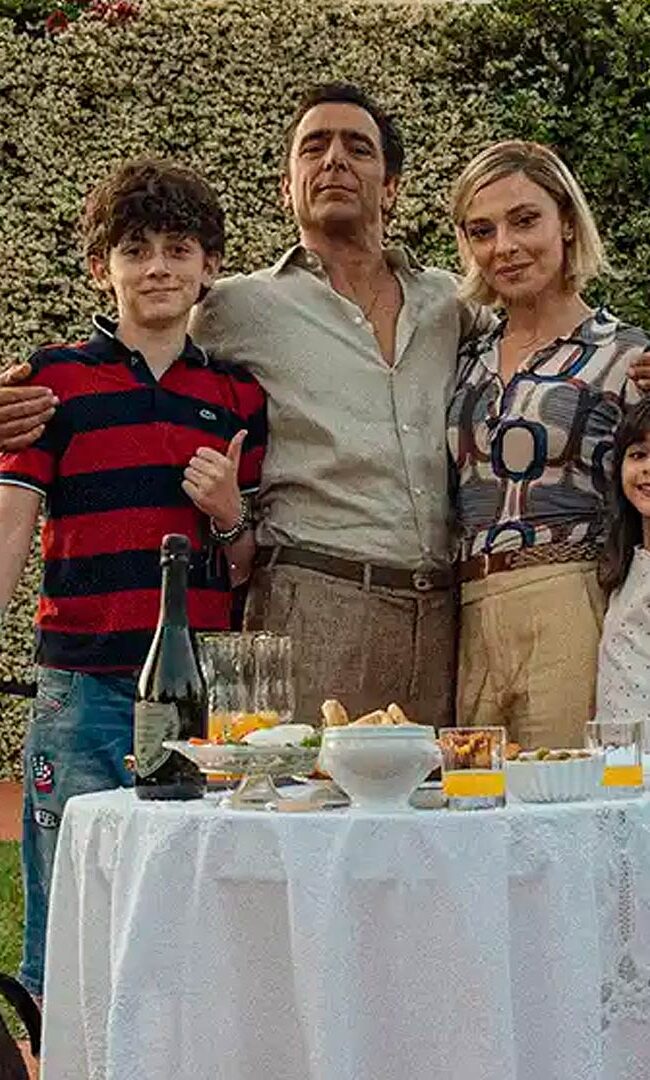
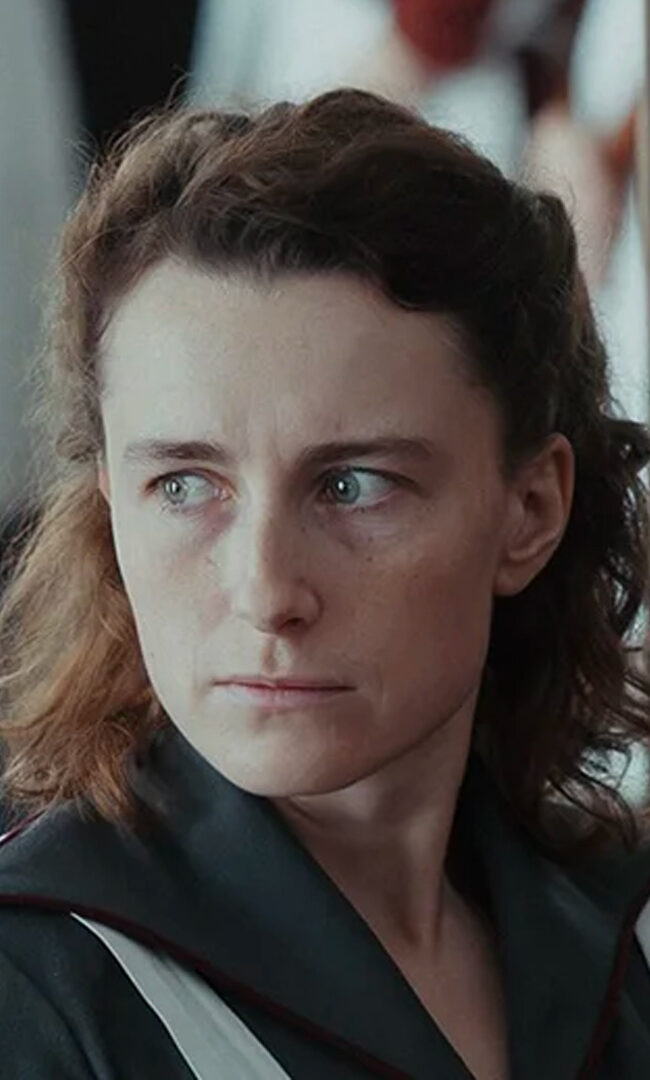
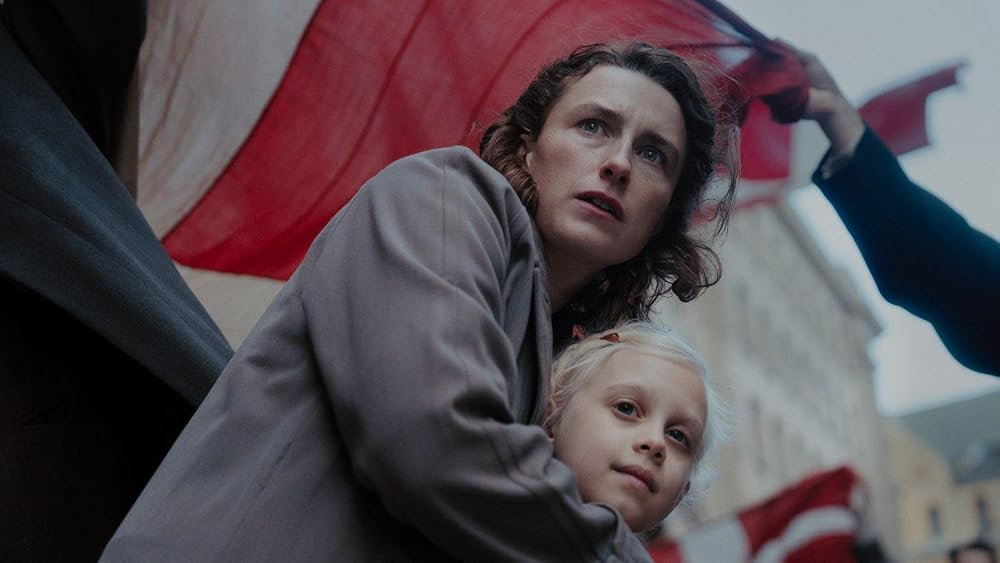
The film kicks off right at the end of the war, when the Danish resistance was given powers of authority to arrest and interrogate those allegedly involved with the German forces. Denmark’s flag hangs all over the city to celebrate its patriotism and independence from Nazi rule. Marie (Arcel) has already been living and working as a nanny in an upper-class apartment in Copenhagen for quite some time. Her employer is Christian (Carsten Bjørnlund), a widowed, middle-aged glove factory owner who has also fallen in love with her. Seeing that his daughter, Leonora (Flora Yde Sander), needs a new mother, he appreciates Marie’s acquiescent attitude enough to ask for her hand in marriage, which she accepts. The rest of the house’s staff doesn’t seem to resent her role as the new lady of the house. However, it’s easy to tell early on that Marie has a few secrets. At one point, she seeks out a doctor (without anyone’s knowledge) to get a liquid opioid prescription to dull the pain of nightly sex with Christian. Here is where we find out she gave birth to a baby during the war who didn’t survive, which left internal scarring. Mathilde Arcel’s performance reaches its peak in Marie’s most secretive moments, oscillating between stoicism and deep anxiety as she protects a far graver secret – one that would cost her everything.
In pure Daphne du Maurier fashion, Christian expects Marie to wear the wedding dress that belonged to his late wife on the day of their nuptials. But whether or not he still carries a torch is nearly irrelevant to Marie being willing to do whatever it takes to rise in her new status. While taking the dress to get it refitted, hell starts to freeze over for her when someone calls out the name, “Karin.” A suddenly petrified Marie turns and sees Karl (Thorbjørn Hedegaard), an old classmate from her hometown who carried a torch and knew her before she fled to Copenhagen and met Christian. Even worse, he knows her secret. During the war, Marie got involved sexually with a German soldier, which resulted in her pregnancy and ostracism from her family and community. Exposing such a history would mean suffering the same fate she sees inflicted on the street: women accused of sleeping with the enemy being publicly shaved, stripped, and marked with a swastika. It’s easy to understand the tricky situation Marie is in, especially as she is engaged to a man of prestige who is firm on decency and expects nothing less than obedience from his wife.
It’s not long after that damning occurrences start taking place: blackmail, a blood-red swastika being painted on the apartment building door, and rumors from the house staff about Nazi involvement. What Marie is willing to do to protect her reputation and chance at a better life shows her inner nature, which is less pleasant than how she tries to present herself. Out of desperation, Marie tries to deflect any suspicion of German collaboration by shifting it to other women in her orbit, from a newly appointed maid to her single mother next-door neighbor, Ms. Berg (Sofia Nolsøe). This is not the first time we’ve seen Marie be this cold, as earlier on she pockets a photo Leonora secretly keeps of her late mother as a way to cement herself as the only mother figure in her life. But the complex themes in Woman Unknown don’t lie as much within Marie’s character as they do in how women under suspicion in that period were treated more brutally, unlike men who bent their own morals to survive the war. Such an example is Christian, who is willing to condemn a person on suspicion alone but is unwilling to place any culpability on himself for his own business dealings with the Germans during the war so that he could survive. It’s as if shaming women was a means for men to divert attention from their own questionable choices. This hypocrisy of this society has been rarely explored in cinema, and el-Toukhy emphasises it through her masterful tension-building and complex characters. When tragedy soon occurs over Marie’s manipulation, a bigger question is raised about whether the need to protect yourself from the past resurfacing is worth sacrificing your morals.
With Woman Unknown, May el-Toukhy shines a light on a Europe that may not have been as progressive post-war as it tried to be. With the resistance and a vengeful public trying to make their own justice, the fallout is just as much bloodshed and brutality as during wartime. The production design by Sabine Hviid is evocative and meticulous, working well visually with cinematographer Jasper Spanning’s frames. Mathilde Arcel is a stunning revelation in her Volpi Cup-winning performance, playing someone with limited options in society who corners herself into making impossible decisions to survive, leaving her with a personal reckoning by the end. This is a post-war world with no heroes, but mostly broken people trying to move forward and shed any shred of their former lives. There’s comfort in knowing history tends to grow more empathetic over time. But for a film so rooted in the present of its own era, who’s to say what the future holds in our own respective times?
– M.J. O’Toole (@mj_otoole93)