




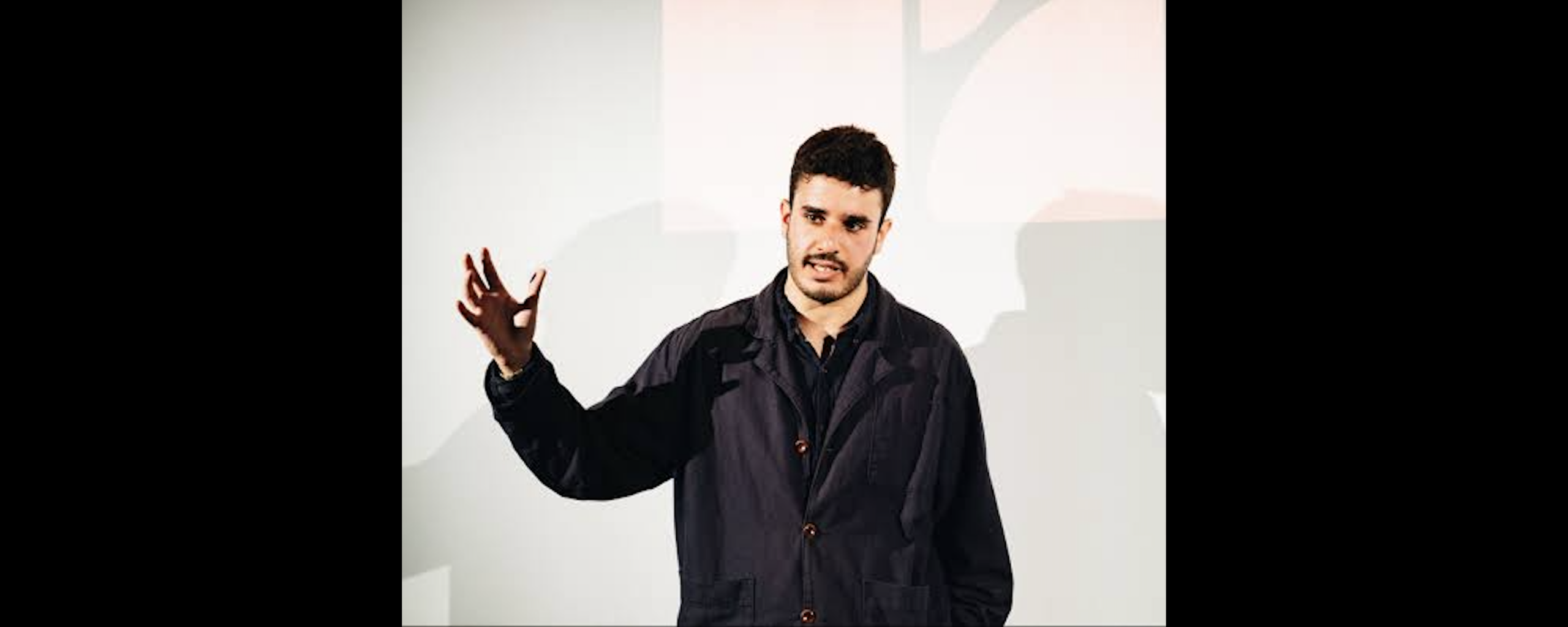
Mas Bouzidi’s Concessions is a love letter to movie theaters wrapped in the melancholy of their disappearance. Shot entirely on 16mm at the Lafayette Theater in upstate New York, the film chronicles the final day at the closing Royal Alamo Cinema, where jaded staff, eccentric patrons, protestors and an unhinged manager stumble through one last night at the movies. With interwoven stories of rejection, redemption, and fate, Bouzidi, a 23-year-old first-time feature director who spent seven years working in various New York theaters, crafts a hangout movie in the tradition of Richard Linklater and Robert Altman, complete with fake films-within-the-film (including an Australian exploitation Western and a Hamilton-esque musical about President Taft). The ensemble cast includes Steven Ogg, Josh Hamilton, Lana Rockwell, Ivory Aquino, Rob Riordan, Jonathan Lorenzo Price, and the great Michael Madsen. Concessions asks what becomes of the communal spaces we take for granted and the people who dedicate their lives to keeping the magic alive. It was great to speak with Mas in the following conversation edited for length and clarity.
Hammer to Nail: I’m curious when in the process you decided to shoot on 16mm. Why 16mm instead of 35mm or digital? And what exactly did 16mm bring to the film that other formats couldn’t?
Mas Bouzidi: It’s not a thing that’s specific to this film. For me, film is definitely a non-negotiable. It was particularly easy to pitch based on the subject of the film and the nostalgic qualities that the film has.
The reason for 16mm was obviously half a financial one, just due to the film’s budget, but also 16mm is a lot grainier. It looks a lot more tactile, organic and handmade. There is such a love for independent cinema in the movie, it’s an independent film, but it’s very much an homage to independent cinema as well. I thought shooting on 16mm, was in line with a lot of great films from the ’90s like Slacker.
I also liked the idea of shooting in a widescreen aspect ratio with all these hot movie lights, but then shooting on 16mm was this interesting juxtaposition, it’s so grand with the colors, the light and the scope, but then shot on 16mm. There was something very interesting about that to me.
HTN: At the 13-minute mark, we get this amazing conversation between Michael Madsen and the ticket lady, Lana Rockwell. I love this moment where he’s trying to get out of paying for the ticket because he was a stunt double in the film. Just talk about what was important to you in depicting this moment.
MB: The Rex Fuel character was written without Michael Madsen in mind, that was a stroke of luck. That’s really my tribute to a lot of ’60s, ’70s tough guys that I grew up watching. The way they speak, the code speak about who they knew in the industry—”I knew this guy, I was here for this movie, I didn’t do this movie.” All the little beefs and bromances and gossipy stories that get traded around in the movie business. I think Rex is the ghost of cinema’s past walking through this decaying theater.
HTN: I love these recreations of the fake films like the Western picture and the Taft musical. Each of them is really funny and also really well made. I equally love how you depict people watching movies in this film. I feel like it’s one of the best depictions of a movie theater I’ve seen. Please discuss recreating those films as well as what was important to you in covering the scenes that take place in the cinema.
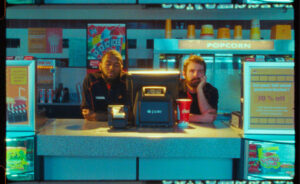
MB: What was really important to me, as much as possible within the limited budget, was that you could feel like a significant amount of story was being covered throughout the day in these films, particularly with The Bad Bloke, which is the Australian exploitation movie playing throughout the film, versus Taft, which we only see at the end but is teased throughout. We only had one day to shoot each, so there was a lot to shoot in a very limited amount of time. We shot those on film as well.
With The Bad Bloke, those are just the kinds of movies that I grew up watching. My first love, the way that I came into movies was by watching Spaghetti Westerns and Sergio Leone movies. Years later, that led into Poliziotteschi films and giallo movies and then even further down the line, Ozploitation films like Stone, Wake in Fright and Mad Dog Morgan. I always loved those movies. I thought the idea of an exploitation movie, particularly an Australian exploitation movie, playing on the last day at a closing movie theater in upstate New York would be really funny.
A still from CONCESSIONS
There’s certainly a humorous aspect to both of them, but I wanted them to be made seriously and taken seriously. We didn’t really cheap out on any of the effects or the shots. We shot them in anamorphic as well. We tried to make them seem as much as possible like they were real movies that could exist and realistically be playing on the screen.
I don’t know if you caught on to this, but we were trying to mirror Hunter’s inner turmoil about where he’s at in his life with that of President Taft during the 1913 immigration bill. It’s obviously a cheap shot at Hamilton, but it’s also more than that. The movie itself is totally knocking those 2000s, 2010s three-hour Weinstein period piece movies like Les Miserables and Tom Hooper films. No shame on Tom Hooper, but it’s those really serious three-hour-long Oscar movies that got nominated for ten Oscars and won nothing. That’s what Taft is.
HTN: At the 44-minute mark, there is a wonderful conversation between Lorenzo and Lana. He says, “Was our time working here the same as anything else?” She responds, “I don’t know, man. As long as you liked it, as long as it meant something to you, none of it matters. Don’t put a hat on a hat. It’s not that complicated. We were here one day, the next we’re not.” This leads into the “don’t be a stranger” back and forth, which I also love. Talk about your thinking in crafting this sequence, and also the decision to shoot through the speaking hole, which I thought was great.
MB: Regarding the speaking hole, the plan was always to shoot them talking right into the camera, which is something Jonathan Demme did a lot, and I always loved it when he did it in his films.
There’s a great movie called The Mother and the Whore by Jean Eustache, where the main character, played by Jean-Pierre Léaud, delivers this long monologue in a cafe about an abortion. The scene where he’s staring right into the camera, and when it cuts to the actress, she’s looking right at the camera as well. But Demme really made that his stamp. I loved the way he shot it, and I thought that would be really arresting. They had these gorgeous faces, and I almost feel like when you’re watching on a big screen, you kind of lean forward a little bit.
In terms of that conversation, I’m from upstate New York. A lot of that sentiment and way of living is in the film. When you’re growing up and you have big dreams and aspirations and you’re from a small town, it’s that great hangout movie thing—What am I doing with my life? How much time do we have? How do I get out of here?”
On top of that, I worked at movie theaters for seven years of my life. I never really had a crisis of whether where I was working was worth it or doubted the power of movie theaters. But the reality is that a lot of people are like Deanna. A lot of people who work at movie theaters don’t really appreciate it, and aren’t even particularly cinephiles. They are artists in other ways. She’s a photographer. It was really important to not just have everybody be a cinephile who loves movies and is very cinematically literate. It was very important to just have a normal high school girl who maybe likes TV, wants to be a photographer, and doesn’t really give a shit about the movie theater. In the end, maybe that changes. But I think it was really important for these characters to be in crisis about whether this old hundred-year-old theater actually really matters.
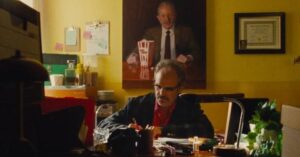
HTN: Shortly after that, we have another one of my favorite moments between Hunter and the kid. The Schindler’s List sequel starring Vin Diesel had me crying laughing, but it became quite searing. The chat about his dad letting him pick the movie, saying “Who are you today? Where do you want to go?”—it’s really such a great way to explain how we pick movies. This then leads into this pretty specific soliloquy about Close Encounters on 35mm. And then he asks the kid the same question his dad would: “Who are you? Where do you want to go?” It’s a smaller moment, but one that really stuck with me. What was your thinking?
MB: That’s not something that particularly happened to me, but I’m glad you like that moment. I think that line, “Who are you today and where do you want to go,” is the thesis of the movie, at least for Hunter and his character. Tying it to his early movie theater experiences, specifically with his dad, who is maybe or maybe not in the picture anymore, is the key to unlocking how he can survive in his present day as a 29-, 30-year-old.
A still from CONCESSIONS
That same question that was asked of him when he was five or six, going to see Close Encounters in 35mm and it changing his life, is the same thing he needs to ask himself by the end of the day, when the theater closes and he’s left without a job and without a path forward for the first time in eight, nine years.
Close Encounters is obviously a fucking amazing movie. I’ve had the chance to see it on film many times. It’s ironic because it’s a movie about aliens, but if you were to show a movie to aliens about the power movies can have on a human being, Close Encounters is certainly up there.
HTN: At the 56-minute mark, we have another great moment with the protesters. We have Sergio waxing poetic on streaming, talking about his admiration for Tilda Swinton. I cried at the girlfriend, still with smoke in her lungs from the joint, saying, “Orlando has great…mise-en-scène.” So good. Talk about this sequence and also just your thinking with the protesters in general.
MB: The band, the Saratoga County Dragon Cocks, Saratoga County being a real place that I’m from—this movie is me throwing my hat in the ring of the hangout movie genre. Fast Times at Ridgemont High, American Graffiti, and Dazed and Confused. I feel like that stoner-type band hanging outside is such a staple of that genre.
I think that Sergio is the Greek chorus of the movie. He delivers a lot of commentary about the state of the movie business and the state of theaters and streaming. He kind of just hangs outside and is almost like a mouthpiece for me to, through a stoner haze, deliver his assessment on where we are, where the movie business is. He’s also kind of a therapist for Hunter. Hunter will go into the ring with Lorenzo and fight, come outside, have a smoke and it’s like, “How’d I do, coach?” Sergio gives him a pat on the shoulder and some wistful advice. That was Sergio’s purpose in the story.
All of those jokes like Tilda Swinton in Orlando—those are just things that I thought were kind of funny. I thought the idea of a stoner who loves Sally Potter was really endearing. He’s actually kind of a feminist, even though he uses really vulgar and crass language.
HTN: In the director’s statement, you mention watching theaters close felt like living in a nightmare. Can you discuss a specific theater closure that hit you particularly hard?
MB: There’s a few. I can talk about my hometown first. The Spectrum in Albany was my hometown theater. It’s a very small art house movie theater that got all of the smaller world cinema films and some of the smaller Oscar contenders. I went there a lot as a kid and it closed. It actually got rebought last year, so it’s open again. But I remember when Film Forum closed, and the last movie that I saw at Film Forum was Come and See, which was the wildest movie to see right before the pandemic. That was literally the last movie that I saw in a movie theater. It was a 4K restoration that Rialto was doing.
I also got furloughed from my job. I was working on breaks from college at Regal in my hometown. So that was definitely a very personal experience that I had. The Spectrum was actually permanent for a couple years. We did a whole year almost without going to the movies. That was nightmarish.
HTN: I’d be remiss not to ask about the great Michael Madsen. The character of Rex Fuel is so great and is perfect for the setting of a closing theater. I know we already discussed him a little bit, but talk about casting Michael in this role, why he was so perfect for it and what he brought to the film that was not on the page.
MB: We shot the movie during the SAG strike and we had an interim agreement. So we were one of the only SAG movies shooting at the time. Because of that, the script was able to get to some actors that normally we wouldn’t have been able to reach. One of those being Michael. His agent had reached out and said Michael’s interested in the role. We did a FaceTime and we talked.
A still from CONCESSIONS
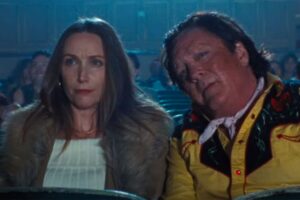
It’s funny, because there were a lot of characters in the melting pot of Rex—Billy Jack, Tom Laughlin, Sonny Carl Davis in Last Night at the Alamo, Eagle Pennell and then obviously the Michael Madsen himself, like Budd in Kill Bill. We managed to get him in the film. He was really excited about it. It was the first time in a while that he had done a supporting role in a film. It was also his first comedy.
I know he’s been asked to do a lot of funny things, but this is definitely one of his more slapsticky screwball roles. The scene with him and Annie Grier in the theater is like a Preston Sturges comedy. I think that was definitely testing him a bit.
Working with him is great. It’s what I imagine working with those old greats like Robert Mitchum and Robert Ryan, these guys that were super cool. The camera was their friend. Every little thing they did, they did it for the camera. They knew what would be picked up and what wouldn’t be picked up. Every take was different. They had an aura.
This is an anecdote I love to share just because I can’t believe it’s in my movie. When he’s leaving the auditorium and he’s tossing the bag of popcorn in the trash, the way he does it is just so ridiculously funny. I don’t know why he did it that way. He just stops and then throws it into the trash can and then keeps walking in this cool guy way. That guy knew that it was going to read well and it did.
What he added, I think, was a mournful, sad quality to Rex that wasn’t exactly in the script. I thought that I was maybe reaching for that, but I didn’t get it until Michael came. Michael was a very sensitive, smart, contemplative guy. He’s a poet. I think that he felt things super deeply. When he’s looking at that poster at the end and seeing his reflection in the glass, and when that kid comes and asks for a photo, I think he was able to tap into something that was really honest and almost dangerously close to himself.
I think there’s a lot of Michael in Rex. There’s a lot that’s not, but especially towards the end of the film, when Rex gets a lot more contemplative and is forced to reckon with whether his life and his career actually amounted to anything. Those are things that any actor and any person working in any field has to ask themselves. I’m sure Michael asked that of himself as well. He brought that sensitivity, that mournfulness to the role.
Also, his face, the way he looks, the complexion of his skin, the redness, the sun-weathered texture of his face, his voice. These are sounds and images and visuals that were not in the movie before him. They add so much to the film. He’s so amazing to look at. He photographs so well. I think that he probably steals every scene that he’s in, and he’s so much fun to watch.
– Jack Schenker (@YUNGOCUPOTIS)