




A Conversation with Nicole Bazuin and Andrea Werhun (MODERN WHORE)
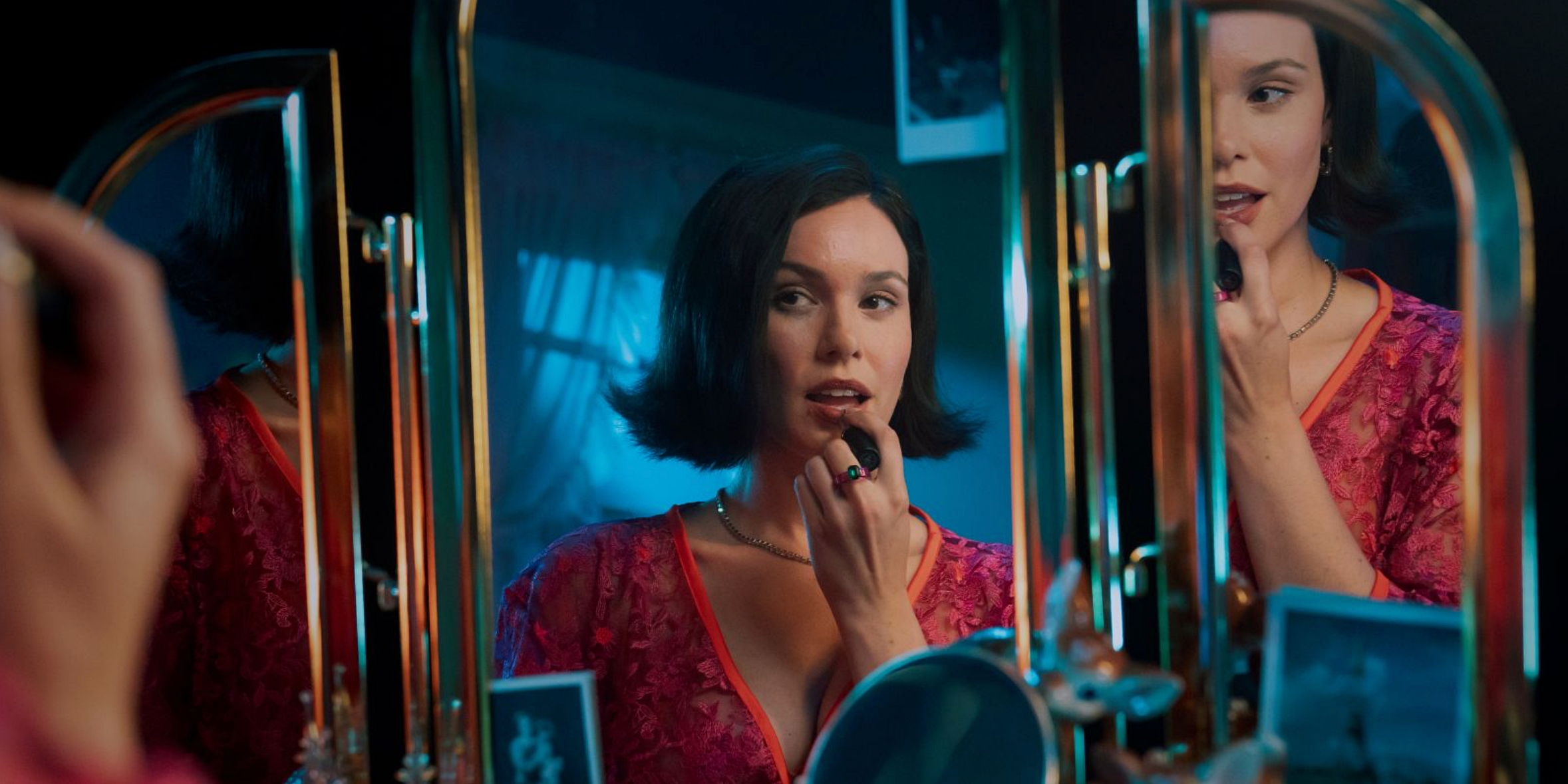
Modern Whore, which world-premiered at TIFF, is the latest sex-work-destigmatizing project in an unusual multiyear collaboration between director Nicole Bazuin and the hybrid doc’s co-writer and star Andrea Werhun (who also served as a consultant on EP Sean Baker’s Anora). It’s based on Werhun’s book Modern Whore: A Memoir, which features Bazuin’s photos, and comes on the heels of Bazuin’s 2020 shorts Modern Whore and Last Night at the Strip Club, which likewise center on Werhun. In other words, this prolific pair have long been on a fierce artistic mission to bring the oldest and perhaps most misunderstood profession in the world out of the closet, and simultaneously slay some tired tropes in an inventively stylish and often cheeky manner along the way.
A few days after the film’s May 1st VOD release (via Quiver Distribution), Hammer to Nail caught up with the Canadian duo to learn all about the productive partnership, along with what they’ve dubbed the “Modern Whore Cinematic Universe.”
Hammer to Nail: This film is actually a culmination of a series of collaborations, including Modern Whore: A Memoir, a collection of Andrea’s stories and Nicole’s photos, as well as two doc shorts directed by Nicole and featuring Andrea. I know you two met on the set of a music video a decade and a half ago, but what compelled you to form this intense artistic partnership?
Andrea Werhun: I’m a writer/performer and Nicole’s a visual artist/director. I think we recognized in each other a very complementary artistic skillset that layered nicely atop a beautiful friendship. The moment we decided to work together was in 2015, when I was working on an organic farm. Nicole came to visit, and after regaling her with stories from my escort years she said, “We have to make something.” We started with the book but always kept our eyes on the moviemaking horizon.
HtN: I was really struck by the doc’s aesthetics, as it’s an unusually colorful and nearly campy take on the “escort film.” Could you talk a bit about your influences? Why go in this upbeat, highly stylized direction?
Nicole Bazuin: Camp comes naturally, but also intentionally. For a subject burdened by stigma, it becomes a storytelling mode that disrupts expectations of a dark, dreary portrayal and instead opens up a fresh perspective on sex work. Because this is a film about claiming and performing one’s own story, it was essential to build a vibrant Modern Whore Cinematic Universe (the MWCU, if you will) where Andrea can inhabit multiple facets of her persona—whether intrinsic, perceived, or imposed. Andrea is a gifted actress and natural comedienne, with a rubber face that’s reminiscent of Jim Carrey, and camp gives her the space to explore a wide tonal range.
The style embraces humor, irony and candy-colored aesthetics, intended to support both audience and storyteller through the full spectrum of Andrea’s experiences. In the film, Andrea acknowledges the exhausting legacy of sex worker archetypes, the victim and the villain, and how these narratives help sustain harmful laws. By jumping inside Andrea’s memoir and entering the heightened space our cinematographer Nina Djacic calls “story world,” we can imagine something different.
HtN: Though Modern Whore is Andrea’s story, it also features sit-downs with many of her ethnically diverse colleagues – as well as her mom and her longterm partner. So how did you decide who to include – and why? Was everyone onboard to participate from the start or were folks hesitant?
AW: It was important for us to expand the Modern Whore Cinematic Universe™ to include other voices from the sex industry, because as we always say, “Sex workers are not a monolith.” There will never be a singular sex worker story because each and every one of us comes to this labor from a wide variety of backgrounds, identities and lived experiences. The sex workers in the film are not just my friends, but artistic collaborators. While our experiences in the industry differ greatly, what we have in common is a shared desire to see sex work destigmatized so that not a single one of us lives in fear of violence or discrimination. Thankfully everyone, including my mom and boyfriend, were down to participate from the very beginning.
HtN: As a sex-industry veteran (and published memoirist) myself, I found the film refreshingly real and radical in its addressing of both the joyous aspect of the work, and also the inherent racism and classism that’s always apparent. (Though I’ll note that I come from the BDSM world, which is obviously vastly different in terms of the job requirements, skill sets and clientele.) As a straight educated white woman with no history of sexual abuse, Andrea is able to revel in a powerful choice she freely made, which is likely not the experience of an impoverished POC with a traumatic background. So did you ever worry that forthrightly celebrating this privileged whoredom might unintentionally read as being tone deaf towards workers for whom “choice” is a relative term, and whose stories aren’t sexy and marketable enough to be heard?
AW: Thank you, I’m really glad the film resonated with you, and I appreciate your perspective. I do want to clarify a few points, though. I don’t identify as straight, and the assertion that I have no history of sexual trauma isn’t accurate. Multiple sexual assaults I experienced while on the job are included in this film, and I detail events from my childhood in my book as well.
I also wouldn’t personally describe my relationship to sex work as a freely made, empowering choice. Sex work is work and work is bad. I wasn’t born to work, I work because I have to, as does 99% of the population who don’t have access to generational wealth. The thesis of Modern Whore is that I do sex work to afford being an artist. While I can’t speak for anyone else but myself, I do believe telling authentic stories about one’s labor has the potential to inspire class solidarity across industries and improve conditions for all workers, including in the sex industry.
HtN: Finally, in addition to engaging two of the participants as script consultants, you also worked on set with a social worker, a trauma-informed sex worker peer counselor, an intimacy coordinator, and even a disability consultant for a scene with a disabled client. Why was it so important to have all these various elements in place?
AW: It’s always important to consult with relevant communities to check one’s work. We wanted to do right by the people represented in Modern Whore, but also ensure everyone on set felt safe and protected.
– Lauren Wissot