



A Conversation with Maya Annik Bedward (BLACK ZOMBIE)
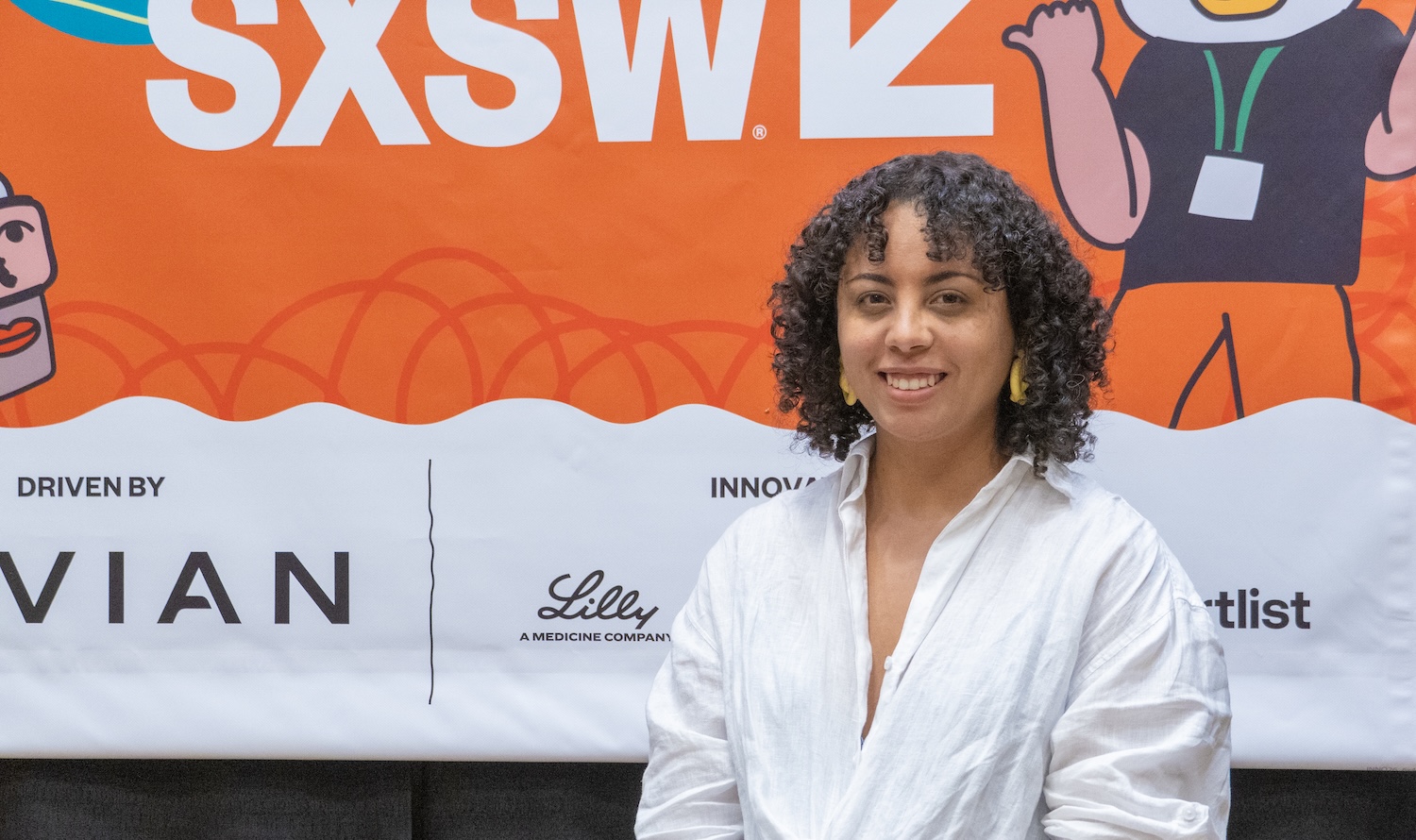
The documentary Black Zombie marks director Maya Annik Bedward’s feature debut. In the film, Bedward examines how the cinematic zombie has its roots in the Haitian Vodou faith, even though the original term refers to a live person enslaved by a sorcerer, and not an undead monster. A white American travel writer named William Seabrook appropriated the concept for his 1929 book The Magic Island and things took off from there. Eventually, filmmaker George A. Romero would transform the zombie into something with which most movie watchers are familiar in his 1968 Night of the Living Dead. In her documentary, Bedward traces that history, combining archival footage, interviews, and creative reenactments into an engaging mix. I spoke with Bedward at the recent SXSW Film & TV Festival, where Black Zombie premiered (and where I reviewed it), and here is that conversation, edited for length and clarity.
Hammer to Nail: You take on quite a lot here; it’s a very ambitious documentary. How and when did you decide to tell this particular story?
Maya Annik Bedward: I’m Afro-Caribbean and Canadian. My father was born in Jamaica and I’ve always been really interested in the history of our people that predates colonialism and our connection to West Africa. And often those connections are said to be lost, that there’s no record of this, but there are and there are traces of it in our spiritual traditions. So Vodou, Candomblé, Santería … these things were always very interesting to me because they hold so much knowledge in history. So when I heard that the zombie was a Haitian Vodou metaphor for slavery, I was completely shocked that I didn’t know that, and I needed to learn more. And as I learned more, I said, “Oh my gosh, I can’t believe no one’s told this story and no one knows this story.” And it just became a huge passion project of mine.
HtN: It definitely has quite a lot in it that holds one’s interest and it’s very informative. What was your research process like? It’s a huge topic. Where did you start and how did you find the people that you interviewed for the film about Haitian Vodou?
MAB: I always knew I wanted to center the voices of Haitian Vodou practitioners. So I started from there and went to Haiti and I worked with a Haitian crew there who introduced me to one of their friends—who’s Grégory in the film, the Vodou priest—and then I reached out to other people, practitioners who are also advocates for changing the representation of Vodou in the media. So that’s how I found them. And then I knew that key parts of the story were the movies White Zombie, Night of the Living Dead, The Serpent and the Rainbow, to understand the evolution of the zombie as a phenomenon in pop culture. I knew that there were key people who could tell that story and looked for those people and critics of those stories, as well, who could also be in the film.
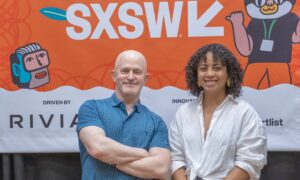
Lead critic Chris Reed and filmmaker Maya Annik Bedward
HtN: I remembered, watching your film, that I had seen The Serpent and the Rainbow when it first came out and I remember not thinking that much of it and now I feel validated. (laughs)
MAB: (laughs) I mean, it was always going to be bad, but not as bad as it was, but the studio made them make it gorier and messier and crazier. They just wanted it to be nuts, with no thought to what that would do to the representation of Haiti or Vodou.
HtN: And certainly the clips you chose from it do the film no favors. (laughs)
MAB: (laughs) No.
HtN: On the Hollywood zombie side, there’s a lot to choose from. You focus a lot on Romero and you have, of course, Tom Savini, who’s a great find for your film. But given the wealth of material you could have chosen, what was your priority in picking clips from more modern Hollywood films—not the White Zombie era—but post-Romero?
MAB: I think there are a lot of the clips in there from the films that everyone talks about or might know. Like Shaun of the Dead: we have one clip in there. We also have World War Z. So there are films that people are familiar with, or if you’re a zombie fan, you would recognize those clips. But we also … a lot of it’s a legal matter: what could we actually use in the film to which we could apply Fair Use?
HtN: You have that wonderful scene—a recrea, or reenactment, whatever you want to call it—of your actor in the field with the torch. How did you decide on that as a recurring device?
MAB: Well, once I had the opportunity to shoot in a sugar-cane field, I decided that we had to do this. And just thinking about the early zombie films, I wanted to use that visual language and tell the Haitian Vodou story that I was inspired by to make this film. It just felt like the right fit to take that approach, to kind of flip what we’ve seen in those classic old zombie films, flip it on its head and actually tell the real story.
HtN: But then you reveal that it is in fact a recrea/reenactment. Why that choice? Which I like; I think it’s a good choice. But what motivated that?
MAB: Because film, no matter what, is a medium where there’s a person making choices of what to show and what not to show, and it is a creation and there’s someone behind that. And I think that’s why we have to be critical of films and what we watch and understand that there are choices being made. And for me, I really want to make sure that the choices I made weren’t perpetuating a lot of the harm that’s been done to Vodou. And like Zandashé [Brown] says in the film, it’s so much about intention. And so I was always thinking about how I can make sure I’m not re-perpetuating the stereotypes, or the misunderstandings, of zombies and Vodou. So, breaking the fourth wall, I just want people to leave the film and be like, “OK, this was a creation and I do have to be sensitive to everything I watch and think of and ask questions behind it.”
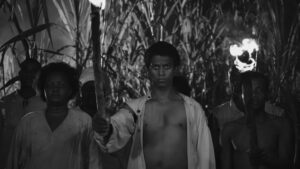
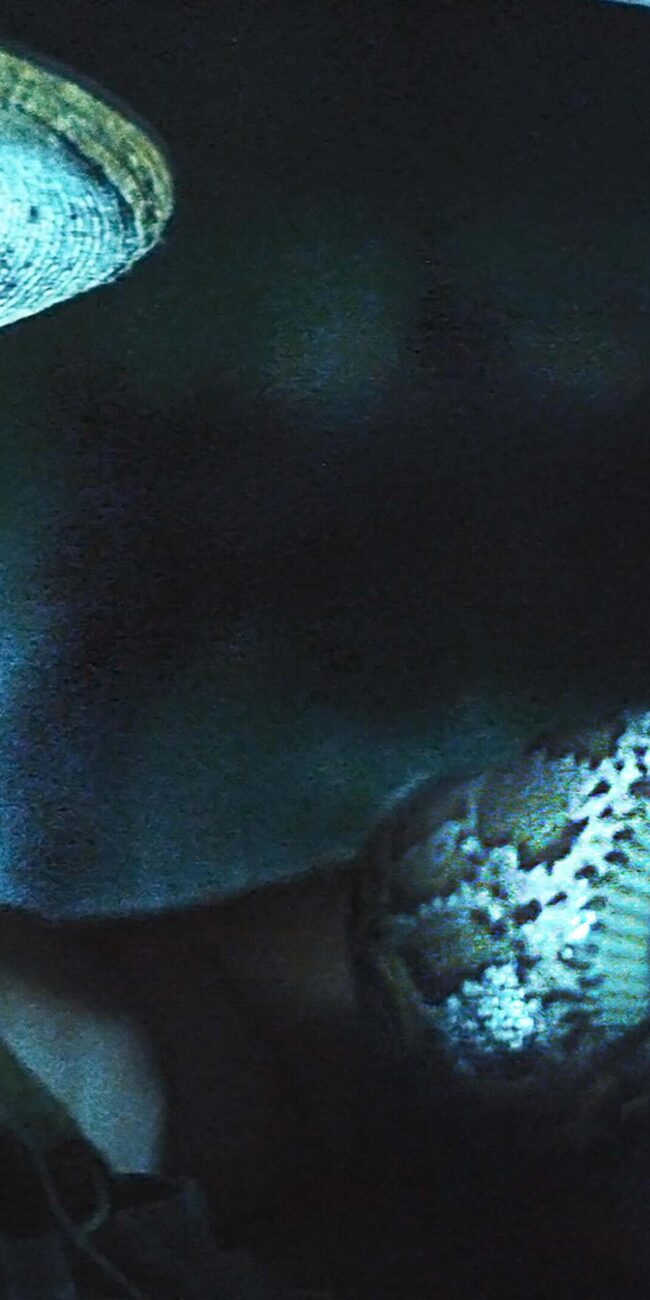
A still from BLACK ZOMBIE
And also, when I asked Erol [another Vodou priest] about his thoughts on my film, I wanted to include that in there and his reservations. I thought that was an important piece of the film, as well, because this has been done over and over and over again, where people come in with these supposed good intentions and then things just turn and there’s this exploitation and misrepresentation that happens. And I just wanted to be honest about the process.
HtN: In your movie, you talk about how modern zombie films, even those that don’t feel like they have a direct connection to Haitian Vodou, nevertheless do, in a way, because of their representation of otherness, and you have that clip of World War Z when the zombies climb the wall into the fortified state of Israel. What do you think are some of the best zombie films in the canon that do things like that?
MAB: That’s a good question. I mean, people ask me what my favorite zombie film is and it’s hard for me, knowing the history of zombies, not to think about zombies in a different way. But my favorite zombie film is actually Mati Diop’s film Atlantique.
HtN: Very good film. I like that.
MAB: Which uses this idea of the zombie to explore the migrant crisis that’s happening. And I think that’s a really powerful zombie film. And some people probably don’t think of it this way, but I even think of Get Out as a zombie film because again, it’s about this man who’s losing his agency, like someone wishing ill on him and turning him into someone that doesn’t have agency. And I’m like, “That’s the Haitian Vodou zombie. That’s actually what a zombie is. It’s the closest thing to it.”
And even in that film, what was so interesting is how Jordan Peele was actually very much influenced by Night of the Living Dead, because originally, in his ending, he had the main character be captured by the police, but then he decided, “No, I have to change the narrative and actually show this guy being triumphant.” And I just think that film is so connected to Night of the Living Dead and early zombie films, to what the zombie really is in Haiti. And I love that film, too. So I would consider it a zombie film, although maybe some people wouldn’t.
HtN: I love that! I would not have thought of it in that context, but it makes so much sense. And now, having seen your film and hearing your explanation, it really does make sense as a sort of direct descendant of what Haitian Vodou says a zombie should be. That’s great. Thank you so much for talking to me.
MAB: Thank you!
– Christopher Llewellyn Reed (@ChrisReedFilm)