



A CONVERSATION WITH BETH HARRINGTON (BEYOND THE DUPLEX PLANET)
It is said that you cannot go home again. Literally, you can go home but which version of you goes? Not the one that disappeared. That version is long-gone.
[These words are written from the dining room table of Jonathan Marlow’s childhood home.]
Once you’ve arrived at a certain age, the home might be an establishment for retirees. That was precisely the setting for David Greenberger. He worked at the Duplex nursing home in the late-1970s and, under its employ, started a self-published zine featuring interviews with—and occasional artwork by—its residents. There wasn’t anything particularly unique* about these individuals but there was something revolutionary about Greenberger’s approach. These weren’t merely oral histories (of which there exist numerous alternative examples from that era, earlier and after). Instead, as an art-for-art’s-sake take, the residents discuss more pedestrian concerns. Life not as a chronological laundry-list of past occurrences but life in the then-present. Life and how it was (and is) lived.
The Duplex Planet zine spawned graphic novels, albums, monologues, theatrical productions, exhibitions and a long-running (now defunct) radio segment on All Things Considered. Now the illustrious tale has found its way to a feature-length documentary as well (premiering in Austin at SXSW and at a cinema near you over the weeks and months thereafter).
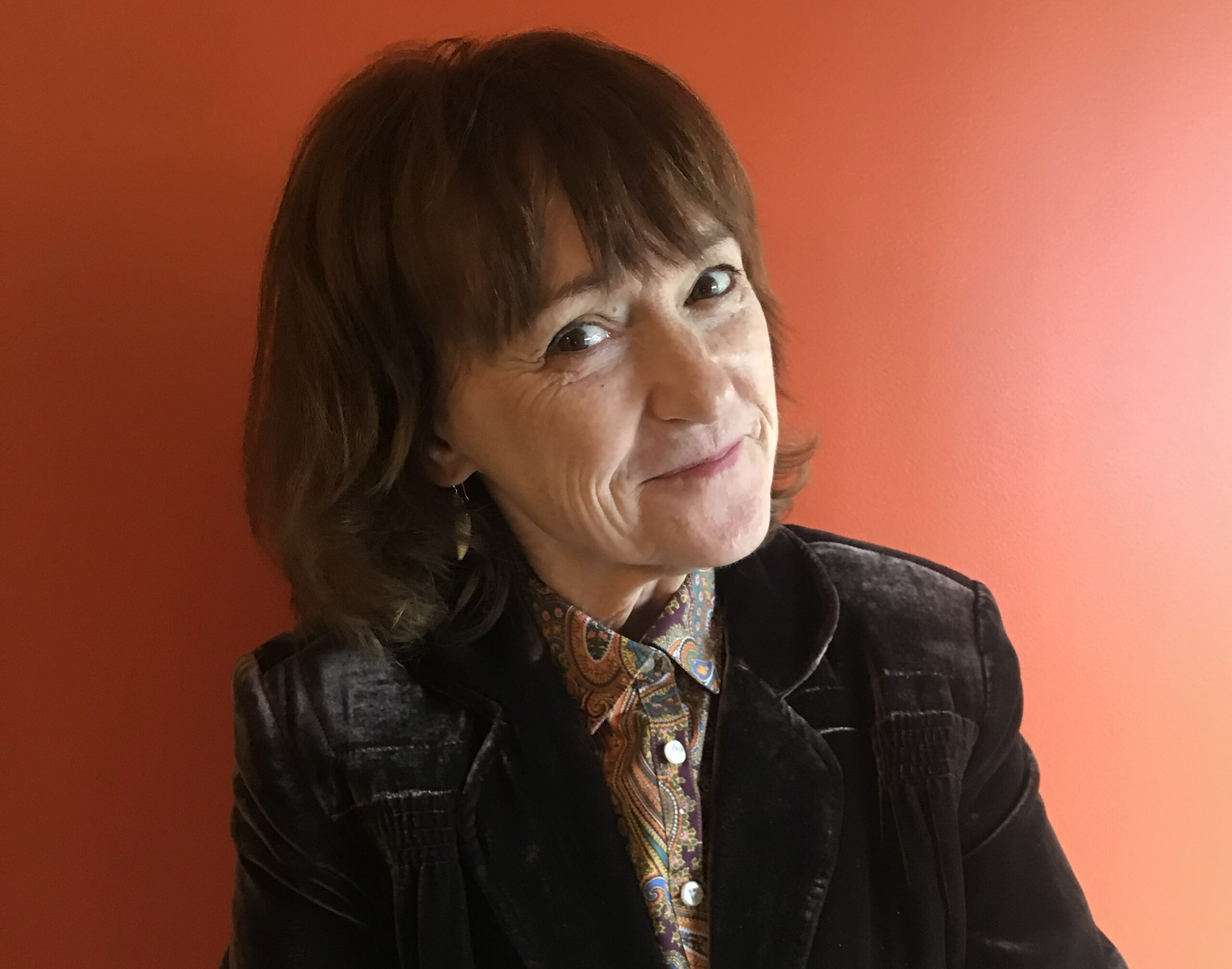
The beautifully constructed Beyond the Duplex Planet (reviewed here by Chris Reed) is the latest from writer / producer / director (and former Jonathan Richman and the Modern Lovers singer) Beth Harrington. The paths of Harrington and SV Archive [Scarecrow] Executive Director Jonathan Marlow first crossed when her The Winding Stream—a wonderfully insightful investigation into the intersection of the Carter and Cash families—was making its way from one film festival to another. Her Welcome to the Club: The Women of Rockabilly is similarly essential viewing (as are all of her films). Beyond… is one of two documentaries on the festival circuit at the moment. Our Mr. Matsura screened mere days ago at the Better Angels Society’s Hindsight Film Festival in Savannah, Georgia.
Harrington and Marlow met in Tacoma while the former was driving south, back to her home in Vancouver, Washington, and the latter was driving north (from Los Angeles).
[excerpted from a longer conversation which might find its way to you at a later date]
Hammer to Nail: As a multi-decade SXSW participant, Austin strikes me as the perfect location for the premiere of Beyond the Duplex Planet. It is one of the few festivals that adequately represents the intersection of multiple artforms. How do you choose your subjects? Or do they choose you? An unfair question, admittedly.
Beth Harrington: It had been in the back of my mind for a long time. I’ve known David [Greenberger] for many years. He and I go back to our twenties in Boston and that is when he started the Duplex Planet. I was there when he was just starting to publish it. I had gone to college, presumably for communications. I was very interested in music. I was very interested in media. I didn’t know for certain what I was going toward. In college, I thought that I was going to be a rock-and-roll DJ at a progressive Bronx station. I had my moment for four years in college; I was a college DJ but then I moved on. But I met David and I was really struck. Here was someone who had graduated from art school with what appeared to be no discernible, marketable skills and yet he was doing a thing that combined his art with his life.
HTN: Making it out of his job. His day-job (as Activities Director at the Duplex).
BH: He was doing this thing and I thought that was pretty cool. I didn’t know you could do that. That you could make a living as an artist. Art that was kind of tangentially a “real job” but was also a self-contained art project. Additionally, he was always a nice and lovely person. He is very expansive about how he approaches his friendships and stays connected to people. I would like to think that I try to be that person, too…
HTN: I can attest that you are that person.
BH: …but David is really, really good at it! That is part of the art. In a sense, it is. He has been in touch [since Beth Harrington relocated to the opposite coast] and he has come through Portland many times doing his shows.
HTN: When did you start filming?
BH: Initially, we started filming in 2017. I had thought about doing this for a long time but I never broached the subject with him. We had a conversation one day—ostensibly about the last film I’d made, which he had seen and liked—and then he was asking about my father and my father’s developing dementia. I hung up the phone and I thought, “When am I going to ask this guy about this thing? I think we should do it now. Now seems like the right time!” I called him back and asked, “Would you want to do this?” He agreed but neither of us had any plan for it. It certainly limped along for a long time. There really wasn’t the funding for a documentary. It was very much one of those projects where you’d just get a little pile of money and shoot and then get another little pile of money and shoot.
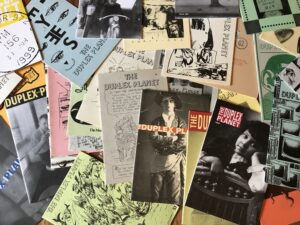
Duplex Planet covers by Beth Harrington
HTN: Opportunistic, in a way. Several of the interviews in the film happen when friends are attending performances. I was delighted by the fact that Wayne White—one of the great artists of our time—is in-attendance without explanation. You just throw him in the mix. It is unnecessary to explain anything about him being there. If you know, you know, Somewhat impromptu. These are the sorts of individuals who come out for these shows.
HARRINGTON: It was very on-the-fly. There was much less plan than almost any film I’ve made. We have a camera. Who is going to be there? We’ll see what happens. I don’t usually like to work that way. Then, of course, there were the complications of COVID in the middle of the process.
HTN: I remember your crowdfunding campaign was a long time ago. [Disclosure: Marlow’s name appears in the “Special Thanks” acknowledgements, accordingly.]
BH: A long time ago.
HTN: Obviously, you’ve been working on other projects simultaneously, as Beyond the Duplex Planet progressed. When we first met, I would think of you as always working on a film. It was never as if there was slate of projects, though.
BH: I am not that person. I’m usually a one-at-a-time person. Circumstances… “Hey, you need to change your plan.” I did think at one point that the project was dead in the water. In the moment, I forced myself to do a few Zoom interviews with Penn Jillette and with David and his collaborator [musician Tyson Rogers].
HTN: It doesn’t have the trappings of the usual remote-interviews.
BH: Partly because Penn had really nice equipment on his end!
HTN: It looks like he is in a living room doubling as a recording studio.
BH: It is his own house and he has great stuff. In fact, we recorded it but he said, “Why don’t I record it and I’ll send it to you?” That worked pretty well. It was a strange setup up because he has an immense microphone.
HTN: It suits the connections, given that NRBQ has a Duplex Planet connection and Penn has always had a fondness for the band (from what little I know). All of these worlds start to intersect.
BH: Exactly. Our world. Their worlds. East coast. West coast. A network of cult-y weirdness. I became aware of the fact when I was promoting our fundraising on social media. In the comments, someone (whom I do not know) wrote, “The girl from Jonathan Richmond and the Modern Lovers is making a film about a guy from Duplex Planet.” There is the Venn diagram. I hadn’t really put it together in my own head that way.
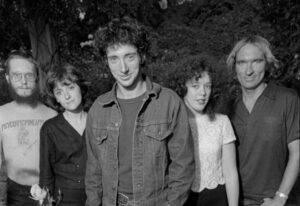
5 of the Modern Lovers by Chester Simpson
HTN: We’re the folks on the fringe. What is your attraction to outsider artists? Arguably, the Carter family were the ultimate outsiders (despite seeming like insiders after-the-fact). As I’ve told you before, whenever anyone comes into Scarecrow looking for an outstanding music-related documentary, I always point them to The Winding Stream. If, as a viewer, you don’t know anything about them—and even if you already know plenty about their music—the film is like a warm blanket. To what extent does your background in music inform your choices as a filmmaker? Is it the reflection of enthusiasm for those things that you find of interest?
BH: It is those moments when you want to share an album with someone. “You have to know this artist!” Then there is the more negative side of that: “How do you not know about this person? Let me tell you about this artist!” I try not to be that person anymore. As a teenager, I was that person.
HTN: It isn’t possible to know if audiences have encountered the Duplex Planet through the Fantagraphics series or the original zines or perhaps the Duplex-inspired music releases. With these seniors in the Duplex complex, David Greenberger gave himself over to their stories. Your film is enriched by the kind of authentic approach you find in his work.
BH: He definitely made a big impression on me. He was good at staying in touch, of course, and every month I would get the Duplex Planet [in the mail]. Then I was in the band [the Modern Lovers] and I was touring. Threads got lost. But the kind of person he is, it is a certain kind of friendship where you just pick-up right where you left-off. Our thoughts about what we were doing were somewhat in-sync.
HTN: The passage of time that is reflected in the Duplex Planet and the way people talk about their lives in that publication. Our bodies age but our minds—until we lose them—and personalities are roughly the same from about the age of ten until we cease to exist.
BH: David is seventy-one. I am seventy. Here we are. What he says in the film, early-on, is true. He used to think it was about age. The conversations weren’t really about age. It was just about being in relationship with people and conversing. Age happened to be the original construct but now it is not about that at all.
HTN: If it had been about age, it wouldn’t be timeless. When I first encountered the Duplex Planet, I found it remarkably revealing. When I was growing up, many of my closest friendships were with people many decades older than me. That is still true today.
BH: David was really good at eliminating the thing that would normally be distancing, especially at the time when it first came out. “Where were you during the war? How did your family get through the depression?” That would be the usual approach but that isn’t the thing that binds us. “What do you think when I say how close can you get to pain?” Talk about that. It seems like you get to a deeper understanding of a person when you talk about these things.
HTN: Creating certain rhythms with the editing and the ways that materials are introduced have a musical quality. You’re not doing things in the way that [air-quotes] “conventional” documentary filmmakers would approach this material.
BH: I worked closely with my friend, editor Emily Gilbert. We both recognized early-on when we started to dig-in that this thing could be cut a hundred different ways and it would still be a fascinating film. There is so much wacky, interesting stuff in it. You can’t get a much more eloquent and heartfelt about art than with David as the subject. It was a little bit like shooting fish in a barrel. “That’s a great quote… and that’s a great quote!” We wanted to have the vibe, obviously, of a homemade publication. We didn’t have any money so we didn’t have to worry about fancy stuff.
HTN: Right. All of those animated sequence. [There are no animated sequences.] There goes your substantial budget.
BH: That stuff was not going to happen. At the same time, we did not want it to be so “inside baseball” that if you didn’t know anything about this, you had no point-of-entry. It was a little bit of a trick that way. Then I think, at least, I am biased and it felt like the right choice. We had Ed Ruscha in it. If you were an art-person at all, Ed Ruscha means something. Otherwise, he is just someone who made an album cover for David.
HTN: These appearances do not call attention to themselves, throughout.
BH: What David accomplished keeps it calm. In his art career and all that he has done with the Duplex Planet, everything is a level playing field. [Duplex resident / Duplex Planet contributor] Ernie Brookings worked building telescopes. Ken Eglin was a tap dancer. There were people from all walks of life in this nursing home. At the end of the day, we’re all kind of in the same nursing home. Louie Perez (of Los Lobos) happens to relate to David on a very human level. I have to say that many men love David in a way that I feel like David gives to people in general but maybe to men in particular. A place to open up a little bit. A place to be a little vulnerable. Penn says [in the film] that he went to David and talked to him about his aging parents. I did that with David as well. He is the guy that you could talk to about that. He is also the guy you can talk to about all kinds of stuff. I am struck by all of his own humanity coming through. He is also a skilled interviewer.

David Greenberger and collaborators by Beth Harrington
HTN: You are disappearing for Savannah to screen an entirely different film.
BH: Some of this takes a long time. I’ve been fortunate in my career that not only have I done my own films (that I’ve produced and directed) but I’ve also worked in public television. Since early in my early-ish in my career, in my thirties, I started working with WGBH [in Boston] and then at Oregon Public Broadcasting in Portland. Unlike many fine filmmakers who also have a day-job doing something else [like teaching], my day-job was also filmmaking. There are the constraints of a commissioned work but, honestly, I had a lot of leeway in public television. I never felt particularly oppressed in the ways that I wanted to tell stories. I am fortunate, especially in Portland-area. “Want to do a documentary on beer?” [Beervana.] I did those kinds of things for years. The Winding Stream took over ten years to get funded. I honestly thought that it was going to be the easiest film I had ever made. It wasn’t. Johnny Cash is in it! I’ve always tried to keep a steady flow and this accident of two screenings happening at the same time…
HTN: Is there a benefit to being interested in everything? I can relate, if so.
BH: I am super curious. Communications is the best gig of all. Then being in a band and touring around the country. Then, “I’m going to make documentaries!” This thing [about making documentaries] was always there in the background. Not that I thought you could actually make a living from it! But the act of talking to people, which I have always loved to do. I like to talk, as you know! I like going places and talking to people and then I realized, “Here is a job that has my name on it!” I get to talk to people. I get to ask questions. I get to walk through doors I would never be allowed, ordinarily. The fact that I spent part of a year-and-a-half in the Aleutian Islands working on a film [Aleutians: Cradle of the Storm] for OPB. It was not like the girl from Boston was ever going to end up in the Aleutian Islands unless she was a documentary filmmaker. It is like being given permission to follow whatever. The beauty of the people you meet in the strangest places. That has completely enriched my life and I cannot think of anything better.
HTN: It isn’t as if you’re going to change careers now.
BH: But the other piece of this is if you’d told me forty-five years ago that I would spend a huge amount of time in my life trying to raise money, I would’ve told you, “No, that is not who I am.”
HTN: Maybe if you and Andy [Lockhart, her husband] had moved to Europe at some point. Funding is (theoretically) a little easier there.
BH: I am very grateful for these last two films. Beyond the Duplex Planet took a while to get off the ground but some private funders came in. In the case of Our Mr. Matsura, we got NEH money for the film. Back when that was still a possibility.
HTN: It feels as if there should be a swell of interest for both: Frank Matsura and David Greenberger. They talk—the former, from beyond—and you listen, not unlike how the latter would sit with the elderly residents of the Duplex.
BH: You have whole conversations and they have fascinating things to say about their lives and about the world. You just need to be engaged enough. To be open to the things that they are willing to say. Reserve judgment. Just listen.
HTN: Active listening. That is what documentary truly is, ideally, when it is done well. Thankfully, you do it well.
BEYOND THE DUPLEX PLANET (2026)
dir. Beth Harrington [93min.] Argot Pictures
— Jonathan Marlow | Executive Director — SV ARCHIVE [SCARECROW VIDEO]
*[Arguably untrue. Ernest Noyes Brookings, Herbert Caldwell and Ken Eglin (among others) were far from ordinary.]