





(The 2026 SXSW Film Festival runs March 12-18 in beautiful Austin, TX. Check out Chris Reed’s Ugly Cry movie review, fresh from the fest. Seen it? Join the conversation with HtN on our Letterboxd Page.)
In her directorial debut feature, Ugly Cry, actor turned writer/director Emily Robinson delivers a compelling meditation on how the harsh gaze—male, female, and even one’s own—within systems built on exploitation inevitably leads to terrible outcomes. A young actress who should be focusing on performance instead becomes obsessed with making her face show as little actual emotion as possible. As a young starlet, you wouldn’t want to scare people with the ugliness of real pain, now, would you?
Robinson plays Delaney James. She’s 24 and lives in Hollywood, attending acting classes and going up for roles as they come, her agent sending her a variety of uninspiring scripts, many of which involve bad things happening to the character. These days, the initial audition happens virtually, first through a taped scene reading and then through Zoom with the director and producer. Putting oneself on the line emotionally is hard enough; doing it this way is an especially isolating experience.
It’s a good thing Delaney has a friend, Maya (Ryan Simpkins, Edge of Everything), who is in the same boat and can help with the self-tapes, and vice versa. Except that Maya is as much rival as bestie, both women going up for the same parts. Seems like unhealthy competition, or even sabotage?
Delaney has another problem, too, which is that the way she cries is, apparently, “ugly,” at least according to the male producer of a horror film for which she gets a callback. “You’re the director’s first choice, but the producer says you have an ‘ugly cry,’” says her agent. Cue the mental breakdown.
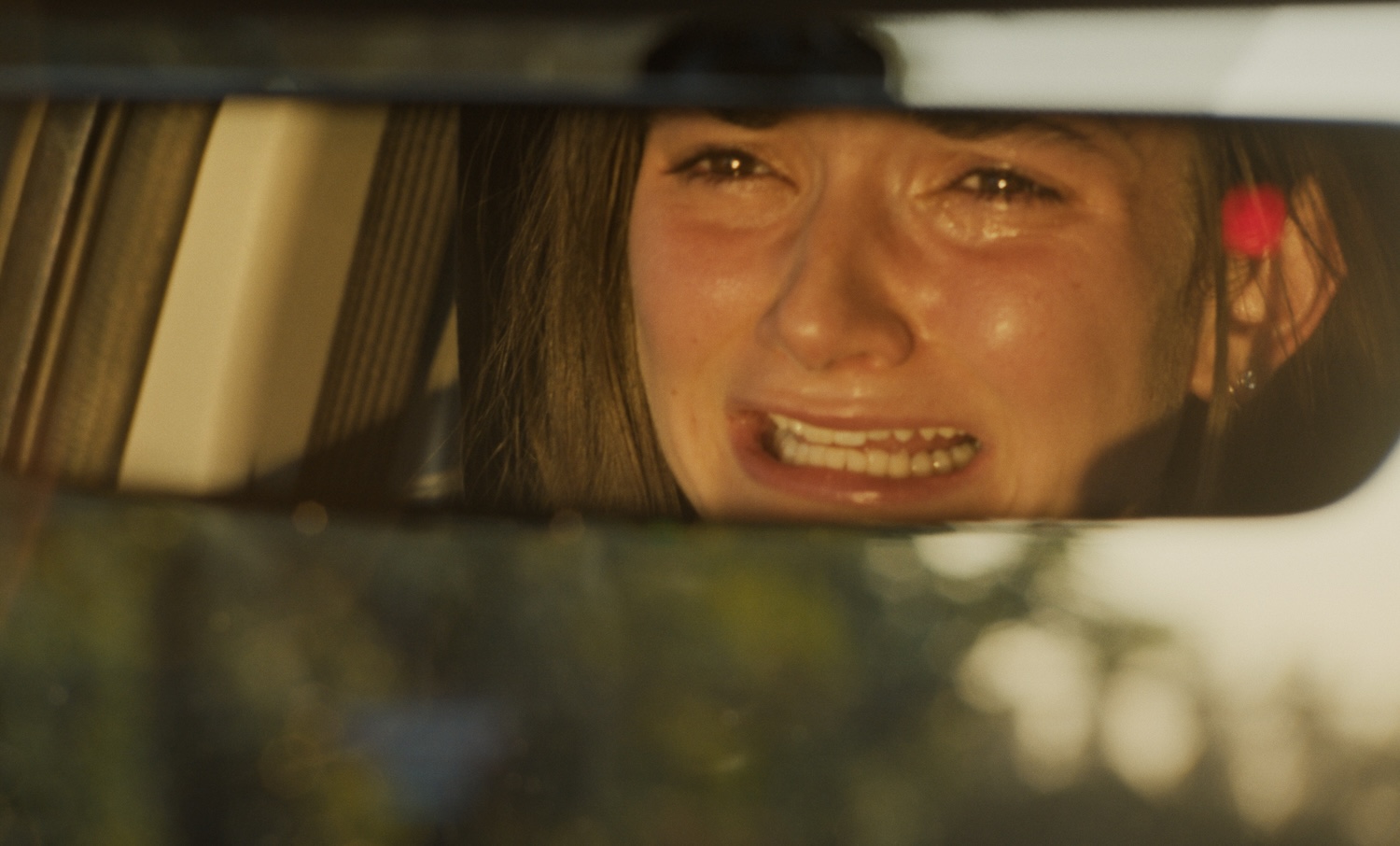
Robinson smartly begins the movie inside Delaney’s car on her way to class, pushing in on the rearview mirror as she rehearses a scene, her face scrunching up in pain and her eyes watering. This is the crux of it all: what we look like when we try to express an inner truth. First of all, expressing that truth is difficult (her acting teacher doesn’t believe her tears), and secondly, you have to worry about how you look on camera and whether someone, somewhere (usually male) finds your face appealing through these contortions. Acting for a living is certainly not easy.
Robinson takes these ideas and pushes them to the extreme, eventually leaning into Botox body-horror imagery that made this viewer cringe (though perhaps not as much as the texting-and-driving moments, which are my personal greatest anxiety). The genre elements are the natural extension of the real-life horrors of Delaney’s situation and serve the narrative well. Surprisingly, there’s also a lot of comedy, bitter though the laughter may be.
Ultimately, it’s a very ambitious work, succeeding on most levels and presaging an impressive career behind the camera for Robinson. Beyond Simpkins, the supporting cast includes additionally impressive work from Aaron Dominguez (Breathe) and Robin Tunney (By Design). If some scenes drive their points home with occasionally excessive exposition, the overall result is gut-wrenching and highly effective.
– Christopher Llewellyn Reed (@ChrisReedFilm)