


(The 2026 SXSW Film Festival ran March 12-18 in beautiful Austin, TX. Check out Chris Reed’s Black Zombie movie review, fresh from the fest. Seen it? Join the conversation with HtN on our Letterboxd Page.)
In her feature debut, Black Zombie, director Maya Annik Bedward gives the viewer a rich feast to digest. There are the brains that we savor in every good flick about the rapacious undead, but also many other dishes. This is a history lesson and a corrective, and lest that sound like a slog, it is also a very entertaining documentary, overflowing with information and charismatic interviewees, as well as clips from a great variety of older movies.
If Black Zombie has a flaw, it is in how exhaustive it tries to be, which sometimes can almost veer into exhausting. But just when we begin to tire, Bedward makes a creative turn that surprises, enlivening the narrative once again. And at 90 minutes, the movie does not overstay its welcome.
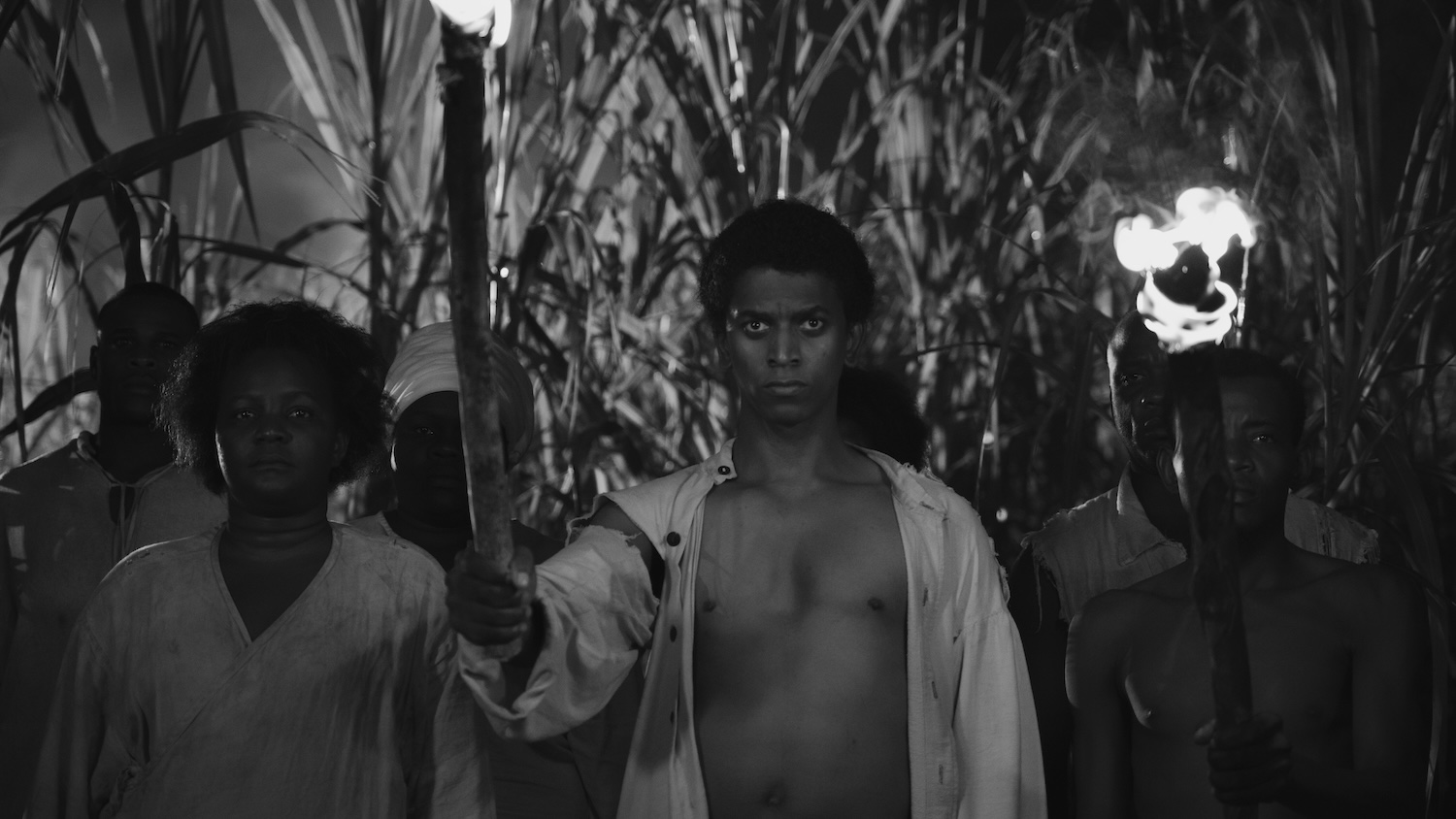
We begin in Haiti, at night, on a creatively staged scene which will repeat throughout. An opening voiceover intones that there, on the island, “zombies are real.” Except that these are not George Romero’s flesh-eating beasts, but rather human beings who have been enslaved through sorcery. What follows explains how misconceptions and willful one-dimensional appropriations of this one aspect of Haiti’s native Vodou faith have led to racist interpretations and usages of the zombie figure in literature and on screen.
Bedward has assembled a strong cast of experts, many of them cultural historians, to walk the viewer through the material. Among them are educators like Tananarive Due and Kaiama Glover, filmmaker Zandashé Brown (who makes Black-centered horror films), Vodou spiritual leaders such as Yves–Grégory François and Mambo Labelle Déesse Jr., graphic novelist Joe Ollmann, and Romero collaborator (on all the gruesome special effects) Tom Savini. This great diversity of voices creates a compelling, if at times overwhelming, collection of facts and figures on the topic.
American travel writer and occultist William Seabrook, along with illustrator Alexander King, first brought the image of the zombie to the English-speaking world in his 1929 The Magic Island, and then this borrowed idea was further distorted in the 1932 Hollywood film White Zombie, in which the main danger was that the white characters would be enslaved by Black masters. Further movies on similar topics continued this theme.
Later, in 1968, Pittsburgh-based director George A. Romero, changed the representation of zombies in Night of the Living Dead, though his seminal movie still dealt with important ideas about race courtesy of its principal protagonist, played by African American actor Duane Jones. Even though many modern viewers only associate the word zombie with Romero’s legacy, Black Zombie makes the case that these later iterations are grounded in Haitian roots and present visuals that are relevant to many important subjects of our world, such as immigration and colonialism.
That’s quite a lot to process, and sometimes the movie feels like two different stories stitched together in an overly broad tapestry. But more often than not, Bedward delivers, through fascinating juxtaposition, new insights into the all-too-familiar tropes of zombie horror. These dead were made for walking, but so much more, as well.
– Christopher Llewellyn Reed (@ChrisReedFilm)