



A Conversation with Myrsini Aristidou (HOLD ONTO ME)
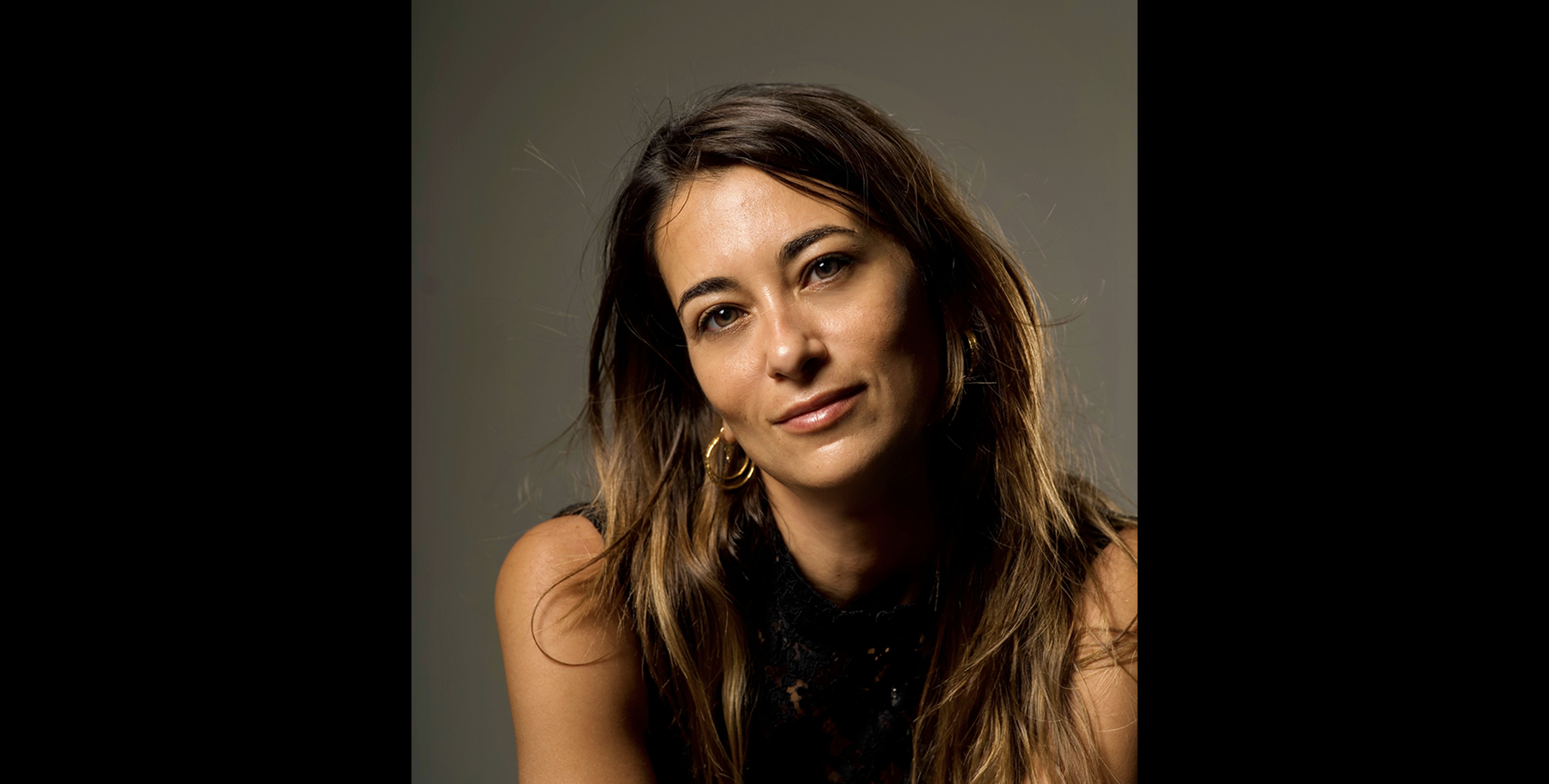
Myrsini Aristidou is a Cypriot filmmaker born and raised in Limassol. She holds a BFA in Film and Art History from Pratt Institute and an MFA in Film Directing from NYU Tisch School of the Arts, and in 2016 founded her production company One Six One Films. Her short film Semele (2015), about a young girl hitchhiking to reach her estranged father, premiered at the Toronto International Film Festival and won the Special Jury Prize at the 2016 Berlinale. Her follow-up, Aria (2017), made with the support of Spike Lee, premiered at the 74th Venice Film Festival and continued to the 2018 Sundance Film Festival. A fellow of the Cannes Cinéfondation Residence and TIFF Talent Lab, Aristidou sees her debut feature Hold Onto Me as the culmination of a trilogy exploring father-daughter dynamics. The film follows 11-year-old Iris (Maria Petrova, in her first screen performance) as she tracks down her estranged father Aris (Christos Passalis of Dogtooth) to a decaying shipyard in Cyprus after he returns for his own father’s funeral. Shot entirely on location with cinematography by Lasse Ulvedal Tolbøll and an original score by Alex Weston, Hold Onto Me is the first Cypriot feature film ever selected for Sundance, premiering in the World Cinema Dramatic Competition at the 2026 festival. This interview has been edited for length and clarity.
Hammer to Nail: Maria Petrova, who plays Iris, is a non-actress giving her first screen performance. You have said that with children, trust is everything—it allows them to remain open, to stay innocent while still being committed. Can you talk about building that trust with Maria and also how that casting process worked?
Myrsini Aristidou: First of all, she is so photogenic. When I first saw her, I was just like, “Wow, this kid, her gaze.” I could tell from the way she was talking. At ten and a half years old, she was so mature in her demeanor. She really wanted to do it. Of course, she had the childishness—she was still a kid and you had to make her focus on occasion—but she would listen very well.
We did not have a lot of time to rehearse before we started shooting, and I did not want to rehearse too much with her and Christos because I wanted them to build a relationship while shooting. That awkwardness that existed was real—she was a child, she did not really know how to behave, and I wanted to maintain that innocence in her. But she worked really hard. She is a very hardworking kid, and she was very focused when she had to be. I am very happy I chose to work with her.
HTN: She was amazing in the movie. The decaying shipyard where Aris keeps to himself is clearly more than just a location. You have described it as a liminal space forgotten by time, suspended between land and sea, much like Iris and Aris themselves. When did you first discover this place, and what made you know it was right for the film?
MA: I discovered it many years ago. It is in my hometown, in Limassol. I actually wanted to shoot Semele there many years ago, but it was winter and it was really tricky to get it done because it was not covered. I have dreamt of shooting in that location for many years. Since the beginning when I started writing the script, I knew I wanted to shoot there.
The reason is it is a part of the city that stays messy and undeveloped. The rest of the city around has developed into tall buildings—they fixed the marina. Then you go to this part and it is all these shipyard companies that fix boats, but it is left abandoned, right next to a thing that is changing. In itself as a place, it is a place where things get fixed. I felt like it is a great place for a relationship to get fixed—to fix things there because it is such a transient place. That was the initial inspiration for shooting there.
HTN: I loved it. I thought it was a great location, very cinematic. At the 15-minute mark, we have this first moment between Iris and Aris. We find Iris in a long shot sitting alone in the hallway of the police station when she hears her dad’s voice. She peeks through the door to find her dad telling the police officer and the man whose boat was damaged that “the girl is not his problem”—he is there to bury his father and leave. Iris walks in as the man who owns the boat calls her a “bastard child.” Aris says he is not paying anything, her mother can pay. The man says he is not leaving until he is reimbursed 300 dollars, and Aris lunges at him. The sequence ends with Aris pulling Iris outside, taking what money she has in her pocket, and giving it to the man. Begrudgingly, he accepts less than 300. Can you talk about this introductory moment between father and daughter? Was this always their first interaction in the script?
MA: Yes, I always wanted it to be there. In every version, every draft, I knew I wanted it to be in the police station. There are many layers to this decision. The first layer is that I wanted Aris to declare that the kid is not his problem to an authority figure, just to show how disconnected he has been from the family generally. There is that level when it happens in the police station.
A still from HOLD ONTO ME
But I think also for me, there are all these dynamics between a father and daughter and how he should be the authority figure for a child. In society, police are the authority figure for the people—they keep order and set boundaries. I always knew that the real deep issue of this child is that when you grow up without a father, you do not have boundaries. It is not that you do not have boundaries, but you do not understand them as well, because it is hard for a mother alone raising kids. I grew up like that. They usually do the best they can, but you are missing that figure that could set boundaries.
I feel it was great because both of them—both the daughter and the father—have a hard time with boundaries. He himself is a bit of a lone wolf that just roams around and cannot take too many orders. They are in a place where they have to behave, both of them, but they do not.
HTN: It was a great scene, definitely one that really stuck with me. At the 32-minute mark, Iris finds her dad trying to sell a toaster oven to a few gentlemen, and he works very hard to sell them this oven. However, the men, disinterested and enjoying lunch, laugh at him. Despite their clear disinterest, he continues on, explaining the defrosting button on the device. Out of the corner of his eye, he spots Iris and says, “What are you doing here? I told you to wait. Kids these days don’t listen.” He slowly approaches her and tells her not to speak and follow his lead. He does a sob story about how they have no water but they do have dignity, so he will no longer try to sell them the oven. It works—one of the workers purchases the oven. Can you talk about your thinking with this moment?
MA: I wanted to find a way that Aris realizes this girl might be useful for him, because that is the only way he could actually get close to her or allow her to be in his space. I thought, what is one thing that kids are? They are super cute and it is really hard to say no to them. I wanted him to be having a hard time selling this junk that he collected from his dad—he is just trying to empty the house or whatever the guy owned.
That is how this scene came about. Then I thought it was really funny. We improvised a lot with the actor. That is one of my favorite scenes—the entire selling sequence in the market, which actually became the bonding of the two of them. It was written this way, but it gained so much more depth when we did it together. The market was largely improvised. I really threw them in a market with a long lens and just let them do whatever. My producers were running around trying to get release forms from everyone. It was a very documentary-style scene. It was nice to see how that was a moment where they actually really bonded, the two of them. It happened in real life, because they were not in every scene together. But in that scene, they really connected.
HTN: It is definitely a moment I loved. Shortly after this, at the 39-minute mark, there is a quick but very impactful moment with Iris in the bathtub. She has a pencil in her mouth, pretending to smoke it and repeating, “Stay out of trouble,” impersonating her father. She smirks and shows a clear sense of admiration for her father despite their odd relationship. This moment ends with a really beautiful shot—half of her in the bathtub, half in the other room, which has this really nice cool blue lighting. Can you illuminate your thinking here?
MA: There is this painting of Marat—the painting of the guy in the French Revolution. It is an 18th-century painting. He was a journalist at the time, someone important, a bourgeois, and he was found dead in the bathtub. I had that painting in mind. It has nothing to do with the content, but it is set up so beautifully. That was the painting I had in mind when I shot that.
For me, that is another transitional moment, because it happens right after this bonding scene. You see how affected she is by her father and how things are going to change after. This very important painting of the Renaissance—it was a big turning point in the history of art when the French Revolution happened. I don’t know, I felt like it was a similar moment. And I love the imitation, how kids imitate and repeat words adults say without knowing even what they mean. The bad habits underlying it, because she is pretending to smoke, which is not good for her.
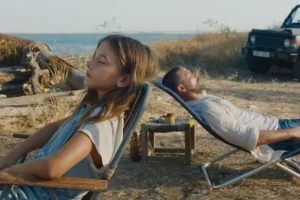
HTN: It is a really sweet moment, and that shot was really beautiful. At the 53-minute mark, after stealing cigarettes from the convenience store, Iris finds her dad sunbathing, sleeping in a lounge chair. She gets up next to him and puts her finger through his hair. We cut to them sitting in opposite directions in lounge chairs, her father still sleeping. He wakes up to find Iris next to him and asks, “What are you doing?” She responds by repeating him, saying, “And what are you doing?” Her father then takes her through a quick meditation, a breathing exercise. He says, “You have to balance your energy. Your breath is your best friend.” As he says this, she begins to light a cigarette. Her dad gets a real kick out of this but takes the cigarette away from her. Can you talk about what was important to you here?
MA: I really wanted to show the contradiction of this guy and this character—how he meditates. It is like modern society. We all meditate to stay balanced and everything. Even this guy, meditation got to him in some way. He is trying to teach her something also.
The way the scene begins with her kind of—we called it with my composer “petting the father”—because she is curious. We are even using the same, an altered but same music as is used in the beginning when she is petting that dog on the roof before she goes to the funeral. For me, it is like taming the dog, taming the beast, taming the animal in some way. That is how that scene begins for me. She is curious about his head or whatever—she is trying to come close to him.
The meditation scene—he is a bit of a prankster. He is a bit of a jack of all trades as a guy. At the end of the scene, it was important to understand that he is leaving. He is selling the boat tomorrow and he is out. He sold the things, made some money, and he is out. But there is also the danger of these guys following him—you understand he owes some money and needs to take care of things and get out.
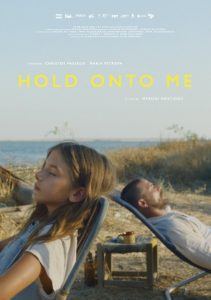
HTN: I love that moment, and I love the shot of them sitting in opposite directions, which is the still being used for the movie. At the hour mark, Iris and her dad go to the mom’s house unannounced. They ring the doorbell and her boyfriend answers. She is immediately upset to see him, saying, “What are you doing here?” He makes up that he called before coming, but she is not buying that. He admits he is lying and says, “But you were real pretty.” She responds, “You’re a real prick.” Iris stands up for him, saying, “Don’t talk to him like that.” The brother comes out of his room, sees his dad, and seemingly upset says, “What is he doing here?” The mom looks at him and says, “You have no place here,” and this really hurts. Aris storms off. Iris pushes her mom and runs after him. Immaturely, he starts lashing out, saying, “Your mom is right. I got no place here. That hairy accountant does.” Iris says, “What are you going to do?” And he responds aggressively, “Don’t worry about me. I got 200,000 ideas.” Can you talk about what was important to you in this sequence, which is the only time we see the full family interact?
MA: First of all, for me it was to show the immaturity of this character. He is a big baby. There are two children for me—the kid and him. Compared to the responsible mother who has been taking care of the kids and everything, the fact that he even tries to make a joke on the door—he lied but he tried to be sweet about it, tries to compliment her and get away with it. But on the other hand, you can feel a little bit of the regret. You feel the regret. You feel how they were in love at some point and just things went really wrong. That was the intention of the scene.
I wanted to show these dynamics—how the girl starts getting angry at the mother because she would not let her spend more time with her father. Now she is getting to know him and understand him a little bit more and starting to love him. It is this Oedipal thing—how the daughter is with the father and then the son is inside with the mother, who rejects the father. They are kind of split into teams. That was the important thing. I love his line about the hairy accountant. We talked about it and we were like, “We have to think of something.” I had something written, but we escalated it to an even funnier thing. I love that he gets so angry and he is so selfish—he just cannot deal with it.
HTN: You have talked about wanting to portray the worn-out backdrops, the slow movement of time, and the raw emotional undercurrents of everyday life. How did you work with your cinematographer Lasse Ulvedal Tolbøll to capture that texture?
MA: It was not hard. Cyprus in the summer is a Mediterranean island. It has this monotone cicada thing going on in the background all the time. It is so hot. People cannot move much. This is in the summer—in August or the period I wanted to shoot in, things get so quiet. We just went to these locations. We did not have to get rid of people or anything. They were just like that—hot, scorching sun. No one was walking around. Everyone was probably somewhere in an AC hiding.
There is something about this place, which I was born in, even if I later lived in the US. I love writing there. I love being there when it comes to looking inside. When things are so quiet on the outside—like in a place like New York, there is so much going on, it is so chaotic, you rarely have time to actually look inside because you are always busy doing something. Whereas there, you are allowed to be bored. You are allowed to have nothing to do. You do two things in a day and it is so hot that you are just going to stop doing anything and sit on a lounge. I feel that is there in the film—you sense it in the choice of the camera movements and how we worked.
I think Lasse did an amazing job, especially shooting with such harsh lights, because it really does look softer than the harsh light we had when we shot this. He is Danish—poor guy came into this excruciating heat. It was 113, 115 degrees Fahrenheit. It was insane. People were passing out. But I think it is so well captured, the quiet thing. Even the moments of the old men sitting in that coffee place—it is very real of how the vibe is in specific areas. The rest of the place is very modern, and I did not choose to shoot in those modern areas. I wanted everyone to be a bit on the edge. They are the misfits. They are on the edge of town. They are on the edge of life. They are on the edge of where things are happening.
– Jack Schenker (@YUNGOCUPOTIS)