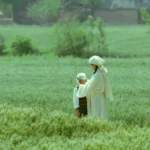

A Conversation with Cece King, Elsa Hana Chung & Camilla Marchese González (SI LA ISLA QUIERE (ISLAND WILLING))

On Chile’s Robinson Crusoe Island, a remote Pacific speck 700 kilometers from the mainland with 61 times more endemic species per square kilometer than the Galápagos, filmmaker Cece King discovered something unexpected: a community that treats the island not as a resource to be managed, but as a living entity to surrender to. Her 29-minute documentary Si La Isla Quiere (Island Willing), produced with Elsa Hana Chung and co-produced by Camilla Marchese González, captures this relationship through vignettes shot from 60 meters underwater to 3,000 feet above sea level. After arriving on the island, King moved in with four generations of the Goldsworthy family and embedded herself in culture, learning to freedive, babysitting local children, and hiking. The resulting film offers a radically intimate portrait of climate resilience rooted not in control, but in coexistence. As islanders grapple with the unintended consequences of mainland conservation policies that banned farming and introduced invasive species, they demonstrate what it means to live with nature in an age of environmental crisis.
Hammer to Nail: The film shows that Robinson Crusoe Island has 61 times more endemic species per square kilometer than the Galápagos. Why do you think this extraordinary place remains relatively unknown? What do you hope changes after audiences see your film?
Cece King: Historically, it was hard to get to. What we say in the film is that no Polynesian cultures ever got to the island and no mainland Indigenous cultures because of how dangerous it is to sail there. The combination of the currents and the location, 700 kilometers into the Pacific, made it so that until sailing technology improved, people didn’t get there.
Later, it was really a hub for pirates to dock and build boats, and then it was used as a place for prisoners, like a lot of islands. Historically it wasn’t a place that people viewed as livable, even once human populations started to live there, until the more intrepid people, like the man Robinson Crusoe is named after, Alexander Selkirk, who was stranded there, fell in love with the island and wanted to start a life there.
HTN: You guys were filming from 60 meters underwater to 3,000 feet above sea level. Can you walk us through how you and the team executed shooting these underwater and mountain range shots?
CK: It was a very scrappy production. I had a Canon 70D, which only shoots in Rec 709 and 1080p and an old DSLR for photography. I had some wildlife lenses that I borrowed from an NGO that you see Sol, one of our collaborators. We had two GoPros. Gloria and Germán, the diver couple, also had the same GoPro.
We did freedive shoots. I learned how to freedive. I put on my carbon fiber flippers and weight belt to sink faster and try to get some of the seal shots. Some of them are also family archives. The one of Gloria swimming where she looks like a mermaid is actually when she was pregnant with the little girl who’s in the film.
The drone shots were all done by lobster fishermen. One was a lobster fisherman and the history teacher of the two young women who were also participants in the film. It’s very community-driven with whatever materials we had accessible at the time. People who had never run sound before were running sound, myself included.
We had just a tripod and a DSLR and were trekking all over the island. I was joining hunters on one trek who were monitoring the Fardela population. We say it was production, but it was me with other people, a hiking backpack, jumping on dive trips and filming as we went. I shared a five-person tent with the diver family and their two little daughters.
I helped them film the proliferation of invasive sea urchins, and that’s how I got all the seal shots because I was just there with them and then happened upon this little cove.
Elsa Hana Chung: One thing that’s very special about this documentary is that a lot of people you see on screen have an off-screen capacity, as Cece was mentioning. It’s deeply collaborative on screen, it’s an ensemble portrait with many different characters and voices, but also off screen. This collaboration continued when we wanted to make sure we had all the beautiful shots, all the little family moments that made the story what we wanted it to be.

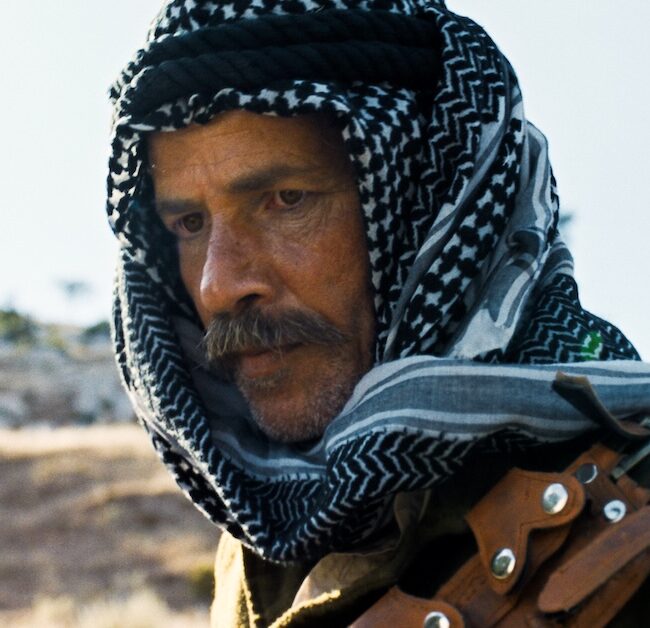
A still from ISLAND WILLING
Camilla Marchese González: It’s a collage of various styles because we used different equipment to capture the island. We scouted what we needed for B-roll that we were missing and contacted them. It was continuous communication, so it was post-production but technically a continuation of production. It was really fun. To keep in touch with the islanders who were very much part of how the film was being made.
CK: We couldn’t control the visual language in a technical sense because we were so constrained with the materials we had available.The closeness, the intimacy, and the collaboration are the guiding stylistic thread through the project, rather than a unifying, hyper-stylized camera or aesthetic.
HTN: Another essential element was the sound. You guys used an omnidirectional mic with a shotgun mic to make nature an equally dominant voice. Can you describe what the island sounds like to our NYC audience and also talk about your collaboration with composer Morgana Acevedo Cordero, who basically translated these sounds into a score?
CK: We had an amazing sound designer, Noah Chevan. In post we used all endemic sounds, which was incredibly hard. I worked with Noah to source different field recordings from various biologists on the island to enhance the sounds of the Fardelas, because when it’s really windy you can’t really hear the bird sounds clearly. We really tried to bring that alive in post with authentic sounds from the endangered and endemic species themselves. When there’s less than a thousand of a bird species left, it’s really hard to find any kind of recording.
There are very few vehicles on the island. Nobody has a car. For me coming from New York City, where I was born and raised, it was shocking how much the wind was the prevalent sound. There were the waves and the birds, but it was really this dramatic wind. Some days you were not able to leave the house. When the grocery boat wasn’t going to come, you weren’t able to travel to the mainland.
The wind would be clanging against the doors. Your clothes would be flying everywhere when they were drying. The window would be coming open and shut. That was the defining soundscape for me on the island. I’d never experienced wind to that degree of intensity before.
Noah also brought that alive when we tried to figure out a way to transition from the poetic reflections of what “island willing” means into talking about the history of the National Park, displacement and the complicated introduction of species that became invasive. We used the wind as a visual and sonic language to transition us into that framework.
In terms of the score, we had so much fun with Morgana. She’s a phenomenal composer and truly such a pro. We had fallen in love with our temp score, Alexander Desplat, the Wes Anderson composer, was basically our temp score. But we wanted to bring more sounds that reflected sounds of the island. Not necessarily just Chilean instruments, which are much more Andean, but this collage of instrumentation from European instruments from the island and Chilean sounds.
Morgana was amazing at researching. There was a local band on the island that appears in the closing credits. She researched what instruments you would hear and then brought that in and created something reflecting the personality. The little girl who appears a couple times—Morgana gave her a specific sound. We had a more mystical sound for the sound of the island. We wanted the score to reflect the characters and help us with pacing.
CMG: The last sound of the film is the wind, which Noah made with almost the sigh of a woman, a vocalist. It was really intentional. We didn’t want it to be gimmicky but slightly mystic so that people feel it. It’s really hidden within the sound design.
HTN: The film obviously critiques mainland Chilean policies and conservation approaches. Did you guys share cuts with the islanders to ensure their critiques were being represented accurately? How did you approach that?
CK: We shared the close to final cut. Throughout the process, we had continuing conversations. A lot of that came from Wilson, who I think is the emotional heart in many ways. He’s Sol’s grandfather, and I was living with him. He speaks with such a distinct accent, and he’s older, and sometimes it’s hard to understand him. We had so many different people on our team who are fluent in Spanish, and none of us would sometimes be able to understand what he was saying.
We had to call Sol, the granddaughter, and have her parse the recordings with us. That collaboration continued through the interviews, me living with him, eating with him every day, talking about how he wanted his story represented, and then even Sol participating in the edit process with his voice recordings to help us figure out how to best put it together, made it very collaborative throughout the whole process. We were very confident in how that portion of the story was portrayed.

A still from ISLAND WILLING
Those critiques were the things that the islanders were most adamant about sharing, and it was a very powerful, almost cathartic moment when that was shared during production, during interviews. That was the part that we were most confident in. There were other parts where we were like, “We have to make sure they like the way they’re portrayed here.” Things that probably seem much more mundane to the outside eye were the things that we wanted to confirm about.
This was the emotional heart and something that poured out of Wilson when he was sharing it. It had to be told. Once we did all of the fact-checking and went into the archives to confirm what had happened, we knew it was going to anchor the film.
EHC: We’ve had so many lovely in-person screenings. It’s beautiful as filmmakers to see how people live-react to a film. What was extra special is when Cece sent the final screener to everyone featured in the film. The outpouring of WhatsApp messages, so many emojis, so many exclamation points. Wilson, now his profile picture on WhatsApp is a still from the film. Even virtually, we can feel the big hug there. A lot of folks are so happy to see this film they’ve been collaborating on finally hit the final cut.
CK: We’re planning our big screening in Chile. We’re figuring out the logistics, but everyone is very excited. There is a film festival on the island that the diver couple started, Gloria and Germán. Cross your fingers we get back there. We’re figuring out how to get the whole team to go back and share the film in person.
HTN: I love at the three-minute mark the story of how Gloria and Germán fell in love and their matching tattoos. It’s just a great little moment of humanity. Can you talk about why you felt it was important to include that story?
CK: That and a clip of a goat hitting the wall were the most contentious parts of the edit. We were so conscious of how the tsunami was going to get portrayed because on the island there was this incredible tragedy. It’s really delicate to discuss something that’s not just a political catastrophe but is also deeply personal. Every single person was affected. Everyone has a friend or family member who passed away in the tsunami. It was relatively recent.
You also have the reputation on the mainland where people tend to identify the island with the tsunami and not look past that. It has this dark cloud over its history. We knew that we had to address it because it was an essential part of island life, identity and resilience. How you still live in a place even though it’s not easy to live there. Yaritza starts the film talking about how we never felt any kind of resentment towards the island. That’s a very different framework of looking at natural disasters than we hold.
We didn’t want it to be a super intense tragedy. Gloria and Germán having met as rescue divers and having something beautiful come out of tragedy reflects that resilience and different way of looking at things. We will survive, we will get through this, and we’re still going to engage with the water. We wanted to show that.
It was contentious in the edit because the island is not the protagonist in that moment. We’d structured it where the island is the main character. This was very much about their personal story. It was getting a little bit deeper into their personal story than we had done for other characters and their relationships.
It’s also a crowd pleaser. Nobody watches that and doesn’t love them. They have a whale tail tattoo because they saw a whale on one of their first dates and thought, “We have to make it a tattoo.” They named their daughter Victoria because their love was victorious after the tsunami. There’s so much about them. They live and breathe in symbols to get through tragedy and to get on with life. That’s just who they are as people. So it felt important and really sweet to keep it.
CMG: After seeing audiences’ reaction, it’s very reassuring that it had to be an emotional anchor. That’s something that will forever hold some awws or murmurs of sweetness. I feel like every single screening, people react very warmly to it in a very vocal way.
HTN: At the six-minute mark, we have this conversation with Raimundo. He says hilariously that the island has captured him more than any romantic relationship on the mainland. He also discusses how the island can either embrace you or spit you out. What was your thinking for this moment?
CK: It’s unique to Raimundo, but it’s also a universal experience where the island has this magnetic pull. Sara, one of the other characters, kept telling me on a personal level: you feel pulled. There is never going to be a day when I’m on the mainland that I don’t feel this intense pull towards the island. It’s not just a pull towards home and family—it’s anchored in the geography, which is a very different thing.
I felt that. The minute I got there, I was like, “Whoa, this is a really special place.” I connected with people in a way that I probably haven’t connected on a community level with anywhere else in the world. I felt like I was meant to be there. There is this spiritual undertone in the way you interact with the landscape, but it’s hard.
It’s definitely a community that has been through a lot of periods where outsiders come and erode trust. There’s a strong history of displacement and resilience through that, but also people coming and going, realizing it’s too hard to not be able to plan their life in a traditional sense. A lot of people aren’t comfortable with not being able to have a regular nine-to-five or Monday-to-Friday work week and having to work around the weather.
Once you surrender to the island’s rhythms, you allow this connection to nature and community that’s not something most of the world experiences at this time in history. It creates such an intense close community, not just between people, but also between people and landscape. Raimundo’s quotes really hone in on that factor of life.
EHC: For folks who worked on the film and weren’t able to go to the island itself, I think you still feel that pull. Camilla and I, who joined Cece in this filmmaking journey after she’d come back to the United States with all this footage, this has been a labor of love for all of us because we can recognize that this is such a beautiful place through the stunning footage and the character stories.
We’ve pulled together with our editors, composers, sound designers a very international virtual team, all of whom have not been on the island for folks who came on later in post-production. But people have been so generous and lovely with their time and creative collaboration because the island is so special. From a distance and virtually, it has embraced them as well. As the filmmaking team, we feel very lucky to be a part of it.
CK: But it does test you. It is not easy. You have to sleep in a very different way. You have to learn how to trust the island because it is eerie, complicated and a little bit terrifying to be in a place where you are 100% beholden to the whims of nature in a way that you aren’t in most other places.
HTN: At the 16-minute mark we speak with Wilson about the invasive species. He says that farming was banned and many species were introduced such as rabbits and a raccoon-like mammal, and that many invasive plants overgrew, why would the government want species such as rabbits on the island?
This is a complicated history of conservation. It’s mind-boggling the way we consider conservation. There’s a big movement towards rewilding, but if you’re not careful, reintroducing species that aren’t native to the ecosystem in order to revive the land in some way can just result in invasive species taking over. That’s what happened here.
Basically, the mainland came in during a time when the U.S. was mandating other countries adopt the national park system that we have in the U.S. The National Park Service of Chile took a while to really get to the island. They first came in the ’30s and then later in the ’70s officially set up a presence. Farming was seen as inherently bad. There was land that was parceled into pastures where trees were cut down for farm animals, but it wasn’t very large-scale because there are so few people there.
The National Park Service said, “We’re going to ban farming and we’re going to try to reforest this land,” and then ended up introducing all of these species that became invasive. It was a lack of good science and thinking that humans know best. If we come in, we can fix it, we can introduce whatever we want, and nature will just respond in the way that we predict. That’s not the case.
It was this imposition rather than letting the land revive itself, a guiding ethos of Western conservation policies that led to human displacement and displacement of endemic species. That’s what we saw on the island, but it is really confusing. It’s really hard to tell people that national parks have a complicated history, that they’re not just inherently good, that we kind of play God with ecosystems. That was really hard to explain in a concise way through interviews without bringing in a scientist, and we didn’t want to bring in an outside voice to explain this dynamic.
We wanted it to come from Wilson and focus more on the experience of having that happen to you versus someone explaining from the outside. That was a very big challenge in the edit.
HTN: With Cece on the island, Elsa in New York, and Camilla splitting time between locations, how did you guys maintain creative cohesion? And just generally, what did your collaboration look like?
EHC: For the edit, it was a combination of the three of us mainly being based in New York, Cece hopping around a little bit, and our collaboration with our editor Cristina, based in Barcelona. We did it in phases, because frankly, that’s what our money and process of fundraising could allow, but also based on availability.
Even though at the time it was frustrating to not have a cohesive block edit, being stretched out gave us time to find the story over time. It was great as first-time filmmakers, to gain our confidence as filmmakers and editors and storytellers over time. It was a lot of 11 p.m., 12 p.m. FaceTimes and Zoom calls trying to scrap this story together. Toward the end of the edit, it was a lot of in-person afternoon blocks on a Saturday, ironing out the story, finalizing which B-roll goes where. In summary, it was deeply collaborative. I look back on it very fondly. Late night sessions can be grueling but I believe we did iron out the story Cece set out to do. It was a blend of different voices, not just one single protagonist. She knew that the island needed to be a recurring voice and presence and we are all really proud of the result.
CMG: Cece came with the story, but we spent so many hours watching all of the footage, same as Cristina. This transatlantic editing block was also a learning process. It just became a conversation of how are we going to tell this story without actually knowing it?
During the breaks when we didn’t have the funds and were waiting for the next editing period that we could afford, those were moments where we could share with other people. We had this big moment at the beginning of the year where we shared with mentors and really reshaped the edit after getting that feedback.It became like a puzzle, which was really fun because it’s very different from narrative filmmaking. We have everything and then it’s like, how are we going to place it together?
CK: I intentionally wanted to work with these two who had narrative backgrounds because that’s a very different way of approaching post in documentary. It’s super different production-wise, but in terms of post, it’s such an asset to have people who are narrative first. Elsa and Camilla’s comments were so rich and incredible. That’s because they had such strong backbones in narrative filmmaking and creative writing.
Our executive producers now are all incredible documentary filmmakers. But at the time they weren’t EPs, they were just mentors, people we had either worked for or had networking calls with. We basically said, “Guys, we have this cut, we need some help.” We did what I like to call a “murder board”, where we just dissected it and saw what’s not working with people who are pros. This ended up becoming our film school.
Tom Yellin, who made Cartel Land, Debi Wisch who made The Price of Everything, and Judith Mizrahi who did The Martha Mitchell Effect—then Debi and Tom ended up becoming EPs and were so involved throughout the process. That was a formative moment of shredding it.
Then I got deep into Premiere, and every weekend Elsa and Camilla would come over. We would go to my parents’ house and put it on the biggest screen available and airplay Premiere and just meticulously go through every single shot until it was a consensus that we all were happy with it. That’s a very different way of editing than other edit rooms I’ve been in where it is very consensus-oriented. Every single shot was a debate and an intentional decision.
We often did this across time zones. I had to delay graduation to be eligible for student funding to go to the island, so I kept delaying graduation. I was in New Hampshire when we were editing for part of it. I was also on set in London. Cristina was between Barcelona and Argentina. Morgana was primarily in Madrid and went back to Ecuador for a bit. Camilla and Elsa were mostly in New York, but Camilla would go back to Guatemala during breaks from editing, and were sometimes in Italy visiting family. So it was a crazy international editing process, but very, very meticulous.
– Jack Schenker (@YUNGOCUPOTIS)