



A Conversation with Adam Meeks, Will Poulter, Emily Meade, Elise Kible, Brad Becker-Parton & Annette Deao (UNION COUNTY)
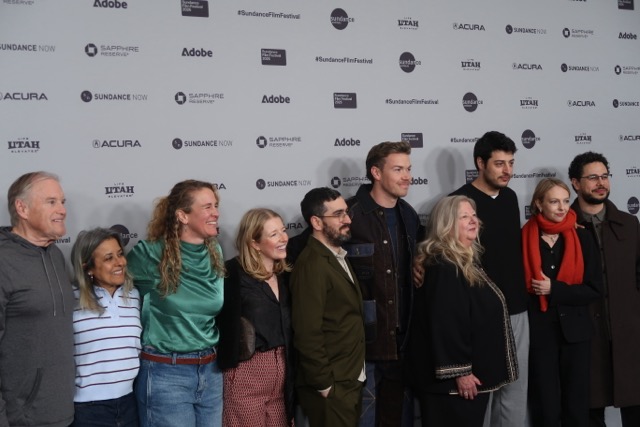
Union County is a drama about the opioid epidemic that does something rare: it focuses on recovery rather than despair. Writer-director Adam Meeks’s feature debut follows Cody Parsons (Will Poulter), a young man in rural Ohio navigating a county-mandated drug court program after his release from prison. His foster brother Jack (Noah Centineo) is also enrolled in the program, and both men struggle to stay sober in a community without many promising economic opportunities. The film premiered in the U.S. Dramatic Competition at the 2026 Sundance Film Festival, where it received a standing ovation at the Eccles Theater.
Meeks, a Brooklyn-based filmmaker and NYU Tisch graduate, first sat in on a drug court meeting in 2017 after his uncle gave him Sam Quinones’s book Dreamland, a chronicle of the opioid crisis that focuses on central and southern Ohio—where both sides of Meeks’s family are from. That visit led to a short film of the same name, which premiered at the 70th Berlinale in 2020 and screened at the Champs-Élysées Film Festival, Palm Springs ShortFest, and Maryland Film Festival. The feature, seven years in development, expands on the short while maintaining its hybrid approach, blending professional actors with non-professional performers from the real recovery community. The actual drug court judge and therapist appear as themselves.
Meeks is a 2023 Film Independent Screenwriting Lab Fellow, a 2021 Yaddo Artist-in-Residence, and a 2019 Creative Culture Fellow at the Jacob Burns Film Center. The film is produced by Brad Becker-Parton of Seaview (whose credits include Reality, Stress Positions, Master, and Beach Rats), alongside Martha Gregory, Stephanie Roush, Faye Tsakas, and Sean Weiner. Poulter and Centineo, who previously played brothers-in-arms in Alex Garland and Ray Mendoza’s Warfare, came to Ohio months before shooting to attend NA meetings, have dinner with the judge, and immerse themselves in the community. At Sundance, I spoke with the director, cast, producer, and real-life participants. These interviews have been edited for length and clarity.
ADAM MEEKS (Writer/Director)
Hammer to Nail: You first sat in on a drug court meeting in 2017 and described it as a sanctuary with a pervasive feeling of empathy. What was it about that initial experience that told you this needed to become a film?
Adam Meeks: It was the reality that these stories of hope had not really been shared. This was a new narrative. It was my own personal emotional reaction, and when I shared that reaction with other people, it was also felt by others. It is a good example of the personal becoming universal. I felt like this needs to be shared, and I hope I can help translate the beautiful work that is happening here. That personal reaction just snowballed from there.
HTN: The short version of Union County premiered at Berlin in 2020, and now here you are with the feature five years later. How did the story evolve across those years of development? What did you learn that you couldn’t have known when you started?
AM: The story evolved a lot. It is a similar central character played by a different actor, maybe a similar baseline circumstance, but different relationships and narratives at its core. This film, even more than the short, was built around an embracing of documentary processes. That was one aspect of the short, in a scene or two. But in this, we weave through these documentary spaces a lot more. What I have learned and carried with me is that unknowns are your friends.
HTN: You’ve described this as a landscape film where you wanted to show the lush, beautiful side of rural Ohio rather than the typical bleak depictions. How did shooting in spring and summer shape the emotional register of the story and can you talk about putting that into practice on set?
AM: The other day we were doing a Q & A and someone on our team referred to the character’s arc as a blossoming. I think that is exactly what it is. That made me think about shooting in the spring. The way the landscape progresses over the movie mirrors and hopefully accentuates how our character blossoms. A lot of us realized while we were filming that we had not had very many filmmaking experiences in the spring previously. There are some April showers, weather elements to contend with, but it is just beautiful. There is a lot of energy around being out in the landscapes at that time.
WILL POULTER (Cody Parsons)
Hammer to Nail: Adam said that you came to Ohio a full month before shooting, attended NA meetings, had dinner with Judge Braig, and lived across the street from Noah. What did that extended immersion teach you about Cody that you couldn’t have found on the page?
Will Poulter: Central to this film really is the recovery community. It was made with the community, in the community, and by a director who is from the area. So there was an immense amount of respect and reverence for the place and the people well before we ever arrived. For me to be able to step into that space where these bonds of trust had been forged between Adam and Annette, and of course Annette and the rest of the community—the waters were very warm and welcoming. It allowed me to understand things about Cody as a representation of the experiences of lots of different participants through this really unique and incredible program.
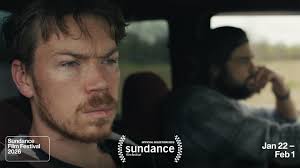
A still from UNION COUNTY
HTN: You and Noah already built a brotherhood on Warfare, where you went through a three-week boot camp together. How did that existing dynamic translate when you became the Parsons brothers?
WP: It is a really good question because the brotherhood was sort of inbuilt. That was really lovely, to be able to have this genuine bond and understanding between one another that we arrived on set with. I love Noah. I really love him, and playing his brother was very easy.
EMILY MEADE (Katrina)
Hammer to Nail: I am a huge fan from The Deuce. Your work on that show, as Lori, is really one of the best performances I have ever seen. That character also dealt with cycles of vulnerability and survival. Do you see through lines to Katrina?
Emily Meade: I myself am in recovery and have dealt with cycles of addiction. I tend to play characters, or get cast as characters, who are dealing with some sort of demons they are working through. This was the first time I was playing someone on the other side of it. In the film, Will is the addict and I am his sister who is being affected by it and is not an addict and does not really have understanding for it—is sort of lacking empathy or being hurt by it. So as far as my character, they were not the same, but they were on other sides of the same conversation. That was a really fun thing to do.
HTN: You grew up in New York, but this is set in rural Ohio, a community Adam has deep roots in. How did you find your way into that world?
EM: I love Ohio. As someone who grew up in the city, I always romanticize not the city. I wanted to go to a suburban high school and have a football team and cheerleaders. My first few boyfriends were all people from Ohio who hated Ohio, and every time they would take me home with them I was like, this is the best place. The only thing I struggled with was finding food sometimes. But besides that, I love it.
ELISE KIBLER (Anna)
Hammer to Nail: You trained as a filmmaker at NYU Tisch while simultaneously building an acting career on Broadway. How does understanding both sides of the camera change how you approach a character, specifically this one?
Elise Kibler: I think it is very useful because you understand the scope of the universe you are operating in. You know where your slice of the pie, as an actor, fits in the whole pie as a film. For this project in particular, we are doing a lot of stuff that borders on documentary. There are so many different elements in play when that is going on. Knowing a little bit as a filmmaker—though I have never worked in doc—what that takes was useful to me as an actor to know how to support what we were doing.
HTN: Union County blends professional actors with non-professional performers from the real recovery community. Can you talk about working with the non-professional actors, what they brought to the set, and what they brought out of you?
EK: They brought everything. It was the greatest gift. It was a true privilege to work with them, and it was also incredibly grounding. I do not want to speak for the other actors, but it certainly was for me—whatever ideas you may have about anything, when you are sitting across from a person who is living their real life, that is telling you where your performance should live.
HTN: You have worked on stage in The Orchard and many other ensemble pieces. What does theater training bring to a film this grounded in authenticity?
EK: I think when you work in theater there is a certain amount of freedom you have to learn to have because stuff goes wrong all the time. You learn to have a flexible approach to what you are doing. When you are working with non-professional performers—and I do not know what the word is that feels sufficient, because “non-actor” sounds so diminutive considering the lift that these performers did—you do not know exactly what is going to happen next, and you have to have flexibility. There is a stamina you build up in theater that was very useful on this project.
BRAD BECKER-PARTON (Producer)
Hammer to Nail: Seaview has built a remarkable track record—Reality, Stress Positions, Master, Beach Rats. What connects these projects for you, and how does Union County fit?
Brad Becker-Parton: They are all personal stories. By that I do not mean they are autobiographical in particular, but each story is about something that the filmmaker making it knows more about than any other filmmaker who could make that story. Beach Rats is about where Eliza went to high school and the culture of masculinity in deep Brooklyn. Master is about Mariama’s experience being a Black woman at Yale. Union County is where Adam grew up. He is making a movie about his family, people who have been affected by the opioid epidemic, a place and a geography that he knows well. When we would go scout, seeing the places through the filmmakers’ eyes—they saw something in it that you could not see on the page. All the movies came alive in that same way, through the faces and the places.
HTN: Adam developed this project for seven years, starting with the short that premiered at Berlin in 2020. When did Seaview come aboard, and what convinced you this feature was ready?
BBP: About three years ago. One of the producers, Sean Weiner, I have known for 20 years—I worked at a movie theater in high school that he was the manager of, and we have kept in touch over the years. He ran a lab program that Adam participated in with the short, and over the years he would tell me about his people coming through the program, who to be excited about. He said, “I am working with this filmmaker Adam Meeks.” I had seen the short. “Would you just read the script?” I read the script that night, and it was amazing. My advice the next day was that I should come on and produce it.
HTN: The film blends professional actors with non-professional performers from the real recovery community. What unique challenges did that hybrid approach create for production?
BBP: It is something I had done before, so it attracted me to the project. Honestly, the bigger challenge was integrating the professional actors with the authenticity of the non-professional actors than the other way around. We made this movie in service of this community, and the key was: how can we put Will Poulter, someone whose face you recognize immediately, in this world without that being jarring? That is the work we did.
HTN: Will Poulter and Noah Centineo are also producers on this film. How did their creative involvement shape the production?
BBP: We shot the movie in May—they started coming to Ohio with us regularly in January. They got to know Annette, they got to know the place, they got to know the people in the movie. They were very invested in the project, in getting to know the people making it, in understanding how the story would be told, how their characters thought, lived and spoke. Just having that time with them. It was not, “They are coming off this Marvel movie, you have a week of rehearsal, and the movie starts and they are gone.” That is what set it apart. Now they still talk to Annette multiple times a month. It is fortunate to have someone of their profile champion a movie like this.
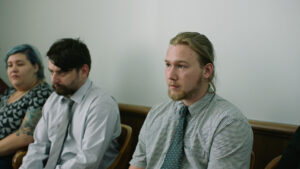
A still from UNION COUNTY
ANNETTE DEAO (Herself / Drug Court Therapist)
Hammer to Nail: You have been running the drug court program in Logan County for over 20 years. When Adam first approached you about making a film, what made you say yes?
Annette Deao: Because I thought he had the heart about it. He was not looking at making a film about drug addiction. He was looking at making a film about recovery. That is what I am about. I am not here to say that we should punish people for having a disease. We are here to help them. His whole effort was to look at it that way. That is what drew me right in from the beginning.
HTN: Adam discovered that you studied acting for four years before running the drug court. What made you step away from performing, and what was it like to return to it for this film?
AD: I stepped away because I did not really see it as a career path. I was really interested in psychology, so I went back to school to become a therapist. Being a theater person is really good—you are animated, you can engage with people really well. It has been a real plus in my career. I started out with adolescents. I now work with adult felons. You have got to be on. So I think that has helped. Joining Adam in this process was a no-brainer. Once I had looked at his other films and had time to sit with him—yeah, he is a master.
HTN: You became Adam’s on-the-ground creative partner over seven years of development. How did your collaboration evolve from that first meeting at a folk music show?
AD: I just played the person who could open the doors because I am from this community. I have been there for years. It did not take long for people to say, if you trust this, I trust this. That was a lot of my role until we got to the script. He wanted to make sure it was true to what the process was.
JUDGE KEVIN BRAIG (Himself)
Hammer to Nail: You appear as yourself in Union County, presiding over the court scenes. What was it like to have cameras documenting what you do every week?
Judge Kevin Braig: It was fun. A little bit crazy with all the cameras and wires, but it really was not that different. It was just Monday afternoon for the most part for me. We mixed the stars of the movie, Will Poulter and Noah Centineo, into the mix of people who we see every Monday. I just tried to treat it like I always would—just another normal Monday. I had a little flutter of butterflies in my stomach when I first started, but we always had a few regular people to get rolling. So by the time Will and Noah would come up, I was pretty much in the rhythm and would just go through it with them. It was a lot of fun. They were easy to work with.
HTN: You studied journalism before law. Does storytelling play a role in how you think about justice and rehabilitation?
JKB: Yes it does. Storytelling helps you reach people and move them. What we are trying to do is help me replace unhealthy habits with healthy habits. That is really hard to do when you have a substance abuse disorder that has control over you. You are basically a slave to it. You have to will yourself and think yourself into doing something differently. Once you lock in those healthy habits its much more likely you will recover. Its like climbing a hill. On the first day you are at the bottom looking up and it looks really steep, but once you get higher up it starts to level out and become easier.
HTN: Logan County has dramatically improved in overdose death rankings since you took the bench. How much of that do you attribute to the Adult Recovery Court?
JKB: The most important thing about that is the awareness—not only the Adult Recovery Court but law enforcement and probation staff and the emergence of Narcan as a treatment drug in fatalities. Certainly we have done our part to educate everyone who goes through the Adult Recovery Court on those situations. You have people with disorders saving other people with disorders, and we have contributed a lot to that. But we are certainly not the only branch of government that has done that. What we have contributed uniquely is building a long-term recovery community. Every community has sub-communities—the Kiwanis Club, Rotary Club, athletic teams, high schools—just smaller populations that fit in and are healthy within the community. What we have been able to do is build a recovery sub-community that has really grown to be very proud of itself and feels good about helping other people who need it. We have built our snowball, started rolling it, and it is picking up steam. We just have to keep going in that direction.
HTN: Will and Noah came to Ohio early, attended meetings and had dinner with you. What did you make of these Hollywood actors wanting to understand your world, and what was it like connecting with them?
JKB: It was great connecting with them. They were wonderful people, and it was just a lot of joy and fun to work with. I like seeing young people doing exciting things and achieving their dreams. That was really great. At first it was kind of surreal—Adam Meeks had made this as a 20-minute short movie before I took the bench, so I was aware of it. I had seen that short movie. You are never ready for a movie director to walk into your office with one of your employees and sit down and say, “Hey Judge, we would like to make a movie in your courtroom and you be in it.” I do not have any advice for anybody if that happens. I would just say yes.
– Jack Schenker (@YUNGOCUPOTIS)