



A Conversation with Bi Gan (RESURRECTION)
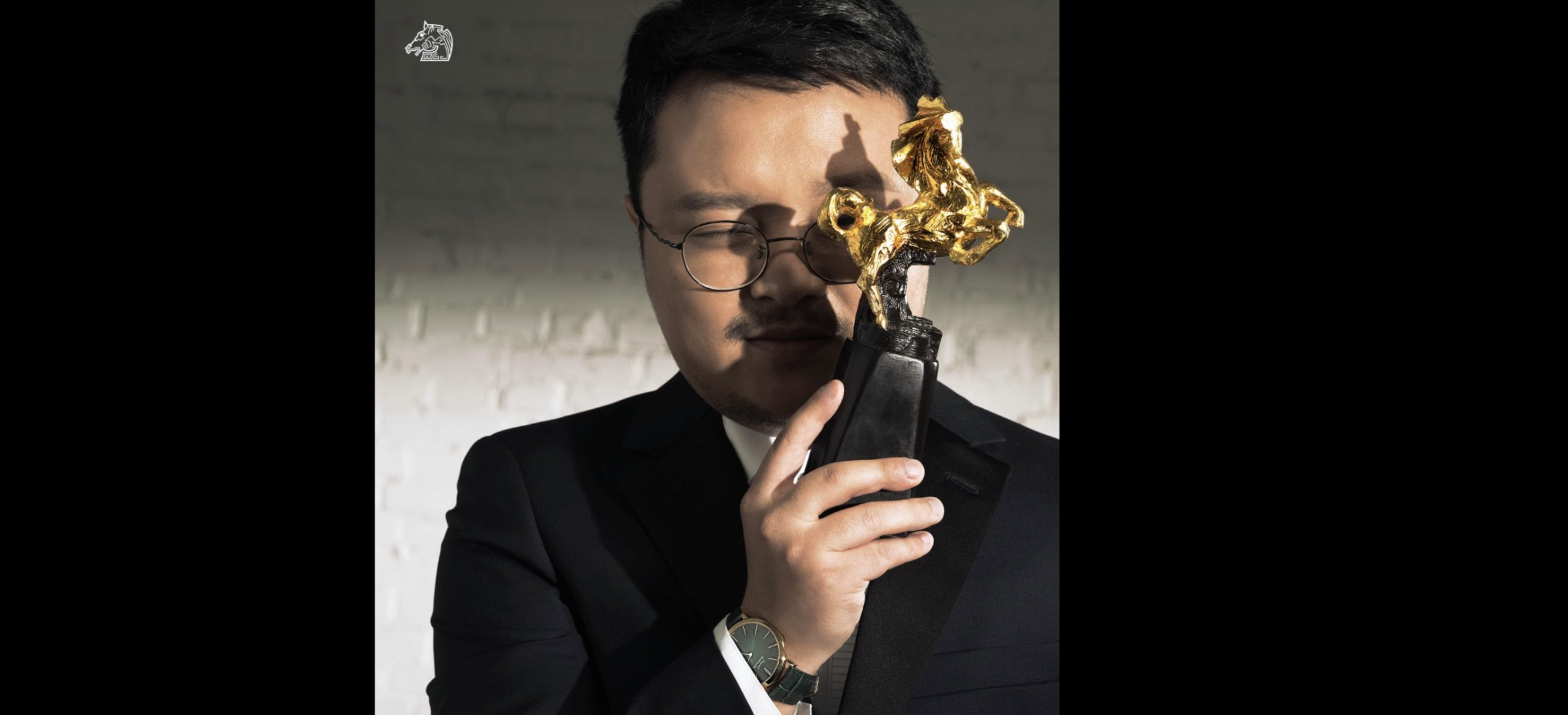
Seven years after the international sensation Long Day’s Journey Into Night, a film that climaxed with a breathtaking 59-minute 3D long take, visionary director Bi Gan returns with his most ambitious work yet. Resurrection (reviewed here by M.J. O’Toole) is a staggering cinematic achievement: a 156-minute epic that spans an entire century of cinema history through six interconnected stories. In a future where humanity has surrendered its ability to dream in exchange for immortality, a “deliriant” (a mortal who still dreams) on the brink of death, has a long roll of film weaved through the back of his body as he is sent on an 100 year journey through all sorts of cinema. A tough movie to explain the plot of to say the least.
Each chapter pays rigorous homage to different eras of film history, from German Expressionist silent film to 1940s noir, to classical melodrama—while transcending mere pastiche to become something genuinely original and emotionally overwhelming. Bi Gan, who burst onto the international scene with his micro-budget debut Kaili Blues in 2015, has crafted a film with the most audacious formal experimentation imaginable. In a time where the existence of theaters are being threatened, no movie will speak to the power of cinema and going to a theater more than Resurrection. The production spanned three separate shooting cycles over more than a year.
Resurrection premiered in Competition at the 2025 Cannes Film Festival, where it won the Special Prize of the Jury, before playing at the New York Film Festival where I saw it. Featuring a hypnotic original score by M83 and stunning cinematography by Dong Jingsong, the film stars Jackson Yee alongside Shu Qi, Mark Chao, and Huang Jue. Resurrection is one of the most extraordinary films of the year. It is in theaters now.
Hammer to Nail: You’ve described shooting “air holes”—extra angles, alternate approaches—without knowing exactly why, trusting you’ll find their purpose in editing. Can you give me a specific example from Resurrection where one of those instinctive choices ended up reshaping a scene or story in a way you never anticipated?
Bi Gan: Different from my previous two films, for Resurrection I discussed with our DP, Dong Jingsong, that we were going to shoot the film with two cameras. For me, it’s not about using two cameras to increase the productivity or effectiveness of the shoot. One camera stays focused on the narrative structure and narrative line, and the other serves other purposes. Our art directors, Liu Qiang and Tu Nan, did such a great job with the sets. When we shot Resurrection, there were a lot of opportunities for me to improvise because the sets and locations gave me so much inspiration.
To answer your question specifically, I used a lot of scenes from the fourth chapter that were not in the script. That chapter is about the sense of smell, and there are many instances where what was kept and added into the film were not actually written in my script.
One particular example: there’s a scene where the little girl is smelling the ash in the box. In the script, when I was envisioning it with the shooting script and storyboard, I planned to follow with a close-up of her face, then to the box, and then when she looks up, I would stay with that close-up for the actress to really do her thing. Instead of doing that, I realized when we were shooting, in the background, it was this magic hour sunset—so beautiful that I ended up using a medium shot in the edit. I loved the background with the changing colors of the sky, the sunset. It worked very well with the sadness and pain I wanted to capture.
HtN: At the three-minute mark, we have this astounding introductory shot where a fire burns open the frame and we see men and women in a theater staring right at the camera. This image sits briefly while ethereal music hums. Police show up, begin to clear people out and the music becomes much more bombastic. Light slightly pours in as Shu Qi enters and takes a flash picture. Can you talk about designing that opening?
BG: This is something I do with all my films—creating an opening sequence that will take you where I want you to go. With Kaili Blues, if you remember, and also Long Day’s Journey Into Night, you start with darkness and then have this flickering light that takes you directly into the storyline.

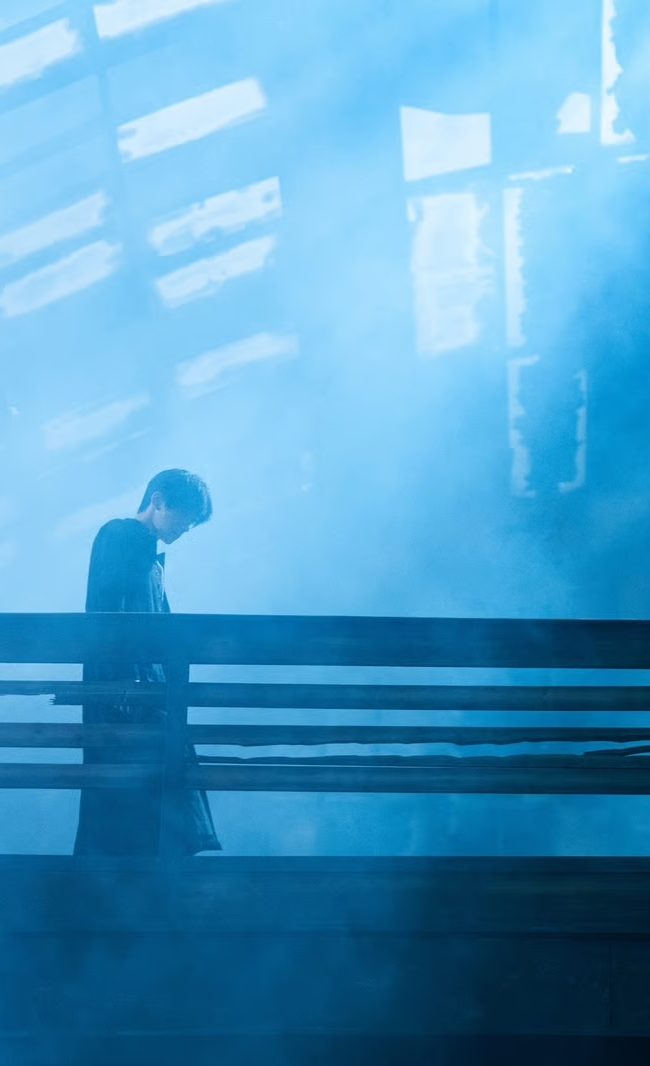
A still from RESURRECTION
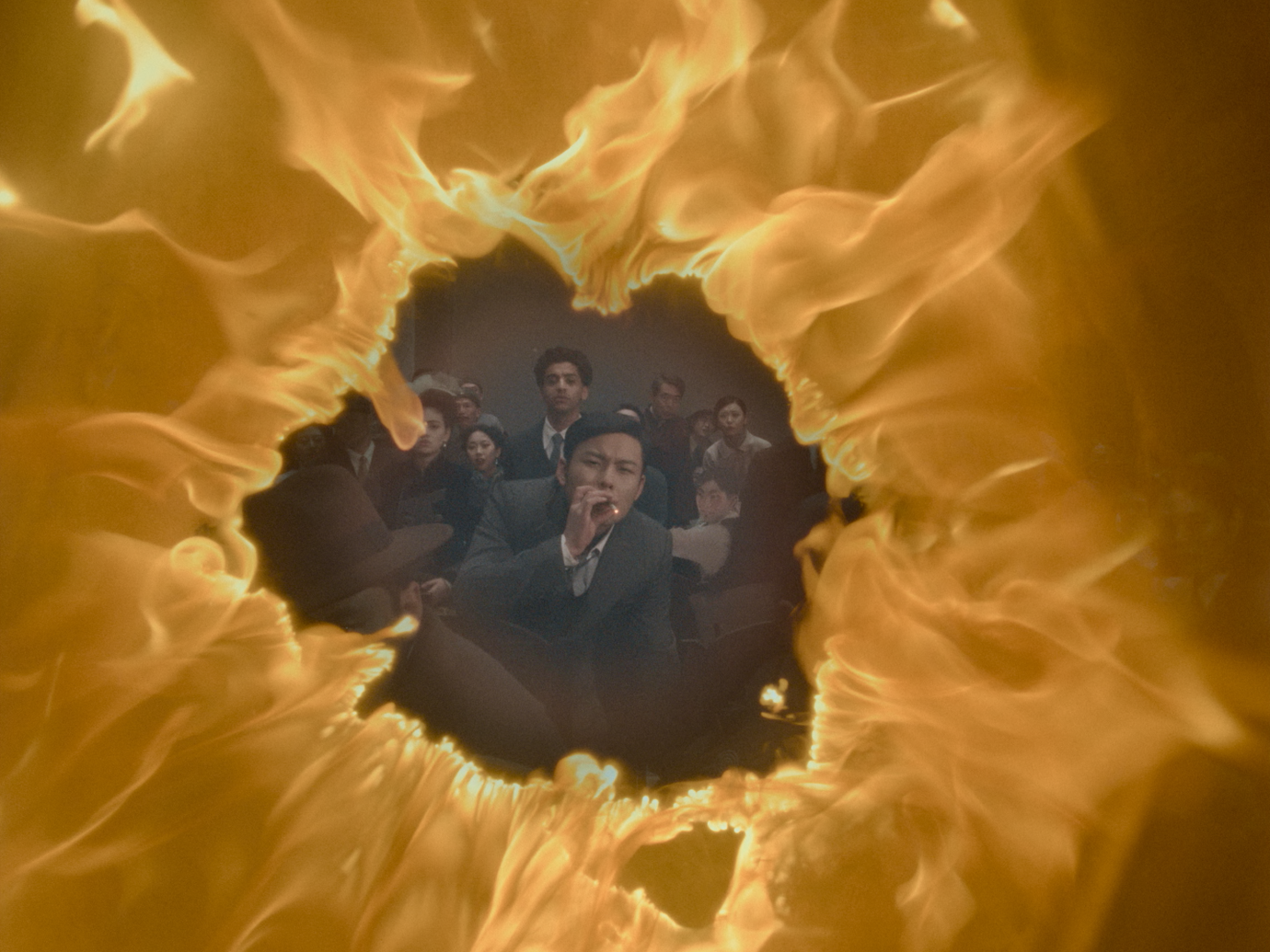
For me, this is one of the most important sequences of any film, the opening sequence. I treat it very, very carefully with every single film of mine, and Resurrection is no exception. I wanted to set the tone right away. Having Shu Qi with this burning of the curtain or screen, having people stare into the theater, into the audience, watching them, staring at them, this already hints at and foretells the storyline. The viewers watching this are actually the “deliriants” as well.
I wanted to intentionally break that fourth wall. To burn the screens not only in the story but also burn the screens of the actual cinema where you’re watching the film. That’s a very intentional way of starting the film, not just because it’s an opening sequence, but to embed a lot of contextual cues, storylines, and plot lines from the very beginning. How I treat the interaction between the audience staring into the theater and the theater’s audience staring at them, that’s a great way to let the audience know they are deliriants themselves watching this film.
It echoes at the end with the silent film-style title cards, bookending the different chapters in between. One of the intertitle cards towards the end also clearly indicates that you, as an audience, are now outside of the film.
HtN: At the 45-minute mark, we get an amazing transitional moment. After the commander stabs himself in the ear and pulls out the knife, we get this stunning music cue of a choir. He shoots the mirror. The camera pushes forward as we see the commander running onto a train into the same room as Jackson Yee. He opens the theremin and plays it. As the theremin music plays, we see him strangle Jackson. Once he’s knocked out, the commander stabs him in the back, opening him up and finding light and music inside. The commander and the train all light on fire as we cut to the melting wax. This is such an incredible moment. How did you conceive of this sequence?
BG:To start, my intention with the opening—with that burning screen and the audience staring back—was to set the tone for the beginning of the 20th century. Instead of just letting the audience know they are in a theater, that they are the deliriants themselves watching this film, I wanted to establish that particular genre and context. I wanted them to know that this is the theater and stage we’ve set up to tell a story from the beginning of the 20th century. This isn’t the contemporary theater you’re sitting in. This is a theater designed to look and feel like a stage from that era. And from there, the story can begin.
Now, moving on to the second part with the sense of hearing. you move into a very tumultuous era of Chinese history in the 1940s. This chapter is very much about hearing, so we wanted to find a way to render it in a very violent manner, to tease out this particular sensory channel.
We had discussions about designing it so that when you destroy one part of the eardrums, half of the soundscape changes. When he violently destroys the other eardrum, the soundscape changes again and evolves into something else entirely. That was an intentional design. Using that as a way to not only tell the stories of the 1940s but also to tease out the sensory channel of hearing.
– Jack Schenker (@YUNGOCUPOTIS)